Impact of Sanctions and Trade Wars on Global Trade Dynamics
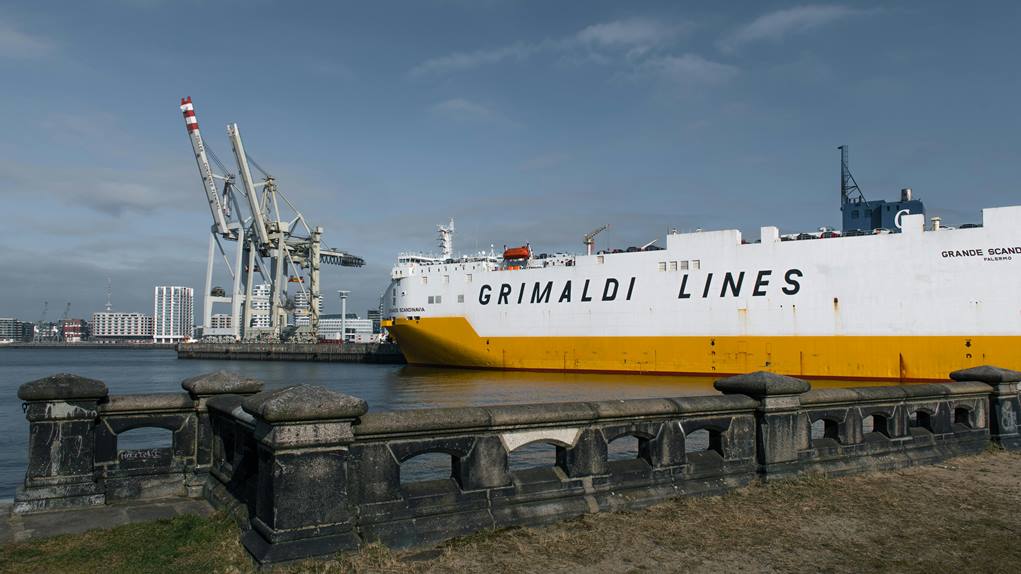
Sanctions and Trade Wars: Impact on Global Trade, Supply Chains and Prices
Sanctions and trade wars affect global trade by raising the cost of cross-border business, limiting access to markets or technology, and forcing companies to redesign supply chains. The impact is rarely a simple shutdown. More often, trade is rerouted through new suppliers, alternative buyers, different payment channels and longer logistics paths.
This article explains the main economic channels behind sanctions and tariff conflicts: direct market loss, higher import costs, export-control limits, front-loaded shipments, third-country routing, energy-market pressure and long-term fragmentation of global value chains.
Direct answer
Sanctions and trade wars reshape trade by changing where goods are bought, how they are shipped, which firms can legally supply them and how much risk companies must price into contracts. The result can be lower bilateral trade between the countries in conflict, but higher activity through substitute suppliers and transit economies.
2026 source snapshot: what the data says
The latest comparable public evidence does not support a simple story that trade wars always stop trade. It shows a more precise pattern: trade adjusts, but adjustment is costly. Companies front-load shipments before tariff deadlines, pay more for transport, carry more inventory and replace suppliers when legal or political risks rise.
WTO reported world merchandise trade volume growth of 4.6% in 2025, helped by AI-related demand and pre-tariff shipping.
The March 2026 WTO baseline projected slower merchandise trade volume growth after the stronger 2025 result.
UNCTAD reported that U.S.-bound air shipments rose nearly 10% in Q1 2025 as firms rushed goods before tariff deadlines.
IEA reported Russian oil export revenues of $11 billion in November 2025 after lower exports and weaker prices.
What are sanctions and trade wars?
Sanctions
Sanctions are legal restrictions used to pressure a country, company, sector or individual. They can block financial transactions, freeze assets, ban imports, restrict exports, limit shipping services or prevent access to advanced technology.
Trade wars
Trade wars involve escalating tariffs, quotas or other trade barriers. One country raises barriers, the affected country retaliates, and firms must adjust prices, sourcing, contracts and market strategy.
The two tools are different, but the economic effect often overlaps. Both increase trade friction. Both can reduce direct bilateral trade. Both can create substitution effects, where third countries gain orders because buyers avoid a sanctioned supplier or a tariff-heavy route.
For SEO and economic interpretation, the important distinction is this: sanctions usually restrict permission to trade, while tariffs usually change the price of trading. Export controls sit between the two because they can make specific technology or equipment unavailable even when general trade continues.
Evidence: how sanctions and trade wars affect global trade
The table below uses source-backed facts only. It avoids unsupported estimates and separates each data point from its interpretation.
Source-backed signals from WTO, UNCTAD, USTR and IEA
| Issue | Source-backed fact | Why it matters | Source |
|---|---|---|---|
| Trade resilience | WTO reported 4.6% merchandise trade volume growth in 2025 and a 1.9% baseline for 2026. | Global trade can keep growing during tariff conflict, but growth may depend on temporary forces such as AI-related goods and pre-deadline shipping. | WTO, 2026 |
| Policy uncertainty | UNCTAD reported nearly 10% year-on-year growth in U.S.-bound air shipments in Q1 2025 as firms front-loaded goods. | Uncertainty changes trade behavior before tariffs fully take effect. Faster transport and higher inventories raise business costs. | UNCTAD, 2025 |
| Strategic tariffs | USTR Section 301 modifications targeted strategic China-origin sectors including electric vehicles, batteries, semiconductors and solar-related products. | Modern trade wars are not only about trade balances. They are also about industrial policy, technology dependence and supply-chain control. | USTR, 2024 |
| Energy sanctions | IEA reported Russian oil exports fell by 420 kb/d in November 2025, with export revenues down to $11 billion. | Energy sanctions can reduce revenue and increase buyer risk even when physical supply continues through alternative routes. | IEA, 2025 |
The table is an evidence snapshot, not a country ranking. Each fact is kept close to its source to avoid invented estimates or unsupported conclusions.
Chart: WTO trade volume growth and baseline projections
WTO data show why the impact of trade conflict should not be read from one headline number. Goods trade grew strongly in 2025, but the WTO March 2026 baseline projected slower merchandise trade growth in 2026. Services trade was expected to remain more resilient.
How sanctions and trade wars transmit through the economy
1. Direct market loss
A sanctioned exporter can lose buyers, banks, insurers, ports or payment channels. A tariff-targeted exporter may keep access to the market but become less competitive because the imported product lands at a higher cost.
2. Higher input costs
Tariffs raise import costs. Export controls force firms to replace restricted parts or machinery. Financial sanctions increase legal review, payment risk and insurance costs.
3. Supply-chain redesign
Companies qualify new suppliers, move orders to lower-risk jurisdictions, hold more inventory or split production across several countries. This reduces exposure but can lower efficiency.
4. Uncertainty premium
When tariff rates, exemptions or sanction lists can change quickly, firms price uncertainty into contracts. Some delay investment; others ship early and pay more for transport.
Which sectors are most exposed?
The most exposed sectors are those with high cross-border dependency, regulated technology, concentrated suppliers or strategic value. The risk is not only that a product becomes expensive. In some cases, the product, software, chip, component or financial service becomes legally unavailable.
Energy
Oil, gas, coal, shipping, insurance and tanker services are highly exposed because sanctions can alter buyers, discounts, transport routes and payment channels.
Semiconductors and advanced technology
Export controls can restrict chips, equipment, software and production tools. The long-term effect may be deeper than a tariff because substitution is technically difficult.
Agriculture and food inputs
Tariffs and sanctions can redirect grain, oilseed, fertilizer and meat flows. Alternative suppliers may gain market share, but seasonal supply and transport distance matter.
Automotive and clean technology
Electric vehicles, batteries, solar cells, critical minerals and related components sit at the center of industrial-policy trade disputes.
Methodology and limits
This article uses a source hierarchy: international organizations and official government notices first, then sector-specific institutional analysis. It does not average conflicting claims and does not calculate unverified country-level totals.
Source snapshot
WTO March 2026, UNCTAD September 2025, USTR September 2024 and IEA December 2025 are used as the core evidence base.
What is measured
The article covers trade volume signals, tariff-policy evidence, front-loading behavior and oil-market data related to sanctions.
What is excluded
No invented GDP losses, consumer-price averages, unofficial country rankings, CAGR, synthetic forecasts or unsupported trade-turnover estimates are used.
Important limitation
Trade values and trade volumes are different. Dollar values can move because of exchange rates, commodity prices and inflation, while volume measures focus on real quantities.
Analysis: what the pattern means
Main takeaway
Sanctions and trade wars increase the cost of trust. Firms must verify suppliers, buyers, ownership, origin, payments and legal exposure more carefully than before.
Market pattern
Trade often shifts rather than disappears. Third countries can gain from substitution, but those gains may come with compliance risk and less stable demand.
Supply-chain pattern
Resilience usually means duplication: more suppliers, more inventory and more routes. That can protect against shocks but raise the long-run cost of production.
Policy risk
The timing of trade measures matters. A deadline can change behavior before a tariff starts, creating short-term trade spikes that should not be mistaken for stable demand.
What this means for businesses and policymakers
For businesses, sanctions and trade wars should be treated as operational risks, not only legal or political topics. Supplier concentration, customs classification, country-of-origin exposure, payment routes, contract clauses and inventory policy all need regular review.
For policymakers, the central trade-off is precision versus spillover. A measure may target one country or sector, but its cost can spread through banks, ports, insurers, manufacturers, consumers and allies.
For readers comparing countries, the key point is that headline trade totals can hide stress. A country may keep exporting through alternative routes while earning less revenue, paying more for logistics or losing access to higher-value technology.
FAQ: sanctions, trade wars and global trade
How do sanctions affect international trade?
Sanctions affect international trade by limiting access to buyers, banks, shipping, insurance, technology or capital. The direct result can be lower bilateral trade, while the indirect result is often rerouting through other countries or suppliers.
How do trade wars affect supply chains?
Trade wars affect supply chains by raising import costs and making sourcing less predictable. Firms may move orders to alternative countries, hold more inventory or redesign products to reduce tariff exposure.
Do tariffs always raise consumer prices?
Not always immediately. Importers, exporters, retailers and consumers can share the cost. Some firms absorb part of the tariff through lower margins, while others pass it through to prices.
Why can global trade grow during trade conflicts?
Global trade can grow if demand is strong in other sectors or if companies ship goods before restrictions start. That growth can coexist with higher costs and weaker confidence.
What is front-loading in trade?
Front-loading means shipping goods earlier than usual to avoid expected tariffs, sanctions or supply disruptions. It can temporarily increase trade flows while making future data harder to interpret.
Which countries benefit from sanctions and trade wars?
Countries that can supply substitute goods, provide logistics services or act as alternative markets may benefit. However, these gains may be unstable if policies change or compliance risks rise.
What is the long-term risk of trade fragmentation?
The long-term risk is a less efficient trading system: duplicated supply chains, higher compliance costs, lower investment confidence and trade decisions driven more by politics than productivity.
Sources
World Trade Organization — Global Trade Outlook and Statistics, March 2026
Used for merchandise and services trade volume growth figures, 2026 baseline projections and the WTO explanation of AI-related demand and tariff uncertainty.
WTO Data Portal — Global Trade Outlook and Statistics dataset
Used as the official WTO data-portal reference for the Global Trade Outlook and Statistics publication and related dataset environment.
UNCTAD — Global Trade Update, September 2025
Used for trade-policy uncertainty, front-loading before tariff deadlines and the reported rise in U.S.-bound air shipments in Q1 2025.
Office of the United States Trade Representative — Section 301 modifications
Used for official evidence on tariff modifications covering strategic China-origin sectors such as electric vehicles, batteries, semiconductors and solar-related products.
International Energy Agency — Oil Market Report, December 2025
Used for the sanctions-related oil-market example involving Russian oil export volumes and export revenues in November 2025.
World Integrated Trade Solution
Used as a context reference for trade-data terminology and international trade data tools. It is not used to create unsourced estimates in this article.
Related rankings
Closely related StatRanker pages selected by topic. If no strong match exists, fewer links are shown instead of unrelated recommendations.