World Trade Ranking: Top 30 Exporting and Importing Countries, 2025
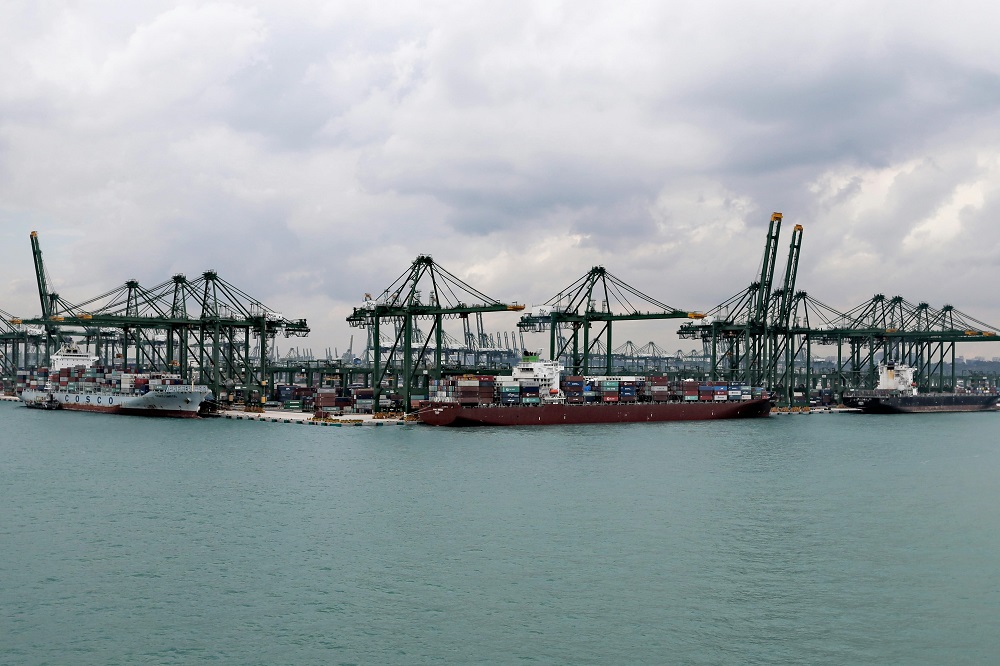
Top merchandise exporters worldwide in 2024: latest global trade snapshot
This StatRanker overview uses the latest World Trade Organization (WTO) and UN trade statistics for 2024 merchandise trade to show which economies dominate world exports. Values refer to trade in goods only, measured in current US dollars, and are presented as a comparative analytical snapshot rather than as a substitute for official national releases.
In 2024, world merchandise exports amounted to roughly US$ 24.4 trillion. China and the United States alone accounted for more than one-fifth of global exports, showing how concentrated trade flows remain at the top of the ranking.
The combined share of the top 10 exporters is close to 50% of world merchandise exports. The broader top-30 group already accounts for well over four-fifths of global exports, which shows how strongly trade is concentrated among a relatively small number of economies.
| Rank | Economy | Exports 2024 (US$ billion) |
|---|---|---|
| 1 | China | 3,577 |
| 2 | United States of America | 2,065 |
| 3 | Germany | 1,683 |
| 4 | Netherlands | 921 |
| 5 | Japan | 707 |
| 6 | Korea, Republic of | 684 |
| 7 | Italy | 674 |
| 8 | Hong Kong, China | 646 |
| 9 | France | 640 |
| 10 | Mexico | 617 |
| 11 | United Arab Emirates | 603 |
| 12 | Canada | 568 |
| 13 | Belgium | 536 |
| 14 | United Kingdom | 513 |
| 15 | Singapore | 506 |
| 16 | Chinese Taipei | 474 |
| 17 | Switzerland | 447 |
| 18 | India | 443 |
| 19 | Spain | 424 |
| 20 | Russian Federation | 417 |
| 21 | Viet Nam | 403 |
| 22 | Poland | 380 |
| 23 | Australia | 341 |
| 24 | Brazil | 337 |
| 25 | Malaysia | 330 |
| 26 | Saudi Arabia, Kingdom of | 305 |
| 27 | Thailand | 301 |
| 28 | Indonesia | 265 |
| 29 | Czech Republic | 263 |
| 30 | Türkiye | 262 |
Note: Merchandise exports, f.o.b., WTO–UNCTAD estimates for 2024. The full StatRanker dataset extends the ranking to the top 100 exporting economies, while only the top 30 are shown here for readability.
Bar chart: Top 10 exporters’ share of world merchandise exports
The chart shows the share of world merchandise exports accounted for by the top 10 exporting economies in 2024. Values are expressed as a percentage of the global export total and rounded to one decimal place.
The same export values can also be displayed as a world heatmap, where darker shading corresponds to higher export totals. The bar chart above makes the concentration of exports among the top economies easier to compare at a glance.
How to read the trade ranking: major economies, hubs, and emerging traders
Looking at exports and imports side by side shows how uneven the structure of world trade remains. Only a handful of very large economies sit at the center of global trade, while a second tier specializes in high-volume manufacturing, re-exports, or commodity-driven trade.
The United States, China, and Germany form the core of the system, each ranking near the top on both the export and import side. Around them sit trade hubs such as the Netherlands, Hong Kong, Singapore, and the United Arab Emirates, along with a rising group of emerging traders that includes Mexico, India, and Viet Nam.
Top merchandise importers and their role in global demand
On the import side, the United States remains the largest single buyer of goods worldwide, with merchandise imports above US$ 3.3 trillion in 2024. China and Germany follow, while the United Kingdom and the Netherlands remain major import markets in Europe. Several emerging economies — especially India, Mexico, Viet Nam, and Poland — now appear among the top importers, reflecting the spread of consumer markets and production networks beyond the traditional G7.
| Rank | Economy | Imports 2024 (US$ billion) |
|---|---|---|
| 1 | United States of America | 3,359 |
| 2 | China | 2,587 |
| 3 | Germany | 1,425 |
| 4 | United Kingdom | 816 |
| 5 | Netherlands | 812 |
| 6 | France | 750 |
| 7 | Japan | 743 |
| 8 | Hong Kong, China | 704 |
| 9 | India | 702 |
| 10 | Mexico | 644 |
| 11 | Korea, Republic of | 632 |
| 12 | Italy | 615 |
| 13 | Canada | 573 |
| 14 | United Arab Emirates | 539 |
| 15 | Belgium | 513 |
| 16 | Spain | 472 |
| 17 | Singapore | 459 |
| 18 | Chinese Taipei | 401 |
| 19 | Poland | 379 |
| 20 | Viet Nam | 379 |
| 21 | Switzerland | 369 |
| 22 | Türkiye | 344 |
| 23 | Thailand | 307 |
| 24 | Malaysia | 300 |
| 25 | Australia | 296 |
| 26 | Russian Federation | 295 |
| 27 | Brazil | 278 |
| 28 | Indonesia | 234 |
| 29 | Czech Republic | 232 |
| 30 | Saudi Arabia, Kingdom of | 232 |
Note: Merchandise imports, valued f.o.b., WTO–UNCTAD estimates for 2024. As with exports, the StatRanker dataset extends the ranking beyond the top 30 for full Top 100 coverage.
Scatter plot: economies that balance exports and imports
A simple way to visualize the structure of global trade is to compare each major economy's share of world exports with its share of world imports. Economies that lie close to a 45-degree line in such a scatter plot are relatively balanced traders, while those above the line import more than they export and those below export more than they import.
- The United States sits clearly above the line: it is the world’s largest importer and a major exporter, but runs a sizeable merchandise trade deficit.
- China and Germany lie somewhat below the line, reflecting persistent trade surpluses driven by manufacturing exports.
- Economies such as the Netherlands, Hong Kong, China and Mexico appear closer to balance, but their trade flows are strongly influenced by re-exports and integration into regional supply chains.
Each point represents an economy that appears near the top of both the export and import rankings in 2024. The horizontal axis shows its share of world merchandise exports and the vertical axis its share of world merchandise imports. Values are expressed in percent and rounded, so the scatter is best read as a pattern view rather than as a precise analytical model.
What the latest trade hierarchy means for policy and risk
The 2024 export and import rankings, used here as the latest comparable global snapshot, show a trade system that is both highly concentrated and gradually shifting. While traditional industrial powers in North America and Europe remain central, the rising weight of Asia and selected emerging economies is unmistakable.
For policymakers, investors, and businesses, the ranking of the top 100 exporters and importers is more than a simple league table. It is a compact summary of where demand originates, where supply is clustered, and which economies transmit shocks through global value chains.
Concentration at the top: systemic importance of a few economies
Because roughly half of world merchandise trade is handled by just ten economies, disruptions in a small number of markets can have outsized global effects. Trade tensions between the United States and China, energy-related shocks affecting major exporters such as Saudi Arabia, or supply-chain disruptions in Germany, Japan or the Netherlands quickly propagate to many other countries through input–output linkages.
At the same time, the full top-100 ranking, which extends well beyond the top 30 shown in the tables, reveals a long tail of medium-sized and smaller traders. For these economies, maintaining predictable access to the markets of the top importers and stable demand from the top exporters is essential for export-led growth strategies.
Shifting geography: Asia’s rise and the role of trade hubs
The rankings also highlight Asia's continued rise as both a production base and a consumer market. China, the Republic of Korea, Chinese Taipei, India and Viet Nam all sit inside the top-20 exporters, and most are also high-ranking importers. This reflects the deep integration of Asian economies into global value chains, particularly in electronics, machinery and textiles.
Trade hubs such as Hong Kong, Singapore, the Netherlands and the United Arab Emirates play a different role. Their positions are lifted by re-exports and entrepôt trade: goods that pass through major ports and logistics centers on their way between other economies. For analysts, it is often useful to distinguish between domestic exports and re-exports when assessing real production capacity.
Emerging and middle-income traders: diversification and opportunity
Mexico’s position in the top-10 for both exports and imports illustrates how regional integration agreements and near-shoring strategies can reshape trade patterns. Similar dynamics can be observed for Poland and Czechia inside the European production network, and for Brazil, Thailand, Malaysia and Indonesia in manufacturing and commodities.
For middle-income economies, moving up the trade ranking is often associated with diversification of the export basket, upgrading from raw materials to higher-value manufacturing, and deeper participation in regional and global value chains. The presence of several such economies in the top-30 shows that competitive pressure is no longer confined to a narrow group of OECD countries.
Key takeaways for trade and industrial policy
- High concentration of trade flows. Around half of global merchandise exports and imports are handled by just ten economies. Any serious global or regional trade strategy must start by analysing exposure to these markets.
- Asymmetric positions. Some economies are consistently export-surplus (for example, China and Germany), while others, like the United States and the United Kingdom, have structurally higher import shares. This shapes debates on trade balances, tariffs and industrial policy.
- Growing importance of emerging Asia and Latin America. The rise of India, Viet Nam, Mexico, Brazil, and others in both exporter and importer rankings signals new opportunities, but also new competitors, for manufacturers and service providers worldwide.
- Role of logistics hubs. Economies with large ports and trans-shipment capacity can amplify trade flows despite a modest domestic market size. For supply-chain risk assessments, the resilience of these nodes (ports, customs, infrastructure) is as important as that of the mega-traders.
- Need for diversification. For smaller economies, over-reliance on a narrow set of top importers or exporters can create vulnerability to policy shifts, tariffs or geopolitical shocks. Diversifying partners within the broader top-100 list is a common risk-mitigation strategy.
Primary data sources and technical notes
The rankings and charts in this article are based on harmonized merchandise trade data from the following official and institutional sources. Values may differ slightly from national statistics due to methodological adjustments, valuation (f.o.b. vs c.i.f.) and revision cycles.
-
WTO Global Trade Outlook and Statistics 2025 – Appendix Table 1.
Leading exporters and importers in world merchandise trade, 2024 (values in US$ billion and shares of
world trade), compiled jointly by the WTO and UNCTAD.
https://www.wto.org/english/res_e/reser_e/wts2025_e.htm -
WTO–UNCTAD Statistics (WTO Stats Portal).
Online database with detailed merchandise trade series by country, product group, and partner, used to validate aggregate export and import totals.
https://stats.wto.org/ -
UN Comtrade Database.
Official UN database of detailed international trade statistics at the HS product level, used to extend
the rankings and to construct country-level trade shares beyond the top-30 group.
https://comtradeplus.un.org/ -
World Bank World Development Indicators (WDI) and WITS.
Series on merchandise exports and imports (current US$) provide cross-checks on global totals and
long-run time series for individual economies.
https://data.worldbank.org/ -
IMF Direction of Trade Statistics (DOTS).
Bilateral trade data by partner and region, used for consistency checks on the geographic distribution
of exports and imports in the top-100 ranking.
https://data.imf.org/
All figures in the tables and charts are rounded and harmonized for comparability. They should be interpreted as analytical estimates rather than as a substitute for official national trade statistics.
Related rankings
Closely related StatRanker pages selected by topic. If no strong match exists, fewer links are shown instead of unrelated recommendations.