
US States by Life Expectancy 2026: Latest Official
Public health · Demographics · Life expectancy Latest CDC/NCHS State Life Tables: 2022 Data Snapshot Hawaii tops all states at
StatRanker.org is a data-driven research publication that transforms official economic, demographic and social statistics into clear rankings, structured comparisons and concise analytical reports.
Our research is based primarily on open data published by authoritative institutions, including the World Bank, International Monetary Fund (IMF), United Nations agencies, national statistical offices, government departments, regulators and other recognized public-data providers.
For each ranking, we define a specific metric, verify the underlying data, document the applicable year or statistical snapshot, and compare only observations that are sufficiently consistent in definition, unit and scope. When multiple sources are required, the dataset is compiled according to a documented source hierarchy, and differences in methodology, reference periods, geographic coverage or measurement standards are disclosed where they affect comparability.
StatRanker.org covers a broad range of economic and social indicators, including economic growth, inflation, public debt, international trade, population, income, labor markets, health expenditure and other measurable dimensions of national and regional performance. Particular attention is given to the United States, including state, county, metropolitan and other domestic rankings as well as comparisons between the U.S. and major global economies.
Our rankings are based on documented source values or transparently disclosed calculations. Where relevant, published values are distinguished from calculated values, official forecasts, modeled projections and other observed industry data. Calculated values are derived from identified source inputs using a disclosed formula, while forecasts and projections are clearly separated from historical or currently observed statistics.
Each research ranking documents the source institution, applicable source year or snapshot, unit of measurement, ranking direction and methodology used for comparison. Where a value has been calculated rather than directly published, the underlying inputs, formula and assumptions are documented. Where a projection is used, the base value, growth or trend parameter, formula and assumptions are identified separately.
Tables and charts on StatRanker.org are research visualizations created from the documented underlying data. Rankings are generally determined from the underlying numeric values rather than rounded display values. Analytical commentary is intended to describe patterns visible in the data and does not present unsupported correlations as evidence of causation.
The publication is designed for researchers, journalists, students, analysts, educators, businesses and decision-makers who need an efficient and transparent way to compare countries, regions, U.S. states, counties, metropolitan areas and other statistical entities using verifiable data.
StatRanker.org also maintains a correction-oriented editorial approach. When an official source revises a dataset, releases a more recent comparable observation or a material error is identified in a published ranking, the relevant page may be reviewed and updated to reflect the best available evidence.
StatRanker.org may be cited in articles, reports, presentations, academic materials and other editorial or educational publications. Original StatRanker.org analysis, tables and visualizations may be reproduced for legitimate editorial, research or educational purposes provided that they are not materially or misleadingly altered, clear attribution is included, and any applicable licensing or attribution requirements of the underlying data providers are also respected.
A recommended attribution is:
“Source: StatRanker.org, based on official data.”
For academic, regulatory, financial, legal or other high-stakes uses, readers should also review and, where appropriate, cite the original statistical institution and dataset identified on the relevant StatRanker.org page.
StatRanker.org does not replace the World Bank, IMF, United Nations, national statistical offices or other primary data authorities. Its role is to research, verify, organize, document and present their data in a format that makes statistical comparisons easier to understand, evaluate and use.
info@statranker.org
Explore global life expectancy data on StatRanker.org. Analyze trends across countries and regions, examining factors like healthcare access, lifestyle, socioeconomic conditions, and public health policies. Gain insights into disparities and improvements in longevity worldwide.
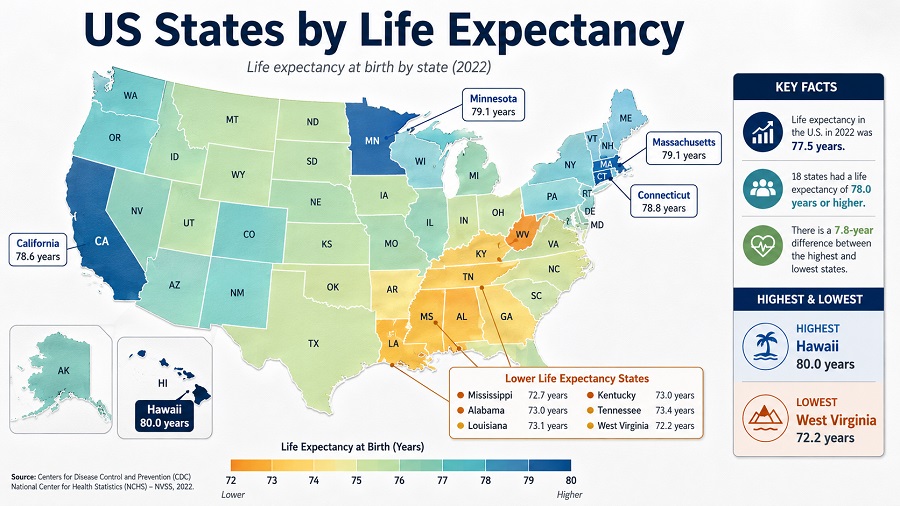
Public health · Demographics · Life expectancy Latest CDC/NCHS State Life Tables: 2022 Data Snapshot Hawaii tops all states at

Public health · SDG 3.4.2 · 2026 reference snapshot Suicide Mortality Rate by Country: Top 100 Based on WHO 2021

Population · Life Expectancy · Updated 20 April 2026 Life expectancy in 2025: who lives longest — and how far

Health · Demographics · Gender & Longevity Gender Gap in Life Expectancy: Why Women Live Longer in 2025 Women outlive

Longevity · Healthy aging · Evidence update Blue Zones still matter, but the simple story needs an update Blue Zones

Life expectancy · WHO · 2019–2021 Global Life Expectancy Fell Sharply During the COVID-19 Pandemic WHO estimates show a clear

Health systems · access · coverage · longevity How healthcare access shapes life expectancy in the United States Healthcare access
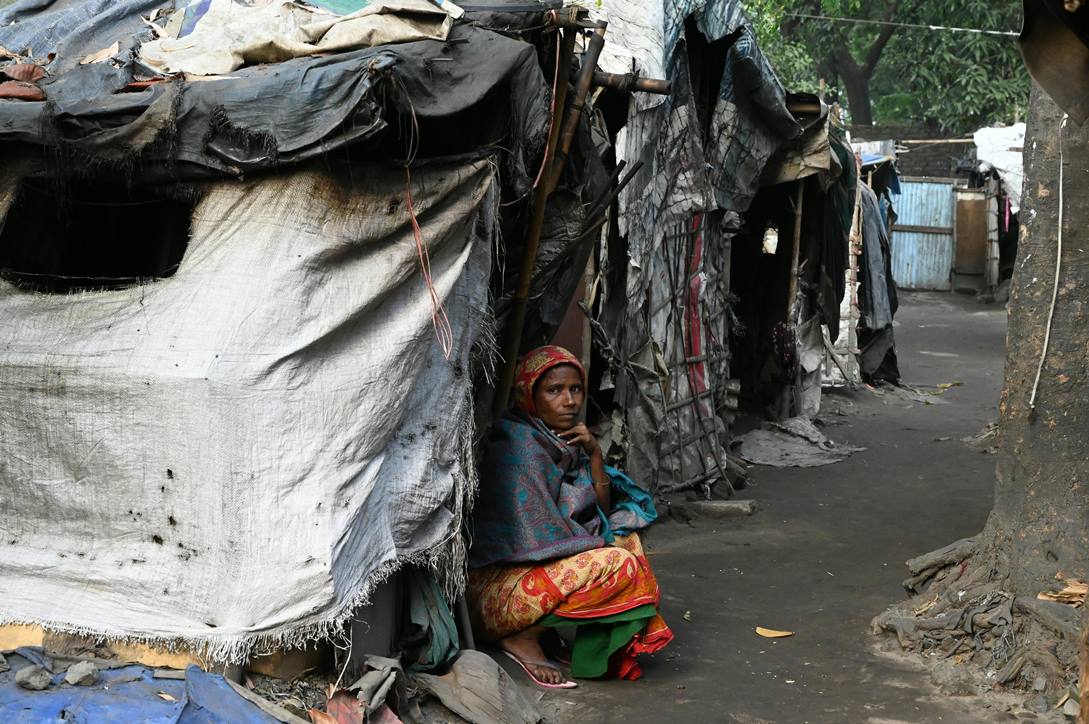
Health · Demographics · Inequality Updated May 2025 · Data: CDC NCHS 2023, U.S. Census Bureau, KFF · 12 min

Updated: May 2026 Lifestyle Habits That Shape Lifespan and Healthy Aging Longevity depends on genetics, medical care, environment and daily

Population health · 2026 snapshot · comparable 2024 data The U.S. Still Trails Comparable Wealthy Countries in Life Expectancy In

Site managed by Oleksandr Isaienko (team lead; private entrepreneur) since 28 August 2025, registration code 133276738020, Ukraine.
Contact: info@statranker.org.
Technical infrastructure (hosting/server resources) is located in the United States; a CDN may be used to improve performance with edge locations in multiple countries.