

Top 100 Countries by Poverty Rate (%), 2025
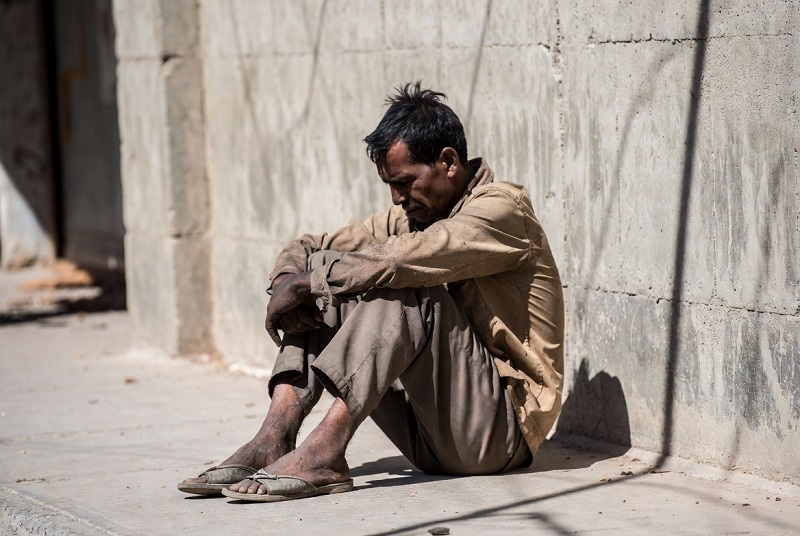
Poverty Rate Ranking: What the Latest International Data Shows
Updated: April 27, 2026 · Data accessed: April 27, 2026
This ranking compares poverty headcount rates across countries using the World Bank's internationally comparable threshold from the Poverty & Inequality Platform (PIP). Because poverty is measured through household surveys, the values shown here are the latest available year for each country. The edition is labelled 2025 to reflect the current publication cycle, not because every country has a 2025 survey.
What “poverty rate” measures (and what it doesn’t)
In everyday language, “poverty rate” can mean several different things. In official statistics it usually refers to a headcount ratio: the share of people whose income or consumption falls below a defined poverty line.
For cross-country comparison, we use an international poverty line expressed in PPP-adjusted international dollars. This helps normalize differences in price levels across countries. The World Bank periodically updates the global poverty line when new PPP price benchmarks are released. In the 2025 update aligned to 2021 PPPs, the headline international line moved from the earlier $2.15/day (2017 PPP) to $3.00/day (2021 PPP). This edition uses the $3.00/day line.
Latest data caveats you should read before comparing countries
Poverty is not measured continuously: most countries run household surveys every few years, and some do so irregularly. As a result, a 2025 edition combines the latest available survey years rather than one common survey year. A country can move up or down in the ranking when a newer survey becomes available.
The indicator shown here is sourced from the World Bank's Poverty & Inequality Platform (PIP), which harmonizes survey microdata where possible, but still inherits limitations from the underlying household surveys (sampling, recall errors, income vs consumption definitions, and differences in price deflators).
Practical reading: treat small differences (for example, 0.5–1.0 percentage points) as approximate. The most useful signals are large gaps, long-standing clusters, and countries with clearly older survey years.
Top 10 countries by poverty rate
The highest-ranked countries have poverty headcount rates above 65.0% under the international poverty line. The “Latest year” column is essential because the newest available survey year differs by country.
| Rank | Country | Region | Poverty rate (%) | Latest year |
|---|---|---|---|---|
| 1 | Congo, Dem. Rep. | Sub-Saharan Africa | 85.3 | 2020 |
| 2 | Mozambique | Sub-Saharan Africa | 81.4 | 2022 |
| 3 | South Sudan | Sub-Saharan Africa | 76.5 | 2016 |
| 4 | Malawi | Sub-Saharan Africa | 75.4 | 2019 |
| 5 | Burundi | Sub-Saharan Africa | 74.2 | 2013 |
| 6 | Madagascar | Sub-Saharan Africa | 74.1 | 2022 |
| 7 | Niger | Sub-Saharan Africa | 72.2 | 2014 |
| 8 | Central African Republic | Sub-Saharan Africa | 70.1 | 2021 |
| 9 | Rwanda | Sub-Saharan Africa | 67.4 | 2016 |
| 10 | Lesotho | Sub-Saharan Africa | 65.0 | 2017 |
- All Top 10 entries are in Sub-Saharan Africa, where high poverty rates often reflect overlapping pressures from low incomes, rural vulnerability, conflict exposure, weak infrastructure and limited fiscal space.
- The range inside the Top 10 is wide, from about 85.3% down to 65.0%.
- Some top entries have older survey years, so the ranking is better read as a latest-available comparison than as a synchronized 2025 snapshot.
Top 20 countries by poverty rate
Latest available survey year is shown in parentheses.
Chart data table (Top 20)
| Rank | Country | Poverty rate (%) | Latest year |
|---|---|---|---|
| 1 | Congo, Dem. Rep. | 85.3 | 2020 |
| 2 | Mozambique | 81.4 | 2022 |
| 3 | South Sudan | 76.5 | 2016 |
| 4 | Malawi | 75.4 | 2019 |
| 5 | Burundi | 74.2 | 2013 |
| 6 | Madagascar | 74.1 | 2022 |
| 7 | Niger | 72.2 | 2014 |
| 8 | Central African Republic | 70.1 | 2021 |
| 9 | Rwanda | 67.4 | 2016 |
| 10 | Lesotho | 65.0 | 2017 |
| 11 | Zambia | 64.9 | 2022 |
| 12 | Liberia | 64.1 | 2016 |
| 13 | Sierra Leone | 62.7 | 2018 |
| 14 | Guinea | 62.4 | 2018 |
| 15 | Mali | 62.3 | 2018 |
| 16 | Guinea-Bissau | 61.3 | 2018 |
| 17 | Gambia, The | 61.2 | 2020 |
| 18 | Uganda | 60.6 | 2019 |
| 19 | Togo | 59.6 | 2018 |
| 20 | Benin | 58.9 | 2021 |
Full Top 100 ranking table
Sorted by highest poverty headcount rate first. “Latest year” shows the newest non-empty survey year available for the chosen indicator. Each country appears once, using its latest available observation.
| Rank | Country | Region | Poverty rate (%) | Latest year |
|---|---|---|---|---|
| 1 | Congo, Dem. Rep. | Sub-Saharan Africa | 85.3 | 2020 |
| 2 | Mozambique | Sub-Saharan Africa | 81.4 | 2022 |
| 3 | South Sudan | Sub-Saharan Africa | 76.5 | 2016 |
| 4 | Malawi | Sub-Saharan Africa | 75.4 | 2019 |
| 5 | Burundi | Sub-Saharan Africa | 74.2 | 2013 |
| 6 | Madagascar | Sub-Saharan Africa | 74.1 | 2022 |
| 7 | Niger | Sub-Saharan Africa | 72.2 | 2014 |
| 8 | Central African Republic | Sub-Saharan Africa | 70.1 | 2021 |
| 9 | Rwanda | Sub-Saharan Africa | 67.4 | 2016 |
| 10 | Lesotho | Sub-Saharan Africa | 65.0 | 2017 |
| 11 | Zambia | Sub-Saharan Africa | 64.9 | 2022 |
| 12 | Liberia | Sub-Saharan Africa | 64.1 | 2016 |
| 13 | Sierra Leone | Sub-Saharan Africa | 62.7 | 2018 |
| 14 | Guinea | Sub-Saharan Africa | 62.4 | 2018 |
| 15 | Mali | Sub-Saharan Africa | 62.3 | 2018 |
| 16 | Guinea-Bissau | Sub-Saharan Africa | 61.3 | 2018 |
| 17 | Gambia, The | Sub-Saharan Africa | 61.2 | 2020 |
| 18 | Uganda | Sub-Saharan Africa | 60.6 | 2019 |
| 19 | Togo | Sub-Saharan Africa | 59.6 | 2018 |
| 20 | Benin | Sub-Saharan Africa | 58.9 | 2021 |
| 21 | Guatemala | Latin America & Caribbean | 57.2 | 2014 |
| 22 | Nigeria | Sub-Saharan Africa | 57.0 | 2018 |
| 23 | Haiti | Latin America & Caribbean | 56.6 | 2012 |
| 24 | Tanzania | Sub-Saharan Africa | 56.2 | 2018 |
| 25 | Angola | Sub-Saharan Africa | 55.4 | 2018 |
| 26 | Ethiopia | Sub-Saharan Africa | 55.2 | 2015 |
| 27 | Chad | Sub-Saharan Africa | 55.0 | 2022 |
| 28 | Zimbabwe | Sub-Saharan Africa | 54.8 | 2019 |
| 29 | Congo, Rep. | Sub-Saharan Africa | 54.6 | 2011 |
| 30 | Somalia | Sub-Saharan Africa | 54.0 | 2017 |
| 31 | Tajikistan | Europe & Central Asia | 53.5 | 2022 |
| 32 | Eswatini | Sub-Saharan Africa | 53.3 | 2016 |
| 33 | Yemen, Rep. | Middle East, North Africa, Afghanistan & Pakistan | 53.1 | 2014 |
| 34 | Papua New Guinea | East Asia & Pacific | 52.7 | 2016 |
| 35 | Burkina Faso | Sub-Saharan Africa | 51.9 | 2018 |
| 36 | Cameroon | Sub-Saharan Africa | 51.7 | 2014 |
| 37 | Laos | East Asia & Pacific | 51.2 | 2018 |
| 38 | Afghanistan | Middle East, North Africa, Afghanistan & Pakistan | 50.6 | 2016 |
| 39 | South Africa | Sub-Saharan Africa | 50.2 | 2022 |
| 40 | Cambodia | East Asia & Pacific | 49.6 | 2021 |
| 41 | Cote d'Ivoire | Sub-Saharan Africa | 49.4 | 2018 |
| 42 | Honduras | Latin America & Caribbean | 49.2 | 2023 |
| 43 | Myanmar | East Asia & Pacific | 49.1 | 2017 |
| 44 | Eritrea | Sub-Saharan Africa | 48.9 | 1992 |
| 45 | Nicaragua | Latin America & Caribbean | 47.7 | 2014 |
| 46 | Kenya | Sub-Saharan Africa | 47.6 | 2022 |
| 47 | Nepal | South Asia | 47.4 | 2022 |
| 48 | El Salvador | Latin America & Caribbean | 46.8 | 2019 |
| 49 | Mauritania | Sub-Saharan Africa | 46.6 | 2014 |
| 50 | Georgia | Europe & Central Asia | 46.2 | 2023 |
| 51 | Philippines | East Asia & Pacific | 46.1 | 2021 |
| 52 | Bangladesh | South Asia | 45.4 | 2022 |
| 53 | Ghana | Sub-Saharan Africa | 45.2 | 2016 |
| 54 | Namibia | Sub-Saharan Africa | 44.8 | 2015 |
| 55 | Pakistan | Middle East, North Africa, Afghanistan & Pakistan | 44.7 | 2018 |
| 56 | Bolivia | Latin America & Caribbean | 44.3 | 2022 |
| 57 | Senegal | Sub-Saharan Africa | 44.2 | 2018 |
| 58 | Sudan | Sub-Saharan Africa | 43.9 | 2014 |
| 59 | Cabo Verde | Sub-Saharan Africa | 43.7 | 2015 |
| 60 | India | South Asia | 43.5 | 2022 |
| 61 | Kiribati | East Asia & Pacific | 43.3 | 2006 |
| 62 | Djibouti | Middle East, North Africa, Afghanistan & Pakistan | 42.9 | 2017 |
| 63 | Micronesia, Fed. Sts. | East Asia & Pacific | 42.8 | 2013 |
| 64 | Albania | Europe & Central Asia | 42.7 | 2022 |
| 65 | Armenia | Europe & Central Asia | 42.5 | 2022 |
| 66 | Kosovo | Europe & Central Asia | 42.3 | 2021 |
| 67 | Tonga | East Asia & Pacific | 42.2 | 2015 |
| 68 | Equatorial Guinea | Sub-Saharan Africa | 41.7 | 2006 |
| 69 | Moldova | Europe & Central Asia | 41.6 | 2022 |
| 70 | Timor-Leste | East Asia & Pacific | 41.4 | 2014 |
| 71 | Fiji | East Asia & Pacific | 41.3 | 2019 |
| 72 | Comoros | Sub-Saharan Africa | 41.1 | 2013 |
| 73 | Dominican Republic | Latin America & Caribbean | 40.9 | 2022 |
| 74 | Samoa | East Asia & Pacific | 40.4 | 2013 |
| 75 | Botswana | Sub-Saharan Africa | 39.9 | 2015 |
| 76 | Sao Tome and Principe | Sub-Saharan Africa | 39.8 | 2017 |
| 77 | Mongolia | East Asia & Pacific | 39.7 | 2018 |
| 78 | Indonesia | East Asia & Pacific | 39.5 | 2023 |
| 79 | Gabon | Sub-Saharan Africa | 39.2 | 2017 |
| 80 | Nauru | East Asia & Pacific | 39.1 | 2012 |
| 81 | Vanuatu | East Asia & Pacific | 39.0 | 2019 |
| 82 | Egypt, Arab Rep. | Middle East, North Africa, Afghanistan & Pakistan | 38.7 | 2018 |
| 83 | Morocco | Middle East, North Africa, Afghanistan & Pakistan | 38.3 | 2019 |
| 84 | Ukraine | Europe & Central Asia | 38.0 | 2021 |
| 85 | Tunisia | Middle East, North Africa, Afghanistan & Pakistan | 37.8 | 2021 |
| 86 | Sri Lanka | South Asia | 37.4 | 2022 |
| 87 | Iran, Islamic Rep. | Middle East, North Africa, Afghanistan & Pakistan | 37.2 | 2019 |
| 88 | Peru | Latin America & Caribbean | 36.8 | 2023 |
| 89 | Kyrgyz Republic | Europe & Central Asia | 36.4 | 2023 |
| 90 | North Macedonia | Europe & Central Asia | 36.3 | 2021 |
| 91 | Jordan | Middle East, North Africa, Afghanistan & Pakistan | 36.0 | 2017 |
| 92 | Argentina | Latin America & Caribbean | 35.9 | 2023 |
| 93 | Bhutan | South Asia | 35.3 | 2022 |
| 94 | Colombia | Latin America & Caribbean | 35.2 | 2023 |
| 95 | Azerbaijan | Europe & Central Asia | 34.8 | 2023 |
| 96 | Iraq | Middle East, North Africa, Afghanistan & Pakistan | 34.4 | 2012 |
| 97 | Algeria | Middle East, North Africa, Afghanistan & Pakistan | 34.0 | 2011 |
| 98 | Turkey | Europe & Central Asia | 33.9 | 2022 |
| 99 | Paraguay | Latin America & Caribbean | 33.8 | 2023 |
| 100 | Ecuador | Latin America & Caribbean | 33.7 | 2023 |
For cleaner comparisons, check the region and the latest year first. Countries are not always observed in the same survey year, and very old rows should be treated as historical reference points rather than current poverty conditions.
Regional patterns (grouped blocks)
Regional differences are shown as descriptive summaries, not as a separate ranking. The cards use the same country-level observations as the table and group them by region. Medians reduce the influence of very high or very low outliers compared with averages.
Median poverty rate by region
The chart uses regional medians for countries with available data. Long region names are wrapped for readability.
Chart data table (regional summary)
| Region | Countries | Median (%) | Mean (%) | Share >20% |
|---|---|---|---|---|
| Sub-Saharan Africa | 39 | 38.8 | 37.7 | 66.7% |
| East Asia & Pacific | 23 | 5.0 | 17.5 | 39.1% |
| Latin America & Caribbean | 24 | 2.8 | 9.8 | 20.8% |
| South Asia | 8 | 2.5 | 15.7 | 50.0% |
| Middle East, North Africa, Afghanistan & Pakistan | 17 | 1.4 | 13.4 | 23.5% |
| North America | 2 | 0.7 | 0.7 | 0.0% |
| Europe & Central Asia | 58 | 0.4 | 5.7 | 13.8% |
Why poverty rates differ across countries
Poverty rates vary for structural reasons such as productivity, demographics and geography, as well as short-run shocks such as inflation, job losses and conflict. The headline poverty rate is a starting point, not a full diagnosis:
- Inflation and food prices: When food inflation spikes, poverty can rise quickly because poor households spend a larger share of their budget on essentials. If a survey year coincides with a price shock, the poverty rate may look worse than in calmer periods.
- Jobs and earnings: Formal employment and stable self-employment reduce poverty through predictable cash flow. In countries where most workers are informal, shocks translate faster into poverty.
- Social transfers: Cash transfers, pensions, and targeted subsidies can reduce poverty headcounts, but only if coverage, targeting, and payment reliability are strong.
- Rural productivity: In many low-income settings, agriculture drives the bottom of the distribution. Drought, conflict, and input price shocks can push large groups under the poverty line.
- Fragility and conflict: Displacement, disrupted markets, and weakened institutions make poverty persistent and harder to measure regularly.
How to use this ranking correctly
A single poverty headcount number needs context:
- Compare like with like: use region and income group as the first filter; global comparisons are meaningful, but the policy levers differ widely.
- Check the survey year: this edition mixes survey years from very old observations to recent surveys. A country with older data may have changed materially since the last survey, so the year column should be read before comparing ranks.
- Use national poverty lines for domestic policy: national lines (World Bank indicator SI.POV.NAHC) reflect local living costs and policy debates, but they should not be used for a strict country-to-country ranking.
- Look beyond headcount: poverty gaps, inequality (Gini), higher international poverty lines and multidimensional poverty provide a fuller picture of deprivation severity and constraints.
International line, national line, and multidimensional poverty
The World Bank international poverty line is built for comparability. National poverty lines are built for domestic relevance. Both matter — but for different questions.
- International line (this ranking): best for cross-country comparisons and broad regional patterns.
- National poverty line: best for domestic policy targets, social protection design, and accountability to local standards of living.
- UNDP Multidimensional Poverty Index (MPI): complements money-metric poverty by measuring overlapping deprivations in health, education, and living standards. In countries where income is volatile or informal, MPI can add stability and detail.
For middle-income economies, the $3.00/day line can understate the living-standard pressures captured by national poverty lines or higher international lines. Use it for comparability, then add local poverty thresholds and multidimensional indicators for domestic interpretation.
Methodology & sources
Indicator: World Bank / Poverty & Inequality Platform (PIP), poverty headcount ratio below the international poverty line (World Development Indicators code: SI.POV.DDAY). Values are expressed as % of population. Data accessed April 27, 2026.
Ranking logic: For each country, the table uses the latest non-empty year available in the World Bank indicator archive. Countries are sorted from the highest poverty rate to the lowest, which is why the “Latest year” differs across rows.
Edition label (2025): “2025” refers to the publication cycle and data access date, not a claim that every country has a synchronized 2025 survey.
Official indicator page with definition and download options. Source: World Bank PIP.
Primary platform for harmonized poverty and inequality estimates based on household surveys.
Explains the June 2025 update of international poverty lines aligned with 2021 PPP benchmarks.
National poverty headcount ratio — useful for domestic policy, not strict cross-country ranking.
Complementary poverty measure based on overlapping deprivations (health, education, living standards).