Top 20 Economies by Fertilizer Use per Hectare: 2026 Snapshot (2023 Data)
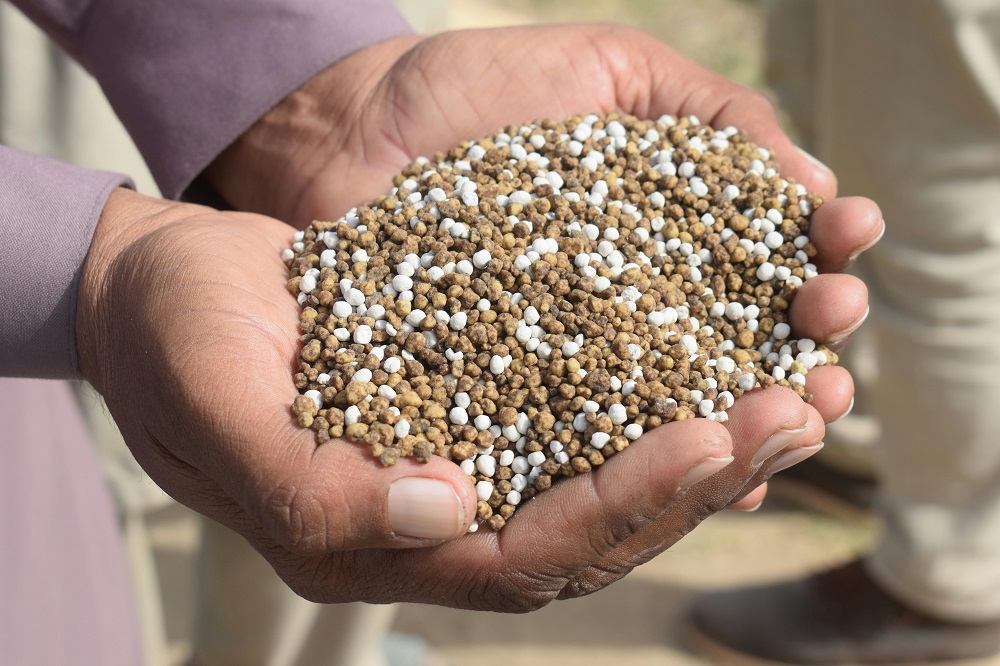
Top economies by fertilizer consumption per hectare of arable land
Updated: April 29, 2026 · Data year: 2023 · Source basis: FAO via World Bank WDI
Fertilizer consumption per hectare of arable land measures how intensively mineral nutrients are applied to crop land. The indicator covers nitrogen, phosphate and potash nutrients and comes from the World Bank WDI series AG.CON.FERT.ZS, sourced from FAO. It is useful because it reveals where fertilizer use is structurally concentrated rather than merely large in absolute tonnage.
This ranking uses 2023, the latest full-year comparable data year available in the FAO / World Bank WDI series. The 2023 dataset reports an average of about 153.7 kg per hectare across 187 countries, while the top-ranked economy stood near 2,926 kg per hectare. The spread shows how uneven fertilizer intensity remains across agricultural systems.
Values below are rounded from the 2023 comparable series. The 2025 framing reflects the current review date, not the existence of harmonised 2025 country data for this indicator. Because the denominator is arable land, the metric should not be read as a direct field-level fertilizer rate for every crop type.
Top 10 economies in the current FAO / WDI ranking
The top 10 is highly concentrated and agronomically specific. Malaysia is the clear outlier, while Kuwait, New Zealand, Costa Rica and Ireland stand well above the rest of the field. The upper tier is shaped by plantation systems, dairy grasslands, irrigated production and small arable-land denominators.
Malaysia is the global outlier in this dataset. The value reflects fertilizer nutrients divided by arable land, so plantation-heavy systems can appear especially intense when permanent-crop areas are not included in the denominator.
Kuwait’s position reflects a very small arable-land base and highly managed irrigated production. The denominator effect is central to the high per-hectare value.
New Zealand is the highest-ranked large advanced agricultural economy in this ranking. Intensive grassland farming keeps fertilizer intensity far above most OECD peers.
Banana and pineapple export systems help keep Costa Rica among the most fertilizer-intensive economies in the world.
Ireland is Europe’s standout high-intensity case, reflecting grass-based livestock systems and dense nutrient cycling.
The Faroe Islands rank highly because even modest fertilizer volumes translate into a high per-hectare reading on a tiny agricultural base.
Seychelles is another small-island case where limited arable land pushes the intensity metric high despite a very small absolute footprint.
Egypt’s irrigation-based, multi-crop Nile system keeps fertilizer use high by global standards even though it is below the small-economy outliers above it.
Hong Kong SAR ranks high in intensity terms, although its value is well below the leading outliers above it.
Vietnam closes the top 10, reflecting very intensive cropping patterns rather than a tiny-denominator island effect.
Table 1. Top 10 economies by fertilizer use per hectare
| Rank | Economy | kg/ha | System profile |
|---|---|---|---|
| 1 | Malaysia | 2,926.4 | Plantation agriculture |
| 2 | Kuwait | 2,008.5 | Desert horticulture |
| 3 | New Zealand | 1,291.1 | Dairy and pastoral systems |
| 4 | Costa Rica | 1,024.6 | Export plantations |
| 5 | Ireland | 895.9 | Dairy grassland |
| 6 | Faroe Islands | 614.3 | Small-island agriculture |
| 7 | Seychelles | 573.3 | Small-island horticulture |
| 8 | Egypt | 532.8 | Irrigated Nile agriculture |
| 9 | Hong Kong SAR | 484.0 | Small-area food production |
| 10 | Vietnam | 420.0 | Dense smallholder cropping |
Updated: April 29, 2026. Latest full-year comparable values in the current FAO / World Bank WDI series. Published 2023 average across 187 countries: about 153.7 kg/ha.
Full ranking: top 20 economies by fertilizer use per hectare
The top 20 combines plantation economies, irrigated systems, small arable-land bases and intensive Asian cropping. Vietnam, Bangladesh, Colombia, Brazil and Uzbekistan all appear in the upper range. The ranking is useful as an intensity table, but it should not be interpreted as a direct environmental-damage league table or as total fertilizer tonnage.
Table 2. Top 20 economies by fertilizer use per hectare
The table is static and fully visible in the page source. The Index column equals the economy value divided by the 2023 world average, where world average = 100.
| Rank | Economy | kg/ha | Index |
|---|---|---|---|
| 1 | Malaysia | 2,926.4 | 1,904.0 |
| 2 | Kuwait | 2,008.5 | 1,306.8 |
| 3 | New Zealand | 1,291.1 | 840.0 |
| 4 | Costa Rica | 1,024.6 | 666.6 |
| 5 | Ireland | 895.9 | 582.9 |
| 6 | Faroe Islands | 614.3 | 399.7 |
| 7 | Seychelles | 573.3 | 373.0 |
| 8 | Egypt | 532.8 | 346.6 |
| 9 | Hong Kong SAR | 484.0 | 314.9 |
| 10 | Vietnam | 420.0 | 273.2 |
| 11 | China | 394.0 | 256.4 |
| 12 | Bangladesh | 391.9 | 255.0 |
| 13 | Colombia | 372.9 | 242.6 |
| 14 | Turkmenistan | 347.3 | 226.0 |
| 15 | Brazil | 344.1 | 223.9 |
| 16 | Belize | 337.5 | 219.6 |
| 17 | United Arab Emirates | 326.9 | 212.7 |
| 18 | Indonesia | 311.1 | 202.4 |
| 19 | Uzbekistan | 303.0 | 197.2 |
| 20 | Oman | 301.5 | 196.1 |
Units = kg of plant nutrients per hectare of arable land. Index view sets the 2023 world average equal to 100. Updated: April 29, 2026.
Chart 1. Fertilizer use per hectare — top 20 economies
The bar chart shows a steep distribution: Malaysia and Kuwait are in a category of their own, New Zealand and Costa Rica form a second tier, and the rest of the top 20 is much more compressed between roughly 300 and 900 kg/ha.
Latest full-year comparable values from the 2023 FAO / World Bank WDI series. Data reviewed on April 29, 2026.
Methodology
Core indicator
The ranking uses World Bank WDI indicator AG.CON.FERT.ZS, sourced from FAO. It measures fertilizer consumption in kilograms of plant nutrients per hectare of arable land. The nutrient total includes nitrogen, phosphate and potash compounds, while traditional manures and compost are excluded. The indicator is based on plant nutrients rather than gross product weight.
All ranking values, index values and chart bars are embedded directly in this HTML block. The page does not load a remote dataset, external JSON file, external spreadsheet, API feed, or charting library.
Why 2023 is used as the current 2025 snapshot
Internationally comparable country data for this indicator are not yet available for 2025. The latest full-year harmonised release in the FAO / World Bank series is 2023, so the ranking uses 2023 as the comparable cross-country benchmark rather than mixing partial forward estimates with historical values. The data review date is April 29, 2026.
Denominator effects matter
The denominator is arable land, not all cropland and not agricultural land as a whole. Arable land includes temporary crops, temporary meadows, market or kitchen gardens, and temporarily fallow land, while permanent crop land is not the denominator. That makes tiny-arable-area economies especially volatile in per-hectare terms and can also affect interpretation in plantation-heavy systems. Kuwait, the Faroe Islands and Seychelles therefore rank high because even moderate absolute fertilizer volumes translate into high intensity when spread over a very small arable base.
How to read unusual cases
Some economies rank high because of structurally intensive agricultural systems, while others do so mainly because the arable-land denominator is very small. That is why the top of the table combines plantation exporters, irrigated desert systems, dairy grassland economies and tiny-island cases in the same ranking.
- This ranking measures intensity, not total fertilizer tonnage.
- High values can reflect plantation crops, irrigated systems, dairy grassland, or very small arable areas.
- The indicator does not show nutrient-use efficiency, yield response, nutrient surplus, runoff, emissions or environmental damage directly.
Insights
1. The ranking is now more agronomically coherent
The top 20 is anchored in identifiable agricultural systems. Malaysia is the global outlier, while the upper table combines plantation agriculture, intensive dairy, irrigated crop production, small-island denominator effects and dense Asian cropping systems.
2. Small-area economies still matter, but not in the same way
Kuwait, the Faroe Islands and Seychelles rank highly because the denominator is small. Their position shows how extreme per-hectare ratios can emerge even without globally significant fertilizer volumes. That makes the ranking analytically useful, but it also means that high placement does not automatically imply a large global nutrient footprint.
3. The upper-middle of the ranking is heavily Asian and tropical
Vietnam, China, Bangladesh, Indonesia and Uzbekistan now sit in the top 20 together with Colombia, Brazil and Belize. This mix points to dense cropping, plantation agriculture and intensive tropical production as the main structural drivers of high fertilizer use per hectare outside the classic OECD dairy cases.
4. Europe appears through specific high-intensity systems
Ireland is one of the clearest European outliers, while the Faroe Islands appear because of scale effects. The broader pattern is mixed rather than Europe-dominated, with Asia, the Americas, Oceania, MENA and Africa all represented in the top 20.
5. The ranking should not be read as an efficiency league table
High fertilizer use per hectare can be associated with high yields, but it can also reflect nutrient losses, heavy irrigation dependence, crop specialization, reporting differences or poor nutrient-use efficiency. The indicator is best read as a pressure and intensity signal, not as a clean measure of agronomic performance.
What this means for the reader
For policy readers:
- High rank does not automatically mean bad policy, but it does point to a system where nutrient management matters disproportionately.
- Small-area economies need to be interpreted carefully because denominator effects can dominate the picture.
- Large agricultural exporters in the top 20 deserve more attention than micro-economies because their environmental footprint is much larger.
For ESG and supply-chain readers:
- Malaysia, Costa Rica, Colombia and Brazil matter because fertilizer intensity intersects with export crops and water-quality risk.
- Ireland and New Zealand matter because nutrient intensity in livestock systems is increasingly tied to climate and water regulation.
For students and analysts:
- Use this ranking together with yield, nitrogen surplus and water-quality data.
- Do not compare tiny-arable-area economies too literally with large diversified agricultural countries.
FAQ
Sources
Data reviewed: April 29, 2026. Ranking values use the 2023 FAO / World Bank WDI-based series, with methodological definitions checked against World Bank, FAO and Our World in Data documentation.
All figures above follow the comparable 2023 ordering in the WDI / FAO-based ranking. Updated: April 29, 2026.