Top 100 Countries by Annual CO₂ Emissions per Capita, 2025
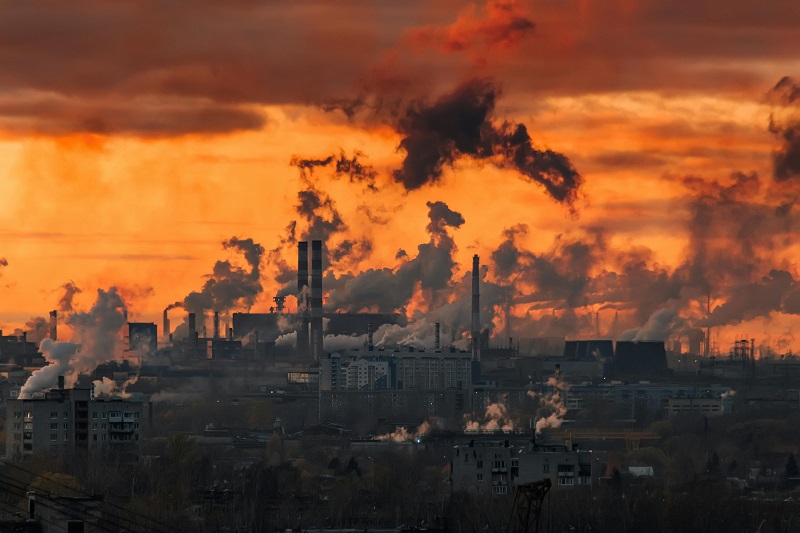
CO₂ emissions per capita divide a country's annual territorial CO₂ output from fossil fuels and industry by its population. This normalisation partly corrects for country size — but not entirely. A small state with a large energy-intensive industry will always rank higher than a densely populated giant with the same total emissions. Understanding why a country ranks where it does requires looking beyond the number itself.
Thank you for reading this post, don't forget to subscribe!Data source: EDGAR Community GHG Database v2024 (JRC / IEA), latest full year 2023. The global average in 2023 was 4.86 t CO₂ per person. Top-ranked economies exceed this by a factor of 8–13; the poorest countries fall below 0.3 t.
Figures cover fossil fuel combustion and cement manufacture CO₂ only. Land-use change (LULUCF) and international aviation/shipping are excluded. All values are rounded for readability.
Top 10: The highest CO₂ per capita economies
The top of the ranking is consistently dominated by Gulf hydrocarbon exporters, small territories with energy-intensive industries, and high-income fossil-fuel-dependent economies such as Australia and Canada. The common thread: fossil-fuel dependence, relatively small populations, and high energy intensity of GDP.
Palau's extraordinarily high figure reflects a statistical artefact: a population of roughly 18,000 people divided into an energy sector sized for tourism-driven demand. The value has already fallen sharply since 2000 (−43%), largely due to fuel-switching and efficiency improvements.
A massive oil-and-gas sector, energy-intensive desalination, and year-round air conditioning in an extreme climate — all concentrated in a population of under 3 million. The figure has actually declined from a peak of 53.6 t in 2000 (−19%) as diversification and efficiency measures take effect.
Electricity generation is almost entirely oil- and gas-fired, and subsidised petrol sustains very high vehicle-based consumption. The modest decline since 2000 (−6%) reflects slow progress on energy efficiency.
Oil-and-gas export dominates an economy of roughly 450,000 people. Emissions have grown since 2000 (+16%) as production expansion has outpaced population growth.
Home to some of the world's largest nickel reserves and energy-intensive smelting operations, with a population of only ~290,000. Emissions have more than doubled since 2000 (+105%) as mining and metallurgy expanded.
ALBA, one of the world's largest single-site aluminium smelters, and major oil-refining capacity generate the bulk of Bahrain's territorial emissions for a population of ~1.5 million.
A combination of oil-and-gas production, aviation hub, tourism, and high living standards. The figure has declined from 28 t in 2000 (−28%) as renewable and nuclear capacity has grown significantly, particularly in Abu Dhabi.
Oil refining and petrochemical complexes concentrated in a small island population (~1.4 million). Emissions have grown since 2000 (+31%), reflecting export-oriented industrial expansion.
Bunkering fuel for the shipping lane and a large port divided by a resident population of only ~32,000 drives an extremely high per-capita figure. Global absolute emissions are negligible; this is a classic "small denominator" effect.
The world's largest OPEC oil producer, with large domestic fuel subsidies and intense air-conditioning demand. Emissions have risen since 2000 (+34%) driven by industrial expansion. Vision 2030 targets a meaningful reduction in carbon intensity by 2030.
Table 1. Top 10 countries by CO₂ emissions per capita, 2023
| Rank | Country / Territory | CO₂ per capita (t/person, 2023) | Change since 2000 |
|---|---|---|---|
| 1 | Palau | 62.59 | −43% |
| 2 | Qatar | 43.55 | −19% |
| 3 | Kuwait | 24.90 | −6% |
| 4 | Brunei | 21.12 | +16% |
| 5 | New Caledonia | 20.90 | +105% |
| 6 | Bahrain | 20.70 | −23% |
| 7 | United Arab Emirates | 20.22 | −28% |
| 8 | Trinidad and Tobago | 19.71 | +31% |
| 9 | Gibraltar | 19.67 | +80% |
| 10 | Saudi Arabia | 17.15 | +34% |
Source: EDGAR Community GHG Database v2024 (JRC/IEA). Data year: 2023.
Chart 1. CO₂ emissions per capita — Top 20 economies, 2023
Values from EDGAR 2023. World average: 4.86 t CO₂/person. Bar chart is sorted from highest to lowest.
How the top 100 CO₂ per capita economies are distributed in 2025
Beyond the top 10, the picture becomes far more diverse. Rich diversified economies — Canada, Australia, the United States, Russia — remain high due to carbon-intensive energy and transport. Fast-growing China is approaching the levels of many Western European countries. Meanwhile the largest developing economies — India, Indonesia, Brazil — remain well below the world average, demonstrating that absolute emission totals and per-capita levels tell very different stories.
World average (2023): 4.86 t CO₂/person | The "% of avg" toggle shows each country's value as a percentage of the world mean.
Table 2. Top 100 countries and territories by CO₂ emissions per capita, 2023
Source: EDGAR Community GHG Database v2024 (JRC/IEA). Territorial CO₂ from fossil fuels and cement.
| Rank ↕ | Country / Territory ↕ | CO₂ per capita ↕ | Region | Income | Change vs 2000 |
|---|---|---|---|---|---|
| 1 | Palau | 62.591,287% | Oceania | Upper-mid. | −43% |
| 2 | Qatar | 43.55896% | MENA | High | −19% |
| 3 | Kuwait | 24.90512% | MENA | High | −6% |
| 4 | Brunei | 21.12435% | Asia | High | +16% |
| 5 | New Caledonia | 20.90430% | Oceania | High | +105% |
| 6 | Bahrain | 20.70426% | MENA | High | −23% |
| 7 | United Arab Emirates | 20.22416% | MENA | High | −28% |
| 8 | Trinidad and Tobago | 19.71406% | Caribbean | High | +31% |
| 9 | Gibraltar | 19.67405% | Europe | High | +80% |
| 10 | Saudi Arabia | 17.15353% | MENA | High | +34% |
| 11 | Oman | 17.11352% | MENA | High | +47% |
| 12 | Canada | 14.91307% | Americas | High | −16% |
| 13 | Curaçao | 14.66302% | Caribbean | High | −66% |
| 14 | Russia | 14.45297% | Europe | Upper-mid. | +26% |
| 15 | Australia | 14.21293% | Oceania | High | −23% |
| 16 | United States | 13.83285% | Americas | High | −34% |
| 17 | Seychelles | 12.76263% | Africa | Upper-mid. | +36% |
| 18 | Kazakhstan | 12.43256% | Asia | Upper-mid. | +42% |
| 19 | Taiwan | 11.68240% | Asia | High | +7% |
| 20 | Luxembourg | 11.18230% | Europe | High | −45% |
| 21 | South Korea | 11.04227% | Asia | High | +10% |
| 22 | Turkmenistan | 10.51216% | Asia | Lower-mid. | +21% |
| 23 | Greenland | 10.21210% | Americas | High | — |
| 24 | Singapore | 9.38193% | Asia | High | −19% |
| 25 | China | 9.24190% | Asia | Upper-mid. | +223% |
| 26 | Iran | 9.10187% | MENA | Lower-mid. | +70% |
| 27 | Libya | 8.88183% | Africa | Upper-mid. | −3% |
| 28 | Estonia | 8.87183% | Europe | High | −29% |
| 29 | Iceland | 8.79181% | Europe | High | −14% |
| 30 | Czechia | 8.52175% | Europe | High | −34% |
| 31 | Mongolia | 8.45174% | Asia | Lower-mid. | +124% |
| 32 | Cook Islands | 8.37172% | Oceania | Upper-mid. | +149% |
| 33 | Malaysia | 8.30171% | Asia | Upper-mid. | +47% |
| 34 | Norway | 7.86162% | Europe | High | −15% |
| 35 | Poland | 7.63157% | Europe | High | −6% |
| 36 | Japan | 7.54155% | Asia | High | −23% |
| 37 | New Zealand | 7.22149% | Oceania | High | −15% |
| 38 | Belgium | 7.18148% | Europe | High | −41% |
| 39 | Netherlands | 7.09146% | Europe | High | −36% |
| 40 | Germany | 7.06145% | Europe | High | −34% |
| 41 | Austria | 6.65137% | Europe | High | −20% |
| 42 | South Africa | 6.56135% | Africa | Upper-mid. | −14% |
| 43 | Ireland | 6.50134% | Europe | High | −43% |
| 44 | Falkland Islands | 6.48133% | Americas | High | +160% |
| 45 | Slovakia | 6.40132% | Europe | High | −17% |
| 46 | Bosnia and Herzegovina | 6.33130% | Europe | Upper-mid. | +67% |
| 47 | Maldives | 6.00124% | Asia | Upper-mid. | +165% |
| 48 | Bulgaria | 5.86121% | Europe | Upper-mid. | −3% |
| 49 | Bermuda | 5.84120% | Caribbean | High | +149% |
| 50 | Cyprus | 5.83120% | Europe | High | −23% |
| 51 | Slovenia | 5.81119% | Europe | High | −23% |
| 52 | Belarus | 5.79119% | Europe | Upper-mid. | +2% |
| 53 | Saint Pierre and Miquelon | 5.73118% | Americas | High | +105% |
| 54 | Finland | 5.73118% | Europe | High | −48% |
| 55 | Cayman Islands | 5.42112% | Caribbean | High | +72% |
| 56 | Italy | 5.19107% | Europe | High | −35% |
| 57 | Turkey | 5.13106% | Europe | Upper-mid. | +43% |
| 58 | Aruba | 4.91101% | Caribbean | High | +66% |
| 59 | Greece | 4.6997% | Europe | High | −46% |
| 60 | Spain | 4.6896% | Europe | High | −39% |
| 61 | Lithuania | 4.6696% | Europe | High | +40% |
| 62 | Hungary | 4.6195% | Europe | High | −21% |
| 63 | Denmark | 4.5694% | Europe | High | −54% |
| 64 | Hong Kong SAR | 4.5193% | Asia | High | −28% |
| 65 | Chile | 4.4592% | Americas | High | +26% |
| 66 | Suriname | 4.4592% | Americas | Upper-mid. | +42% |
| 67 | Macao SAR | 4.4291% | Asia | High | +28% |
| 68 | United Kingdom | 4.4291% | Europe | High | −53% |
| 69 | Croatia | 4.3189% | Europe | High | −1% |
| 70 | Iraq | 4.3088% | MENA | Upper-mid. | +14% |
| 71 | Serbia | 4.2888% | Europe | Upper-mid. | −2% |
| 72 | French Polynesia | 4.2788% | Oceania | High | +41% |
| 73 | France | 4.2587% | Europe | High | −37% |
| 74 | North Macedonia | 4.1986% | Europe | Upper-mid. | −6% |
| 75 | Azerbaijan | 4.1485% | Asia | Upper-mid. | +17% |
| 76 | Israel | 4.1385% | MENA | High | −36% |
| 77 | Guyana | 4.1185% | Americas | Upper-mid. | +86% |
| 78 | Bahamas | 4.0483% | Caribbean | High | +21% |
| 79 | Uzbekistan | 4.0183% | Asia | Lower-mid. | −24% |
| 80 | Algeria | 3.9982% | Africa | Lower-mid. | +42% |
| 81 | Thailand | 3.9481% | Asia | Upper-mid. | +42% |
| 82 | Argentina | 3.9381% | Americas | Upper-mid. | +7% |
| 83 | Switzerland | 3.8780% | Europe | High | −38% |
| 84 | Malta | 3.8579% | Europe | High | −28% |
| 85 | Puerto Rico | 3.8078% | Americas | High | −43% |
| 86 | Romania | 3.7076% | Europe | High | −16% |
| 87 | Vietnam | 3.6976% | Asia | Lower-mid. | +424% |
| 88 | Portugal | 3.5874% | Europe | High | −43% |
| 89 | Latvia | 3.5673% | Europe | High | +17% |
| 90 | Mexico | 3.5272% | Americas | Upper-mid. | −10% |
| 91 | Laos | 3.4972% | Asia | Lower-mid. | +1,892% |
| 92 | Sweden | 3.4371% | Europe | High | −47% |
| 93 | Georgia | 3.3369% | Asia | Upper-mid. | +202% |
| 94 | Mauritius | 3.2968% | Africa | Upper-mid. | +60% |
| 95 | Panama | 3.2968% | Americas | Upper-mid. | +92% |
| 96 | Ukraine | 3.1765% | Europe | Lower-mid. | −57% |
| 97 | Lebanon | 3.0062% | MENA | Lower-mid. | −37% |
| 98 | Antigua and Barbuda | 2.9962% | Caribbean | High | +85% |
| 99 | Botswana | 2.9360% | Africa | Upper-mid. | +23% |
| 100 | Martinique | 2.8358% | Caribbean | High | n/a |
Source: EDGAR Community GHG Database v2024 (JRC / IEA), year 2023. World average: 4.86 t CO₂/person. All figures rounded for readability.
Figure 2. CO₂ per capita vs. GDP per capita (PPP) — selected economies
The correlation between income and emissions is real but far from mechanical. High-income economies with clean electricity grids (France, Sweden, Switzerland) sit well below the expected trendline. Hydrocarbon exporters (Qatar, UAE, Saudi Arabia) spike far above it. China, despite massive renewable investment, still exceeds many European peers due to its coal-heavy power sector.
X-axis: GDP per capita (PPP, thousand constant 2021 int'l dollars, ~2024 data). Y-axis: CO₂ per capita (t/person, EDGAR 2023). Each dot represents one country.
What the 2025 CO₂ per capita ranking reveals about the global energy system
The ranking reveals three structurally distinct clusters. The first — Gulf hydrocarbon micro-states and small territories with concentrated heavy industry — sit 5 to 13 times above the world average. Their high values reflect oil-and-gas extraction, refining, and export concentrated in small populations, not primarily household lifestyles.
The second cluster — wealthy diversified economies (Australia, Canada, the United States, Russia) — ranges from 10 to 15 t/person. Their carbon intensity is driven by a combination of large distances, car-dependent transport, coal or gas power generation, and high consumption levels. The spread within this group is largely explained by the electricity mix: France, with ~75% nuclear generation, emits 4.25 t/person — half of Germany's 7.06 t, which long relied on coal.
The third cluster — large emerging markets: China (~9.2 t), Iran (~9.1 t), Malaysia (~8.3 t), Thailand (~3.9 t), India (~2.0 t), Indonesia (~1.9 t). Their position in the ranking depends heavily on the coal-to-gas ratio in their power sector. China, despite massive renewable investment, still exceeds many European countries because of coal-fired generation. India and Indonesia remain well below the world average in per-capita terms — yet their absolute emission totals are enormous due to population size.
A defining trend of the past two decades is sharp per-capita declines across most rich countries: Germany −34%, the United Kingdom −53%, Denmark −54%, Finland −48%. This reflects simultaneous transitions to renewables, energy-efficiency improvements, and partial deindustrialisation. The reverse pattern holds in several developing and resource economies: Vietnam +424%, Iran +70%, Kazakhstan +42%, Mongolia +124%.
Methodology: how this ranking is constructed
Data source
- Primary source: EDGAR Community GHG Database v2024 (JRC/IEA), data year 2023. This is the most comprehensive and consistently harmonised international dataset for CO₂ emissions across countries and territories.
- Cross-verification: Our World in Data (Global Carbon Budget 2025 v15, Global Carbon Project), Global Carbon Project materials, UNFCCC national inventory submissions, and World Bank indicator series where available.
What "emissions" means here
- CO₂ from fossil fuel combustion and cement manufacture — territorial (production-based) accounting. Land-use change (LULUCF) is excluded.
- Emissions from international aviation and maritime shipping are not attributed to any individual country and are excluded from national figures.
How the indicator is calculated
- CO₂ per capita = total territorial CO₂ of the country ÷ national population.
- The "% of world average" toggle computes (country value ÷ 4.86) × 100.
Key limitations
- Territorial accounting does not capture where produced goods are ultimately consumed. This matters for trade-oriented economies: a country importing carbon-intensive goods will look cleaner than one producing equivalent goods domestically.
- For small territories and island states, a single industrial facility or major port can dominate per-capita figures — making cross-country lifestyle comparisons misleading.
- 2023 is the latest full-year EDGAR release used here for consistent cross-country comparison in the 2025 edition.
Key insights for readers
"High rank" does not mean "worst environmental actor." It means a country's industry or energy system produces a lot of CO₂ per resident. The reasons vary enormously: hydrocarbon exports, coal-fired power, remote geography, fuel subsidies, or industrial specialisation. Using per-capita rankings as a moral score misreads what the data measures.
Power-sector decarbonisation is the highest-leverage action. Countries that have cut per-capita emissions most sharply (the UK, Denmark, Finland, Germany) did so primarily by shifting to renewables and gas in electricity generation. This is a multiplier: a clean grid reduces emissions not just in power but in industry and transport as electrification expands.
Consumption vs. production accounting. If a country imports steel, cement or chemicals rather than producing them domestically, its territorial emissions look lower — but the climate impact of that consumption does not disappear. Consumption-based (trade-adjusted) accounts are a useful complement for understanding demand-side responsibility.
The small-denominator effect. Extreme values in Palau, Gibraltar, and New Caledonia are driven by a single industrial sector or port complex divided by a tiny population. These data points are useful as illustrations of concentrated industry, but they are not comparable to typical national lifestyle footprints.
FAQ
Primary data sources and technical notes
Figures are compiled from openly available international datasets, harmonised and rounded for comparability. For formal statistical or policy work, always refer back to the original databases and accompanying methodological documentation.
-
EDGAR Community GHG Database v2024 — JRC / IEA (primary source)European Commission database providing CO₂ and GHG estimates for all countries 1970–2023 using a consistent global methodology.
edgar.jrc.ec.europa.eu/report_2024 -
Our World in Data — CO₂ and GHG Emissions dataset (Global Carbon Budget 2025 v15)Harmonised per-capita series from 1750 to present, based on Global Carbon Project data.
github.com/owid/co2-data -
Global Carbon Project — Global Carbon Budget (GCB 2025, v15)The core scientific synthesis of territorial and consumption-based CO₂ emissions globally.
globalcarbonproject.org/carbonbudget/ -
UNFCCC — National Inventory Submissions (Annex I parties)Official national GHG inventories for Annex I member states. Used for verification of European economy figures.
unfccc.int/ghg-inventories-annex-i-parties/2025 -
World Bank — EN.ATM.CO2E.PC (CO₂ emissions per capita)Additional cross-check source for individual country values.
data.worldbank.org/indicator/EN.ATM.CO2E.PC -
World Bank — GDP per capita, PPP (scatter chart context)GDP per capita, PPP, constant 2021 international dollars.
data.worldbank.org/indicator/NY.GDP.PCAP.PP.CD
All figures in tables and charts are approximate and rounded for clarity. For formal statistical work, refer to the underlying source databases and methodological notes.

StatRanker (Website)
administrator