Top 100 Countries by Passenger Car Ownership per 1,000 People, 2025
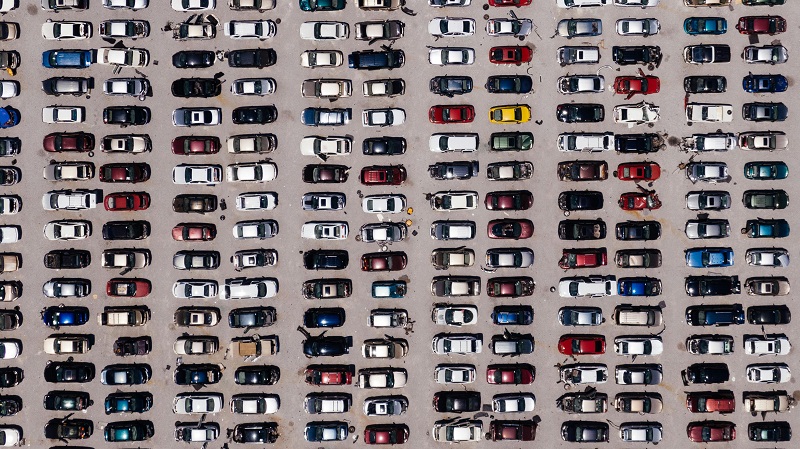
Passenger car ownership per 1,000 people: Top 100 economies
Passenger cars per 1,000 people is a standard motorization indicator. It compares a country's registered passenger-car fleet with its population, which makes different economies easier to compare on one scale. A high value usually points to widespread private-car ownership, while a lower value can reflect lower purchasing power, stronger public transport, greater reliance on two-wheelers, or denser urban form.
The global median for the top 100 is roughly 367 cars per 1,000 people. The top of the ranking is dominated by microstates and small affluent economies where registered fleets can be unusually large relative to resident population. The lower part of the ranking includes larger emerging economies where two-wheelers play a much bigger role in daily mobility, so passenger-car ownership alone does not describe total vehicle access.
"2025" refers to the publication date of this ranking. Each row shows the most recent year with available data — reporting cycles differ across national statistical systems.
Top 10 most motorized economies in 2025
The leading positions are dominated by microstates and affluent small economies. In these jurisdictions, the relationship between resident population and registered fleet can be distorted by company vehicles, cross-border workers, and second-home patterns.
More registered passenger cars than residents. San Marino's figure reflects a very small resident base combined with registration patterns typical of affluent microstates.
Very high vehicle density in a tiny territory. Small population size and registration structure both matter here.
A prosperous, small economy with high income per capita and limited mass transit infrastructure, producing one of the world's highest motorization rates.
Cross-border workers and high household incomes help keep Luxembourg near the top of the ranking. Ownership remains high even though public transport policy has become more ambitious.
Dispersed settlements, cold climate and minimal rail infrastructure make private cars essential. Iceland has one of the highest EV adoption rates per capita globally.
Sprawling cities, weak inter-city rail and high rural-area shares combine to make New Zealand one of the most car-dependent developed nations.
Car-centric urban planning, limited transit in most metropolitan areas, and low fuel taxation historically keep US motorization among the world's highest.
High ownership despite dense historic city centres; suburbanisation, multi-car households and a strong domestic auto-manufacturing culture sustain Italy's elevated rate.
Low population density outside Helsinki, extreme winter conditions and long inter-urban distances make private cars the dominant transport mode across most of the country.
Switzerland combines one of the world's strongest rail systems with high car ownership, which is a useful reminder that ownership and usage are not the same metric.
Table 1. Top 10 economies by passenger cars per 1,000 people
| Rank | Economy | Cars per 1,000 people | Year |
|---|---|---|---|
| 1 | San Marino | 1,024 | 2022 |
| 2 | Monaco | 960 | 2022 |
| 3 | Liechtenstein | 940 | 2022 |
| 4 | Luxembourg | 820 | 2023 |
| 5 | Iceland | 790 | 2023 |
| 6 | New Zealand | 770 | 2023 |
| 7 | United States | 760 | 2022 |
| 8 | Italy | 740 | 2022 |
| 9 | Finland | 730 | 2023 |
| 10 | Switzerland | 720 | 2022 |
Source: World Bank WDI, indicator IS.VEH.PCAR.P3. Values rounded to nearest integer.
Chart 1. Passenger cars per 1,000 people — Top 20 economies
Values are the latest available per country (2022 or 2023). The chart is illustrative of relative ordering.
Full ranking: Top 100 economies by passenger car ownership, 2025
The full table below covers 100 economies and can be filtered by region, income group and ranking tier. Use the Units / Share % toggle to switch between cars-per-1,000 values and each country's share of the combined total in this table. All rows remain visible in the page source even without JavaScript.
Global total (top 100 sum): calculating…
| Rank | Economy | Cars / 1,000 | YoY est. | Region | Income | Year |
|---|---|---|---|---|---|---|
| 1 | San Marino | 1,024 | +1.2% | Europe | High | 2022 |
| 2 | Monaco | 960 | n/a | Europe | High | 2022 |
| 3 | Liechtenstein | 940 | +0.8% | Europe | High | 2022 |
| 4 | Luxembourg | 820 | +1.5% | Europe | High | 2023 |
| 5 | Iceland | 790 | +2.1% | Europe | High | 2023 |
| 6 | New Zealand | 770 | +1.4% | Asia-Pacific | High | 2023 |
| 7 | United States | 760 | +0.5% | North America | High | 2022 |
| 8 | Italy | 740 | +0.7% | Europe | High | 2022 |
| 9 | Finland | 730 | +1.0% | Europe | High | 2023 |
| 10 | Switzerland | 720 | +0.9% | Europe | High | 2022 |
| 11 | Australia | 710 | +1.3% | Asia-Pacific | High | 2023 |
| 12 | Canada | 700 | +0.6% | North America | High | 2022 |
| 13 | Austria | 690 | +0.8% | Europe | High | 2022 |
| 14 | Germany | 680 | +0.5% | Europe | High | 2022 |
| 15 | France | 670 | +0.4% | Europe | High | 2022 |
| 16 | Belgium | 660 | +0.6% | Europe | High | 2022 |
| 17 | Sweden | 650 | +0.7% | Europe | High | 2023 |
| 18 | Norway | 640 | +1.1% | Europe | High | 2023 |
| 19 | Netherlands | 630 | +0.9% | Europe | High | 2022 |
| 20 | United Kingdom | 620 | +0.5% | Europe | High | 2022 |
| 21 | Ireland | 610 | +1.3% | Europe | High | 2022 |
| 22 | Denmark | 600 | +0.8% | Europe | High | 2023 |
| 23 | Spain | 590 | +1.1% | Europe | High | 2022 |
| 24 | Portugal | 580 | +1.6% | Europe | High | 2022 |
| 25 | Japan | 570 | −0.3% | Asia-Pacific | High | 2022 |
| 26 | South Korea | 560 | +1.8% | Asia-Pacific | High | 2022 |
| 27 | Czechia | 550 | +1.2% | Europe | High | 2022 |
| 28 | Slovenia | 540 | +1.0% | Europe | High | 2022 |
| 29 | Malta | 530 | +2.0% | Europe | High | 2022 |
| 30 | Cyprus | 520 | +1.4% | Europe | High | 2022 |
| 31 | Estonia | 510 | +1.1% | Europe | High | 2022 |
| 32 | Lithuania | 500 | +0.9% | Europe | High | 2022 |
| 33 | Latvia | 490 | +0.8% | Europe | High | 2022 |
| 34 | Greece | 480 | +0.6% | Europe | High | 2022 |
| 35 | Poland | 470 | +2.4% | Europe | High | 2022 |
| 36 | Hungary | 460 | +1.6% | Europe | High | 2022 |
| 37 | Slovakia | 450 | +1.3% | Europe | High | 2022 |
| 38 | Croatia | 440 | +1.4% | Europe | High | 2022 |
| 39 | Romania | 430 | +2.8% | Europe | Upper-mid | 2022 |
| 40 | Bulgaria | 420 | +1.9% | Europe | Upper-mid | 2022 |
| 41 | Russia | 410 | −1.2% | Europe | Upper-mid | 2022 |
| 42 | Turkey | 400 | +3.1% | Europe | Upper-mid | 2022 |
| 43 | Chile | 395 | +2.5% | Latin America | Upper-mid | 2022 |
| 44 | Uruguay | 390 | +1.8% | Latin America | Upper-mid | 2022 |
| 45 | Argentina | 385 | +0.9% | Latin America | Upper-mid | 2022 |
| 46 | Saudi Arabia | 380 | +2.0% | MENA | High | 2022 |
| 47 | United Arab Emirates | 375 | +1.5% | MENA | High | 2022 |
| 48 | Israel | 370 | +1.2% | MENA | High | 2022 |
| 49 | Qatar | 365 | +1.8% | MENA | High | 2022 |
| 50 | Kuwait | 360 | +1.4% | MENA | High | 2022 |
| 51 | Oman | 355 | +1.1% | MENA | High | 2022 |
| 52 | Kazakhstan | 350 | +3.5% | Europe | Upper-mid | 2022 |
| 53 | China | 345 | +5.2% | Asia-Pacific | Upper-mid | 2022 |
| 54 | Malaysia | 340 | +2.1% | Asia-Pacific | Upper-mid | 2022 |
| 55 | Thailand | 335 | +2.4% | Asia-Pacific | Upper-mid | 2022 |
| 56 | Mexico | 330 | +1.8% | North America | Upper-mid | 2022 |
| 57 | Brazil | 325 | +2.2% | Latin America | Upper-mid | 2022 |
| 58 | South Africa | 320 | +0.7% | Sub-Saharan Africa | Upper-mid | 2022 |
| 59 | Colombia | 315 | +2.6% | Latin America | Upper-mid | 2022 |
| 60 | Peru | 310 | +2.0% | Latin America | Upper-mid | 2022 |
| 61 | Costa Rica | 305 | +1.9% | Latin America | Upper-mid | 2022 |
| 62 | Panama | 300 | +2.3% | Latin America | Upper-mid | 2022 |
| 63 | Dominican Republic | 295 | +2.5% | Latin America | Upper-mid | 2022 |
| 64 | Ecuador | 290 | +2.1% | Latin America | Upper-mid | 2022 |
| 65 | Paraguay | 285 | +3.0% | Latin America | Lower-mid | 2022 |
| 66 | Bolivia | 280 | +2.8% | Latin America | Lower-mid | 2022 |
| 67 | Ukraine | 275 | −4.1% | Europe | Lower-mid | 2022 |
| 68 | Serbia | 270 | +1.6% | Europe | Upper-mid | 2022 |
| 69 | Bosnia and Herzegovina | 268 | +1.4% | Europe | Upper-mid | 2022 |
| 70 | North Macedonia | 265 | +1.2% | Europe | Upper-mid | 2022 |
| 71 | Montenegro | 262 | +1.5% | Europe | Upper-mid | 2022 |
| 72 | Albania | 260 | +2.1% | Europe | Upper-mid | 2022 |
| 73 | Georgia | 258 | +3.8% | Europe | Upper-mid | 2022 |
| 74 | Armenia | 255 | +2.9% | Europe | Upper-mid | 2022 |
| 75 | Azerbaijan | 252 | +2.5% | Europe | Upper-mid | 2022 |
| 76 | Moldova | 250 | +1.2% | Europe | Upper-mid | 2022 |
| 77 | Belarus | 248 | +0.8% | Europe | Upper-mid | 2022 |
| 78 | Iran | 245 | +1.8% | MENA | Upper-mid | 2022 |
| 79 | Jordan | 242 | +1.4% | MENA | Upper-mid | 2022 |
| 80 | Lebanon | 240 | −2.5% | MENA | Upper-mid | 2022 |
| 81 | Tunisia | 238 | +1.0% | MENA | Lower-mid | 2022 |
| 82 | Morocco | 235 | +2.2% | MENA | Lower-mid | 2022 |
| 83 | Egypt | 232 | +2.5% | MENA | Lower-mid | 2022 |
| 84 | Algeria | 230 | +1.7% | MENA | Lower-mid | 2022 |
| 85 | Vietnam | 228 | +6.3% | Asia-Pacific | Lower-mid | 2022 |
| 86 | Philippines | 225 | +3.4% | Asia-Pacific | Lower-mid | 2022 |
| 87 | Indonesia | 223 | +4.8% | Asia-Pacific | Lower-mid | 2022 |
| 88 | India | 220 | +7.1% | South Asia | Lower-mid | 2022 |
| 89 | Sri Lanka | 218 | −1.8% | South Asia | Lower-mid | 2022 |
| 90 | Pakistan | 216 | +2.0% | South Asia | Lower-mid | 2022 |
| 91 | Bangladesh | 214 | +3.5% | South Asia | Lower-mid | 2022 |
| 92 | Kenya | 212 | +2.4% | Sub-Saharan Africa | Lower-mid | 2022 |
| 93 | Ghana | 210 | +1.9% | Sub-Saharan Africa | Lower-mid | 2022 |
| 94 | Nigeria | 208 | +1.2% | Sub-Saharan Africa | Lower-mid | 2022 |
| 95 | Tanzania | 206 | +1.5% | Sub-Saharan Africa | Lower-mid | 2022 |
| 96 | Uganda | 204 | +1.8% | Sub-Saharan Africa | Lower-mid | 2022 |
| 97 | Ethiopia | 202 | +2.1% | Sub-Saharan Africa | Lower-mid | 2022 |
| 98 | Nepal | 200 | +4.2% | South Asia | Lower-mid | 2022 |
| 99 | Zimbabwe | 198 | +1.0% | Sub-Saharan Africa | Lower-mid | 2022 |
| 100 | Myanmar | 196 | +3.8% | Asia-Pacific | Lower-mid | 2022 |
Source: World Bank WDI (IS.VEH.PCAR.P3), International Road Federation. Values are rounded and used for comparative analysis. Last data point: primarily 2022, some countries 2023. Page published: 2025.
Table 3. Regional summary
| Region | Mean (cars/1,000) | Median | Countries in top 100 | Key observation |
|---|---|---|---|---|
| Europe & C. Asia | 515 | 510 | 45 | Dominates top half; wide spread from microstates to lower-income CIS countries. |
| North America | 597 | 700 | 3 | Car-dependent urban form drives high ownership across all income levels. |
| Asia-Pacific | 432 | 345 | 11 | Wide range: high ownership in ANZ and Korea; rapid growth in China and SEA. |
| Latin America & Caribbean | 326 | 313 | 12 | Mid-range ownership; urbanisation and credit access are key growth drivers. |
| MENA | 293 | 242 | 13 | Gulf states have high car use; North Africa has lower motorisation rates. |
| South Asia | 214 | 217 | 5 | Two-wheelers dominate; passenger-car ownership understates total vehicle access. |
| Sub-Saharan Africa | 207 | 207 | 7 | Informal transport and income constraints limit private-car ownership. |
Charts: distribution and income correlation
Chart 2. Cars per 1,000 vs GDP per capita (PPP) — selected economies
The scatter shows the usual positive relationship between income and motorization, while also showing that policy, urban form, and transport alternatives still matter. Some high-income economies maintain large car fleets despite strong rail and transit systems, while others remain more car-dependent because of settlement patterns and road-based mobility.
Horizontal axis: GDP per capita, PPP (constant 2021 international dollars, thousands). Vertical axis: passenger cars per 1,000 people (latest available year).
Methodology
How this ranking is constructed
Indicator definition
Passenger cars per 1,000 people (World Bank code IS.VEH.PCAR.P3) counts registered road motor vehicles designed primarily for passenger transport seating no more than nine people, including the driver. It excludes two-wheelers (motorcycles, scooters), buses, minibuses, and freight vehicles. The denominator is the total national population estimate for the corresponding year.
Data source and year
Primary source: World Bank World Development Indicators, with underlying data compiled from the International Road Federation (IRF) World Road Statistics. Some countries also draw on national transport ministries and statistical offices. The WDI series is updated annually but reporting lags mean that the most recent observation year varies by country — predominantly 2022 for most, with a subset of countries providing 2023 data. The page is published in 2025 and reflects the best available data as of that publication date.
Coverage
The ranking covers 100 economies with sufficiently comparable registration data in the World Bank series. Some very small states and economies with incomplete reporting were left out for comparability. Microstates near the top should be read with particular care because small population bases make the ratio highly sensitive to registration rules and fleet definitions.
Processing and rounding
Values are rounded to the nearest integer. YoY estimates are based on the latest two available points in the underlying series where possible; where that is not possible, "n/a" is shown. The share-of-total display is calculated dynamically from the 100 values used in this table.
Limitations
- Registered stock ≠ active usage. A country may have high ownership but low average annual distance driven if transit alternatives reduce actual car use.
- Company fleets, tourism rentals and cross-border commuter registrations can inflate figures for small economies such as Luxembourg and Monaco.
- Two-wheeler mobility (dominant in South and Southeast Asia) is excluded, so these countries appear less mobile than they actually are by total vehicle access.
- PPP conversion applies only to the scatter chart; the cars-per-1,000 metric itself requires no currency conversion.
- Registration timing can differ from actual fleet age or condition — some fleets include many vehicles that are registered but rarely used.
Insights: what the 2025 ranking tells us
1. Microstates and small open economies dominate the top
The very top of the table is occupied by San Marino, Monaco, and Liechtenstein. These are unusual cases because very small resident populations make the ratio especially sensitive to registration patterns, company vehicles, and cross-border effects. Luxembourg belongs in the same broad interpretive category even though it is much larger than the classic microstates.
2. Affluent Anglo-Saxon and Nordic economies: car culture vs. geography
The United States (#7, 760), Australia (#11, 710), and Canada (#12, 700) sit near the top among large sovereign economies. Their positions reflect a familiar mix of suburban development, long travel distances, and strong dependence on road transport. Iceland and Finland add the effects of climate and dispersed settlement.
The Netherlands (#19, 630) is a useful case because it shows that high ownership does not automatically mean high daily car use. A household may own a car while still relying heavily on cycling or rail for regular commuting.
3. Central and Eastern Europe: rapid catch-up still running
Poland (#35, 470), Czechia (#27, 550) and Romania (#39, 430) have all posted sustained increases in motorization over the past decade as household incomes converged toward Western European levels. Much of Central and Eastern Europe is still in a catch-up phase. Rising household income and wider vehicle access have kept ownership climbing in countries that started from a much lower base than Western Europe.
4. Gulf states: income is not the full story
Saudi Arabia (#46, 380), the UAE (#47, 375), and Qatar (#49, 365) do not rank as high as their income levels might suggest. Large expatriate populations and the way the population denominator is constructed both affect the result.
5. China's extraordinary trajectory
China at #53 with 345 cars per 1,000 people sits in the middle of the ranking by this indicator, but its absolute fleet scale is enormous. Continued income growth and wider household access to car ownership still leave room for further expansion.
6. South and Southeast Asia: the two-wheeler gap
India (#88, 220), Indonesia (#87, 223) and Vietnam (#85, 228) occupy the lower third of the ranking despite rapid economic growth. A main reason is that two-wheelers remain the default personal transport mode in many of these economies. That means passenger-car ownership on its own understates everyday vehicle access.
7. The income–motorization relationship has diminishing returns at the top
The scatter chart shows the expected positive relationship between income and motorization, but it also shows that the relationship is not mechanical. At higher income levels, tax policy, land use, and public-transport alternatives still shape the ownership path.
What this ranking means for you
Different readers will use this ranking in different ways:
- Urban planners and transport policymakers: A high rank usually signals strong car dependence and greater exposure to congestion, road-maintenance pressure, and transport emissions. The practical issue is how that dependence is managed, not whether it exists.
- Automotive industry and investors: Countries in the middle of the ranking with rising incomes can still offer growth potential for passenger-car demand, especially where first-time ownership is still expanding.
- Infrastructure and real-estate professionals: Motorization ratios directly inform parking-space demand, road capacity needs and the viability of transit-oriented development.
- Sustainability researchers and climate analysts: Higher car ownership correlates with higher transport-sector CO₂ emissions, but the relationship depends heavily on fleet age, fuel type (EV penetration), and average distance driven per vehicle.
- Journalists and general readers: Cars per 1,000 people measures registered stock, not how intensively cars are used. That distinction matters for interpretation.
FAQ
Frequently asked questions about this metric, answered in plain language.
Primary data sources and technical notes
All values are drawn from public international datasets and rounded for comparative use. For formal statistical work, the original databases and metadata should be checked directly.
Core data source for passenger cars per 1,000 people (indicator IS.VEH.PCAR.P3).
Underlying data are compiled from the International Road Federation World Road Statistics.
data.worldbank.org/indicator/IS.VEH.PCAR.P3
Formal definition of "passenger cars" and source attribution to the IRF.
databank.worldbank.org (WDI metadata)
The primary source organisation whose vehicle registration data underpin the World Bank
compilation. IRF collects annual data from national road and transport authorities.
irf.global
Used for historical context and cross-validation of long-run motorization trends.
ourworldindata.org
GDP per capita (PPP) figures used in the scatter chart.
imf.org/en/publications/weo
Page published: 2025 · Data year: primarily 2022 (some 2023) · All values approximate and for analytical use only.
Related rankings
Closely related StatRanker pages selected by topic. If no strong match exists, fewer links are shown instead of unrelated recommendations.