Top 10 Countries in Electric Vehicle Production for 2025
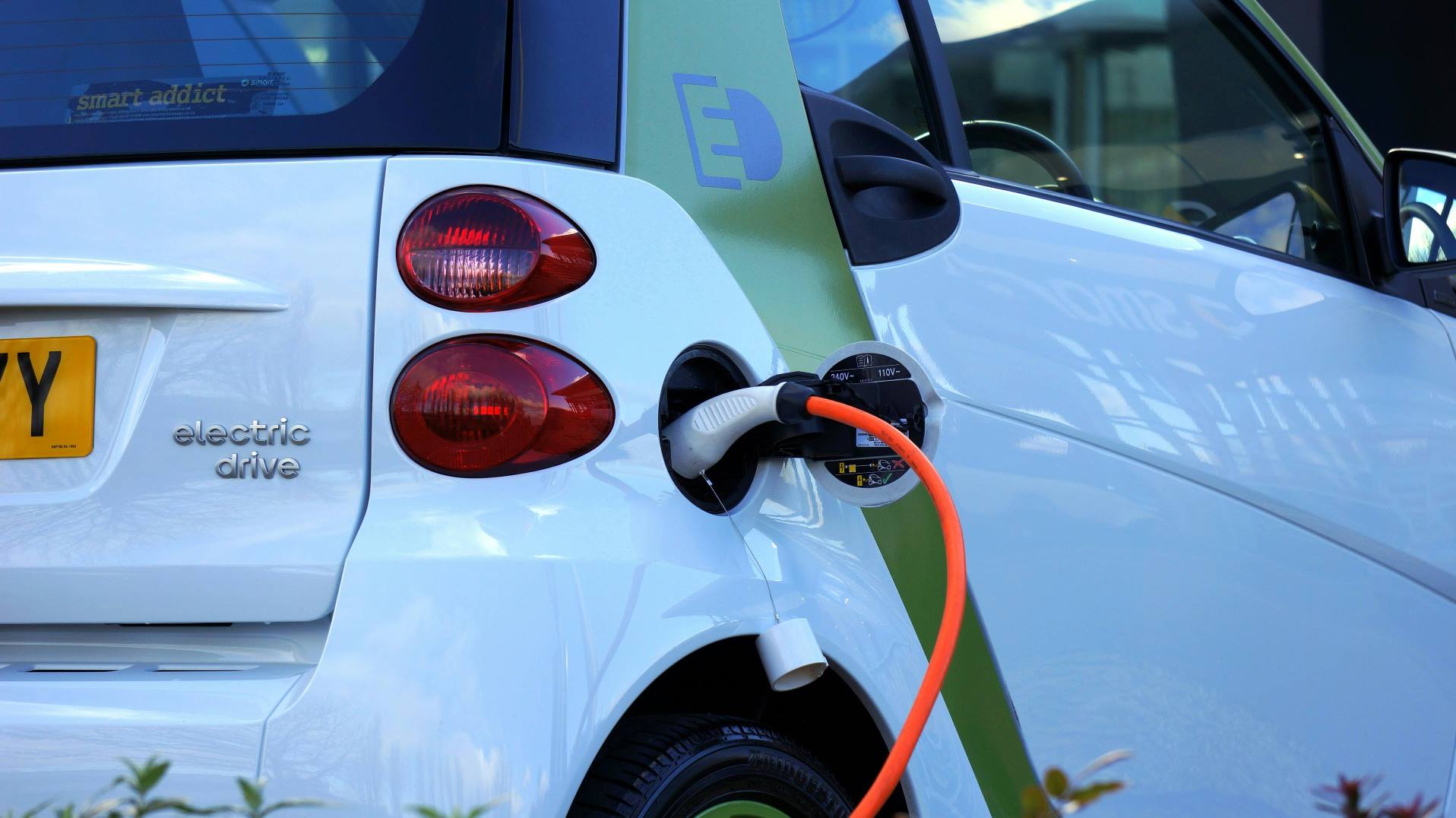
Electric vehicle manufacturing has moved from an “early adopter” niche into the core of global industrial strategy. In 2025, EV output is no longer determined only by consumer demand; it is shaped by battery supply chains, policy incentives, trade rules, charging rollouts, and the ability of manufacturers to scale a platform across multiple models.
This page focuses on a single comparable indicator: electric passenger car production (Battery Electric Vehicles + Plug-in Hybrids). Many sources also publish broader “EV” categories (for example, “new energy vehicles,” which can include commercial vehicles and other sub-types). For cross-country comparison, StatRanker uses the electric-car definition, rounds values, and provides context so readers don’t confuse sales, registrations, and factory output.
Reading tip: A country can lead in EV sales without leading in EV production (import-heavy markets), and it can lead in production without having the highest domestic adoption (export-heavy hubs). This ranking is about where vehicles are manufactured.
Continue exploring
More StatRanker pages connected by topic, category or ranking theme.
Top 10 snapshot (2025 estimate)
The global EV manufacturing map is increasingly concentrated. Large plants benefit from learning curves, supplier density and battery economics. As a result, the top tier can widen its lead even when other countries grow quickly in percentage terms. The Top 10 below summarises estimated output in 2025 and each country’s approximate share within this Top-10 total.
Table format is kept to four columns for readability. On mobile, it automatically transforms into stacked cards (no horizontal scrolling).
| Rank | Country | Production (units) | Share (Top 10) |
|---|
Note: Shares here are calculated within the Top-10 total shown on this page, not within the entire world. This keeps the math transparent even when world totals are updated later.
Visualization: the scale gap between #1 and the rest
A chart helps you see the real story: EV production is not a “flat” global race. It is a steep distribution, where the #1 producer operates at a different order of magnitude. That gap matters because it affects battery procurement, component pricing, export capacity, and the speed at which cost-down improvements can be rolled out across a model lineup.
Chart unavailable — data shown as a list:
How to interpret: If a country’s bar is high, it usually means it has (1) a dense supplier ecosystem, (2) battery capacity aligned with vehicle assembly, and (3) a strong pathway to scale through domestic demand or exports. Lower bars can still represent strategic importance if the output is concentrated in high-margin models or in region-critical assembly hubs.
Production leadership in 2025 also reflects a second-order effect: platform consolidation. Automakers increasingly rely on shared skateboard architectures and standardized battery modules. When a platform scales, component suppliers invest, defect rates fall, and cycle times improve — reinforcing the advantage of countries that host high-volume plants.
At the same time, the market is not purely about volume. Countries with smaller output can still matter through specialised engineering, premium manufacturing, or acting as “bridge” hubs for regional supply chains. That is why a ranking must be read with context, not as a simple scoreboard.
Methodology
Indicator: electric passenger cars produced (BEV + PHEV). The focus is on passenger vehicles because it is the most consistently reported category in international EV reporting and avoids mixing fundamentally different manufacturing economics (for example heavy commercial vehicles).
Reference year: 2025 values are treated as estimates. Country-level EV production totals can be published with delays, revisions, or differing definitions (“EV,” “NEV,” “plug-in,” “electric car,” etc.). To avoid false precision, the values are rounded and presented with a strong contextual layer explaining what is being measured.
Data handling: the page uses (a) a harmonised Top-10 dataset for 2025, (b) transparent share calculations within the Top-10 total, and (c) narrative interpretation that separates manufacturing output from sales, registrations, and export flows. The chart uses the same table values, and includes a fallback list if the chart library is blocked by content security policies or ad-blockers.
Limitations: (1) Definitions differ: some datasets group PHEVs with hybrids, others group them with electric cars; (2) “production” can mean assembly count, factory shipments, or national output reported by industry bodies; (3) multinational production footprints mean that “brand nationality” and “manufacturing location” are not the same; (4) late revisions can move ranks, especially near the bottom of the Top-10.
Why this matters: Production leadership is a supply-side story. If you care about consumer adoption, affordability, charging coverage, or emissions impact, pair production rankings with sales/registration and electricity-mix indicators.
Insights and what this means for you
1) Scale is not just “more cars” — it is cheaper batteries and faster iteration. High-volume EV manufacturing reduces per-unit costs through better supplier pricing, higher automation utilization, and faster learning cycles. When a producer builds millions of units, even small process improvements (cycle time, scrap rate, warranty reduction) compound into large cost advantages. That is one reason the top producer can keep pushing prices down while adding features, and why competitors often respond with platform consolidation or local manufacturing incentives.
2) “Production hubs” and “sales hubs” can be different places. EV adoption depends on charging access, price, incentives, and consumer preferences. Production depends on labor ecosystems, supplier clusters, battery plants, logistics corridors, and export agreements. Countries that are attractive to buyers are not automatically attractive to factory investment, and vice-versa. For readers, this explains why headlines about “record EV sales” in one market may not translate into a domestic manufacturing boom.
3) Trade rules now shape factory maps. In 2025, tariffs, rules-of-origin standards, and subsidy eligibility can decide where an EV is assembled as much as engineering does. Automakers increasingly split production across regions to manage policy risk: one set of plants optimizes cost and scale, another set optimizes compliance and market access. If you follow jobs, investment or supply-chain risk, watch policy changes as closely as model launches.
4) Batteries are the bottleneck and the leverage point. EV production leadership usually tracks battery capacity and the ability to secure materials, refine them, and manufacture cells at scale. When cell supply is tight, vehicle assembly lines cannot run at full capacity; when cell supply is abundant, manufacturers can expand model offerings and compete on price. This is why battery investment announcements often precede vehicle output increases.
What this means for consumers: manufacturing concentration tends to push prices down over time, but it can also increase exposure to trade disruptions and supply-chain shocks. If you’re shopping for an EV, “where it is built” can influence availability, delivery times, and price volatility.
What this means for businesses: if you depend on EV fleets, charging services, parts, or battery recycling, production hubs are likely to be the earliest locations where scale services become cheaper and more reliable. If you are planning partnerships or expansions, the Top-10 map is a practical signal of where supplier ecosystems will deepen first.
FAQ
What exactly counts as “EV production” in this ranking?
This page tracks electric passenger cars: Battery Electric Vehicles (BEV) plus Plug-in Hybrid Electric Vehicles (PHEV). Some sources use broader categories (for example “NEV”), which can include additional vehicle types. StatRanker keeps the core ranking on electric cars for cleaner cross-country comparability.
Why are the 2025 values shown as estimates?
Country production totals are not always published in one synchronized global dataset for the most recent year, and definitions can differ. StatRanker therefore uses rounded estimates and prioritizes transparency: consistent scope (BEV + PHEV passenger cars), a single Top-10 dataset, and clearly stated limitations.
Can a country move up quickly in this ranking?
Yes — especially around the lower half of the Top-10. A new plant ramp, a major platform allocation, or policy changes that redirect assembly can shift output by tens of thousands of units. The top position, however, is usually more stable because it is supported by an entire ecosystem of suppliers, battery capacity, and domestic competition that keeps plants running at high utilization.
Is production the best measure of “EV leadership”?
It depends on the question. Production is best for industrial capacity, supply chains and investment analysis. For consumer adoption and climate impact, combine production with sales/registrations, charging coverage, and grid emissions intensity.
Sources (official / international)
Links are provided as plain URLs for transparency. These sources are used for baseline context, definitions, and market/industry framing.
- International Energy Agency (IEA) — Global EV Outlook https://www.iea.org/reports/global-ev-outlook-2025
- International Energy Agency (IEA) — Electric car industry trends (manufacturing/trade context) https://www.iea.org/reports/global-ev-outlook-2025/trends-in-the-electric-car-industry-3
- European Automobile Manufacturers’ Association (ACEA) — market/industry statistical context https://www.acea.auto/
- International Organization of Motor Vehicle Manufacturers (OICA) — production statistics (all vehicles; broader context) https://oica.net/production-statistics/
Related rankings
More StatRanker pages connected by topic, category or ranking theme.
Apple Production by Country 2026: Official FAOSTAT 2024 Ranking
Open rankingSugarcane Production by Country 2026: Official FAOSTAT 2024 Ranking
Open rankingBanana Production by Country 2026: Official FAOSTAT 2024 Ranking
Open rankingCorn (Maize) Production by Country 2026: Top 50 Ranking
Open ranking
StatRanker (Website)
administrator