PPP GDP of the world 2025
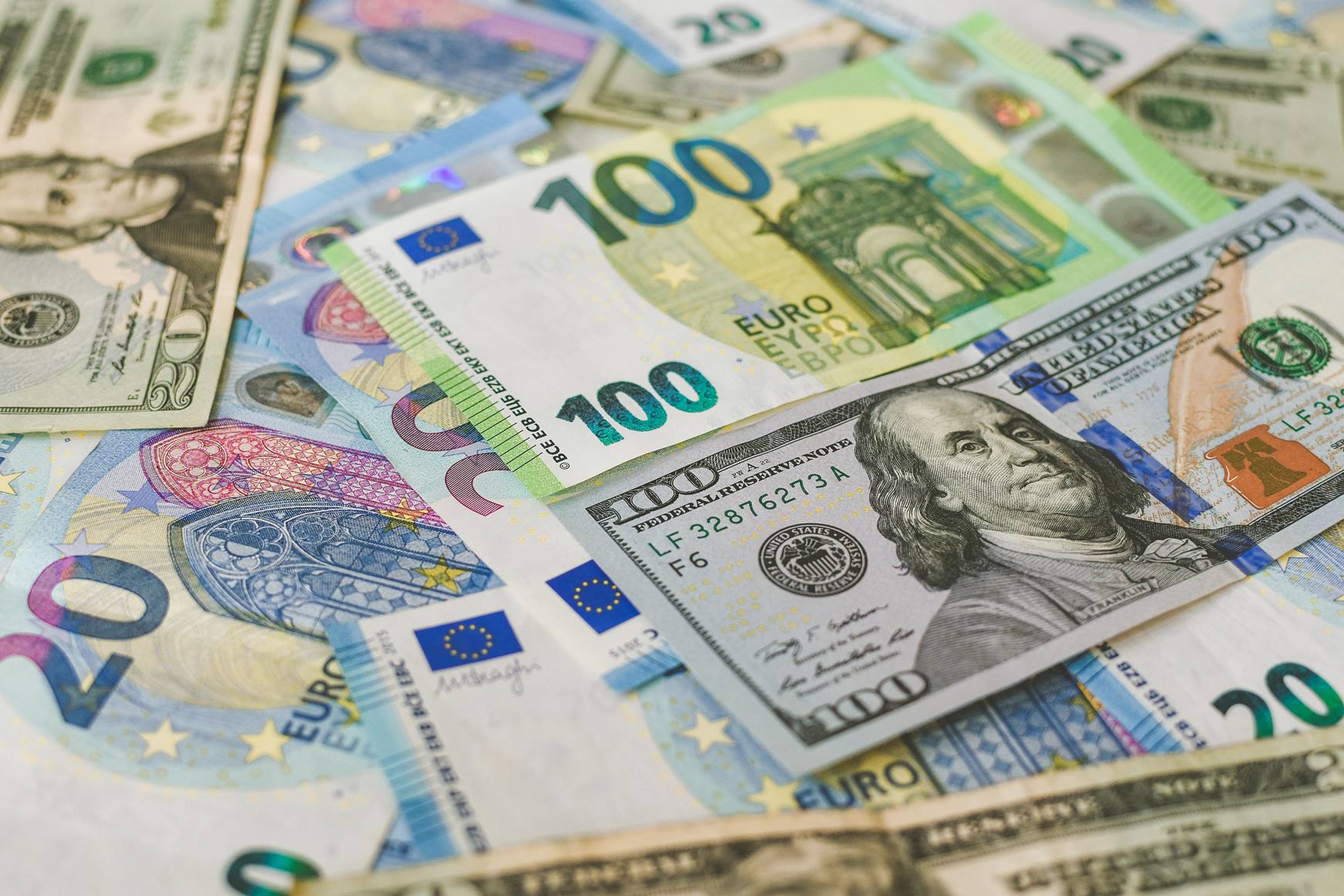
GDP (PPP) in 2025: the clearest way to compare real economic scale across countries
GDP converted using purchasing power parity (PPP) compares economies in “international dollars” by adjusting for differences in price levels and domestic purchasing power. In practice, this reduces distortions from exchange rates and makes cross-country comparisons of economic scale more meaningful.
Values are rounded for readability and used for analytical comparison. For official releases and methods, use the source databases listed in “Sources” (Part 3/3).
Top 10 countries by GDP (PPP), total (2025)
The Top 10 is dominated by large-population economies and major industrial hubs. PPP-adjusted totals typically elevate countries with lower price levels relative to nominal (market-exchange-rate) GDP.
Continue exploring
More StatRanker pages connected by topic, category or ranking theme.
GDP (PPP): 39.44 trillion int$
Scale driver: large domestic market + manufacturing depth.
GDP (PPP): 30.34 trillion int$
Scale driver: high value-added services + technology leadership.
GDP (PPP): 17.37 trillion int$
Scale driver: large population + fast-growing services and manufacturing.
GDP (PPP): 7.13 trillion int$
Scale driver: commodities and heavy industry.
GDP (PPP): 6.88 trillion int$
Scale driver: advanced manufacturing and technology ecosystem.
GDP (PPP): 6.18 trillion int$
Scale driver: export manufacturing + industrial supply chains.
GDP (PPP): 4.98 trillion int$
Scale driver: demographics + domestic demand + resources.
GDP (PPP): 4.85 trillion int$
Scale driver: agriculture + manufacturing + services.
GDP (PPP): 4.38 trillion int$
Scale driver: services + finance + high-value industries.
GDP (PPP): 4.28 trillion int$
Scale driver: diversified economy + strong domestic market.
Table 1. Top 10 countries by GDP (PPP), total (2025)
| Country | GDP (PPP), trillion int$ | Share of global GDP (PPP), % |
|---|---|---|
| China | 39.44 | 24.3 |
| United States | 30.34 | 18.7 |
| India | 17.37 | 10.7 |
| Russia | 7.13 | 4.4 |
| Japan | 6.88 | 4.2 |
| Germany | 6.18 | 3.8 |
| Indonesia | 4.98 | 3.1 |
| Brazil | 4.85 | 3.0 |
| United Kingdom | 4.38 | 2.7 |
| France | 4.28 | 2.6 |
Rounded values. The “Share” column is computed from the same global PPP aggregate used in the underlying dataset.
Chart 1. GDP (PPP), total for the Top 10 economies (2025)
Fallback: the same Top 10 values used in the chart
| Country | GDP (PPP), trillion int$ |
|---|---|
| China | 39.44 |
| United States | 30.34 |
| India | 17.37 |
| Russia | 7.13 |
| Japan | 6.88 |
| Germany | 6.18 |
| Indonesia | 4.98 |
| Brazil | 4.85 |
| United Kingdom | 4.38 |
| France | 4.28 |
Per-capita PPP: why “average income” rankings can look very different from total GDP
Total GDP (PPP) shows overall economic scale, but GDP (PPP) per capita highlights how output relates to population size. Small, high-productivity economies can rank far higher on a per-person basis than large economies that dominate total output.
Table 2. Top 10 countries by GDP (PPP) per capita (2025)
| Country | GDP (PPP) per capita, int$ | Population, millions |
|---|---|---|
| Luxembourg | 149,200 | 0.7 |
| Singapore | 103,600 | 6.0 |
| Ireland | 102,800 | 5.3 |
| Qatar | 93,700 | 2.8 |
| United States | 89,680 | 338.0 |
| Switzerland | 83,500 | 9.0 |
| Norway | 82,400 | 5.6 |
| Denmark | 73,900 | 6.0 |
| Netherlands | 72,600 | 18.0 |
| Australia | 68,400 | 27.0 |
Values rounded. Per-capita PPP can be influenced by cross-border workforces, multinational profit attribution, and sector concentration.
Table 3. Regional GDP (PPP) totals (2025) — context for global distribution
A regional view helps interpret why the global PPP landscape is often described as “Asia-led” in total output, even when many top per-capita positions belong to smaller high-income economies.
| Region | GDP (PPP), trillion int$ | Comment |
|---|---|---|
| Asia-Pacific | 89.3 | Large populations + industrial capacity; lower price levels lift PPP totals. |
| North America | 32.1 | High value-added services; higher price levels compress PPP advantage vs nominal. |
| Europe | 29.8 | Diversified economies; strong manufacturing and services in core countries. |
| Latin America | 11.2 | Commodity + manufacturing mix; large internal markets in key countries. |
| Africa | 8.9 | Fast growth potential but constrained by infrastructure and productivity gaps. |
Chart 2. GDP (PPP) per capita — Top 10 (2025)
Fallback: Top 10 per-capita PPP values used in the chart
| Country | GDP (PPP) per capita, int$ |
|---|---|
| Luxembourg | 149,200 |
| Singapore | 103,600 |
| Ireland | 102,800 |
| Qatar | 93,700 |
| United States | 89,680 |
| Switzerland | 83,500 |
| Norway | 82,400 |
| Denmark | 73,900 |
| Netherlands | 72,600 |
| Australia | 68,400 |
Methodology, insights, and interpretation
Methodology
What we measure. GDP (PPP) expresses total economic output in a common “international dollar” using purchasing power parity conversion factors. This adjusts for differences in local price levels and makes comparisons of real economic scale more consistent than nominal GDP at market exchange rates.
Year of data. The tables use 2025 estimates/projections for GDP (PPP) totals and 2025 values for per-capita PPP in the provided dataset, rounded for readability.
Processing. Values are lightly rounded; ordering is based on the reported totals/per-capita levels.
- PPP revisions: benchmark updates (e.g., ICP rounds) can revise PPP factors and reorder ranks.
- Per-capita caveats: small economies can be affected by cross-border workers and multinational profit attribution.
- PPP ≠ distribution: GDP per capita is an average and does not describe inequality or household welfare directly.
Use PPP GDP alongside complementary indicators (median income, poverty rates, inequality, productivity) when the question is about living standards rather than output scale.
Insights and conclusions
The 2025 PPP picture highlights a familiar but important split: economic scale and income per person do not point to the same set of “leaders.” China, the United States and India dominate total PPP output because they combine large populations with broad production capacity. At the same time, the top per-capita positions are mostly held by small, high-productivity economies whose output is large relative to their resident populations.
A second key insight is how strongly price levels shape international comparisons. PPP tends to raise the relative weight of economies where domestic goods and services are cheaper, which is why some emerging markets look larger in PPP terms than in nominal GDP.
Finally, the regional totals underline why global output discussions are increasingly Asia-focused: population size and industrial depth combine with relatively lower price levels to produce very large PPP totals.
What this means for readers
- If you compare economic “size”: use total GDP (PPP) for a realistic view of domestic purchasing capacity.
- If you compare living standards: start with GDP (PPP) per capita, but validate with inequality and cost-of-living context.
- If you track growth & convergence: PPP helps reduce FX noise; changes are often more structural than currency-driven.
- If you build country benchmarks: use the same unit (PPP) and the same base year across all charts and tables.
Treat rankings as a map, not a verdict: they point to the broad position of economies, but policy and business decisions should triangulate PPP with sector structure, productivity, demographics, and institutional quality.
FAQ: GDP (PPP)
Nominal GDP uses market exchange rates, which can move for financial reasons unrelated to domestic prices. PPP replaces exchange rates with purchasing-power factors, so countries with lower price levels often appear larger in PPP terms than in nominal GDP.
It is a strong starting point for average material living standards, but it is still an average. For welfare, add distributional metrics (inequality, median income), health/education indicators, and affordability measures.
A small population combined with high-productivity sectors (finance, advanced services, energy rents) can produce very high output per resident. Some cases are also influenced by cross-border workers and multinational accounting.
PPP benchmarks are updated periodically through the International Comparison Program (ICP). Between benchmarks, series rely on model-based updates. Revisions can change ranks, especially for smaller economies.
Sources
Primary datasets and documentation that underpin PPP GDP series and cross-country comparisons.
-
IMF — World Economic Outlook (WEO)GDP (PPP) levels and projections by country (WEO database and publications).https://www.imf.org/en/Publications/WEO
-
World Bank — World Development Indicators (WDI), GDP PPPCore PPP GDP series (“GDP, PPP (current international $)”).https://data.worldbank.org/indicator/NY.GDP.MKTP.PP.CD
-
World Bank — International Comparison Program (ICP)PPP benchmarks and methodology used to construct PPP conversion factors.https://www.worldbank.org/en/programs/icp
-
UN Statistics — National Accounts (SNA)Supporting national accounts data and international comparability notes.https://unstats.un.org/unsd/snaama/
-
Eurostat — GDP and main componentsEU-focused definitions and national accounts background for GDP comparability.https://ec.europa.eu/eurostat/statistics-explained/index.php?title=GDP_and_main_components
All values presented on the page are rounded for clarity. For formal analysis, use original databases and their methodological notes.
Compare the 2025 PPP GDP view with the latest 2026 economy ranking
See which countries lead the global economy when GDP is measured by purchasing power parity in the 2026 IMF WEO forecast snapshot.
Related rankings
More StatRanker pages connected by topic, category or ranking theme.
Countries by Mortgage Interest Rate, 2026
Open rankingTop 100 Countries by Labor Force Participation Rate (15+), Latest Year
Open rankingTop 100 Countries by Renewable Power Capacity per Capita in 2025
Open rankingTop 100 Countries by Electric Power Consumption per Capita (Latest Year)
Open ranking
StatRanker (Website)
administrator