

World Population Trends: Growth, Decline, and Projections for 2050
Global population in 2025: slower growth, sharper regional contrast
The headline number is still rising: the world is estimated at about 8.232 billion people in 2025 (medium projection baseline), on track for roughly 9.664 billion by 2050. The pace, however, is very different from the 20th-century surge: fertility has fallen quickly in most regions while longevity continues to improve, reshaping age structures and economic priorities.
Top 10 most populous countries in 2025 (with 2050 projection)
| Rank | Country | 2025 (M) | 2050 (M) |
|---|---|---|---|
| 1 | India | 1,464 | 1,680 |
| 2 | China | 1,416 | 1,260 |
| 3 | United States of America | 347 | 381 |
| 4 | Indonesia | 286 | 321 |
| 5 | Pakistan | 255 | 372 |
| 6 | Nigeria | 238 | 359 |
| 7 | Brazil | 213 | 217 |
| 8 | Bangladesh | 176 | 215 |
| 9 | Russian Federation | 144 | 136 |
| 10 | Ethiopia | 135 | 225 |
Bar chart: Top 20 countries by population in 2025
Methodology and definitions (how to read these numbers)
What is measured: Total population is the de facto population of a country/area as of 1 July of the year. Values in the tables are shown in millions for readability.
Data source and projection setup: Country values for 2025 (baseline year) and 2050 are taken from the United Nations World Population Prospects (WPP) 2024, using the medium (middle) variant. This is not a “forecast” in the financial sense; it is a scenario built from assumptions about fertility, mortality, and migration.
Why revisions happen: UN estimates are updated when new censuses and administrative data become available or when methods improve. Projections can move with faster-than-expected fertility declines, unexpected mortality shocks, or major migration shifts. The best way to interpret 2050 numbers is as a planning range rather than a fixed destination.
Key insights to 2050
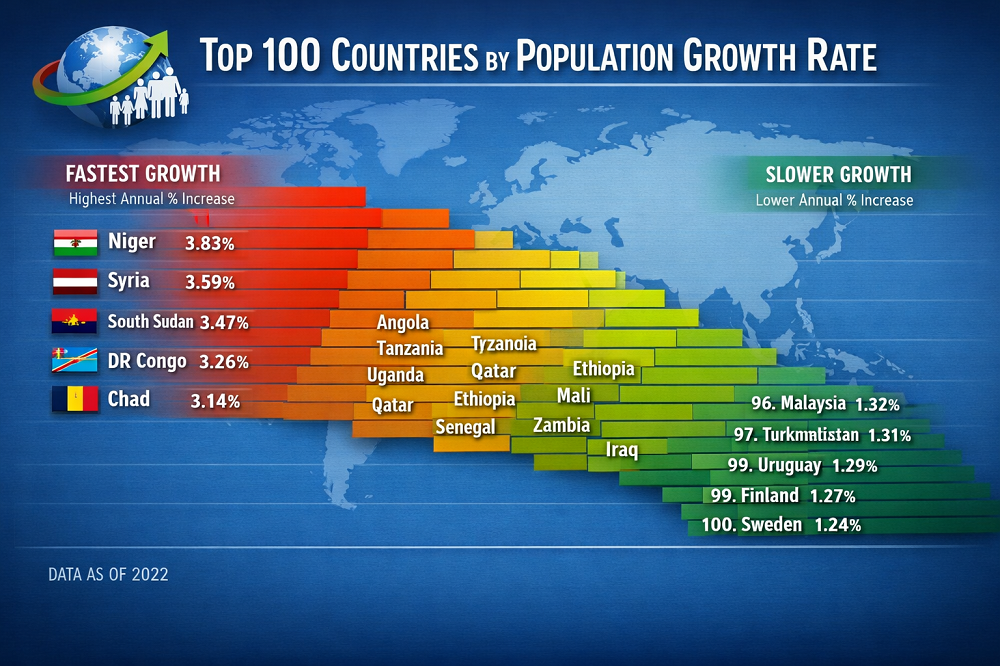
- Growth is concentrating. Many large countries are entering slow-growth or decline, while several African countries are expanding quickly under the medium path.
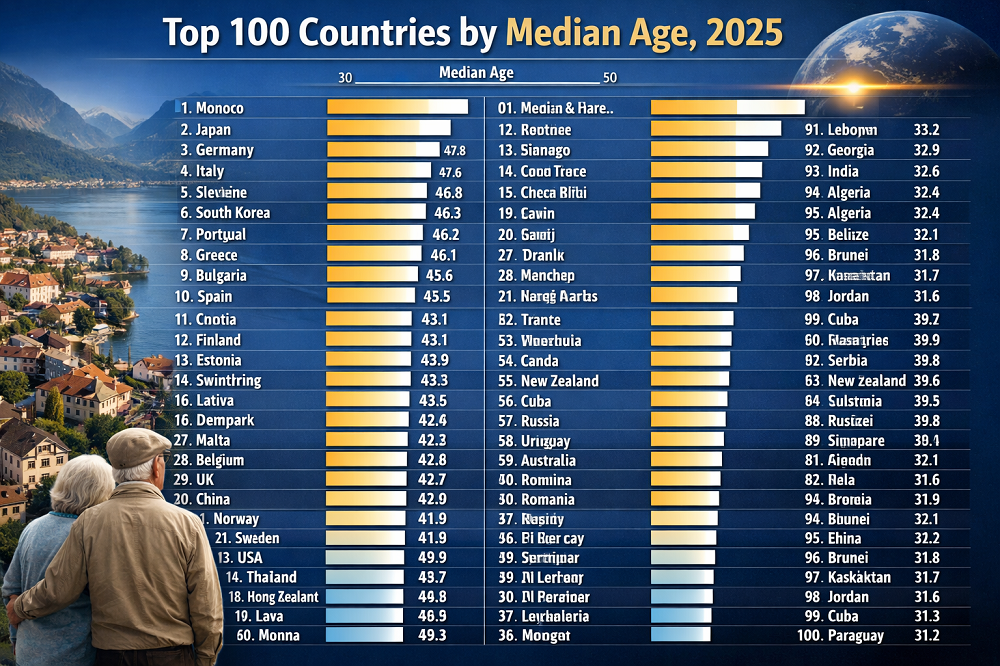
- Ageing becomes the central constraint. UN WPP 2024 highlights that the number of people aged 65+ is expected to keep rising strongly in coming decades, shifting budgets toward health and pensions.
- Population “size” isn’t the whole story. Labour force dynamics depend on age structure, participation, education, and productivity—not only headcount.
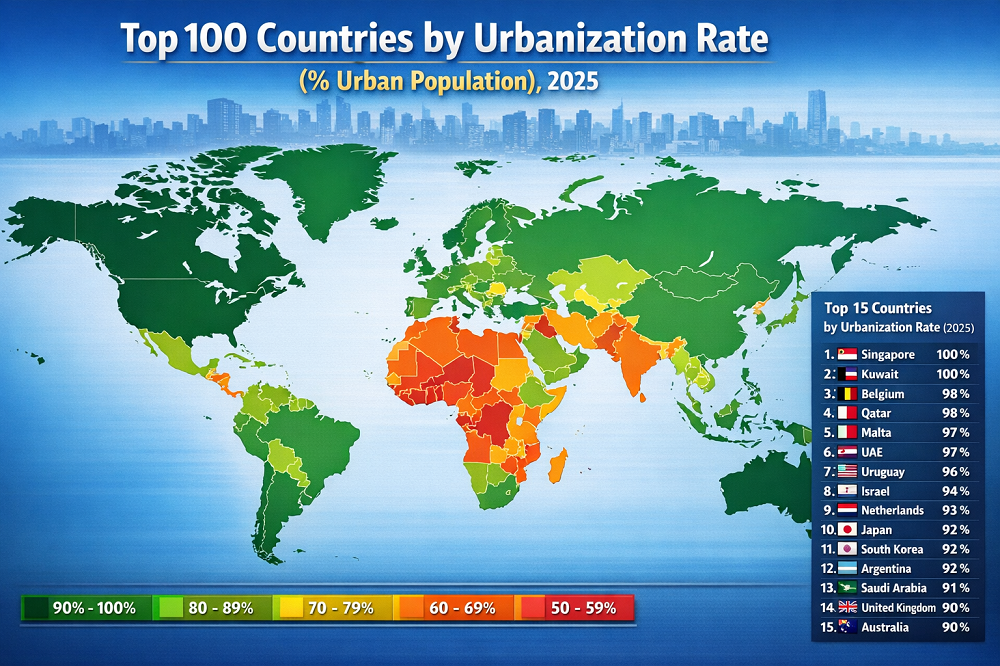
- Urban pressure continues. Even with slower global growth, cities absorb most of the net increase through internal migration and metropolitan expansion.
What this means for readers (practical interpretation)
- Jobs & wages: Younger, fast-growing countries face a “jobs race,” while ageing countries prioritize productivity, automation, and retention.
- Housing & infrastructure: The binding constraint is often urban capacity: transport, water, energy, and construction pace.
- Migration: Labour shortages and demographic imbalances tend to increase cross-border mobility pressure and policy experimentation.
- Long-term investing: Demographics influence sectoral demand (health, education, housing, consumer staples) more than short-run cycles.
FAQ (population projections without hype)
Does “9.7B by 2050” mean the world will keep growing forever?
No. The medium path suggests growth slows and later peaks; UN WPP 2024’s headline trajectory points to a peak around the mid-2080s (≈10.3B) and a slight decline by 2100 (≈10.2B).
Why can the world grow while many countries shrink?
Global totals are the sum of very different national trajectories. If several large countries decline slowly while a smaller set grows quickly, the world can still rise—just with growth concentrated in specific places.
What is the “medium variant” in UN projections?
It’s the UN’s central scenario for fertility, mortality, and migration assumptions. It is designed for planning and comparison, not as a guarantee.
What matters more for the economy: population size or age structure?
Often age structure. A country can be large but ageing rapidly, constraining labour supply. Another can be smaller but young, creating potential gains if education and jobs keep pace.
How reliable are country-level numbers for 2050?
They are best treated as scenarios. Short-term (next 10–15 years) tends to be more stable because future parents are already alive; uncertainty widens over longer horizons with fertility and migration changes.
Why do revisions happen from one UN edition to another?
New censuses, improved vital registration, updated migration estimates, and method upgrades can shift both estimates and projections. Revisions are a normal part of demographic accounting.
Top 50 populations: searchable table with year & unit toggles
The table below lists the 50 most populous countries in 2025 (baseline year) with their 2050 medium-scenario projection. Use the controls to search, filter by region, switch between 2025 and 2050, and toggle between units (millions) and share of world (%).
| Rank | Country | Population (Units / Share) | Change to 2050 |
|---|---|---|---|
| 1 | India |
2025 1,464 M%
2050 1,680 M%
2025 1,464M
2050 1,680M
|
|
| 2 | China |
2025 1,416 M%
2050 1,260 M%
2025 1,416M
2050 1,260M
|
|
| 3 | United States of America |
2025 347 M%
2050 381 M%
2025 347M
2050 381M
|
|
| 4 | Indonesia |
2025 286 M%
2050 321 M%
2025 286M
2050 321M
|
|
| 5 | Pakistan |
2025 255 M%
2050 372 M%
2025 255M
2050 372M
|
|
| 6 | Nigeria |
2025 238 M%
2050 359 M%
2025 238M
2050 359M
|
|
| 7 | Brazil |
2025 213 M%
2050 217 M%
2025 213M
2050 217M
|
|
| 8 | Bangladesh |
2025 176 M%
2050 215 M%
2025 176M
2050 215M
|
|
| 9 | Russian Federation |
2025 144 M%
2050 136 M%
2025 144M
2050 136M
|
|
| 10 | Ethiopia |
2025 135 M%
2050 225 M%
2025 135M
2050 225M
|
|
| 11 | Mexico |
2025 132 M%
2050 149 M%
2025 132M
2050 149M
|
|
| 12 | Japan |
2025 123 M%
2050 105 M%
2025 123M
2050 105M
|
|
| 13 | Egypt |
2025 118 M%
2050 162 M%
2025 118M
2050 162M
|
|
| 14 | Philippines |
2025 117 M%
2050 134 M%
2025 117M
2050 134M
|
|
| 15 | Democratic Republic of the Congo |
2025 113 M%
2050 218 M%
2025 113M
2050 218M
|
|
| 16 | Viet Nam |
2025 102 M%
2050 110 M%
2025 102M
2050 110M
|
|
| 17 | Iran (Islamic Republic of) |
2025 92 M%
2050 102 M%
2025 92M
2050 102M
|
|
| 18 | Türkiye |
2025 88 M%
2050 91 M%
2025 88M
2050 91M
|
|
| 19 | Germany |
2025 84 M%
2050 78 M%
2025 84M
2050 78M
|
|
| 20 | Thailand |
2025 72 M%
2050 66 M%
2025 72M
2050 66M
|
|
| 21 | United Republic of Tanzania |
2025 71M
2050 130M
|
|
| 22 | United Kingdom |
2025 70M
2050 76M
|
|
| 23 | France (metropolitan) |
2025 67M
2050 68M
|
|
| 24 | South Africa |
2025 65M
2050 79M
|
|
| 25 | Italy |
2025 59M
2050 52M
|
|
| 26 | Kenya |
2025 58M
2050 84M
|
|
| 27 | Myanmar |
2025 55M
2050 59M
|
|
| 28 | Colombia |
2025 53M
2050 59M
|
|
| 29 | Republic of Korea |
2025 52M
2050 45M
|
|
| 30 | Sudan |
2025 52M
2050 85M
|
|
| 31 | Uganda |
2025 51M
2050 85M
|
|
| 32 | Spain |
2025 48M
2050 45M
|
|
| 33 | Algeria |
2025 47M
2050 60M
|
|
| 34 | Iraq |
2025 47M
2050 72M
|
|
| 35 | Argentina |
2025 46M
2050 48M
|
|
| 36 | Afghanistan |
2025 44M
2050 77M
|
|
| 37 | Yemen |
2025 42M
2050 71M
|
|
| 38 | Canada |
2025 40M
2050 46M
|
|
| 39 | Angola |
2025 39M
2050 74M
|
|
| 40 | Ukraine |
2025 39M
2050 32M
|
|
| 41 | Morocco |
2025 38M
2050 43M
|
|
| 42 | Poland |
2025 38M
2050 33M
|
|
| 43 | Uzbekistan |
2025 37M
2050 52M
|
|
| 44 | Malaysia |
2025 36M
2050 44M
|
|
| 45 | Mozambique |
2025 36M
2050 64M
|
|
| 46 | Ghana |
2025 35M
2050 51M
|
|
| 47 | Peru |
2025 35M
2050 40M
|
|
| 48 | Saudi Arabia |
2025 35M
2050 48M
|
|
| 49 | Madagascar |
2025 33M
2050 53M
|
|
| 50 | Côte d'Ivoire |
2025 33M
2050 56M
|
Scatter: 2025 population size vs 2025→2050 growth (Top 50)
Interpreting the 2050 outlook: what changes (and what doesn’t)
The most important shift is not simply “more people,” but where growth happens and how populations are structured by age. By 2050, the world total rises to roughly 9.664B under the medium path, yet many large countries are near a plateau or in decline while several countries in Africa and parts of Asia expand quickly. In parallel, ageing accelerates in much of Europe and East Asia, changing fiscal priorities, labour markets, and healthcare demand.
- Fast-growing countries face a capacity challenge: schools, urban services, jobs, and public health must scale faster than the population.
- Ageing or shrinking countries face a productivity challenge: sustaining output with fewer workers requires higher participation, innovation, and efficiency.
- Migration becomes a stronger balancing mechanism: it can soften decline in receiving countries while raising integration and housing pressures.
- Climate and shocks matter: fertility, mortality, and mobility assumptions can change with policy, conflict, and extreme weather.
Policy takeaways (practical, non-ideological)
- Invest in human capital where growth is fastest: girls’ education, maternal health, child health, and job creation tend to be the highest-leverage levers.
- Plan ageing early: pension design, preventative health, long-term care systems, and “workable cities” for older adults reduce future fiscal stress.
- Make cities the unit of delivery: transport, water, energy, housing permits, and land-use decisions are where demographic pressure becomes visible.
- Use migration systems as infrastructure: predictable legal pathways, credential recognition, and integration capacity matter more than headline slogans.
- Measure, revise, repeat: demographic data improves with better registration and census coverage—revisions are a feature, not a failure.
Bottom line
2050 is less about “how many” and more about “where” and “how old.” Countries that align education, jobs, urban capacity, and healthy ageing policy with their demographic reality tend to convert population change into stability rather than strain.