Top 100 Countries by Road Fatalities per 100,000 Inhabitants, 2025
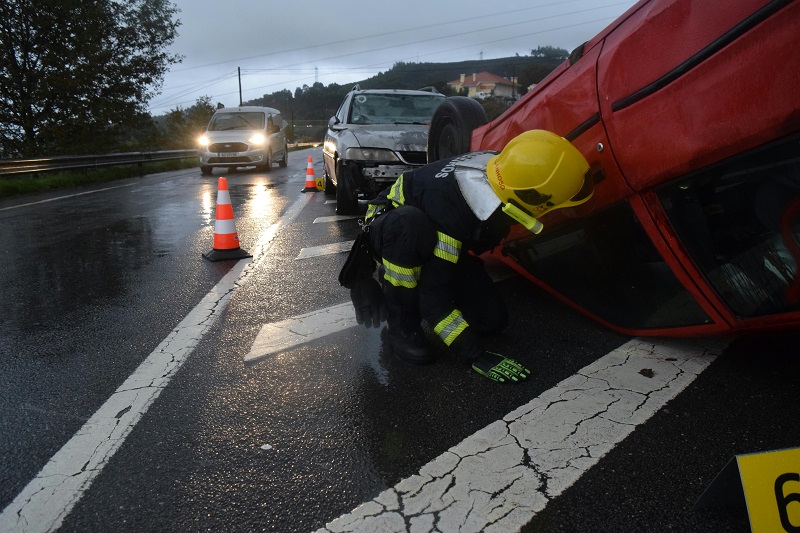
Where road-fatality risk is highest in the current global snapshot
Updated: April 21, 2026
This page ranks countries by the estimated rate of road-traffic deaths per 100,000 inhabitants. The rate is the cleanest cross-country headline measure because it compares population risk instead of raw death counts, which are heavily influenced by country size.
This is a 2025 edition snapshot, not a single-year official WHO release table. The ranking is rebuilt from the latest publicly accessible WHO-based country values in the currently visible reference list, so the country years are not fully uniform across all rows. Many values still reflect 2019 or 2021 estimates, while some higher-income countries show newer public updates.
A high rate usually signals more than dangerous driving alone. It often reflects a combination of weaker road design, less forgiving speed environments, older vehicle fleets, inconsistent enforcement, and slower post-crash trauma care. That is why road mortality sits at the intersection of transport policy, policing, emergency medicine, and broader state capacity.
What stands out at the top of the ranking
The upper end of the list is overwhelmingly concentrated in Africa, with a smaller cluster in Asia and a single very high-rate outlier from Oceania. Zimbabwe, Liberia, Eritrea, South Sudan, the Democratic Republic of the Congo, Namibia, Malawi and Guinea-Bissau all sit above 32 deaths per 100,000. Vietnam and Yemen are the most prominent non-African entries in the top tier, showing that high road mortality is not only an African issue but is especially concentrated there.
Top 10 countries in the 2025 edition snapshot
Zimbabwe sits at the top of the current public WHO-based ranking layer. A rate above 40 suggests an extremely high road-safety burden relative to population size.
Liberia remains deep in the very high-risk band. Rates at this level usually point to multiple system weaknesses rather than one isolated policy gap.
Eritrea’s position reinforces how strongly the top of the ranking is concentrated in African states with high estimated mortality burdens.
South Sudan remains in the extreme upper tier, where weak road infrastructure and fragile emergency response can amplify crash lethality.
The country’s scale matters for absolute burden, but the per-100k rate is already high enough on its own to mark a severe population-risk profile.
Namibia stands out as another very high-rate case where long-distance travel patterns and emergency-care access can materially affect mortality outcomes.
Malawi remains far above the global average and helps explain why Africa dominates the top of the table.
Tonga is the clearest non-African outlier in the top 10, showing that small-island states can also appear high in road mortality rankings.
Guinea-Bissau remains in the high-risk cluster where road safety, regulation, and care systems are likely all relevant.
Lesotho closes the top 10 and confirms how heavily the upper tier is concentrated in sub-Saharan Africa.
The average rate across the top 10 is about 35.5 deaths per 100,000. Across the full top 100, the average is roughly 21.2, and even the 100th position still stands at 12.6.
Full Top 100 countries by road fatalities per 100,000 inhabitants
The table below uses one consistent ranking set across the whole page. It is sorted from highest to lowest rate, so the top panel, the chart, and the full table all now point to the same underlying ordering.
| Rank | Country | Region | Rate |
|---|---|---|---|
| 1 | Zimbabwe | Africa | 41.2 |
| 2 | Liberia | Africa | 38.9 |
| 3 | Eritrea | Africa | 37.9 |
| 4 | South Sudan | Africa | 36.7 |
| 5 | Democratic Republic of the Congo | Africa | 34.9 |
| 6 | Namibia | Africa | 34.8 |
| 7 | Malawi | Africa | 33.4 |
| 8 | Tonga | Oceania | 33.0 |
| 9 | Guinea-Bissau | Africa | 32.2 |
| 10 | Lesotho | Africa | 31.9 |
| 11 | Vietnam | Asia | 30.6 |
| 12 | Mozambique | Africa | 30.0 |
| 13 | Congo | Africa | 29.7 |
| 14 | Guinea | Africa | 29.7 |
| 15 | Gambia | Africa | 29.6 |
| 16 | Yemen | Asia | 29.4 |
| 17 | Madagascar | Africa | 29.2 |
| 18 | Togo | Africa | 28.7 |
| 19 | Ethiopia | Africa | 28.2 |
| 20 | Burkina Faso | Africa | 27.8 |
| 21 | Dominican Republic | Americas | 27.5 |
| 22 | Iraq | Asia | 27.3 |
| 23 | Sudan | Africa | 26.8 |
| 24 | Comoros | Africa | 26.6 |
| 25 | Chad | Africa | 26.4 |
| 26 | Central African Republic | Africa | 25.9 |
| 27 | Ghana | Africa | 25.7 |
| 28 | Mauritania | Africa | 25.6 |
| 29 | Niger | Africa | 25.5 |
| 30 | Thailand | Asia | 25.4 |
| 31 | Benin | Africa | 24.8 |
| 32 | Eswatini | Africa | 24.7 |
| 33 | Democratic People's Republic of Korea | Asia | 24.2 |
| 34 | Afghanistan | Asia | 24.1 |
| 35 | Côte d’Ivoire | Africa | 24.1 |
| 36 | Ecuador | Americas | 23.4 |
| 37 | Senegal | Africa | 23.4 |
| 38 | Mali | Africa | 22.7 |
| 39 | Palau | Oceania | 22.2 |
| 40 | South Africa | Africa | 22.2 |
| 41 | El Salvador | Americas | 21.5 |
| 42 | Iran | Asia | 21.5 |
| 43 | Libya | Africa | 21.3 |
| 44 | Mongolia | Asia | 21.0 |
| 45 | Paraguay | Americas | 21.0 |
| 46 | Nigeria | Africa | 20.7 |
| 47 | Zambia | Africa | 20.5 |
| 48 | Myanmar | Asia | 20.4 |
| 49 | Somalia | Africa | 20.2 |
| 50 | Cambodia | Asia | 18.8 |
| 51 | Bangladesh | Asia | 18.6 |
| 52 | Honduras | Americas | 18.5 |
| 53 | Saudi Arabia | Asia | 18.5 |
| 54 | Algeria | Africa | 18.3 |
| 55 | Lao People's Democratic Republic | Asia | 17.9 |
| 56 | Jamaica | Americas | 17.8 |
| 57 | Bolivia | Americas | 17.6 |
| 58 | Cook Islands | Oceania | 17.6 |
| 59 | Belize | Americas | 17.5 |
| 60 | China | Asia | 17.4 |
| 61 | Azerbaijan | Asia | 17.2 |
| 62 | Morocco | Africa | 17.0 |
| 63 | Botswana | Africa | 16.5 |
| 64 | Cabo Verde | Africa | 16.5 |
| 65 | Tunisia | Africa | 16.5 |
| 66 | Lebanon | Asia | 16.4 |
| 67 | Nepal | Asia | 16.3 |
| 68 | Bahamas | Americas | 16.2 |
| 69 | Suriname | Americas | 16.2 |
| 70 | Uganda | Africa | 16.0 |
| 71 | Tanzania | Africa | 15.8 |
| 72 | Brazil | Americas | 15.7 |
| 73 | Tajikistan | Asia | 15.7 |
| 74 | Colombia | Americas | 15.5 |
| 75 | Costa Rica | Americas | 15.5 |
| 76 | Kuwait | Asia | 15.4 |
| 77 | Guyana | Americas | 15.2 |
| 78 | Angola | Africa | 15.0 |
| 79 | Syrian Arab Republic | Asia | 14.9 |
| 80 | United States | Americas | 14.2 |
| 81 | Micronesia | Oceania | 14.1 |
| 82 | Malaysia | Asia | 13.9 |
| 83 | Sierra Leone | Africa | 13.8 |
| 84 | Bosnia and Herzegovina | Europe | 13.7 |
| 85 | Armenia | Asia | 13.6 |
| 86 | Jordan | Asia | 13.6 |
| 87 | Nicaragua | Americas | 13.6 |
| 88 | Djibouti | Africa | 13.5 |
| 89 | Fiji | Oceania | 13.5 |
| 90 | Turkmenistan | Asia | 13.5 |
| 91 | Venezuela | Americas | 13.2 |
| 92 | Pakistan | Asia | 13.0 |
| 93 | Samoa | Oceania | 13.0 |
| 94 | Uruguay | Americas | 13.0 |
| 95 | Kazakhstan | Asia | 12.7 |
| 96 | Kyrgyzstan | Asia | 12.7 |
| 97 | Peru | Americas | 12.7 |
| 98 | Guatemala | Americas | 12.6 |
| 99 | India | Asia | 12.6 |
| 100 | Papua New Guinea | Oceania | 12.6 |
Source snapshot used for ranking: the latest publicly accessible WHO-based country values visible in the current public reference list. Because the visible public rows do not all belong to one identical reference year, this page should be read as a 2025 latest-available ranking snapshot, not as a one-year official WHO release table.
Africa accounts for 44 of the top 100 entries, Asia for 28, the Americas for 20, Oceania for 7, and Europe for just 1. That concentration is the clearest structural pattern in the ranking.
What the ranking actually tells readers
Road-traffic mortality is one of the clearest examples of a development problem that is also a systems problem. Countries do not land high in this ranking simply because crashes happen; they land high because crashes happen in environments where roads, speeds, vehicles, enforcement, and trauma response interact in a more lethal way.
The distribution is not subtle. The current public WHO-based snapshot is heavily dominated by African countries at the top, with a smaller high-risk cluster in Asia and only occasional appearances from other regions. That pattern does not mean every African road system is equally dangerous, but it does indicate where the global mortality burden is most concentrated when measured relative to population.
Methodology
This page was rebuilt from the latest publicly accessible country rows in the visible WHO-based road-mortality reference list. The metric is the estimated road-traffic death rate per 100,000 population. Values are then sorted from highest to lowest to create a Top 100 ranking.
The reference year is not fully uniform across every country row. Many values in the current public reference layer still reflect 2019 or 2021 WHO-based estimates, while some higher-income countries show newer official updates in 2022–2025. That is why this article is labelled as a 2025 edition rather than a 2025 observed-year table. It is a latest-available snapshot, not a single-year official global release.
Country names were lightly harmonized for readability, rates were rounded to one decimal place, and the same ranking set is used consistently in the top panel, the chart, and the full Top 100 table. The page is therefore internally consistent even though the source layer itself is mixed-year.
Insights
- The upper end is extremely concentrated. The top 20 average is about 32.4 deaths per 100,000, well above the global level mentioned by WHO.
- Africa dominates the ranking. Forty-four of the top 100 entries fall in Africa, which is the strongest regional signal on the page.
- Very high rates are not confined to one continent. Tonga, Vietnam and Yemen show that high mortality risk also appears outside Africa.
- The lower edge of the Top 100 is still high. A country can sit at rank 100 and still record 12.6 deaths per 100,000, which is not a low-risk outcome.
- Rates and counts answer different questions. A small country can rank high by rate while a large country carries a much larger absolute burden.
What this means for readers
If you are reading this as a traveler, migrant, investor, insurer, or policy observer, the useful takeaway is not just which country is first. The real question is how much road risk is embedded in everyday mobility. A higher rate often implies weaker pedestrian protection, more dangerous speed environments, more fragile trauma-care pathways, or a less forgiving mix of vehicles and roads.
For policymakers and analysts, the ranking is a prompt to ask better questions: how much of the burden falls on pedestrians and motorcyclists, how quickly emergency care can reach crash victims, whether seat-belt and helmet rules are actually enforced, and whether road design prioritizes survival rather than just traffic flow.
FAQ
Why are these numbers not all from one identical year?
The visible public country rows in the current WHO-based reference layer are mixed-year. Many countries still reflect WHO-based 2019 or 2021 estimates, while some countries show newer public official updates. That is why the page is framed as a 2025 edition snapshot instead of a single-year release.
Why use deaths per 100,000 instead of raw road-death totals?
The per-100,000 rate compares population risk. Raw totals are useful for absolute burden, but they are dominated by country size. A standardized rate makes cross-country comparison more meaningful.
Does a high rate always mean a country has more crashes?
Not necessarily. It can also mean crashes are more lethal because of road design, vehicle standards, helmet and seat-belt use, emergency response, or the mix of vulnerable road users on the road network.
Can a richer country still rank badly?
Yes. Wealth helps, but it does not guarantee safety. Policy choices, enforcement quality, speed management, and trauma care can move countries far above or below what income alone would predict.
Why should readers care about vulnerable road users?
Because pedestrians, cyclists and motorcyclists often absorb a disproportionate share of deaths. A country can improve national road mortality only slowly if it does not protect the least protected users of the transport system.
Sources
The ranking is rebuilt from a public WHO-based country list, while the official measurement framework comes from the sources below.
- WHO indicator metadata — RS_198. Definition and measurement notes for the estimated road-traffic death rate per 100,000 population.
https://www.who.int/data/gho/indicator-metadata-registry/imr-details/198 - WHO road-traffic mortality topic page. Global context on road deaths and rates.
https://www.who.int/data/gho/data/themes/topics/topic-details/GHO/road-traffic-mortality - WHO SDG target 3.6 road-traffic injuries page. Indicator framing and global progress context.
https://www.who.int/data/gho/data/themes/topics/sdg-target-3_6-road-traffic-injuries - UN SDG metadata for indicator 3.6.1. Official methodological background for cross-country interpretation.
https://unstats.un.org/sdgs/metadata/files/Metadata-03-06-01.pdf - World Bank indicator SH.STA.TRAF.P5. WHO-based access point for country data and definitions.
https://data.worldbank.org/indicator/SH.STA.TRAF.P5
Related rankings
Closely related StatRanker pages selected by topic. If no strong match exists, fewer links are shown instead of unrelated recommendations.