

World grain production 2025
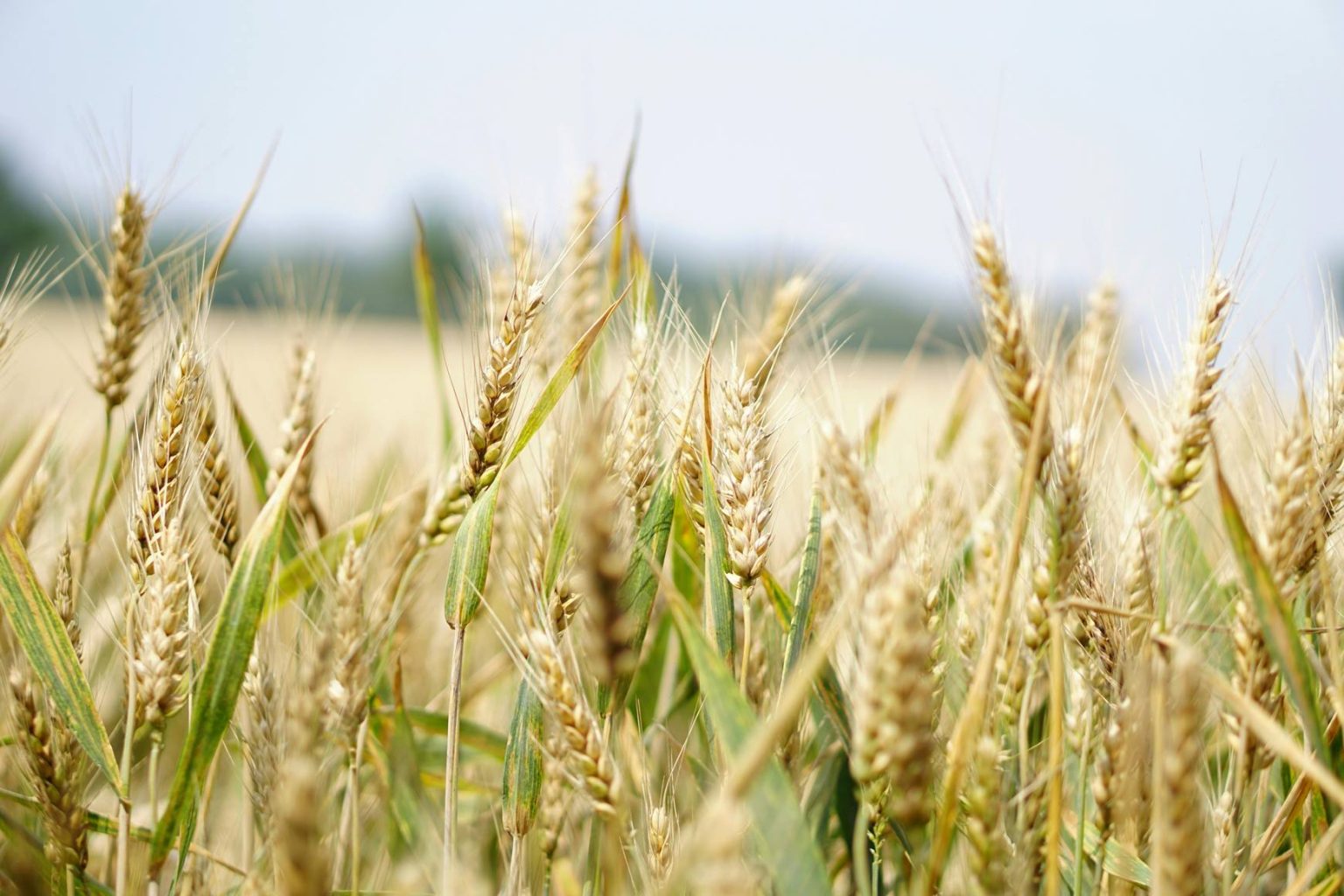
Grain production is central to global food security, animal feed, and several industrial uses. The 2023/24 crop year produced an estimated 2,847 million metric tons, and the 2025/26 cycle is projected to remain near record levels. This article ranks the world’s largest grain-producing countries, reviews recent output changes, and explains what the numbers mean for markets, trade, and food-security planning.
* IGC 2025/26 figure covers only coarse grains, wheat and rice (excludes all minor cereals); global total including all grains exceeds 2.85 billion tons.
Methodology
The rankings, values, and growth rates in this article are compiled from the three primary international datasets listed under Sources. The table and chart use the 2023/24 crop year, which is the latest fully comparable cross-country cycle in the source set used here. References to 2025/26 are limited to forward-looking figures from IGC and USDA. All values are expressed in million metric tons (Mt) of combined grain output — wheat, coarse grains, and milled-equivalent rice — unless stated otherwise.
Crop year 2023/24 for output levels; 2025/26 IGC projections for forward-looking figures.
All cereals: wheat, maize (corn), rice (milled equivalent), barley, sorghum, millet and other coarse grains.
Million metric tons (Mt). 1 Mt = 1,000,000 metric tons = approx. 36.7 million bushels of wheat.
FAO Food Outlook, USDA WASDE (July 2025), IGC Grain Market Report. Cross-checked with national statistics.
Percentage change vs. previous crop year (2022/23). Sign: "+" = increase, "−" = decrease.
EU member-state data is presented individually; the EU bloc total (~270 Mt) is not a single row. Minor rounding may affect totals.
Calculated as (country value ÷ 2,847 Mt) × 100. Toggle between Units and Share in the table below.
FAO, USDA, and IGC revise crop estimates during the marketing year. Values here reflect the latest published figures used in this article as of mid-2025.
Key insights: what the 2025 grain production landscape reveals
1. Extreme geographic concentration at the top
Three economies — China, the United States and India — together account for roughly 47% of all global grain output. China alone (577 Mt) produces more grain than the entire European Union combined. This concentration has narrowed only slowly over the past three decades, because the productivity gap between these frontier producers and the rest of the world remains large. Any weather shock or policy disruption in any of the top three immediately registers in global prices and food security indicators.
2. The diverging fortunes of Eastern Europe
Russia and Ukraine together produced approximately 185 Mt in 2023/24 — around 6.5% of global output — but both recorded year-on-year declines. Russia's output fell roughly 3% due to a combination of drought in key wheat oblasts and export-quota effects on planting incentives. Ukraine's output dropped ~5%, compounded by ongoing infrastructure damage and reduced planting in conflict-affected regions. Their combined decline is a reminder that geopolitical disruption can affect hundreds of millions of consumers worldwide, since both countries are disproportionately important as exporters relative to their production share.
3. Argentina's sharp swing — a recurring vulnerability
Argentina recorded the largest YoY drop in the top 20 (−8.2%), driven by a maize stunt disease outbreak that reduced plantings and by La Niña–related moisture deficits. Argentina is the third-largest maize exporter globally, so this contraction directly tightened spot prices. The episode illustrates the structural fragility of economies where a single crop accounts for a large share of agricultural exports.
4. The United States rebound underlines climate-yield variability
US total output rose 5.2%, largely because maize production rebounded strongly in 2023/24. In global terms, that matters because changes in the US corn crop can move world feed balances quickly. The broader point is not just that the United States remains a large producer, but that year-to-year shifts in its maize output still have an outsized influence on global supply expectations.
5. Emerging-market producers gaining share quietly
Brazil (130 Mt, +4.5%) continues to strengthen its position among the largest grain producers. Other countries lower down the ranking, such as Kazakhstan and Romania, are also becoming more relevant in regional export flows. That does not remove global concentration at the top, but it does show that the supply base is not entirely static.
6. Demand outpacing supply in 2024/25, with tightening stocks
Global grain utilization in 2024/25 is projected at 2,851 Mt, while ending stocks are expected to tighten to 576.6 Mt. That leaves less buffer against weather shocks or trade disruptions than in looser-stock years. Population growth, feed demand, and biofuel policy all remain important drivers, although their relative weight differs across crops and regions.
Bottom line for food security:
- Global supply is growing, but the buffer (ending stocks) is thinning relative to consumption.
- The top-3 producers (China, US, India) have an outsized influence on global market balance.
- Climate events — drought, flooding, pest outbreaks — remain the single largest source of year-to-year volatility.
- Export concentration (Russia, Ukraine, Argentina, US) means that geopolitical events translate rapidly into price spikes.
- Yield improvements from better seed technology, water management, and precision agriculture could raise output materially over time, but adoption remains uneven across regions.
Table 1. Top 20 grain-producing countries, 2023/24
Global total 2023/24: 2,847 Mt. All values in million metric tons (Mt). Share of global = country value ÷ 2,847 × 100. Use the toolbar to search, sort, filter by region or income group, and toggle between absolute values and share of global output.
| Rank | Country | Output 2023/24 | YoY | Region | Income group |
|---|---|---|---|---|---|
| 1 | China | 577.0 | +1.5% | Asia | Upper-middle |
| 2 | United States | 430.0 | +5.2% | Americas | High |
| 3 | India | 329.7 | +2.1% | Asia | Lower-middle |
| 4 | Russia | 131.0 | −3.0% | Europe | Upper-middle |
| 5 | Brazil | 130.0 | +4.5% | Americas | Upper-middle |
| 6 | Argentina | 60.0 | −8.2% | Americas | Upper-middle |
| 7 | Canada | 57.0 | +2.3% | Americas | High |
| 8 | France | 56.5 | −1.2% | Europe | High |
| 9 | Ukraine | 54.0 | −5.0% | Europe | Lower-middle |
| 10 | Australia | 50.0 | −2.1% | Oceania | High |
| 11 | Germany | 43.5 | −0.5% | Europe | High |
| 12 | Pakistan | 40.0 | +1.8% | Asia | Lower-middle |
| 13 | Mexico | 35.0 | +1.5% | Americas | Upper-middle |
| 14 | Turkey | 34.0 | +0.8% | Europe | Upper-middle |
| 15 | Romania | 28.5 | +3.2% | Europe | High |
| 16 | Bangladesh | 26.0 | +1.0% | Asia | Lower-middle |
| 17 | Kazakhstan | 25.5 | +1.5% | Asia | Upper-middle |
| 18 | Poland | 24.0 | +2.8% | Europe | High |
| 19 | Iran | 22.0 | −0.5% | Asia | Lower-middle |
| 20 | Indonesia | 20.0 | +1.2% | Asia | Lower-middle |
Source: FAO Food Outlook (2024), USDA WASDE (July 2025). Values are million metric tons, rounded to one decimal place. YoY = change vs. crop year 2022/23. EU countries shown individually; bloc total ≈ 270 Mt.
Chart 1. Grain output — Top 10 producers, 2023/24
The bar chart below shows absolute output for the ten largest producers. China and the United States together account for more than a third of all grain produced globally.
Source: FAO / USDA 2023/24. Values in million metric tons. Chart is indicative and rounded.
What the grain production ranking means for you
If you follow commodity markets
The concentration at the top means that US planting intentions, Indian monsoon conditions, and Chinese policy decisions remain major drivers of grain-market sentiment. For market monitoring, USDA releases, FAO updates, and official crop estimates from large producing countries remain the most useful reference points.
If you work in food policy or international development
The stocks-to-use ratio is one of the most useful early-warning indicators in global grain analysis. When the ratio falls, markets usually become more sensitive to weather shocks, export restrictions, and other supply disruptions. At current levels, stock management and import planning remain important for countries that depend heavily on external supply.
If you are a researcher or student
This ranking is a starting point, not a complete picture. Total grain output per country does not capture per-capita food availability, post-harvest losses (estimated at 14% globally), distributional equity within countries or trade-adjusted consumption. Pair this data with FAO's Food Balance Sheets, IFPRI's Global Hunger Index and national household survey data for a fuller picture of food security outcomes.
If you are in agribusiness or supply chains
The strong rebound in US output (+5.2%) and Brazil's continued growth (+4.5%) signal that Northern Hemisphere and Southern Hemisphere production cycles are increasingly acting as natural hedges. Procurement strategies that diversify origins across both hemispheres reduce exposure to single-region weather shocks. The rise of Romania (+3.2%) and Kazakhstan (+1.5%) as regional exporters also offers alternative sourcing corridors for Black Sea and Central Asian logistics.
Frequently asked questions about global grain production
-
The most recent complete crop year — 2023/24 — recorded global grain output of 2,847 million metric tons, a 1.2% increase over 2022/23. Looking ahead, the International Grains Council projects the 2025/26 crop year to reach approximately 2,368 Mt for the core grains (wheat, coarse grains, rice). Adding minor cereals, the total is expected to surpass 2,900 Mt, which would represent a new all-time record. The main drivers of growth are expanded maize area in the United States, a wheat recovery in the European Union after weather-affected 2024/25 harvests, and continued yield improvements in South Asia.
-
China is by far the largest grain-producing country, with approximately 577 million metric tons in 2023/24 — roughly 20% of the global total. China leads in both wheat (around 136.9 Mt) and rice (approximately 149 Mt), and is also a major corn producer. The United States ranks second at ~430 Mt, driven primarily by corn, while India is third at ~330 Mt, with wheat and rice as its dominant crops. Together, these three countries account for about 47% of all grain produced globally, a level of concentration that has been stable for several decades.
-
International grain statistics typically cover six crop categories: wheat (the most widely traded), maize (corn) (the largest by volume, used primarily for animal feed and biofuels), rice (usually reported as milled equivalent), barley, sorghum and millet (the last three often grouped as "other coarse grains"). Together, wheat, maize and rice account for over 85% of total grain output. Some aggregate datasets also include oats, rye and triticale. Soybeans and other oilseeds are technically legumes, not grains, and are reported separately; they are not included in the figures on this page.
-
Climate change affects grain production through several interacting channels. Higher average temperatures accelerate crop development cycles, which can reduce grain fill periods and lower yields — a 1°C warming above optimal temperatures is estimated to reduce wheat yields by 6% on average. Shifting precipitation patterns increase the frequency of both droughts (US winter wheat in 2023/24, Argentina in 2024) and flooding (India, Bangladesh). Extreme weather events — late frosts, heatwaves during flowering, and tropical cyclones — introduce new sources of year-to-year volatility. Conversely, elevated CO₂ concentrations have a mild fertilization effect on some C3 crops (wheat, rice), partially offsetting temperature losses. FAO projections suggest that without adaptation, climate change could reduce cereal yields in tropical regions by 10–25% by 2050, while higher latitudes (Canada, Russia, Kazakhstan) may see modest gains in some crops.
-
Supply and demand are broadly balanced but tightening. Global grain utilization in 2024/25 is projected at 2,851 Mt — slightly above estimated production for the same cycle — which means the world is drawing down carryover stocks. Ending stocks are projected to fall to 576.6 Mt in 2025/26, keeping the stocks-to-use ratio just above 20%. This is within the historical "adequate" range, but it leaves little buffer for a simultaneous production shortfall in two or more major producing regions. The three main sources of demand growth are population expansion (adding ~80 million people per year), higher per-capita meat consumption in Asia (each kilogram of pork requires roughly 3 kg of feed grain), and biofuel mandates in the US, EU and Brazil, which divert roughly 200–250 Mt of grain per year from food use.
-
Production measures total output grown within a country's borders in a given crop year. Export volume is a completely different concept: it measures how much of that output (plus any stocks carried over from previous years) is shipped to other countries. Some of the largest producers are not the largest exporters — China and India together produce nearly 900 Mt but are net importers of certain grains (China imports significant quantities of soybeans and corn; India restricts wheat exports in tight years). Conversely, relatively smaller producers like Ukraine (~54 Mt) or Argentina (~60 Mt) are globally important exporters because their domestic consumption is low relative to production. Export market power therefore depends on the production-to-consumption ratio, not on absolute production volume alone.
-
Several technology pathways could improve yields by 2030, including precision agriculture, more resilient seed varieties, and digital advisory tools for farmers. Their long-term effect will depend less on the technology itself than on how widely it is adopted, especially in regions where current yield gaps remain large.
Primary data sources and technical notes
All figures are compiled from the open international datasets listed below and rounded for readability. For formal policy, academic, or commercial use, the underlying databases and methodological notes should be reviewed directly.
-
FAO — Food Outlook: Biannual Report on Global Food Markets
Global grain production, consumption, trade and stock balances by crop and country. The
November 2024 issue is the primary source for 2023/24 crop-year figures used here.
fao.org/publications/…/food-outlook -
USDA Foreign Agricultural Service — World Agricultural Supply and Demand Estimates (WASDE)
Monthly updated production, supply, use and trade tables for major crops worldwide. The
July 2025 WASDE underpins US and global figures.
fas.usda.gov/data/grain-world-markets-and-trade -
International Grains Council (IGC) — Grain Market Report
Monthly global supply and demand outlook, including the 2025/26 forward projections cited in
this article.
igc.int/en/markets/marketinfo-sd -
FAO — Cereal Supply and Demand Brief (CSDB)
Provides quarterly updates on global cereal markets, stocks-to-use ratios and food security
indicators referenced in the policy context section.
fao.org/worldfoodsituation/csdb/en -
FAO — FAOSTAT (Crops and Livestock Products)
Long-run country-level production series used for historical cross-checks and convergence
analysis, particularly for emerging-market producers.
fao.org/faostat/en/#data/QCL -
Our World in Data — Cereal production
Long-run time-series visualisations based on FAO data, used to validate historical growth trends
and convergence patterns for major producers.
ourworldindata.org/grapher/cereal-production
