Commercial Vehicle Registrations and Sales by Country: 57 Markets, 2024
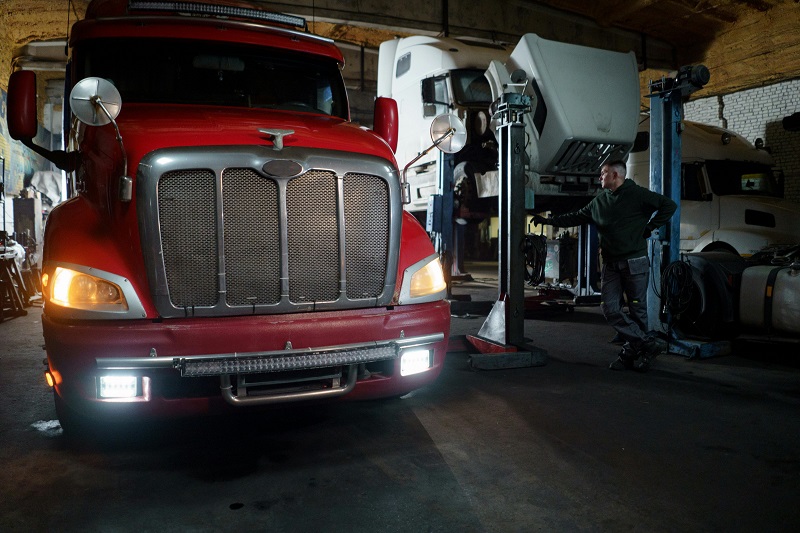
Commercial vehicle registrations and sales by country, 2024: largest markets ranked
Commercial vehicles are part of the operating backbone of modern economies: vans, pickups, trucks, buses and coaches move parcels, construction materials, food, commuters and industrial inputs. This ranking compares annual commercial vehicle registrations or sales by country using OICA’s latest comparable 2024 country table.
The indicator measures market flow: new commercial vehicles registered or sold during the year. It does not measure the total number of commercial vehicles already operating on the road. The 2026 edition uses 2024 data because this is the latest comparable country-level source available for the global commercial vehicle market.
What the ranking measures
The indicator is the number of new commercial vehicles registered or sold during the year. OICA reports commercial vehicle data through the practical market categories supplied by national associations: light commercial vehicles, heavy commercial vehicles, and where available buses and coaches. This is a market-size measure, not a complete fleet-stock measure.
The ranking is labelled as a 2026 edition because it uses the newest comparable OICA release available at the time of update; the measured market year is 2024.
Top of the ranking: what stands out
The United States is far ahead because light trucks, pickups and vans play an unusually large role in both business and household vehicle demand. China ranks second, but its 2024 commercial vehicle market was smaller than the US total because China’s broader vehicle growth is heavily concentrated in passenger cars and electric passenger vehicles. Canada, India, Mexico, Japan and Brazil form the next tier, mixing large economies, trade corridors and domestic logistics demand.
The ranking is not a simple measure of population. Mexico ranks above Japan in 2024 because it combines domestic commercial demand with a deep manufacturing and North American supply-chain role. Brazil leads South America, while France, the United Kingdom, Germany, Turkey, Russia and Italy form the largest European-listed markets in this comparable table.
Comparable country and territory ranking by commercial vehicle registrations/sales
How to read the scope: OICA country rows may use different category scopes. Some markets include light commercial vehicles, heavy commercial vehicles, buses and coaches; others report a narrower scope. The ranking is best read as a broad commercial vehicle market comparison, not as a like-for-like heavy-truck or bus ranking.
Global total used for share calculations: 27,772,650 commercial vehicles registered or sold in 2024.
| Rank | Country | Commercial vehicles | YoY |
|---|---|---|---|
| 1 | United States | 13,356,43348.09% | +3.6% |
| 2 | China | 3,873,20413.95% | −3.9% |
| 3 | Canada | 1,652,6715.95% | +9.7% |
| 4 | India | 951,9913.43% | −2.7% |
| 5 | Mexico | 919,2153.31% | +12.3% |
| 6 | Japan | 696,2942.51% | −11.5% |
| 7 | Brazil | 686,2232.47% | +16.8% |
| 8 | France | 436,6401.57% | +0.7% |
| 9 | United Kingdom | 415,7961.50% | +2.8% |
| 10 | Germany | 374,7001.35% | +4.2% |
| 11 | Australia | 323,8351.17% | −1.2% |
| 12 | Turkey | 305,4481.10% | −3.6% |
| 13 | Russia | 283,6031.02% | +6.0% |
| 14 | Italy | 233,8090.84% | +1.3% |
| 15 | Thailand | 232,6190.84% | −36.9% |
| 16 | South Korea | 192,9780.70% | −25.9% |
| 17 | Indonesia | 192,7370.69% | −14.9% |
| 18 | South Africa | 164,2970.59% | −10.8% |
| 19 | Netherlands | 149,3400.54% | +74.0% |
| 20 | Argentina | 136,4480.49% | −2.8% |
| 21 | Philippines | 117,3300.42% | −13.6% |
| 22 | Saudi Arabia | 99,5070.36% | −12.0% |
| 23 | Poland | 97,1970.35% | −4.5% |
| 24 | Chile | 87,3090.31% | −2.5% |
| 25 | Belgium | 75,9030.27% | −3.1% |
| 26 | Malaysia | 69,5670.25% | −13.8% |
| 27 | Taiwan | 68,5280.25% | +12.0% |
| 28 | Uzbekistan | 52,5100.19% | +7.1% |
| 29 | Vietnam | 46,1440.17% | −5.4% |
| 30 | Sweden | 44,9030.16% | −13.7% |
| 31 | Austria | 42,0630.15% | +5.5% |
| 32 | New Zealand | 41,4160.15% | +7.6% |
| 33 | Peru | 40,3490.15% | −16.7% |
| 34 | Portugal | 39,5350.14% | +8.5% |
| 35 | United Arab Emirates | 37,4030.13% | +10.8% |
| 36 | Switzerland | 36,3010.13% | +1.6% |
| 37 | Norway | 35,4540.13% | −4.4% |
| 38 | Ireland | 34,2260.12% | +7.5% |
| 39 | Denmark | 33,3790.12% | +7.3% |
| 40 | Czech Republic | 32,2640.12% | −5.7% |
| 41 | Hungary | 30,4790.11% | +9.1% |
| 42 | Romania | 28,6530.10% | +8.8% |
| 43 | Pakistan | 27,6330.10% | +16.8% |
| 44 | Puerto Rico | 26,1740.09% | +16.9% |
| 45 | Israel | 22,5850.08% | −5.7% |
| 46 | Colombia | 21,8600.08% | −10.5% |
| 47 | Morocco | 19,3140.07% | +18.6% |
| 48 | Ecuador | 17,8260.06% | −31.5% |
| 49 | Kuwait | 17,5050.06% | +6.2% |
| 50 | Egypt | 15,3870.06% | −8.8% |
| 51 | Ukraine | 14,1650.05% | +9.0% |
| 52 | Finland | 13,7300.05% | −9.7% |
| 53 | Slovakia | 12,7250.05% | −8.0% |
| 54 | Bulgaria | 12,0820.04% | +30.9% |
| 55 | Kazakhstan | 12,0370.04% | +25.6% |
| 56 | Greece | 11,6260.04% | +5.8% |
| 57 | Croatia | 10,7400.04% | +11.5% |
Source: OICA, “Registrations or sales of new vehicles — commercial vehicles”, Q1–Q4 2024. The ranking includes only national or territory rows published by OICA. Regional aggregates and “other countries/regions” rows are excluded from the ranking to avoid double counting.
Chart: top 20 commercial vehicle markets
The bar chart shows how concentrated the market is: the United States is far ahead, China is a clear second, and the remaining top markets form a much smaller second tier.
Methodology
The ranking uses OICA’s country-level table for commercial vehicle registrations or sales in Q1–Q4 2024. The indicator counts new commercial vehicles entering the market during the year. It is not a count of the full active fleet already registered on the road. The article uses 2024 as the measured year because OICA’s latest comparable public country table covers Q1–Q4 2024. Transport Data Commons is used as a metadata cross-check for the OICA source family and dataset structure.
Country rows were separated from regional aggregates. Rows such as “Europe”, “USMCA”, “ASEAN”, “Other countries/regions” and “All countries/regions” are not ranked as countries because including them would double count national markets. Values are rounded as published by OICA and shown as whole vehicles. YoY change is the OICA 2024/2023 percentage change. “Share of global” divides each country value by the OICA all-countries/regions total of 27,772,650.
The main limitation is comparability of vehicle categories. Some countries report LCV+HCV+B&C, while others report only LCV or exclude selected categories. That makes the ranking strong for broad market size but less precise for comparing narrow subcategories such as heavy trucks only or buses only. A separate ranking would be needed for full commercial vehicle fleet stock, vehicle age, electrification rate or freight capacity.
Insights from the 2024 commercial vehicle market
Market concentration
The top two countries dominate the distribution. The United States and China together account for more than three-fifths of the comparable global commercial vehicle registrations/sales total. This concentration reflects the scale of domestic freight, construction, parcel delivery, service trades and regional distribution networks.
Different economic stories
High-income markets often have large replacement cycles, while emerging markets can show sharper swings because purchases are more sensitive to credit, construction cycles, inflation and exchange rates. That is why fast-growing countries do not always outrank older, richer markets.
Europe is fragmented: no single European country comes close to North American or Chinese scale, but France, the United Kingdom, Germany, Italy, the Netherlands and Poland collectively represent a major fleet renewal zone. In the Americas, the US market is structurally exceptional, while Canada, Mexico and Brazil form the second tier. In Asia, China leads, but India, Japan, Thailand, South Korea and Indonesia show very different cycles because the mix of small commercial vehicles, trucks and buses differs sharply by country.
What this means for the reader
Commercial vehicle registrations are a useful real-economy signal. They respond to freight demand, construction activity, small-business confidence, e-commerce logistics, public transport renewal and fleet replacement. A rising market can point to stronger investment in distribution capacity; a falling market can indicate tight credit, weak construction demand, delayed fleet renewal or regulatory transition costs.
For investors and analysts, the ranking helps identify where demand for tyres, parts, maintenance, telematics, charging infrastructure, fuel, insurance and fleet finance is likely to be largest. For policymakers, it shows where emissions rules, road safety standards and logistics infrastructure have the greatest practical importance. For readers comparing countries, the key is to avoid confusing market flow with fleet stock: a country can have a huge existing fleet but a temporarily weak sales year, or a smaller fleet with rapid new registrations.
FAQ
Is this a true commercial vehicle fleet-size ranking?
No. It ranks country-level commercial vehicle registrations or sales in 2024. That is the freshest comparable global public data available from OICA. A true fleet-size ranking would require the number of commercial vehicles already registered and active on the road in each country.
Why are there fewer than 100 ranked markets?
Because the comparable OICA country table does not provide 100 country-level rows for this indicator. The ranking shows all available country and territory entries from the comparable source and keeps aggregates out of the table to avoid double counting.
Why is the United States so far ahead?
The US market includes a very large light-truck, pickup and van segment. Many vehicles used for work, trades, delivery and mixed personal-commercial purposes fall into the commercial vehicle category, which lifts the US total well above other countries.
Why can China be second despite being the world’s largest auto market?
China is extremely large in total vehicle production and passenger-car demand, but this table is only for commercial vehicles. The commercial segment has its own cycle, linked to logistics, construction, regulation, replacement demand and freight investment.
Does YoY growth mean the fleet is growing at the same rate?
No. YoY growth here compares new registrations or sales in 2024 with 2023. Fleet stock changes more slowly because it depends on new additions, scrappage, exports, imports, retirements and how long vehicles remain in service.
Why do some countries report only LCV while others include trucks and buses?
National reporting systems are not identical. OICA publishes the reported scope in the table. That is why the methodology flags category differences and treats this as a broad market ranking rather than a narrow engineering comparison.
Sources
- OICA — Commercial vehicles registrations/sales, 2024. Main source for the country and territory ranking, Q1–Q4 2024 values, YoY change and category scope. OICA commercial vehicles PDF
- Transport Data Commons — OICA Global Sales Statistics metadata. Metadata cross-check for dataset description, update timing, time coverage and vehicle-category split. TDC OICA dataset page
- OICA — Sales statistics portal. Official access point for OICA motor vehicle sales datasets used to verify the source family. OICA sales statistics
- OICA — Statistics portal. Official entry point for OICA production and sales statistical releases. OICA statistics
Related rankings
Closely related StatRanker pages selected by topic. If no strong match exists, fewer links are shown instead of unrelated recommendations.