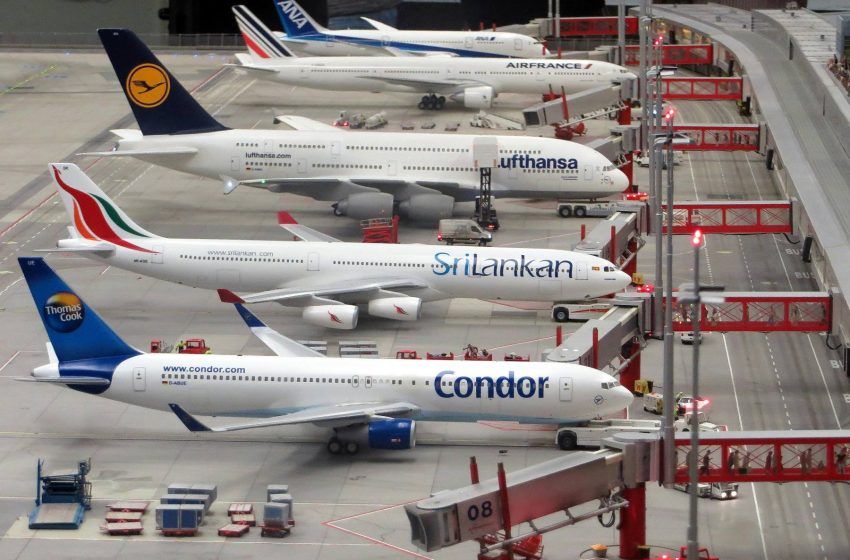
Civil aircraft production in the world TOP10 countries 2025
Civil aircraft production in 2025: who builds the most planes (and what “production” really means)
Civil aircraft output is not a single number in a single database. In practice, the cleanest real-world proxy is deliveries: the aircraft that manufacturers hand over to customers within the year. For 2025, this page compiles a practical “production snapshot” from two pillars: commercial airliners (Airbus and Boeing) and general aviation & business aircraft (GAMA shipment reporting), with smaller turboprop/regional items where explicit 2025 delivery figures are available.
Two facts define 2025 output at the top of the market: Airbus delivered 793 commercial aircraft, and Boeing delivered 600 commercial aircraft. General aviation shipments add a large “long tail” of smaller aircraft that can exceed airliner volumes in unit terms.
Top 10 countries by measured civil aircraft deliveries (2025)
The ranking below aggregates publicly reported 2025 deliveries/shipments for major civil fixed-wing OEMs headquartered in each country. Because unit counts mix large airliners and small GA aircraft, the table is best interpreted as “how many aircraft left factories,” not “how many seats were produced.”
Table 1. Top 10 countries — measured civil aircraft deliveries (2025)
| Rank | Country | Aircraft delivered (units, 2025) | Major OEMs included (2025 delivery reporting) |
|---|---|---|---|
| 1 | United States | 2,485 | Boeing; Cirrus; Textron Aviation; Gulfstream; Piper |
| 2 | France | 960 | Airbus; Daher; Dassault; ATR; Elixir |
| 3 | Austria | 235 | Diamond Aircraft |
| 4 | Brazil | 233 | Embraer (commercial + executive) |
| 5 | Italy | 219 | Tecnam; Piaggio Aerospace |
| 6 | Canada | 157 | Bombardier |
| 7 | Switzerland | 132 | Pilatus (PC-12; PC-24) |
| 8 | Slovenia | 53 | Pipistrel |
| 9 | China | 30 | COMAC; AVIC General |
| 10 | Japan | 12 | HondaJet (Honda Aircraft Company) |
Chart 1. Top 10 countries — measured civil aircraft deliveries (2025)
- United States — 2,485
- France — 960
- Austria — 235
- Brazil — 233
- Italy — 219
- Canada — 157
- Switzerland — 132
- Slovenia — 53
- China — 30
- Japan — 12
Methodology (how the 2025 ranking is built)
This page uses deliveries/shipments in calendar year 2025 as a practical proxy for “production.” Commercial airliners are taken from OEM year-end delivery releases (Airbus and Boeing). General aviation and business aircraft shipments come from the GAMA 2025 year-end shipment report, which lists unit deliveries by make/model. Smaller turboprop/regional counts are included where OEMs publish explicit 2025 delivery numbers.
Country assignment is based on the OEM’s headquarters/primary industrial base and is a best-effort proxy: modern aircraft programs have multi-country supply chains, and final assembly can occur outside the home country. Because the metric counts units, it does not weight by aircraft size (a widebody and a piston single both count as one).
Key insights from the 2025 production map
First, the market is split between airliner scale and high-volume general aviation. Airbus and Boeing alone delivered 1,393 commercial aircraft in 2025, but the unit count ranking shifts once you include the GA ecosystem where the U.S. produces hundreds of piston aircraft and business jets.
Second, “Europe” appears as different layers: France ranks high on the back of Airbus airliners plus business aviation, while several European countries dominate specific niches (training aircraft, light aircraft, premium turboprops). Third, China’s headline program progress in 2025 is real, but output is still early-stage in unit terms for large jets.
What this means for readers
If you follow aviation as a traveler, the biggest signal is capacity growth: higher airliner deliveries translate into more fleet renewal, better fuel efficiency, and more route options—once airlines absorb and deploy aircraft. For investors and suppliers, the key is the production mix: airliners drive long multi-year backlogs and supply-chain intensity, while GA/business aviation is sensitive to financing costs, training demand, and premium travel cycles.
For workforce and industrial policy, the ranking highlights two very different job engines: a few mega-lines for airliners, and a broad base of smaller OEMs producing training, piston, and business aircraft.
FAQ
Why does the United States dominate the unit count?
Because the U.S. combines large commercial output (Boeing) with very high-volume general aviation and business aircraft shipments (piston singles, training aircraft, and business jets). Unit counts treat all aircraft equally, regardless of size.
Why is France ranked above other European countries?
France hosts Airbus’s main commercial aircraft operations and also has business aviation and turboprop activity captured in 2025 delivery reporting. In unit terms, Airbus deliveries are a major driver.
Is “deliveries” the same as “production”?
Not perfectly, but it is the most comparable real-world proxy. Aircraft can be produced and delivered in different periods, yet deliveries are reported consistently and reflect completed aircraft entering service.
Why don’t suppliers (engines, wings, avionics) appear as “producers”?
This ranking tracks aircraft delivered by OEMs (airframes). Countries that specialize in engines or major structures can be critical to global output even if they deliver fewer complete aircraft.
Why is China still low in unit terms?
Large jet programs take time to scale. In 2025, C919 deliveries were still in the tens, while Airbus and Boeing delivered hundreds. The trajectory matters, but the unit gap remains wide.
What is the biggest limitation of this ranking?
Unit counts mix aircraft categories. A single-engine piston aircraft and a widebody airliner both count as one. For capacity and revenue impact, you must also consider aircraft size, value, and backlog.
Interactive view: sorting, filtering, and “airliner vs GA” production mix (2025)
Use the controls to search countries, switch units to shares, and re-sort the ranking. The “Airliner share” mix metric captures how much of a country’s measured output comes from large commercial aircraft deliveries (airliners/turboprops) versus GA/business aircraft.
| Rank | Country | Value | Region |
|---|---|---|---|
| 1 | United States Boeing; Cirrus; Textron; Gulfstream; Piper |
2,485
55.03%
Airliner share: 24.14%
|
Americas |
| 2 | France Airbus; Daher; Dassault; ATR; Elixir |
960
21.26%
Airliner share: 85.94%
|
Europe |
| 3 | Austria Diamond Aircraft |
235
5.20%
Airliner share: 0.00%
|
Europe |
| 4 | Brazil Embraer (commercial + executive) |
233
5.16%
Airliner share: 33.48%
|
Americas |
| 5 | Italy Tecnam; Piaggio |
219
4.85%
Airliner share: 0.00%
|
Europe |
| 6 | Canada Bombardier |
157
3.48%
Airliner share: 0.00%
|
Americas |
| 7 | Switzerland Pilatus (PC-12; PC-24) |
132
2.92%
Airliner share: 0.00%
|
Europe |
| 8 | Slovenia Pipistrel |
53
1.17%
Airliner share: 0.00%
|
Europe |
| 9 | China COMAC; AVIC General |
30
0.66%
Airliner share: 50.00%
|
Asia |
| 10 | Japan HondaJet (Honda Aircraft Company) |
12
0.27%
Airliner share: 0.00%
|
Asia |
The “Share of Top 10” view normalizes totals to the Top-10 measured aggregate (units). Airliner share uses the same measured set: Airbus/Boeing/ATR/Embraer commercial/COMAC as “airliners,” and GA/business shipments as “GA.”
Chart 2. Output scale vs airliner share (2025)
Countries sit in different corners of the production map: France is strongly airliner-led in unit terms because Airbus dominates the measured set, while the U.S. combines a massive GA base with large-scale airliner deliveries. Smaller European producers cluster near zero airliner share.
X-axis: total measured deliveries (units). Y-axis: share of airliners in the country’s measured total (%).
How to interpret the 2025 civil aircraft ranking
The 2025 production landscape is best understood as two overlapping economies. The first is the commercial airliner system, where output is concentrated in a handful of programs and factories and tracked through annual deliveries. The second is the general aviation and business aircraft system, where dozens of models deliver in smaller batches but can add up to very large unit totals. A unit-count ranking will therefore look different from a revenue, seat-capacity, or fleet-impact ranking.
What 2025 signals about production constraints and momentum
The key macro constraint remains industrial throughput: engines, structures, and cabin interiors can be the binding limits even when demand is strong. In commercial aviation, 2025 deliveries confirm a high baseline for the duopoly, while also underscoring how tightly output is linked to supplier quality and ramp capability. In business aviation and GA, 2025 shipments highlight resilient demand for training, private mobility, and premium travel—yet with model-level sensitivity to component availability and certification timelines.
For emerging large-jet producers, the story is ramp speed: initial deliveries are meaningful proof of industrialization, but scaling from tens to hundreds of aircraft is the hard part and depends on stable supply, certification pathways, and airline confidence.
Policy takeaways (what governments and industry usually optimize for)
- Supply-chain resilience: ramp plans fail when a small set of components becomes the bottleneck; second-source capability matters.
- Certification and quality: consistent quality systems reduce rework and delays, especially in high-rate single-aisle programs.
- Workforce depth: the constraint is often skilled labor (assembly, composites, avionics integration, testing), not just capital.
- Industrial clustering: countries that lead in units typically have dense ecosystems (OEMs + tier suppliers + MRO + training demand).
- Decarbonization reality: near-term progress is fleet renewal efficiency and SAF compatibility; zero-emission aircraft scale is longer-cycle.
Sources (official and primary reporting used for 2025 figures)
- Airbus — 2025 commercial aircraft deliveries press release: https://www.airbus.com/en/newsroom/press-releases/2026-01-airbus-reports-793-commercial-aircraft-deliveries-in-2025
- Boeing — “Boeing Announces Fourth Quarter Deliveries” (full-year 2025 commercial deliveries): https://investors.boeing.com/investors/news/press-release-details/2026/Boeing-Announces-Fourth-Quarter-Deliveries/default.aspx
- GAMA — General Aviation Shipment Report, 2025 Year-End (units by make/model): https://gama.aero/wp-content/uploads/2025ShipmentReport_02-18-2026.pdf
- Embraer — 2025 deliveries (commercial + executive aviation): https://www.embraer.com/media-center/en/?detail=23997&mediatype=NEWS
- Bombardier — 2025 results release (delivery guidance exceeded; 157 deliveries referenced): https://bombardier.com/en/media/news/bombardier-exceeds-all-2025-guidance-metrics-successfully-completes-its-turnaround-plan
- ATR — 2025 deliveries (turboprops): https://www.atr-aircraft.com/presspost/atr-reports-strong-2025-demand-prepares-2026-ramp-up/
- Aviation Week — COMAC C919 deliveries in 2025 (industry reporting): https://aviationweek.com/aerospace/manufacturing-supply-chain/c919-deliveries-fall-short-despite-reported-cuts-production
Update note: Figures reflect 2025 year-end reporting and are compiled into a country-level view as a practical production proxy. Countries with strong supplier roles may not rank high in delivered-unit counts even when they are critical to global output.