Top 100 Countries by PM2.5 Air Pollution (Annual Mean), 2025
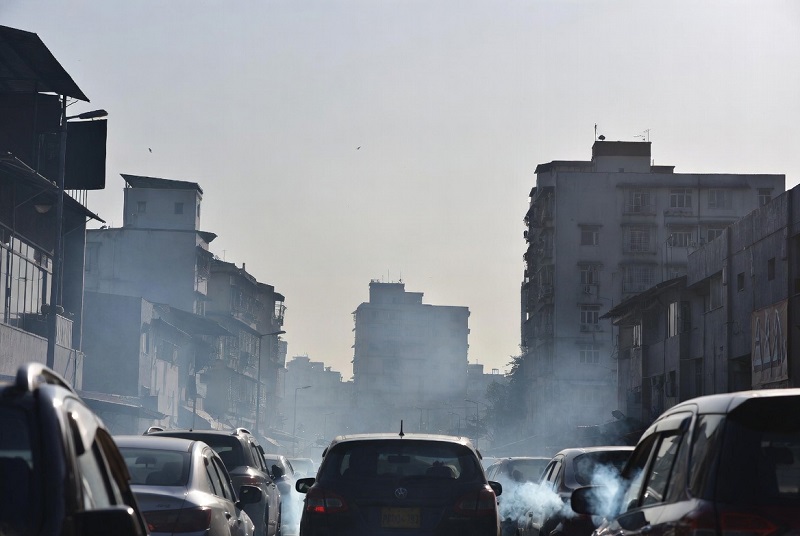
PM2.5 Air Pollution by Country: Latest Available World Bank/GBD Data
PM2.5 means fine particulate matter with an aerodynamic diameter of 2.5 micrometers or less. The ranking below compares countries by population-weighted annual mean exposure, measured in micrograms per cubic meter. Population weighting matters because it reflects the air people actually breathe where they live, rather than a simple geographic average.
Key facts from the latest PM2.5 exposure ranking
Overview: what the top of the ranking shows
The top 20 shows two broad exposure patterns. Niger, Qatar, Mauritania, Senegal, Bahrain, Burkina Faso and The Gambia sit in the highest exposure cluster, while South Asia appears through India, Afghanistan, Pakistan and Bangladesh. The ranking therefore combines arid or dust-influenced environments with densely populated combustion corridors.
Dust and arid-zone exposure
Several high-ranking countries are in the Sahel, North Africa and the Gulf, where mineral dust and resuspension can add a strong natural component to PM2.5 exposure.
Combustion and population density
South Asian entries illustrate the importance of population-weighted exposure: emissions from transport, energy, industry, household fuels and seasonal burning can affect very large populations.
Top 10 countries by annual PM2.5 exposure
| Rank | Country | PM2.5 | × WHO |
|---|---|---|---|
| 1 | Niger | 85.12 | 17.0× |
| 2 | Qatar | 75.66 | 15.1× |
| 3 | Mauritania | 70.82 | 14.2× |
| 4 | Senegal | 63.74 | 12.7× |
| 5 | Bahrain | 58.50 | 11.7× |
| 6 | Burkina Faso | 58.47 | 11.7× |
| 7 | The Gambia | 58.36 | 11.7× |
| 8 | Mali | 56.78 | 11.4× |
| 9 | Nigeria | 56.53 | 11.3× |
| 10 | Egypt | 54.86 | 11.0× |
Values are µg/m³. The WHO multiple uses the 2021 annual PM2.5 guideline of 5 µg/m³.
Chart: Top 20 countries by annual PM2.5 exposure
The chart highlights the size of the gap between the highest-exposure countries and the rest of the Top 20.
Chart values are population-weighted annual mean PM2.5 exposure, µg/m³.
Full Top 100 table: latest available PM2.5 exposure ranking
The table is sorted from highest to lowest annual mean PM2.5 exposure. Use the controls to search countries, change sorting or narrow the visible ranking to Top 10, Top 20 or all 100 entries.
| Rank | Country | PM2.5 µg/m³ | × WHO 5 |
|---|---|---|---|
| 1 | Niger | 85.12 | 17.0× |
| 2 | Qatar | 75.66 | 15.1× |
| 3 | Mauritania | 70.82 | 14.2× |
| 4 | Senegal | 63.74 | 12.7× |
| 5 | Bahrain | 58.50 | 11.7× |
| 6 | Burkina Faso | 58.47 | 11.7× |
| 7 | The Gambia | 58.36 | 11.7× |
| 8 | Mali | 56.78 | 11.4× |
| 9 | Nigeria | 56.53 | 11.3× |
| 10 | Egypt | 54.86 | 11.0× |
| 11 | Ghana | 54.24 | 10.8× |
| 12 | Kuwait | 53.72 | 10.7× |
| 13 | Saudi Arabia | 53.15 | 10.6× |
| 14 | Togo | 51.67 | 10.3× |
| 15 | Benin | 51.05 | 10.2× |
| 16 | Guinea-Bissau | 50.21 | 10.0× |
| 17 | Côte d’Ivoire | 49.50 | 9.9× |
| 18 | Chad | 49.14 | 9.8× |
| 19 | India | 48.39 | 9.7× |
| 20 | Afghanistan | 46.09 | 9.2× |
| 21 | Sudan | 45.83 | 9.2× |
| 22 | Nepal | 45.72 | 9.1× |
| 23 | Guinea | 43.77 | 8.8× |
| 24 | Sierra Leone | 43.22 | 8.6× |
| 25 | Pakistan | 43.00 | 8.6× |
| 26 | Bangladesh | 42.38 | 8.5× |
| 27 | Liberia | 42.36 | 8.5× |
| 28 | Cabo Verde | 42.32 | 8.5× |
| 29 | Cameroon | 39.81 | 8.0× |
| 30 | Oman | 39.58 | 7.9× |
| 31 | Iraq | 38.18 | 7.6× |
| 32 | Tajikistan | 37.05 | 7.4× |
| 33 | United Arab Emirates | 36.31 | 7.3× |
| 34 | Djibouti | 35.92 | 7.2× |
| 35 | Equatorial Guinea | 35.38 | 7.1× |
| 36 | Yemen | 34.83 | 7.0× |
| 37 | China | 34.81 | 7.0× |
| 38 | Central African Republic | 34.43 | 6.9× |
| 39 | Uganda | 33.81 | 6.8× |
| 40 | Libya | 32.97 | 6.6× |
| 41 | Eritrea | 32.35 | 6.5× |
| 42 | Myanmar | 32.32 | 6.5× |
| 43 | Iran | 32.29 | 6.5× |
| 44 | Uzbekistan | 31.96 | 6.4× |
| 45 | Rwanda | 31.29 | 6.3× |
| 46 | Thailand | 31.01 | 6.2× |
| 47 | South Sudan | 30.74 | 6.1× |
| 48 | Armenia | 30.58 | 6.1× |
| 49 | Gabon | 29.95 | 6.0× |
| 50 | North Korea | 29.93 | 6.0× |
| 51 | Mongolia | 29.65 | 5.9× |
| 52 | Burundi | 29.65 | 5.9× |
| 53 | Jordan | 28.77 | 5.8× |
| 54 | Belize | 28.65 | 5.7× |
| 55 | Republic of the Congo | 28.57 | 5.7× |
| 56 | São Tomé and Príncipe | 27.34 | 5.5× |
| 57 | Suriname | 27.31 | 5.5× |
| 58 | Ethiopia | 27.31 | 5.5× |
| 59 | Peru | 27.04 | 5.4× |
| 60 | Democratic Republic of the Congo | 26.65 | 5.3× |
| 61 | Bosnia and Herzegovina | 26.60 | 5.3× |
| 62 | West Bank and Gaza | 26.36 | 5.3× |
| 63 | North Macedonia | 26.12 | 5.2× |
| 64 | South Korea | 25.94 | 5.2× |
| 65 | Trinidad and Tobago | 25.60 | 5.1× |
| 66 | Algeria | 25.55 | 5.1× |
| 67 | Guyana | 25.46 | 5.1× |
| 68 | Angola | 25.15 | 5.0× |
| 69 | Tanzania | 25.08 | 5.0× |
| 70 | Syria | 24.71 | 4.9× |
| 71 | Grenada | 24.66 | 4.9× |
| 72 | Somalia | 24.53 | 4.9× |
| 73 | Kenya | 24.39 | 4.9× |
| 74 | Kyrgyz Republic | 24.38 | 4.9× |
| 75 | Zambia | 24.31 | 4.9× |
| 76 | Tunisia | 24.18 | 4.8× |
| 77 | Cambodia | 24.14 | 4.8× |
| 78 | Bhutan | 23.95 | 4.8× |
| 79 | St. Vincent and the Grenadines | 23.93 | 4.8× |
| 80 | St. Lucia | 23.76 | 4.8× |
| 81 | South Africa | 23.75 | 4.8× |
| 82 | Barbados | 23.73 | 4.7× |
| 83 | Malawi | 23.70 | 4.7× |
| 84 | Lesotho | 23.44 | 4.7× |
| 85 | Chile | 23.28 | 4.7× |
| 86 | Bolivia | 22.88 | 4.6× |
| 87 | Serbia | 22.51 | 4.5× |
| 88 | Lao PDR | 22.32 | 4.5× |
| 89 | Azerbaijan | 21.73 | 4.3× |
| 90 | Guatemala | 21.64 | 4.3× |
| 91 | Turkey | 21.61 | 4.3× |
| 92 | Haiti | 21.35 | 4.3× |
| 93 | Morocco | 21.32 | 4.3× |
| 94 | Cuba | 21.24 | 4.2× |
| 95 | Vietnam | 20.80 | 4.2× |
| 96 | Dominica | 20.67 | 4.1× |
| 97 | Honduras | 20.31 | 4.1× |
| 98 | Philippines | 20.29 | 4.1× |
| 99 | Mozambique | 20.08 | 4.0× |
| 100 | El Salvador | 20.03 | 4.0× |
Source basis: World Bank PM2.5 air pollution, mean annual exposure indicator, using the latest available 2020 country-ranking values. Values are shown as µg/m³ and rounded to two decimals. Data checked: May 4, 2026.
Methodology
The ranking uses World Bank indicator EN.ATM.PM25.MC.M3, “PM2.5 air pollution, mean annual exposure (micrograms per cubic meter).” The World Bank’s metadata defines the measure as population-weighted exposure to ambient PM2.5, with concentrations weighted by population in both urban and rural areas.
The latest country-ranking values used here are for 2020. They are treated as the latest available internationally comparable World Bank / GBD exposure estimates, rather than measured 2025 PM2.5 readings.
World Bank metadata describes the PM2.5 estimates as GBD/IHME-derived and produced from a combined approach using satellite aerosol optical depth, chemical transport models and ground-level monitoring data. These are comparative modeled exposure estimates, not regulatory monitoring readings for specific cities or neighborhoods.
The WHO multiple is calculated as PM2.5 divided by 5, using the WHO 2021 annual PM2.5 guideline of 5 µg/m³. Values are rounded to one decimal place for the multiple and two decimals for PM2.5.
Insights
The top tier is not only an industrial story. High PM2.5 exposure can come from combustion sources, road dust, arid-zone mineral dust and atmospheric conditions that keep particles suspended. This is why some Gulf and Sahel countries sit near the top alongside South Asian countries.
Population weighting changes the interpretation. The indicator gives more weight to where people live. A polluted corridor with a large population can dominate the national figure, even if other parts of the country are cleaner.
Recent comparable values change the top-tier picture. Nepal and India remain high in the Top 100, but the latest available values place several Sahel and Gulf countries above them. This reinforces why the year and source behind any PM2.5 ranking must be stated clearly.
WHO multiples make the scale easier to read. A country at 50 µg/m³ is not just “high”; it is about ten times the WHO annual guideline. That framing is clearer for readers than raw µg/m³ alone.
What it means for readers
PM2.5 exposure matters because it links environmental conditions to public health, labor productivity, school attendance, healthcare burden and long-run development. Higher exposure does not determine outcomes alone, but it increases chronic risk at population scale.
For residents and travelers, this ranking is best used as background context, not as a daily air-quality forecast. For analysts, it helps identify countries where cleaner energy, industrial controls, transport policy, dust management and monitoring investment may have large health benefits.
For public health interpretation, compare countries within similar regions first. Neighboring countries may share dust regimes, weather patterns and transboundary pollution, while countries in different climate zones may have very different source mixes behind the same annual mean value.
FAQ
Which country has the highest latest available PM2.5 exposure?
Niger ranks first in the rebuilt table, with annual mean PM2.5 exposure of 85.12 µg/m³ in the latest available 2020 ranking values.
Are these 2025 PM2.5 values?
No. The latest country-ranking values used here are 2020 World Bank / GBD-based PM2.5 exposure estimates.
Why does the table compare values with 5 µg/m³?
The WHO 2021 annual PM2.5 guideline is 5 µg/m³. Dividing each country value by 5 gives an intuitive “times the WHO guideline” comparison.
Why can desert or arid countries rank high?
PM2.5 includes fine dust as well as combustion-related particles. In arid regions, dust storms and resuspension can contribute strongly to annual exposure, especially when combined with urban emissions.
Can this ranking be used for city-level decisions?
Not directly. The table is a national population-weighted annual average. City-level monitoring, hourly air-quality indices and seasonal patterns are more useful for daily health decisions.
Sources
- World Bank — PM2.5 air pollution, mean annual exposure.
Official indicator page for EN.ATM.PM25.MC.M3 and downloadable data.
https://data.worldbank.org/indicator/EN.ATM.PM25.MC.M3 - World Bank DataBank metadata glossary — EN.ATM.PM25.MC.M3.
Definition, methodology, GBD/IHME source description, unit, periodicity and limitations.
https://databank.worldbank.org/metadataglossary/world-development-indicators/series/EN.ATM.PM25.MC.M3 - World Open Data country-ranking view for the World Bank ESG indicator.
Used for the 2020 Top 100 ordering and values; methodological source remains World Bank / GBD metadata.
https://worldopendata.com/worldbank/indicator/WB_ESG/WB_ESG_EN_ATM_PM25_MC_M3 - WHO Global Air Quality Guidelines.
Health-based annual PM2.5 guideline used for the 5 µg/m³ benchmark.
https://www.who.int/publications/i/item/9789240034228
Related rankings
Closely related StatRanker pages selected by topic. If no strong match exists, fewer links are shown instead of unrelated recommendations.