Top 100 Countries by Climate Risk Index (Heat, Floods, Storms), 2025
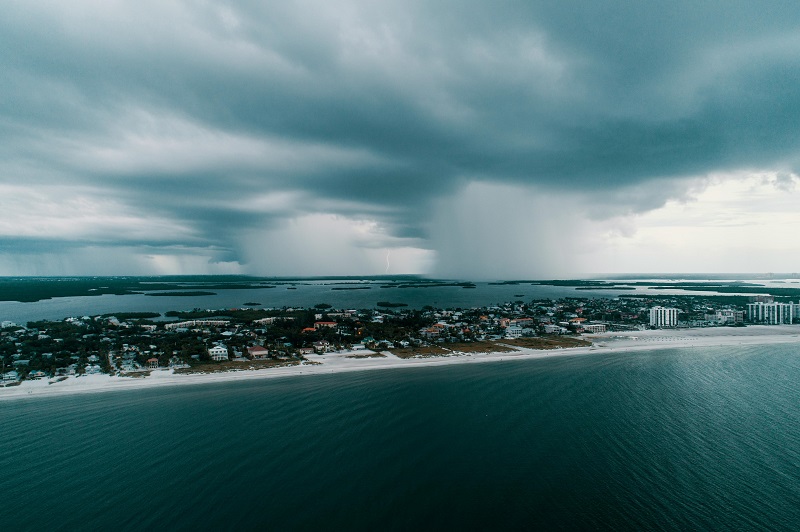
Composite Climate Hazard Exposure Score 2025: heat, floods and storms on a 0–100 scale
Climate risk is not the same as the number of disasters recorded in one year. Event counts describe what happened during a period, while a useful country comparison has to connect physical hazards with exposed people, assets and the ability of systems to absorb shocks.
This ranking compares national exposure to three climate-related hazard families: heat, floods and storms. A higher score means a country has a stronger combined exposure profile and needs closer subnational review before decisions about infrastructure, insurance, supply chains or public planning are made.
Methodology. The score is a comparative model built from harmonised heat, flood and storm exposure proxies. The final value combines Heat 40%, Flood 35% and Storm 25%, with each driver normalised to a 0–100 scale and rounded to one decimal place. It helps compare national hazard exposure, but local decisions should also use subnational data on population density, infrastructure quality, insurance coverage and emergency-response capacity.
Scale: 0 (lower) → 100 (higher) Components: Heat • Flood • Storm Weights: Heat 40% • Flood 35% • Storm 25% Reference year: 2025 composite
Table 1 — Top 10 countries by Composite Climate Hazard Exposure Score, 2025
The top of the distribution is dominated by countries where multiple hazards coincide (for example, high heat plus high flood risk), and where exposure and vulnerability amplify impacts. A key analytical point is that two countries can share similar overall scores but for different reasons: one may be driven mostly by heat stress, another by flood exposure, and another by tropical cyclones.
| Rank | Country | Risk profile (score + drivers) |
|---|---|---|
| 1 | Bangladesh |
Score 83.5
Heat 88
Flood 95
Storm 60
|
| 2 | Philippines |
Score 83.1
Heat 82
Flood 78
Storm 92
|
| 3 | Mozambique |
Score 82.2
Heat 80
Flood 90
Storm 75
|
| 4 | Pakistan |
Score 79.5
Heat 90
Flood 85
Storm 55
|
| 5 | Vietnam |
Score 79.5
Heat 78
Flood 88
Storm 70
|
| 6 | Myanmar |
Score 79.2
Heat 82
Flood 84
Storm 68
|
| 7 | Vanuatu |
Score 78.5
Heat 70
Flood 80
Storm 90
|
| 8 | Madagascar |
Score 77.7
Heat 76
Flood 78
Storm 80
|
| 9 | Haiti |
Score 77.0
Heat 78
Flood 70
Storm 85
|
| 10 | Solomon Islands |
Score 76.5
Heat 68
Flood 78
Storm 88
|
Bar chart — Top 10 Composite Climate Hazard Exposure Score, 2025
Drivers and structure: why similar totals can mean different risk realities
A single score is useful only when the component drivers are visible. Similar composite scores can come from very different combinations of heat, flood and storm exposure. This matters because mitigation and adaptation levers differ: heat risk often concentrates in cities and labour-intensive sectors; flood risk is highly sensitive to land use, drainage, and protective infrastructure; storm risk can be dominated by tropical cyclone exposure and building standards.
Three patterns appear repeatedly in the country profiles: multi-hazard exposure, where heat and flood are both elevated; storm-dominant exposure, typical for cyclone regions and small island states; and heat-dominant exposure, common in arid and semi-arid climates where extreme temperatures are the main driver. The highest-scoring countries often combine more than one of these patterns.
How to read the drivers: when one component is high and the others are moderate, the score is mainly shaped by that dominant hazard. When all three components are elevated, the country has fewer buffers against repeated or compound events, especially where population growth or urbanisation increases exposure.
Bar chart — Top 20 Composite Climate Hazard Exposure Score, 2025
Radar chart — Heat vs Flood vs Storm profiles for the Top 7
Table 2 — Top 100 countries, 2025 (composite score with component drivers)
The table lists the Top 100 by composite score and shows the three drivers behind each result. The risk-profile cell makes it easier to see whether a country is heat-dominant, flood-heavy, storm-exposed or multi-hazard. In practice, the largest differences between countries at similar score levels often come from storm exposure (highly regional) and flood hazard (strongly shaped by geography and drainage basins), while heat risk tends to have broader regional coherence.
| Rank | Country | Risk profile (score + drivers) |
|---|---|---|
| 1 | Bangladesh |
Score 83.5
Heat 88
Flood 95
Storm 60
|
| 2 | Philippines |
Score 83.1
Heat 82
Flood 78
Storm 92
|
| 3 | Mozambique |
Score 82.2
Heat 80
Flood 90
Storm 75
|
| 4 | Pakistan |
Score 79.5
Heat 90
Flood 85
Storm 55
|
| 5 | Vietnam |
Score 79.5
Heat 78
Flood 88
Storm 70
|
| 6 | Myanmar |
Score 79.2
Heat 82
Flood 84
Storm 68
|
| 7 | Vanuatu |
Score 78.5
Heat 70
Flood 80
Storm 90
|
| 8 | Madagascar |
Score 77.7
Heat 76
Flood 78
Storm 80
|
| 9 | Haiti |
Score 77.0
Heat 78
Flood 70
Storm 85
|
| 10 | Solomon Islands |
Score 76.5
Heat 68
Flood 78
Storm 88
|
| 11 | Papua New Guinea |
Score 74.7
Heat 72
Flood 74
Storm 80
|
| 12 | Indonesia |
Score 74.0
Heat 78
Flood 76
Storm 65
|
| 13 | Fiji |
Score 72.6
Heat 66
Flood 72
Storm 84
|
| 14 | Maldives |
Score 72.5
Heat 72
Flood 75
Storm 70
|
| 15 | India |
Score 71.7
Heat 85
Flood 72
Storm 50
|
| 16 | Tuvalu |
Score 71.6
Heat 64
Flood 70
Storm 86
|
| 17 | Samoa |
Score 71.4
Heat 66
Flood 70
Storm 82
|
| 18 | Sri Lanka |
Score 70.4
Heat 76
Flood 70
Storm 62
|
| 19 | Tonga |
Score 70.4
Heat 64
Flood 68
Storm 84
|
| 20 | Kiribati |
Score 70.2
Heat 66
Flood 68
Storm 80
|
| 21 | Timor-Leste |
Score 69.8
Heat 74
Flood 72
Storm 60
|
| 22 | Cambodia |
Score 67.9
Heat 78
Flood 74
Storm 45
|
| 23 | Thailand | Score 67.4Heat 76Flood 70Storm 55 |
| 24 | Honduras | Score 67.1Heat 76Flood 70Storm 60 |
| 25 | Guatemala | Score 66.5Heat 75Flood 68Storm 55 |
| 26 | Dominican Republic | Score 66.0Heat 70Flood 62Storm 72 |
| 27 | Nigeria | Score 65.0Heat 84Flood 65Storm 45 |
| 28 | Nicaragua | Score 65.0Heat 74Flood 72Storm 58 |
| 29 | Guinea | Score 64.3Heat 78Flood 72Storm 38 |
| 30 | Cuba | Score 64.2Heat 68Flood 58Storm 78 |
| 31 | China | Score 64.0Heat 78Flood 70Storm 38 |
| 32 | Sierra Leone | Score 64.0Heat 76Flood 74Storm 45 |
| 33 | Malaysia | Score 64.0Heat 74Flood 64Storm 60 |
| 34 | Mexico | Score 63.2Heat 72Flood 60Storm 55 |
| 35 | DR Congo | Score 62.9Heat 74Flood 76Storm 28 |
| 36 | Liberia | Score 62.7Heat 78Flood 70Storm 42 |
| 37 | Egypt | Score 61.8Heat 88Flood 55Storm 20 |
| 38 | Ecuador | Score 61.8Heat 69Flood 70Storm 48 |
| 39 | Cameroon | Score 61.5Heat 78Flood 68Storm 32 |
| 40 | Benin | Score 61.3Heat 80Flood 66Storm 35 |
| 41 | Jamaica | Score 61.2Heat 66Flood 55Storm 74 |
| 42 | Laos | Score 61.2Heat 77Flood 68Storm 28 |
| 43 | Senegal | Score 60.8Heat 82Flood 55Storm 35 |
| 44 | Togo | Score 60.5Heat 79Flood 64Storm 34 |
| 45 | Angola | Score 60.3Heat 80Flood 70Storm 22 |
| 46 | Tanzania | Score 60.2Heat 78Flood 66Storm 40 |
| 47 | Brazil | Score 60.1Heat 70Flood 66Storm 40 |
| 48 | Colombia | Score 59.9Heat 70Flood 64Storm 45 |
| 49 | Japan | Score 59.9Heat 58Flood 55Storm 70 |
| 50 | Somalia | Score 59.8Heat 90Flood 50Storm 35 |
| 51 | Kenya | Score 59.4Heat 80Flood 58Storm 35 |
| 52 | South Sudan | Score 59.1Heat 91Flood 60Storm 22 |
| 53 | Afghanistan | Score 58.8Heat 88Flood 55Storm 10 |
| 54 | Ethiopia | Score 58.2Heat 86Flood 62Storm 30 |
| 55 | Yemen | Score 58.2Heat 88Flood 48Storm 40 |
| 56 | Uganda | Score 58.2Heat 75Flood 64Storm 28 |
| 57 | Burundi | Score 58.1Heat 74Flood 70Storm 18 |
| 58 | Sudan | Score 57.9Heat 92Flood 55Storm 25 |
| 59 | Ghana | Score 57.8Heat 76Flood 60Storm 26 |
| 60 | Nepal | Score 57.3Heat 70Flood 78Storm 18 |
| 61 | Iran | Score 57.0Heat 85Flood 50Storm 15 |
| 62 | Cote d'Ivoire | Score 57.0Heat 78Flood 62Storm 30 |
| 63 | Peru | Score 56.5Heat 68Flood 62Storm 35 |
| 64 | South Korea | Score 56.0Heat 56Flood 52Storm 60 |
| 65 | Mali | Score 55.7Heat 92Flood 50Storm 22 |
| 66 | Rwanda | Score 55.2Heat 72Flood 62Storm 20 |
| 67 | Burkina Faso | Score 54.7Heat 90Flood 52Storm 20 |
| 68 | North Korea | Score 54.3Heat 64Flood 60Storm 35 |
| 69 | Turkey | Score 54.2Heat 72Flood 58Storm 22 |
| 70 | Chad | Score 53.1Heat 93Flood 45Storm 18 |
| 71 | Zambia | Score 52.8Heat 78Flood 66Storm 18 |
| 72 | South Africa | Score 52.7Heat 72Flood 55Storm 25 |
| 73 | Bolivia | Score 52.6Heat 70Flood 58Storm 25 |
| 74 | Niger | Score 52.5Heat 94Flood 40Storm 20 |
| 75 | Syria | Score 51.7Heat 88Flood 35Storm 12 |
| 76 | Zimbabwe | Score 51.3Heat 76Flood 62Storm 15 |
| 77 | Algeria | Score 50.0Heat 86Flood 38Storm 10 |
| 78 | Morocco | Score 49.5Heat 80Flood 45Storm 18 |
| 79 | Netherlands | Score 49.5Heat 52Flood 70Storm 18 |
| 80 | Bhutan | Score 48.8Heat 66Flood 74Storm 12 |
| 81 | Tunisia | Score 48.5Heat 82Flood 40Storm 12 |
| 82 | Lebanon | Score 48.5Heat 78Flood 40Storm 20 |
| 83 | Libya | Score 48.5Heat 90Flood 30Storm 8 |
| 84 | Iraq | Score 48.4Heat 90Flood 40Storm 8 |
| 85 | Saudi Arabia | Score 48.2Heat 92Flood 30Storm 5 |
| 86 | United Arab Emirates | Score 48.0Heat 91Flood 25Storm 10 |
| 87 | Qatar | Score 47.8Heat 93Flood 22Storm 8 |
| 88 | Kuwait | Score 47.8Heat 92Flood 24Storm 8 |
| 89 | Uzbekistan | Score 47.7Heat 82Flood 38Storm 5 |
| 90 | Oman | Score 47.3Heat 90Flood 28Storm 20 |
| 91 | Turkmenistan | Score 47.3Heat 88Flood 35Storm 5 |
| 92 | Jordan | Score 46.6Heat 86Flood 30Storm 8 |
| 93 | Namibia | Score 46.2Heat 82Flood 40Storm 5 |
| 94 | Israel | Score 45.9Heat 82Flood 32Storm 12 |
| 95 | Tajikistan | Score 45.9Heat 72Flood 55Storm 8 |
| 96 | Azerbaijan | Score 44.7Heat 78Flood 42Storm 10 |
| 97 | Ukraine | Score 44.0Heat 60Flood 55Storm 12 |
| 98 | Kazakhstan | Score 41.8Heat 70Flood 40Storm 8 |
| 99 | Kyrgyzstan | Score 41.5Heat 70Flood 50Storm 8 |
| 100 | Armenia | Score 41.4Heat 70Flood 45Storm 8 |
What the 2025 ranking implies: unbalanced profiles, regional patterns and practical use
The ranking is most useful when it is read as a set of country profiles, not only as a league table. Two countries can sit close together in the overall Top 100 and still face very different climate pressures. The main value is in seeing which hazard drives each result and where several hazards overlap.
Countries with unbalanced profiles (a high driver with weaker secondary risks)
A common unbalanced pattern is heat-dominant risk. Countries in arid and semi-arid zones can score very high on heat, while storms remain structurally limited and flood risk is more localised to specific basins. In the table, examples include Niger and Chad (very high heat scores with low storm scores), as well as parts of the Middle East where extreme heat is the primary driver. In such profiles, health impacts, labour productivity, water stress and power demand peaks tend to carry a larger share of the risk signal than cyclone landfalls.
Another unbalanced pattern is storm-dominant risk, where tropical cyclone intensity and exposure dominate. Many small island states show this structure: their storm score is high, and floods can also be elevated due to coastal processes, while heat is meaningful but not always the single strongest driver. Examples in the Top 100 include Vanuatu, Solomon Islands and several Pacific islands. In these cases, a limited land area concentrates assets and critical infrastructure, making resilience and recovery capacity central to impact outcomes.
A third unbalanced pattern is flood-heavy profiles, where geography (river deltas, low-lying coastlines, basin dynamics) raises flood risk substantially. Delta countries and densely populated coastal plains frequently fall into this group, with Bangladesh being a prominent multi-hazard example where flood remains extremely strong. In Europe, flood-heavy profiles can appear even with moderate heat and storm scores, reflecting exposure and the economics of assets at risk rather than tropical cyclone hazard.
Regional picture in 2025 (why the Top 100 looks the way it does)
The 2025 Top 100 is shaped by two layers: (1) long-run climate and hazard structure, and (2) where people and assets are concentrated. South and Southeast Asia stand out because dense populations overlap with a combination of heat stress and high riverine/coastal flood exposure, and in some locations, cyclone hazard. Sub-Saharan Africa shows many heat-elevated profiles and flood exposure in key basins, where vulnerability and coping capacity can magnify impacts. Small Island Developing States cluster because storm exposure can dominate expected losses, and recovery constraints can matter as much as the physical hazard itself.
Importantly, the ranking does not imply that lower-ranked countries have “no risk.” It indicates that, on a harmonised global scale, the combination of heat, flood and storm drivers is comparatively smaller or that exposure/vulnerability proxies are lower. Within-country variation can be large: coastal provinces, major cities, or specific river basins can face far higher risk than the national average.
Policy takeaway (key implications)
Across the Top 100, high climate risk is rarely driven by a single hazard in isolation. The most policy-relevant finding is the stacking of hazards and exposure: heat stress increases baseline fragility, floods create recurrent asset damage and service disruption, and storms can generate catastrophic “tail” losses. Strategies that improve early warning, resilient infrastructure, urban heat management, and emergency response capacity tend to reduce risk across multiple components rather than optimising only one.
How the score is typically used (business, insurance, public planning)
In practical work, a country-level hazard score should be combined with sector exposure and subnational analysis. Its value is to show where deeper due diligence is most likely to matter. Typical applications include: (a) prioritising adaptation planning and resilient infrastructure funding, (b) informing insurance and reinsurance portfolio screening (especially for flood and storm tail risks), (c) identifying where supply chains may face disruption from compound events, and (d) supporting development and humanitarian risk reduction strategies where vulnerability amplifies hazard impacts.
A five-point gap on the 0–100 scale does not equal a fixed percentage change in losses. It means the country has a higher composite exposure level under the heat, flood and storm weighting used here.
Primary sources
- European Commission JRC — INFORM Risk (methodology and country results) A transparent risk framework combining hazard & exposure, vulnerability and coping capacity, used widely in humanitarian and disaster-risk contexts.
- Copernicus Climate Data Store — ERA5 and derived heat/thermal stress indices (ERA5-HEAT / UTCI) Global reanalysis-based datasets used to construct consistent heat exposure proxies across countries.
- World Resources Institute — Aqueduct Floods hazard maps Riverine and coastal flood hazard layers and documentation used for flood-risk proxy construction and cross-country comparability.
- NOAA NCEI — IBTrACS tropical cyclone best-track archive A global, merged best-track archive used as a reference for storm exposure and intensity proxies.
- World Bank Climate Change Knowledge Portal / Data360 — climate datasets and indicators (including ERA5 access) Curated access points that support reproducible indicator extraction and cross-country climate context.
The final score combines heat at 40%, flood at 35% and storm at 25%. Country values are rounded to one decimal place. Project-level decisions should rely on local hazard maps and site-specific exposure data.
Related rankings
Closely related StatRanker pages selected by topic. If no strong match exists, fewer links are shown instead of unrelated recommendations.