Top 10 Macadamia Producing Countries in 2025
Agriculture · Tree nuts · Global supply
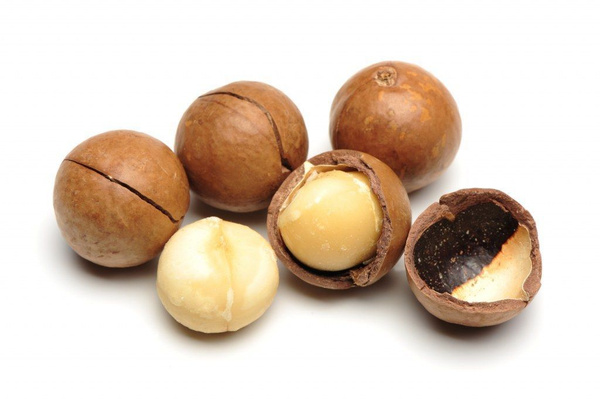
Macadamias sit in the premium tier of global tree nuts: high oil content, a long juvenile phase, and a supply chain that rewards quality sorting and consistent cracking yields. That combination makes the market unusually sensitive to weather, processing capacity and finance (because new orchards take years to pay back).
For a consistent cross-country ranking, this update uses the 2025 global crop forecast reported through the International Nut and Dried Fruit Council (INC) macadamia round table, measured as nut-in-shell at 3.5% moisture. Global output is forecast at 343,310 t for 2025 (up from 324,550 t in 2024). In some origins, later season outcomes can deviate from early forecasts, especially after severe weather events.
Key takeaways for 2025
1) The race is now a three-pole market: South Africa, China, Australia
South Africa remains the largest origin in the 2025 forecast, China is the fastest scaling origin, and Australia remains a quality/innovation anchor — but weather volatility can reshape outcomes.
2) Africa’s depth is widening beyond the headline leaders
Kenya is firmly established, while Malawi and other Southern/East African origins are growing — often constrained more by processing/logistics than by agronomy.
3) Smaller origins matter because macadamias are a “tight” crop
With long orchard lead times, even mid-single-digit shifts in one origin can influence pricing and contract behaviour across kernels vs in-shell segments.
4) Know what the number actually measures
“Tonnes” here are nut-in-shell at a standard moisture reference. Mixing kernel tonnes or different moisture bases will break comparisons.
Chart: Top 10 origins by macadamia production (2025 forecast)
Values are nut-in-shell tonnes at 3.5% moisture. The top 10 are shown; “Others” are excluded from the chart.
Where the supply is really coming from in 2025
The 2025 ranking highlights two structural truths about macadamias. First, production leadership is no longer “one origin at a time”: multiple large origins now expand simultaneously. Second, the market is split between in-shell flows (notably into China) and kernel markets (Europe, North America, premium ingredient demand), and that split shapes investment in cracking, sorting and quality programs.
Notes below are written as industry context (processing, orchard maturity, and weather/finance constraints) rather than promotion. Values use the same 2025 forecast basis as the chart.
Top 10 country snapshots
#1 South Africa
95,500 t
The world’s largest origin in the 2025 forecast, supported by scale, established processors, and export routing. The key variable is not “can it grow?” but how efficiently the chain manages quality, port/logistics friction, and evolving destination demand (kernel vs in-shell).
#2 China
74,500 t
China’s planted area has matured quickly, with production concentrated in southern provinces (notably Yunnan). Industry expectations can be higher than international harmonised estimates because methods differ and quality/yield variability remains a focus area.
#3 Australia
55,960 t
Australia remains a reference origin for quality and agronomy. But 2025 illustrates the climate-risk reality: severe events can pull realised crop below earlier forecasts, tightening supply availability across styles.
#4 Kenya
47,500 t
A scale origin built on a strong smallholder base and export processing. Growth is increasingly linked to orchard maturity and access to working capital — especially for processors financing long seasonal cycles.
#5 United States
15,500 t
Production is dominated by Hawaii. Costs are high and orchards are older, so the supply profile is best described as stable and premium-leaning rather than expansionary.
#6 Guatemala
12,000 t
Output is expected to rebound versus 2024 as weather and farming activity improve. Labour and migration dynamics have been a real constraint, shaping the pace of recovery even when agronomic conditions are favourable.
#7 Malawi
11,000 t
A fast-growing African origin where processing infrastructure and export logistics can be the binding constraint. Investment focus tends to be on aggregating smallholder supply into consistent export-ready volumes.
#8 Vietnam
8,000 t
Vietnam’s industry is smaller but increasingly organised, with steady output and a growing role in regional processing and trade networks.
#9 Brazil
5,000 t
Brazil’s 2025 forecast is lower than 2024 after drought and market pressure. Recovery is tied to rainfall patterns and the economics of orchard reinvestment.
#10 Colombia
1,150 t
An emerging origin that remains small in absolute terms, but relevant because “new supply nodes” can matter in a market where global output is still modest relative to mainstream nuts.
Table: Top 10 macadamia-producing origins (2025 forecast)
Ranking uses a single measurement basis: nut-in-shell tonnes at 3.5% moisture. This avoids mixing kernel weights or different moisture references, which would distort cross-country comparisons.
| Rank | Origin | 2025 production (t) |
|---|---|---|
| 1 | South Africa | 95,500 |
| 2 | China | 74,500 |
| 3 | Australia | 55,960 |
| 4 | Kenya | 47,500 |
| 5 | United States | 15,500 |
| 6 | Guatemala | 12,000 |
| 7 | Malawi | 11,000 |
| 8 | Vietnam | 8,000 |
| 9 | Brazil | 5,000 |
| 10 | Colombia | 1,150 |
The global 2025 crop forecast is 343,310 t (NIS @ 3.5% m.c.). “Others” are reported separately and are not included in the top 10 table.
Methodology (how this ranking is built)
Indicator definition
Production is measured in tonnes of nut-in-shell (NIS), standardised at 3.5% moisture content for international comparability. This is crucial: kernel tonnes and different moisture references are not directly comparable.
Year and data choice
This update uses the 2025 global crop forecast compiled from industry and INC sources and reported in the INC Macadamia Round Table snapshot. Where origins report at a different moisture reference (e.g., South Africa), the reported values are harmonised to the 3.5% NIS basis in the same dataset.
Processing rules
- Ranking is sorted descending by 2025 forecast tonnes (NIS @ 3.5% m.c.).
- Figures are rounded to the nearest 10 tonnes in visuals and to the nearest tonne in the table display.
- “Others” are excluded from the top 10 list because they aggregate multiple small origins.
Limitations you should know
- Forecasts can be revised, especially after late-season weather shocks; realised volumes may differ from early expectations.
- Some national or industry reports use different measurement conventions (kernel vs in-shell; moisture basis), which can create apparent discrepancies.
- “Production” is not the same as “exports”: domestic consumption and inventory/stock changes can be large in some origins.
Insights (what the 2025 ranking reveals)
The key story of 2025 is scale + volatility.
The market is scaling steadily (global crop forecast up year-on-year), but the distribution of that growth is uneven: large origins expand while climate and finance constraints can suddenly reduce realised supply in a single season.
1) South Africa still sets the reference price, but China sets the growth narrative
South Africa remains the largest origin in the 2025 forecast, which matters because it anchors contract terms, grade specifications, and buyer expectations. China’s rapid orchard maturation changes the medium-term balance: it adds a large “second pole” that can absorb supply domestically while also altering the global in-shell vs kernel mix.
2) The “processing bottleneck” is now as important as hectares planted
For several origins, the constraint is less about growing trees and more about cracking capacity, sorting, quality control, and reliable export routing. When processing is tight, prices paid to growers can disconnect from export values, and crop can be delayed or downgraded.
3) Weather risk is not a footnote — it can rewrite rankings
Macadamias are exposed to cyclone winds, flooding, drought stress and flowering disruption. In practice, that means the market must treat “forecast” as a baseline, not a guarantee. This is one reason buyers diversify origin exposure and prefer multi-origin supply programs.
4) “Small” origins still matter because macadamias remain a niche global crop
Even with growth, macadamias are still modest in global nut terms. That makes incremental origins (or “Others”) relevant: they can help fill supply gaps, but they also add variability in kernel recovery, style mix and quality consistency.
What this means for readers
If you use this ranking for market tracking, treat it as a supply map rather than a scoreboard. The top producers shape availability and pricing, but the real decision points come from:
- Measurement clarity: always confirm whether numbers are in-shell or kernel and the moisture basis.
- Risk diversification: single-origin exposure is fragile when climate shocks are frequent.
- Value chain reality: processing capacity, labour and finance can be more decisive than agronomy.
- Demand segmentation: in-shell demand dynamics can move differently than kernel ingredient demand.
For non-specialists, the simplest takeaway is: macadamia growth is real, but it is not smooth. Expect years where the global total rises while one major origin falls — and expect the market to re-price quickly when that happens.
FAQ
Why do some sources show different “tonnes” for the same country?
The two most common reasons are (1) kernel vs in-shell reporting and (2) different moisture references. This ranking uses nut-in-shell at 3.5% moisture for comparability. If you compare to a kernel figure, it will look smaller because kernels are only a fraction of in-shell weight.
Is China already the world’s largest macadamia producer?
China is one of the biggest and fastest-growing origins. Some domestic projections can be higher than harmonised international estimates because methods, definitions and quality/yield assumptions differ. For cross-country ranking, a single harmonised basis is used here.
Why does Australia sometimes “drop” even though it is a mature industry?
Mature industries can be more exposed to climate volatility in a given season, especially where production is concentrated in regions prone to cyclones or heavy rainfall. Australia also has a mix of older orchards and newer plantings, so yield trends can vary by region.
Does higher production automatically mean higher exports?
No. Some origins have rising domestic consumption and can retain more of the crop at home. Others export most output but can shift between in-shell and kernel styles depending on price signals and processing capacity.
What should I watch if I want to track the macadamia market beyond “top 10”?
Watch three things: (1) updates to crop forecasts after major weather events, (2) changes in processing capacity and utilisation, and (3) the split between in-shell and kernel demand (because it changes pricing and style availability).
Sources
INC / Macadamia Round Table (global production 2024 vs 2025 forecast; NIS @ 3.5% moisture).
INC Macadamia Round Table PDF
Australian Macadamia Society — crop reporting and forecasts.
Crop forecasts page
Australian 2025 crop finalisation update (weather-impacted season outcome).
Australian Macadamias industry news
USDA FAS (South Africa macadamia industry context; trade and sector notes).
USDA FAS report PDF
INC Statistical Yearbook (broader nut market context and series).
INC Statistical Yearbook 2024 (PDF)