TOP 10 Busiest Container Ports (2025)
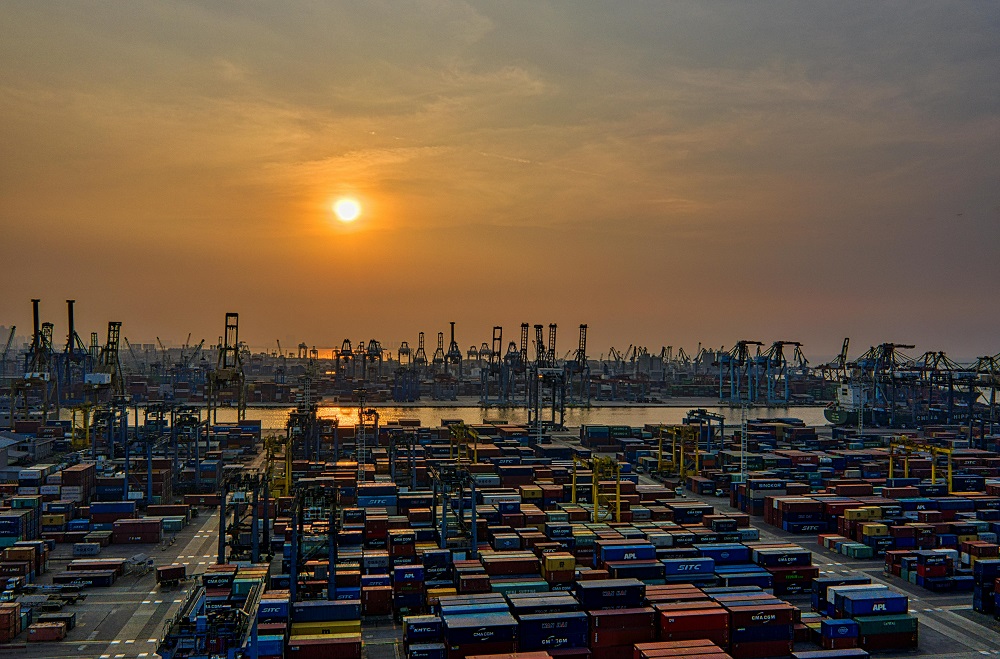
This 2025 view uses the latest full-year container throughput statistics available for 2024 as the baseline (throughput in TEUs). It highlights how a small set of mega-ports—mostly in Asia—handle an outsized share of global container flows, while ports worldwide face renewed pressure from congestion, longer sailing routes, weather disruptions, and geopolitical shocks.
Combined throughput (Top 10, 2024)
≈ 300.1M TEU
Total annual volume handled by the ten largest container ports.
Asia share of container port calls
≈ 63%
Asia remains the dominant region for global container ship port calls.
Waiting time before berthing (2024)
6.4h vs 10.9h
Average waiting time rose to ~6.4h (developed) and ~10.9h (developing economies).
Key insight: every port in the Top 10 by 2024 throughput is in Asia. Mainland China accounts for about 204.5M TEU across its six ports in this Top 10—roughly 68% of the group’s combined volume—underscoring China’s central role in containerized trade.
Methodology: how this Top 10 is built
“Busiest” is measured here by annual container throughput (TEU) for calendar year 2024. Operational speed (dwell time, turnaround) is discussed using publicly available aggregate indicators rather than proprietary per-terminal datasets that are not consistently comparable across ports.
- Primary ranking metric: throughput (TEU handled in 2024).
- Top 10 definition: the ten ports with the highest throughput worldwide (gateway and transshipment included).
- Units: million TEU, rounded to one decimal.
- Congestion context: waiting time, time-in-port, port calls, and connectivity are discussed using international datasets and reports.
- Limitations: per-port dwell time and crane productivity metrics are often proprietary and not standardized, so they are not used to rank ports.
Top 10 busiest container ports worldwide (2024 throughput baseline)
These are the core throughput figures used for this 2025 view (baseline 2024). Values are rounded to 0.1 million TEU.
| Rank | Port & economy | Throughput 2024 (million TEU) |
|---|---|---|
| 1 | Shanghai, China | 51.5 |
| 2 | Singapore, Singapore | 41.1 |
| 3 | Ningbo–Zhoushan, China | 39.3 |
| 4 | Shenzhen, China | 33.4 |
| 5 | Qingdao, China | 30.9 |
| 6 | Guangzhou (Nansha), China | 26.1 |
| 7 | Busan, Republic of Korea | 24.4 |
| 8 | Tianjin, China | 23.3 |
| 9 | Jebel Ali, United Arab Emirates | 15.5 |
| 10 | Port Klang, Malaysia | 14.6 |
How to interpret “busiest”: TEU throughput measures volume, not necessarily speed. A port can be extremely large and still experience long queues or yard congestion, which is why the next block adds congestion signals and operational context.
Chart: throughput of the Top 10 container ports
Units: million TEU (2024). Axis labels and tick labels are black and at least 15px. If the chart library is blocked, a readable data table will appear automatically (no empty space).
The chart did not render (for example, external scripts are blocked). Here is the same dataset as a table:
| Port | Throughput 2024 (million TEU) |
|---|---|
| Shanghai | 51.5 |
| Singapore | 41.1 |
| Ningbo–Zhoushan | 39.3 |
| Shenzhen | 33.4 |
| Qingdao | 30.9 |
| Guangzhou (Nansha) | 26.1 |
| Busan | 24.4 |
| Tianjin | 23.3 |
| Jebel Ali | 15.5 |
| Port Klang | 14.6 |
What this shows: scale concentration is extreme. Shanghai is the only port above 50M TEU, while Singapore and Ningbo–Zhoushan form a second tier above ~39M TEU. A large “middle band” (~23–33M TEU) anchors the rest of the Top 10.
Congestion signals: average waiting time before berthing (aggregates)
This is not a per-port ranking. It is a contextual indicator showing that waiting time increased in 2024: ~6.4 hours in developed economies vs ~10.9 hours in developing economies—consistent with tighter capacity, longer routes, and more volatile schedules.
The chart did not render. Data:
| Group | Waiting time (hours) |
|---|---|
| Developed economies | 6.4 |
| Developing economies | 10.9 |
Port-by-port snapshots: why these Top 10 ports matter
This section focuses on network role and recurring pressure points (yard capacity, hinterland bottlenecks, transshipment peaks, or rerouting shocks). It is designed to be actionable—not a generic encyclopedia.
1) Shanghai (China) — mega-hub #1 (51.5M TEU)
- Strength: high capacity for mega-vessels and dense service frequency.
- Pressure point: demand swings and rerouting shocks amplify quickly due to sheer concentration of volume.
2) Singapore — global transshipment crossroads (41.1M TEU)
- Strength: strategic positioning and high network centrality.
- Pressure point: even small delays can cascade across multiple trade lanes.
3) Ningbo–Zhoushan (China) — deep-sea gateway + industrial hinterland (39.3M TEU)
- Strength: stable industrial demand and large-scale infrastructure.
- Pressure point: yard and truck flow peaks (especially during export surges).
4) Shenzhen (China) — export engine of the Pearl River Delta (33.4M TEU)
- Strength: strong service coverage and proximity to manufacturing.
- Pressure point: landside congestion during peak export windows.
5) Qingdao (China) — balanced hub in North China (30.9M TEU)
- Strength: multi-modal connectivity and diverse cargo base.
- Pressure point: volatility from weather and policy-driven trade shifts.
6) Guangzhou (Nansha, China) — deep-water complement in South China (26.1M TEU)
- Strength: integration with distribution and cold-chain development.
- Pressure point: capacity management across mixed operational demands.
7) Busan (Republic of Korea) — Northeast Asia transshipment specialist (24.4M TEU)
- Strength: diversified routing position and disciplined operations.
- Pressure point: network disruption spikes when regional demand surges.
8) Tianjin (China) — gateway for the Beijing mega-region (23.3M TEU)
- Strength: strategic hinterland and domestic supply chain integration.
- Pressure point: berth and yard allocation complexity under mixed operations.
9) Jebel Ali (UAE) — Middle East redistribution hub (15.5M TEU)
- Strength: integrated logistics ecosystem and regional reach.
- Pressure point: routing volatility when trade lanes and canals face disruption.
10) Port Klang (Malaysia) — Malacca Strait gateway (14.6M TEU)
- Strength: strategic corridor location and diversified routing role.
- Pressure point: competitiveness depends on reliability and landside efficiency.
Why these rankings matter in 2025–2026
For carriers and shippers, volume concentration is both efficient and fragile. Routing more cargo through a small set of mega-hubs lowers unit costs and increases network density—but it also concentrates disruption risk. When a high-centrality node slows down, schedule reliability can deteriorate far beyond the local region.
- Network design: mega-ports anchor mainline strings; second-tier hubs absorb reroutes and add flexibility.
- Congestion sensitivity: higher throughput without proportional productivity gains pushes ports closer to limits.
- Hinterland constraints: yard space, gates, rail capacity, and customs windows often become the true bottleneck.
- Energy transition: bunkering and compliance infrastructure increasingly influences port selection.
- Resilience: extreme weather and geopolitical lane changes increase arrival volatility and yard peaks.
Practical takeaway: treat the Top 10 as critical but vulnerable nodes. Monitor congestion signals and keep contingency routings ready through alternative regional hubs.
How to interpret “busiest ports” correctly
Throughput (TEU) is the best public metric for scale, but it is not a direct measure of service quality. A high-throughput port can still suffer from queues, yard congestion, or slow pickup/delivery on the landside. The correct way to use this ranking is to combine volume with reliability signals.
- Use TEU to understand where global container capacity concentrates.
- Use waiting time / time-in-port (where public aggregates exist) to gauge systemic pressure.
- Use connectivity and port calls to understand centrality in liner networks.
FAQ (Q&A)
Q Are the “busiest ports” always the fastest?
Not necessarily. A port can lead in TEU volume while still experiencing long queues, yard congestion, or landside pickup delays—especially during peak seasons or when arrival patterns become irregular.
Q Why is the entire Top 10 in Asia?
Containerized manufacturing supply chains and transshipment networks remain heavily centered in Asia. Dense liner services, high connectivity, and continuous capacity investment reinforce the region’s dominance.
Q What is the difference between a gateway port and a transshipment hub?
Gateway ports primarily serve domestic import/export demand from their hinterland. Transshipment hubs specialize in transferring containers between ships, connecting mainline routes with feeder networks. Many Top 10 ports are hybrids.
Q Does this ranking include “port efficiency” or dwell time?
The ranking itself is based on throughput (TEU). Efficiency and dwell time are discussed using public aggregate indicators, because per-port operational metrics are often proprietary and not consistently comparable worldwide.
Q How often do these Top 10 rankings change?
The Top 10 is typically stable year to year, but positions can shift when capacity expansions come online, trade lanes rebalance, or rerouting events temporarily amplify traffic at specific hubs.
Primary sources
Clickable references used for throughput rankings and contextual indicators (port calls, connectivity, port performance):
World Shipping Council — Top 50 Container Ports
Annual industry summary widely cited for global container throughput by port.
UNCTAD — Review of Maritime Transport 2025
Port performance context (time-in-port, waiting time), connectivity, and trade-and-transport indicators.
UNCTADstat Data Centre — Maritime transport indicators
Data portal for maritime transport indicators used for background checks and definitions.
UNCTAD — Review of Maritime Transport 2024
Prior-year baseline used for continuity on port calls and structural trends.
Related rankings
More StatRanker pages connected by topic, category or ranking theme.