Top 10 Spice Producing Countries in 2025: A Global Perspective
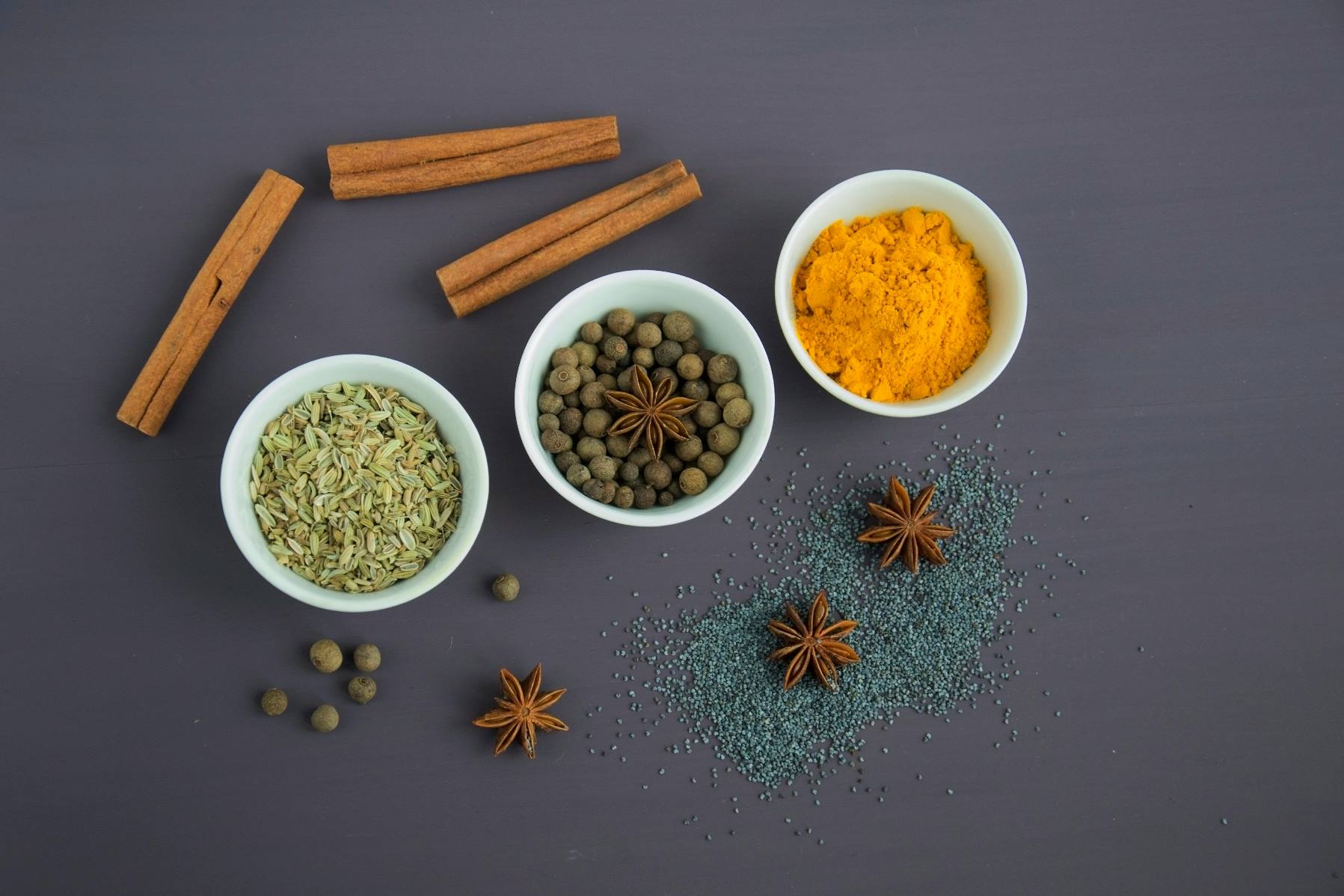
Spices sit at the crossroads of food culture, farm livelihoods, and international trade. In 2025, demand is shaped by two forces moving in parallel: consumers reaching for “real flavor” and ingredient transparency, and manufacturers using spices in value-added formats (blends, extracts, nutraceutical inputs). Because “spices” are not a single commodity in most official crop accounts, global totals and country rankings are compiled from multi-commodity baskets and industry/FAO-aligned sources (details in Part 3).
Thank you for reading this post, don't forget to subscribe!Market and output snapshot
Global spice output
13.4M tonnes
Benchmark year: 2023; industry/FAO-aligned outlook projects ~14.3M tonnes by 2028 (≈1% yearly growth).
Global seasonings & spices market
$21.69B
Estimated 2023 market size; projected to reach $34.31B by 2030 (report-based forecast).
2025 “proxy” logic
2023→2025
Where full 2025 country totals are not published as a single statistic, we use 2023–2024 baselines plus near-term trend to describe the 2025 landscape.
Units in the ranking table below are “estimated production volumes” for 2025 based on widely cited multi-commodity spice baskets (not a single FAO crop line). Treat them as comparable order-of-magnitude estimates, not precision accounting.
Top 10 spice producing countries in 2025
| Rank | Country | Estimated production (tonnes, 2025) | What they are known for |
|---|---|---|---|
| 1 | India | 6,200,000 | Chilli, turmeric, cumin, coriander, pepper, cardamom; large domestic market + diversified agro-climates. |
| 2 | China | 1,000,000 | Ginger, garlic, star anise, cassia cinnamon; scale, processing capacity, and broad export footprint. |
| 3 | Nigeria | 950,000 | Ginger and chilli; fast-growing supply base, rising commercialization, expanding export channels. |
| 4 | Bangladesh | 600,000 | Chilli, garlic, ginger; strong domestic consumption and steady regional trade flows. |
| 5 | Indonesia | 500,000 | Cloves, nutmeg, pepper, turmeric; “Spice Islands” heritage, tropical suitability, export-oriented crops. |
| 6 | Pakistan | 400,000 | Chilli, cumin, coriander; strong brands in blends and a large neighborhood market reach. |
| 7 | Ethiopia | 350,000 | Chilli, cumin, fenugreek; diverse spice ecology, growing export focus alongside iconic cuisine demand. |
| 8 | Türkiye | 300,000 | Oregano, cumin, red pepper; strong processing/trading hubs and established culinary demand. |
| 9 | Colombia | 250,000 | Black pepper and aromatic spices in smaller-holder systems; rising niche/quality positioning in the region. |
| 10 | Nepal | 200,000 | Large cardamom, ginger, turmeric; altitude niches, specialty positioning, and cross-border trade dependence. |
If you compare lists across publishers, you will often see different “Top 10” names. That’s not a contradiction—most lists define “spices” differently (e.g., whether garlic/onion, vanilla, or botanical extracts are included).
Visual ranking: estimated 2025 production (Top 10)
The global outlook often cited for the mid-2020s implies total output rising from ~13.4M tonnes (2023) toward ~14.3M tonnes by 2028, suggesting a mid-point around ~13.7M tonnes for 2025 under a smooth growth path.
Production leadership is rarely about one crop. Countries stay near the top because they can grow a broad basket of spices, dry and clean consistently, and move product through processors and exporters with predictable quality.
Key trends and challenges shaping 2025
- Health narratives keep demand broad: turmeric/ginger-led positioning supports functional-food and wellness categories.
- Compliance is the growth ceiling: residue and contaminant controls increasingly separate reliable exporters from “spot” suppliers.
- Climate volatility matters: heat/rain anomalies and disease cycles can change output quickly for pepper and cardamom-type crops.
- Value-added wins: cleaned/ground/blended/extracted formats typically capture more margin than bulk raw shipments.
Trade signal: what drives export value (India, FY 2023–24)
| Category | Export value (USD, FY 2023–24) | Why it matters |
|---|---|---|
| Chilli | 1,508.94 million | Large-volume anchor; processed formats and price swings strongly influence total export earnings. |
| Cumin | 700.23 million | Highly sensitive to supply shocks; cleaning and grading capacity is a key competitiveness lever. |
| Spice oils & oleoresins | 498.01 million | A value-add signal: extracts and industrial ingredients often carry higher margins than raw shipments. |
How to interpret this ranking in 2025
“Top producer” does not automatically mean “best quality” or “highest export earnings.” Production totals are often driven by a few dominant crops, while export competitiveness depends on cleaning, moisture control, residue compliance, and the ability to supply consistent grades. In 2025, the most durable advantage is usually a combination of (1) agronomic fit, (2) processing capacity, and (3) compliance performance.
Methodology (what “spice production” means here)
There is no single universally accepted “global spice production” statistic across all official crop accounts, because spices span many botanical products (seeds, fruits, roots, bark, and processed derivatives). Some databases publish production for individual crops (pepper, ginger, chillies, etc.), while industry outlooks aggregate a broader basket and harmonize units to produce a single headline total.
This 2025 snapshot uses the common editorial approach for rankings when a single official 2025 total is not available: (a) anchor on the most recent widely referenced multi-country baseline (2023–2024), (b) describe 2025 using near-term projections/trend consistency, and (c) present country volumes as comparable estimates rather than precision accounting. Where trade figures are included, they refer to “spices and spice products,” which may include value-added formats like extracts and oleoresins.
Limitations: different publishers include or exclude certain botanicals (for example, whether garlic is treated as a spice), and coverage quality can vary by country. Rankings should therefore be read as a map of scale and ecosystem capacity—not as a definitive audit.
Policy and industry takeaways
For producing countries, the biggest gains in the mid-2020s come from raising the share of higher-value formats (cleaned, ground, blended, extracted), plus tightening quality assurance and traceability to reduce border rejections and testing delays. For buyers, resilience improves when sourcing is diversified across origins and across harvest windows, instead of depending on a single country or season.
FAQ
Why do “Top 10 spice producers” lists differ across websites?
Because “spices” is a basket, not one crop. Some lists include garlic and onion-like aromatics, others focus on classic “seed spices,” and some add spice extracts or oils. When the basket changes, the ranking changes.
Does the #1 producer always earn the most from exports?
Not necessarily. Export earnings depend on price, quality grade, compliance, and how much is exported as value-added products. Large producers also consume a significant share domestically, which can reduce export share in certain years.
What is the single biggest constraint for exporters in 2025?
Compliance and consistency. Shipment testing for residues/contaminants and documentation requirements have intensified, and failures can quickly disrupt supply chains and reputations.
How should I use this ranking if I buy one specific spice (pepper, cumin, turmeric)?
Start with the country ecosystem scale, then move to the crop-specific map. The best origin for pepper will not necessarily be the best origin for cumin. Crop-level data and grade specifications matter more than overall ranking.
Is the global spice market actually growing?
Yes, most market research sources project growth through 2030, driven by culinary globalization, convenience foods, and health positioning. Growth can still be uneven by spice and by region because weather shocks and disease cycles change supply quickly.
What tends to move spice prices the most?
Harvest shocks (weather/disease), export restrictions, freight disruptions, and quality bottlenecks (cleaning, drying, contamination events). These factors often matter more than a slow-moving trend in global demand.
Sources
- Reportlinker — Spice Market Outlook 2024–2028
- Grand View Research — Seasoning & Spices Market (2023 size; 2030 projection)
- Spices Board India — Trade Information & Statistics (export performance)
- Government of India (PIB) — “Trading Aromas: The Rise of the Spice Economy” (export composition by value)
- FAO — Agricultural production statistics 2010–2023 (FAOSTAT release context)
- Reuters — Compliance/contamination case and tighter testing (industry context)

StatRanker (Website)
administrator