Diesel Locomotive Manufacturing by Country: Verified 2025–2026 Signals
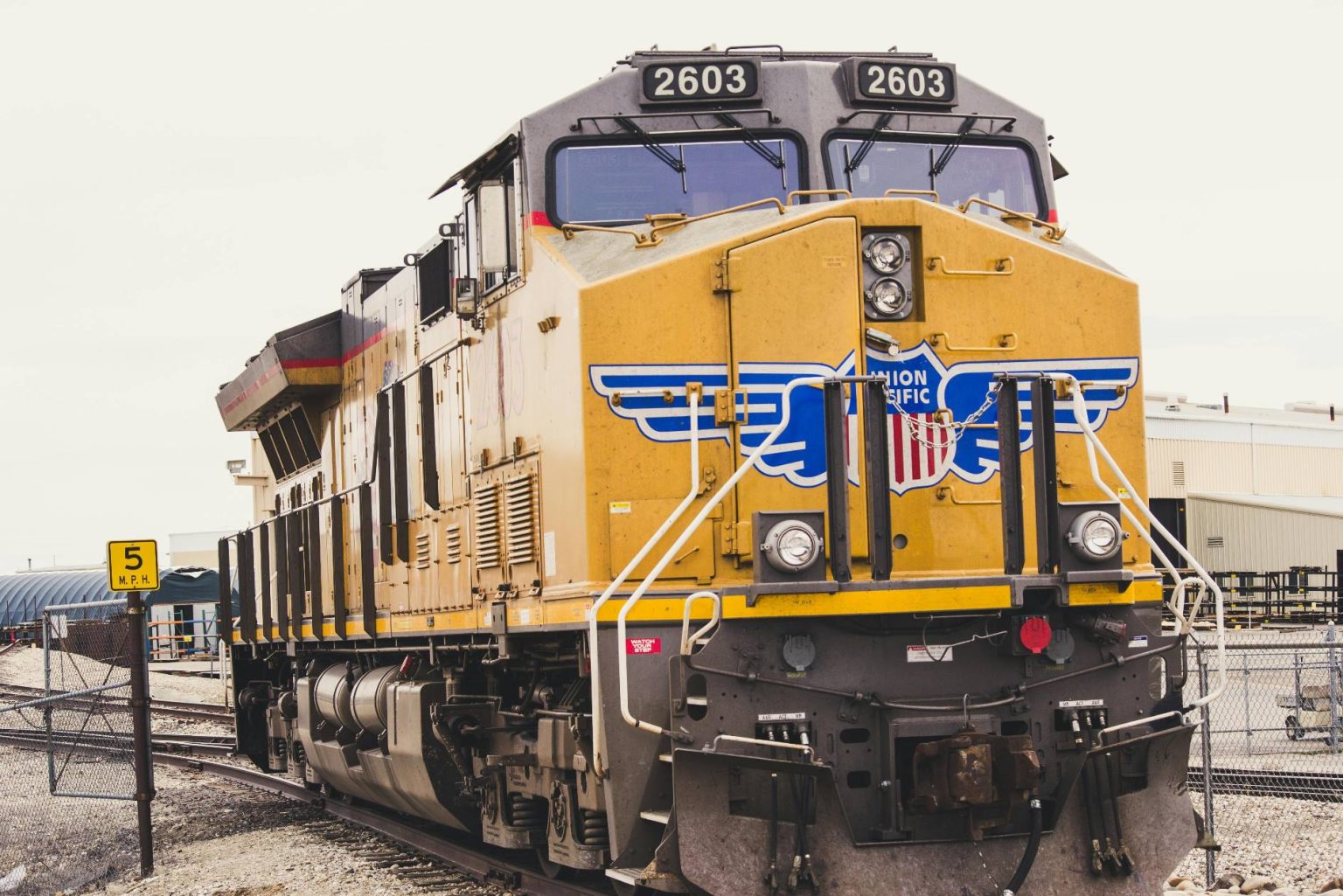
Diesel locomotive manufacturing in 2026: where the strongest public production signals are
Diesel locomotives still matter in heavy-haul freight, export projects, non-electrified routes and transitional hybrid fleets. But there is no single official global census that cleanly publishes a closed country-by-country diesel-locomotive production ranking for calendar 2025. Public comparability in this sector remains limited, so the ranking has to be built from verifiable manufacturing signals rather than from a single universal output table.
This page does not recycle hard country totals that cannot be verified from primary sources. Instead, it uses the strongest recent manufacturing signals that are actually public: official corporate orders, annual reports, export dispatches, plant-level announcements and national railway releases. That produces a more honest page and a better reading of where diesel and diesel-electric locomotive manufacturing is genuinely active right now.
How this page is built:
- Only country signals that can be traced to primary documentation are included.
- Manufacturers, plant operators and end users are kept separate in the country notes.
- Plant evidence, export dispatches, annual-report disclosures and order announcements are treated separately from general market commentary.
- India, Kazakhstan, Australia and Brazil are described through plant, export and order evidence rather than unsupported volume assumptions.
A narrower evidence-based ranking is more useful than a broader table built on numbers that cannot be traced back to primary documentation.
Where the strongest verified manufacturing signals are today
The countries below are not arranged as a strict global unit-output leaderboard. They are the markets where the public evidence is strongest that diesel or diesel-electric locomotive manufacturing is active, expanding or strategically important in 2025–2026.
| Country | Verified 2025–2026 signal | Main manufacturing base | How to read it |
|---|---|---|---|
| United States | Wabtec reported higher locomotive deliveries in late 2025, while Progress Rail states that it continues to produce freight, passenger and road-switching diesel-electric locomotives for use in the U.S. and abroad. | Wabtec and Progress Rail / EMD production network | The U.S. remains the core North American manufacturing base for new diesel, modernization and hybrid-transition locomotive programs. |
| China | CRRC disclosed locomotive business revenue of RMB 29.706 billion in 2025 and reported sales of 813 locomotives for the year. | CRRC locomotive plants and railway equipment ecosystem | China still has by far the broadest rail-manufacturing ecosystem, even though electric traction dominates many domestic corridors. |
| India | BLW recorded 572 locomotive outputs in FY 2025–26 and shipped the sixth 3300 HP diesel-electric export locomotive to Mozambique in December 2025. | Banaras Locomotive Works and associated export programs | India still builds diesel-electric locomotives, but the story has shifted toward exports, special applications and maintenance as domestic electrification nears completion. |
| Kazakhstan | Wabtec’s Astana plant builds Evolution Series locomotives locally; a $405 million order was followed by a $4.2 billion locomotive agreement announced in 2025. | Lokomotiv Kurastyru Zauyty plant, Astana | Kazakhstan is not just a buyer. It is now a serious regional assembly and engineering base for the wider CIS and Middle Corridor rail market. |
| Germany | Vossloh Rolling Stock continues locomotive production, and DB Cargo signed a framework agreement for up to 250 Modula hybrid diesel-battery locomotives presented in Kiel. | Vossloh Rolling Stock, Kiel-Suchsdorf | Germany’s diesel story is now mostly a hybrid, Stage V and shunting-efficiency story, not a classic high-volume pure-diesel expansion story. |
| Australia | UGL launched the Australian-made Evo locomotive in June 2025 and stated that it was manufactured at Broadmeadow. | UGL Broadmeadow, New South Wales | Australia remains relevant because long-haul freight and mining still create a durable market for heavy diesel-electric locomotives built for local operating conditions. |
| Brazil | Wabtec confirmed that 50 new Evolution Series locomotives ordered by Vale will be manufactured at its Contagem plant, while the company also expanded Brazilian engineering and manufacturing capacity in 2025. | Wabtec Contagem plant | Brazil should be read as an active heavy-haul manufacturing base tied to mining and freight decarbonization, not as a market where operators themselves are the manufacturers. |
The table avoids implying that all rows are directly comparable on one identical unit basis. Some countries disclose plant output, some disclose locomotive sales, and others disclose factory-backed orders or export deliveries. For this industry, public comparability is still patchy.
Methodology
This article uses a deliberately strict methodology. Instead of assigning every country an exact 2025 unit total, it ranks manufacturing relevance based on the latest verifiable public signals available from primary sources. That includes official annual reports from locomotive manufacturers, government railway releases, official plant announcements, export dispatches and customer order disclosures.
The time window is mainly 2025 with early-2026 confirmation where that helps verify what was already happening at the end of 2025. In practice, this means the page relies on the most recent closed reporting periods for CRRC and Wabtec, official Indian Railways and PIB releases for BLW, and plant- or order-level disclosures for Kazakhstan, Australia, Germany and Brazil.
The key limitation is comparability. One source may disclose locomotives sold, another may disclose locomotives produced, another may disclose only a plant-backed order and another may disclose a specific export batch. Because the diesel locomotive industry is small, customized and contract-driven, comparable country production data are much weaker than in automotive manufacturing. That is why the page does not force the data into a neat global unit-output Top 10 when the public evidence does not support that level of comparability.
A second limitation is technology mix. In several countries, diesel now overlaps with hybrid, battery-assisted, dual-fuel or bi-mode platforms. In Europe especially, a locomotive may still have a diesel engine but sit inside a transition architecture aimed at low-emission shunting or last-mile operations. Readers should therefore treat “diesel manufacturing” as a broad diesel or diesel-electric category rather than a narrow old-style pure-diesel bucket.
What the data show
The first clear takeaway is that diesel locomotive manufacturing is no longer a simple mass-market story. In most advanced rail systems, the center of gravity has shifted toward modernization, hybridization, emissions compliance and export specialization. That is why country comparisons are now harder: factories are serving different niches, not one single standardized global market.
The second takeaway is that the strongest manufacturing ecosystems still belong to countries with deep rail engineering stacks. The United States and China remain central because they combine design, assembly, services and customer financing depth. India is still important, but for a different reason than before: its domestic railway system is close to full electrification, so diesel is becoming more concentrated in exports, maintenance and specific network needs rather than the old high-volume domestic build story.
The third takeaway is that regional assembly matters more than many generic rankings admit. Kazakhstan and Brazil are good examples. Both are tied to specific freight corridors and local industrial policies, and both have real manufacturing logic behind them. They should not be treated merely as end markets.
Finally, Europe’s diesel story is narrower than the old article suggested. Germany remains relevant because of hybrid shunting and industrial know-how, but a country like France is better read today through electric and broader rolling-stock capacity than as a leading pure diesel-locomotive producer. That distinction matters if the page is supposed to help readers understand where the industry is actually heading.
locomotives from BLW in FY 2025–26, with diesel-electric export activity continuing even as the domestic network is almost fully electrified.
locomotives sold by CRRC in 2025, alongside locomotive business revenue of RMB 29.706 billion.
possible hybrid diesel-battery locomotives under DB Cargo’s framework agreement with Vossloh Rolling Stock.
What this means for the reader
For investors, consultants and supply-chain readers, the most important lesson is that the diesel locomotive market should not be read through generic “global demand” headlines alone. Plant location, export capability, after-sales service networks and emissions-transition strategies now matter as much as raw assembly count.
For readers tracking industrial policy, the page also shows why localization matters. Kazakhstan, India and Brazil are not just buying rail equipment. They are using rolling-stock production to build engineering skills, local jobs and long-term service ecosystems around strategic freight corridors.
For anyone comparing countries, the safer question is no longer “Who built the most diesel locomotives in 2025?” The better question is: “Which countries can still design, assemble, export, modernize and support diesel or diesel-electric locomotives at scale?” That lens is more realistic and more useful.
FAQ
Why is this not a conventional global Top 10 by units?
Because exact country totals for a single clean global diesel-locomotive leaderboard cannot be verified from one official worldwide dataset. In this industry, public reporting is fragmented. Some companies publish sales, some publish orders, some publish plant output and others publish only deliveries or export batches.
Does this mean diesel locomotive manufacturing is disappearing?
No. It means the market is becoming more specialized. Diesel and diesel-electric locomotives remain important in heavy-haul freight, mining, export projects, non-electrified routes, shunting and hybrid transition platforms.
Why is India still important if its railway network is almost fully electrified?
Because India still has manufacturing capacity, service capability and export programs. The diesel story is simply changing shape: less about mass domestic dependence and more about selective production, overseas contracts and long-term maintenance support.
Why is Kazakhstan included?
Kazakhstan is included because locomotive manufacturing there is tied to a real local plant in Astana and to very large Wabtec-backed orders. That makes it a genuine regional manufacturing and engineering node, not just a customer market.
Why are France and Canada treated more cautiously here?
Because the stronger recent manufacturing evidence points elsewhere for diesel-specific production signals. The clearest recent public signals point to active diesel or diesel-electric manufacturing in the United States, China, India, Kazakhstan, Germany, Australia and Brazil. In contrast, recent French locomotive news is more clearly electric, while North American manufacturing evidence for Canadian operators points back to U.S. plants.
What is the best indicator for cross-country comparison in this sector?
There is no perfect single indicator. The best practical approach is to combine plant output where available, locomotive sales in annual reports, export deliveries, major order disclosures and the presence of real assembly and service infrastructure. That is the method used here.
Sources
-
Wabtec — 2025 results and locomotive order disclosures. Used to confirm higher locomotive deliveries, North American demand, Kazakhstan agreements and Brazilian manufacturing signals.
https://www.wabteccorp.com/newsroom/press-releases/wabtec-delivers-strong-fourth-quarter-2025-results-announces-2026-full-year-guidance
https://www.wabteccorp.com/newsroom/press-releases/kazakhstan-awards-wabtec-a-42-billion-locomotive-order
https://www.wabteccorp.com/newsroom/press-releases/wabtec-finalizes-405-million-locomotive-deal-with-kazakhstan-temir-zholy
https://www.wabteccorp.com/newsroom/press-releases/vale-and-wabtec-finalize-locomotive-purchase-agreement -
Progress Rail / EMD — locomotive production and international supply footprint.
https://www.progressrail.com/en/Segments/Locomotive/Locomotives.html
https://www.progressrail.com/en/Company/Locations/NorthAmerica.html -
CRRC 2025 annual results announcement. Used for locomotive revenue and annual locomotive sales disclosures.
https://www.hkexnews.hk/listedco/listconews/sehk/2026/0327/2026032702824.pdf -
Government of India / PIB and Indian Railways. Used for BLW diesel-electric export dispatches and near-full network electrification context.
https://www.pib.gov.in/PressReleasePage.aspx?PRID=2204768
https://www.pib.gov.in/PressNoteDetails.aspx?ModuleId=3&NoteId=156834&lang=2®=3 -
UGL Australia and DB Cargo / Vossloh Rolling Stock. Used for Australia’s Broadmeadow-built Evo locomotive and Germany’s hybrid locomotive program in Kiel.
https://www.ugllimited.com/news/2025/evo-locomotive-launched-for-australias-rail-freight-task
https://www.vl-rs.com/en/
https://www.dbcargo.com/rail-de-en/logistics-news/db-cargo-vossloh-hybrid-locomotives-13603326
Updated: April 7, 2026. The page prioritizes factual reliability and source-traceable manufacturing evidence.