Electric Locomotive Production by Country in 2025: Verified Global Ranking
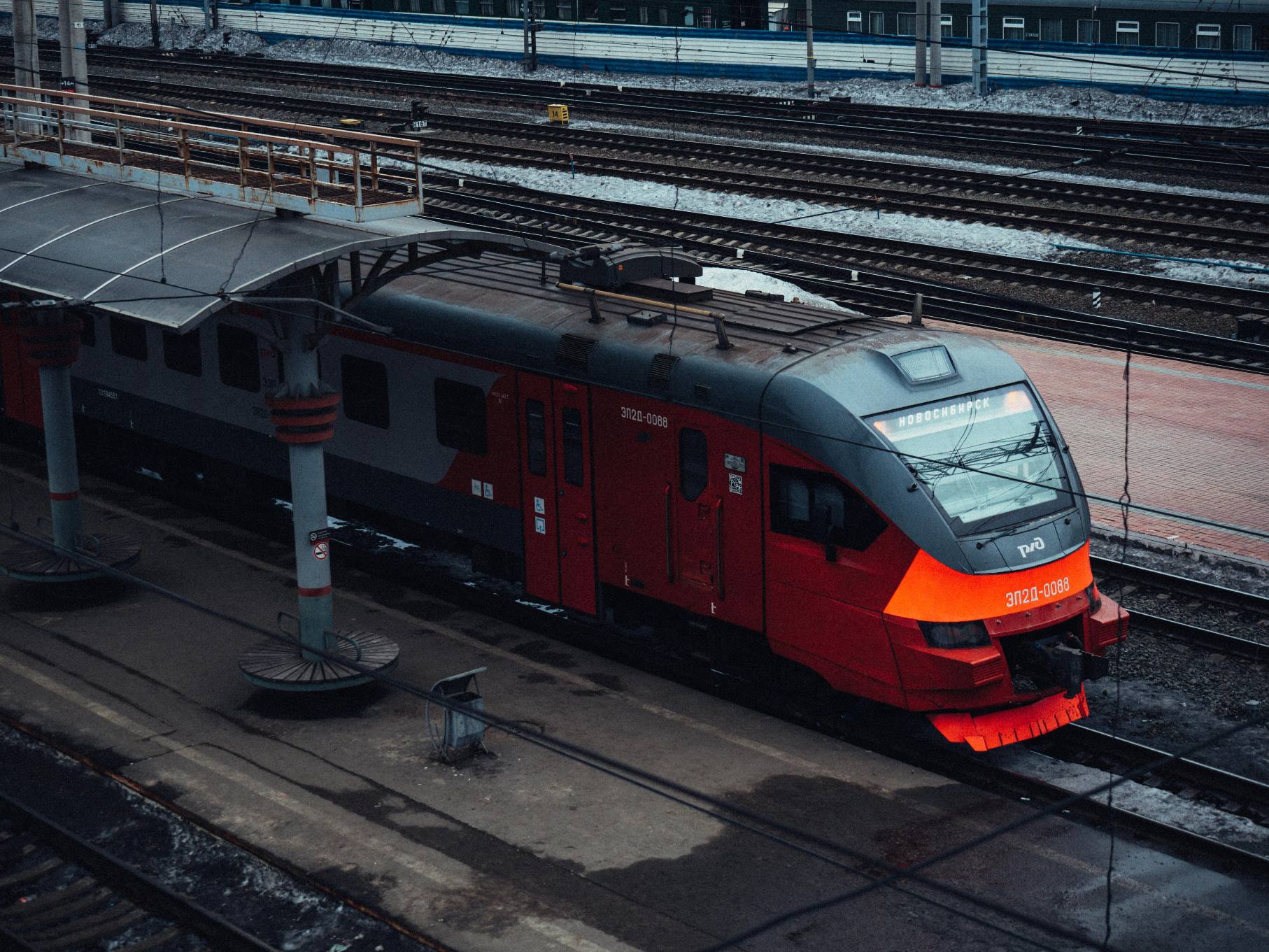
Electric locomotive manufacturing leaders in 2025: a maximum-verifiable country ranking
A clean global league table for electric locomotive output does not exist in one harmonised public database. That matters, because a lot of older “Top 10” lists mix freight locomotives, high-speed power cars, EMUs, frame agreements, plant capacity and future options as if they were the same thing. This version uses a stricter rule: only public 2024–2025 signals that can be traced to official government or manufacturer disclosures are included.
Thank you for reading this post, don't forget to subscribe!As a result, this page does not force a fake Top 10. It presents the maximum defensible country set available from open sources right now: countries with either a published annual output number, a firm 2024–2025 electric-locomotive manufacturing programme, or a clearly disclosed domestic production-capacity proxy where comparable annual output is not publicly broken out.
How to read this correctly: India ranks first on directly published annual electric-locomotive output. China remains the global scale leader in industrial footprint, but open public disclosure does not provide one neat, directly comparable 2024–2025 annual electric-output line, so China is shown with a transparent capacity-based proxy rather than fake precision.
Country leaders at a glance
China almost certainly remains the largest manufacturing ecosystem in this segment. CRRC describes itself as the world’s largest supplier of rail transit equipment, and public company profiles point to a 1,000-per-year electric-locomotive capacity at Zhuzhou plus a 600-locomotive annual capacity at Dalian, while older CRRC group disclosure shows 1,530 new locomotives of annual group capacity. What open sources do not give is one clean, current, country-level 2024–2025 electric-output total, so the China figure is deliberately labelled as a proxy.
India is the clearest open-data leader. Indian Railways’ 2024–25 year book reports 1,476 electric locomotives from its production units, with a further 100 manufactured by MELPL during the period. That gives India the strongest directly published annual number anywhere in the public record and confirms how far its domestic manufacturing ecosystem has scaled.
Italy’s locomotive position is driven by Alstom’s Vado Ligure site. In 2024 Alstom signed a 70-locomotive Traxx Universal contract for Mercitalia Rail, manufactured in Italy, while the plant was also delivering the first locomotive from a 20-unit Italian-market programme. That makes Italy one of Europe’s clearest current production anchors.
Germany remains a top European centre thanks to Siemens Mobility’s Vectron line in Munich-Allach. Public disclosures show a 70-locomotive call-off for Railpool in 2024 and a further 15-locomotive framework call in 2025, while Siemens also expanded the Allach factory in 2025 with roughly €250 million of investment.
France enters the list because Alstom booked a 55-electric-locomotive contract for Ukrainian Railways in 2025, with manufacturing assigned to the Belfort site. Deliveries begin later, so this is not current output; it is a booked manufacturing pipeline signal, which still matters for a 2025 landscape view.
Poland’s visible 2025 footprint comes from Alstom’s Wrocław plant, where locomotive bodies are being built for a 40-unit Traxx Universal multisystem programme for OnTrain. Poland also has a broader locomotive ecosystem via NEWAG, but the figure used here sticks to the cleanest current official unit disclosure.
Spain makes the cut on the back of two separate programmes visible in public sources: Talgo’s active Renfe very-high-speed locomotive scope of 23 units in its annual reporting and Stadler Valencia’s 17-unit electric locomotive contract for LTG Cargo signed in late 2024.
Stadler’s 2024 agreement with SBB Cargo includes a first firm call-off of 36 multisystem locomotives inside a wider 129-unit frame. Because Stadler uses a multinational production network, the Swiss figure is best read as a Swiss-led manufacturing programme signal rather than a narrow one-site count.
The Czech Republic remains part of Europe’s electric-locomotive manufacturing map through Škoda Group, whose Emil Zátopek platform is in service programmes including a six-locomotive supply for DB Regio. The public signal is smaller than in Germany or Italy, but it is current, specific and directly tied to an operating platform.
Table 1. Maximum-verifiable country list for electric locomotive manufacturing in 2025
| Rank | Country | 2024–2025 public unit signal | Evidence basis |
|---|---|---|---|
| SL | China | 1,530+ group capacity proxy | Public capacity disclosures; not a directly published 2025 electric-output total |
| 1 | India | 1,576 | Official FY 2024–25 output |
| 2 | Italy | 90 | Firm programmes plus live 2024 delivery context |
| 3 | Germany | 85 | Firm 2024–2025 Vectron orders |
| 4 | France | 55 | Booked 2025 manufacturing programme |
| 5 | Poland | 40 | Firm order for domestic manufacturing |
| 6 | Spain | 40 | Active dual-source production programmes |
| 7 | Switzerland | 36 | Firm frame-agreement call-off |
| 8 | Czech Republic | 6 | Visible current small-run platform supply |
“SL” means scale leader rather than a strict ranked annual-output number. The ranking uses the strongest public signal available, not a forced apples-to-oranges unit table.
Chart 1. Public 2024–2025 unit signals by country
The China bar uses a public manufacturing-capacity proxy rather than a directly published annual electric-output line. All other bars reflect current official output, firm programmes, or booked manufacturing programmes disclosed in 2024–2025.
Methodology
This article does not treat every rail vehicle announcement as equal. The primary rule is to prioritise official public disclosures from government rail systems and manufacturers. Where a country publishes an annual electric-locomotive output figure, that number takes precedence. Where no such country-level output figure is openly published, firm 2024–2025 electric-locomotive contracts tied to domestic manufacturing sites are used as the next-best signal. Only when neither of those exists do we use transparent capacity proxies from corporate profiles.
That approach is why India ranks so strongly in the disclosed table and why China is handled differently. India’s number comes from a direct annual production disclosure. China’s manufacturing ecosystem is unquestionably larger in real industrial depth, but public open data do not provide one current, clean, country-level electric-locomotive output number that is directly comparable to India’s official annual figure. Rather than inventing one, this page labels China honestly as a scale leader and uses public capacity disclosures as a proxy.
The unit figures therefore mix three evidence types: official annual output, firm programmes / live delivery runs, and capacity proxies. They are not interchangeable in a strict statistical sense, which is why the table and chart repeatedly state the evidence basis. The goal is not to fake precision. The goal is to identify which countries have the strongest verifiable electric-locomotive manufacturing footprint in the 2025 landscape.
Limits remain. Public reporting is uneven. Some companies disclose orders but not deliveries; others disclose plant roles but not annual locomotive totals; some countries build locomotives through multinational production networks. China is the most important example of this problem, but it is not the only one. Readers should therefore treat the list as a maximum-verifiable manufacturing ranking, not as a perfect census of every electric locomotive built worldwide in 2025.
Key insights
The first big pattern is concentration. Electric locomotive manufacturing remains heavily concentrated in a small number of countries with deep rail-industrial ecosystems. India stands out because it now pairs huge domestic procurement with openly visible annual output. Europe, by contrast, is fragmented across a set of specialised national champions and cross-border supply chains: Germany with Siemens, Italy with Alstom Vado Ligure, Poland with Wrocław body manufacturing, Spain with Talgo and Stadler Valencia, Switzerland with Stadler’s locomotive programmes, and the Czech Republic with Škoda.
The second pattern is that visibility and scale are not the same thing. China’s industrial lead is obvious from CRRC’s position, product depth and capacity disclosures, yet public comparability is weaker than in India because open annual output lines are not presented in the same neat way. This is a reminder that many viral rankings reward whoever publishes the easiest number, not necessarily whoever has the largest real industrial base.
The third pattern is the importance of freight decarbonisation and interoperability. The strongest European programmes are not just domestic locomotives for one grid. They are multisystem, cross-border freight platforms, often built for use on several corridors. That tells us where industrial demand is moving: fewer purely national niches, more interoperable assets that can work across networks and support modal shift from road to rail.
What this means for readers
For investors and industry watchers, the main takeaway is simple: count the manufacturing ecosystem, not just the headline order. Countries with live domestic production sites, repeated framework calls and visible service capability are in a much stronger position than countries that only appear in one-off announcements. For policymakers, the lesson is that procurement continuity, certification capability and domestic supply chains matter as much as the locomotive design itself.
For shippers and rail customers, the ranking shows where the industrial backbone of future electrified freight is actually being built. For labour-market observers, it highlights where rail-equipment engineering and component work remain strategically important. For general readers, it is a reminder that decarbonised rail depends on factories, not slogans: battery modules, power electronics, bogies, software, cross-border approvals and after-sales service all shape who leads the market.
FAQ
Why is this not a traditional Top 10 table?
Because the open data do not support a clean, honest Top 10. Some countries publish annual output, some publish orders, some publish plant capacity, and some publish almost nothing comparable. This page stops where the public evidence stops.
Why does India come first in the numbered ranking?
India comes first because it has the strongest directly published annual electric-locomotive output figure in the current public record. That is different from saying India has the entire world’s largest rail-manufacturing ecosystem.
Why is China labelled as a scale leader instead of given one neat 2025 number?
Because a neat country-level annual electric-output number is not publicly disclosed in one directly comparable official line. China is clearly a giant in industrial depth, but this article avoids replacing missing disclosure with guesswork.
Does a firm order count the same as annual production?
No. A firm order is a manufacturing signal, not the same thing as annual completed output. That is why the table explicitly shows the evidence basis for every country.
Why are EMUs and metro cars not used here?
Because this page is about electric locomotives, not all electric rolling stock. A country can be extremely strong in EMUs, metros or high-speed trainsets and still not make this list if the locomotive evidence is weaker.
Are battery-assisted and multisystem locomotives included?
Yes, where the underlying product is still a locomotive platform rather than a distributed-power multiple unit. That matters especially in Europe, where hybrid last-mile and multisystem freight locomotives are now a central part of the market.
Full country table and evidence-strength view
By default, the table below shows all listed countries. Filters are simplified: search by country, narrow by region if needed, change sorting, or switch from units to share of the listed total.
Table 2. Maximum-verifiable electric locomotive manufacturing table, 2025 snapshot
Listed total used for share calculation: 3,458. Shares refer only to the countries shown in this table.
Showing 9 of 9 countries
| Rank | Country | Value | Evidence basis |
|---|---|---|---|
| SL | China CRRC group · Zhuzhou · Dalian | 1,530+ 44.25% Scale proxy, not a directly published annual electric-output total | Capacity proxy Public CRRC scale and plant-capacity disclosures |
| 1 | India CLW · BLW · PLW · MELPL | 1,576 45.58% Published FY 2024–25 output signal | Official output 1,476 from IR production units plus 100 from MELPL |
| 2 | Italy Alstom Vado Ligure | 90 2.60% 70-unit 2024 contract plus 20-unit live delivery context | Firm programmes / orders Strong current locomotive manufacturing pipeline |
| 3 | Germany Siemens Mobility Munich-Allach | 85 2.46% 70 Railpool + 15 Northrail firm calls | Firm programmes / orders Current public Vectron order signal |
| 4 | France Alstom Belfort | 55 1.59% Booked in 2025, with later delivery start | Booked programme Important manufacturing pipeline, not current annual output |
| 5 | Poland Alstom Wrocław | 40 1.16% Domestic manufacturing tied to a firm order | Firm programmes / orders Wrocław body manufacturing for OnTrain |
| 6 | Spain Talgo · Stadler Valencia | 40 1.16% 23 Talgo + 17 Stadler Valencia public signal | Firm programmes / orders Active locomotive manufacturing programmes |
| 7 | Switzerland Stadler | 36 1.04% First firm call-off inside a 129-unit frame | Firm programmes / orders Swiss-led locomotive programme |
| 8 | Czech Republic Škoda Group | 6 0.17% Visible current platform supply | Small-run current platform Emil Zátopek locomotives for DB Regio |
Source basis: official railway year books and manufacturer disclosures. Snapshot logic: 2024–2025 output, firm programmes or transparent capacity proxies where direct annual output is not publicly disclosed.
Figure 2. Unit signal versus evidence strength
The scatter plot below shows both scale and confidence. The horizontal axis reflects the public unit signal used in the table. The vertical axis reflects evidence strength on a 1–3 scale, where 3 means direct official annual output, around 2 means firm manufacturing programmes, and values closer to 1 mean capacity proxies or booked future programmes.
Evidence strength scale: 3.0 = official annual output; about 2.0–2.6 = firm programmes or current production runs; about 1.0–1.6 = capacity proxy or booked future manufacturing programme.
How to interpret the 2025 electric locomotive map
The most important conclusion is that electric locomotive manufacturing is not just a story about demand for greener rail. It is also a story about industrial continuity. The countries that show up repeatedly in the public record are the ones with lasting procurement pipelines, export capability, testing and homologation capacity, and enough supplier depth to keep a locomotive platform alive across several order cycles.
The ranking is strongest when read as an industrial-footprint map. It tells us where locomotive production, assembly, platform engineering and booked manufacturing work are most visible in the public record right now. It is less useful if readers try to squeeze every row into the same statistical box.
Interpretation
India’s position shows what happens when a large domestic railway system keeps ordering, manufacturing and reporting at scale. It is the cleanest example of a visible industrial flywheel: domestic demand, state-backed production units, repeated platform manufacturing and measurable annual output. Europe’s picture is different. Instead of one dominant producer, the region operates as a network of specialised manufacturing centres. Germany, Italy, Poland, Spain, Switzerland and the Czech Republic each hold different parts of the value chain: final assembly, locomotive bodies, platform engineering, cross-border approvals or small-run specialist builds.
China sits above that comparison in a different way. The country’s industrial base is obviously enormous, and CRRC’s scale is unmatched in open corporate positioning. Yet the openness of the output data is weaker than in India. That matters for any serious ranking exercise. A country can be the industrial giant and still be harder to quantify in a clean annual-output table if the public reporting format is different.
France is the most interesting “pipeline” case. Its 2025 Alstom booking for Ukrainian Railways matters even though deliveries start later. That kind of booked work is often the bridge between current manufacturing load and future plant utilisation. Readers should not confuse pipeline with completed output, but they should not ignore it either.
Policy and industry takeaways
- Procurement continuity matters more than one-off mega orders. Repeated calls under framework agreements create a much healthier manufacturing base than irregular bursts of buying.
- Cross-border freight standards are reshaping the European market. Multisystem locomotives, last-mile capability and interoperable freight approvals are now part of the core competitive package.
- Transparency is a strategic advantage. Countries and manufacturers that publish clean annual output data are easier to track, benchmark and finance.
- Domestic ecosystems still decide the winners. Final assembly is only one layer. Power electronics, traction equipment, bogies, software, certification and maintenance capability all determine whether a country remains relevant.
- Rail decarbonisation is industrial policy. Electrification targets, freight-corridor strategy and local manufacturing commitments increasingly move together rather than separately.
Future outlook
The medium-term direction is clear: more freight corridors will demand interoperable electric and battery-assisted locomotive platforms, and more governments will expect domestic manufacturing or domestic content from rail procurement. That favours countries with existing plants and engineering teams over countries that rely entirely on imported turnkey stock.
In the next update cycle, the most important questions will be whether India sustains its published output pace, whether China discloses more directly comparable current electric-locomotive figures, how quickly Alstom’s France and Italy pipelines turn into delivered units, and whether Europe’s fragmented but high-value manufacturing cluster continues to shift toward multisystem freight platforms rather than purely national variants.
Official sources and technical references
Primary official source for India’s FY 2024–25 electric-locomotive output and production-unit breakdown.
https://indianrailways.gov.in/railwayboard/uploads/directorate/stat_econ/2026/INDIAN%20RAILWAYS%20YEAR%20BOOK%2C%202024-25%20ENGLISH.pdfUsed for China’s scale-leader treatment, including CRRC group positioning, Zhuzhou electric-locomotive capacity and Dalian locomotive capacity.
https://www.crrcgc.cc/en/73_5130/73_5141/index.htmlhttps://www.crrcgc.cc/zjen/29_1692/29_2012/index.html
https://www.crrcgc.cc/dlen/162_10665/162_10674/index.html
Used for Germany’s 2024–2025 public unit signal and current factory expansion context.
https://press.siemens.com/global/en/pressrelease/siemens-opens-one-europes-most-modern-train-factories-and-service-centers-munichhttps://assets.new.siemens.com/siemens/assets/api/uuid%3Aec16b97e-4866-40fe-ae7e-e231f69e1fe2/HQMOPR202402146870EN.pdf
https://press.siemens.com/global/en/pressrelease/northrail-expands-fleet-50-new-vectron-locomotives
Used for Vado Ligure, Wrocław and Belfort manufacturing signals.
https://www.alstom.com/press-releases-news/2024/6/alstom-signs-eu323-million-contract-polo-logistica-fs-supply-70-traxx-universal-locomotives-maintenance-serviceshttps://www.alstom.com/press-releases-news/2024/5/alstom-delivers-first-traxx-universal-dc-locomotive-last-mile-polo-logistica-vado-ligure-site
https://www.alstom.com/press-releases-news/2024/12/alstom-supply-traxx-electric-locomotives-ontrain-sp-z-oo-poland
https://www.alstom.com/press-releases-news/2025/11/alstom-will-deliver-55-electric-locomotives-ukrainian-railways
Used for Swiss and Spanish public programme signals.
https://www.stadlerrail.com/api/docs/c73768cb3e/2024_0925_media-release_contract_signing_sbb_cargo_en.pdfhttps://www.stadlerrail.com/api/docs/x/ae317b6202/2024_1216_eurodual-ltg-cargo_clean_en.pdf
Used for Spain’s Talgo manufacturing signal in the Renfe VHS programme.
https://www.talgo.com/inversores/wp-content/uploads/IAR_Talgo_2024_ING_V6.pdfUsed for the Czech Republic’s visible current platform supply signal.
https://www.skodagroup.com/reference/locomotive-emil-zatopek-germanyhttps://www.skodagroup.com/products/electric-locomotives

StatRanker (Website)
administrator