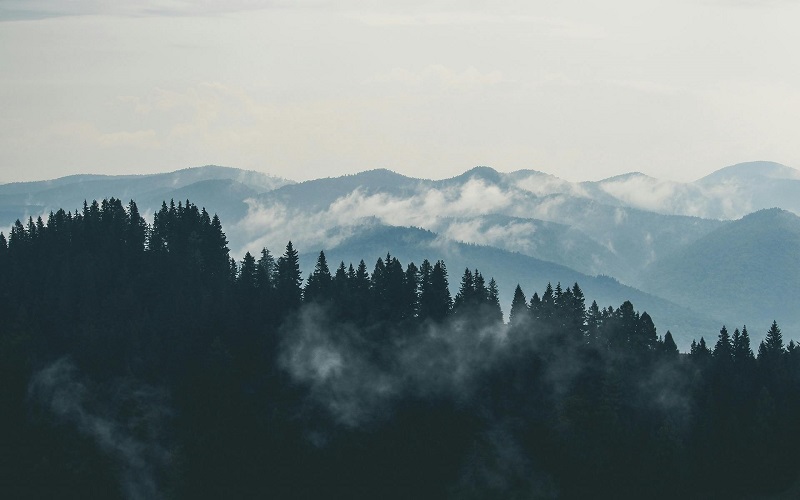
Top 100 Countries by Forest Area per Capita, 2025
Forest Area per Capita: the “Forest per Person” League Table (Top 100, 2025 snapshot)
Forests matter far beyond scenery. They store carbon, regulate local and regional water cycles, support biodiversity, and provide livelihoods through timber, non-timber products, recreation, and ecosystem services. But when countries differ by orders of magnitude in population size, “total forest area” alone can mislead. Forest area per capita is a simple, intuitive lens: how much forest (in hectares) falls, on average, to one resident.
This ranking is designed for comparison and public understanding. Values are rounded and intended to be harmonised for cross-country comparability rather than to replicate every national statistical nuance. The point is to read patterns: which countries are “forest-abundant per person”, and why.
Method in one formula
We compute forest area per capita as Forest area ÷ Population. Forest area is expressed in square kilometres in many international datasets; we convert to hectares (1 km² = 100 ha) and then divide by mid-year population estimates. “Forest” here follows international definitions (minimum area, canopy, and tree height thresholds), so it is not the same as “any trees anywhere”.
Units: hectares per person (ha/person). Interpretation: higher values mean more forest relative to population, not automatically “better forest governance”.
Table 1 — Top 10 countries by forest area per capita (ha/person)
| Rank | Country | Forest area per capita (ha/person) |
|---|---|---|
| 1 | Suriname | 23.5 |
| 2 | Guyana | 21.8 |
| 3 | Gabon | 9.1 |
| 4 | Canada | 8.7 |
| 5 | Russian Federation | 5.6 |
| 6 | Finland | 3.9 |
| 7 | Papua New Guinea | 3.3 |
| 8 | Sweden | 2.6 |
| 9 | Brazil | 2.4 |
| 10 | Bolivia | 2.3 |
Why these leaders? The common pattern is small or moderate populations combined with large forest estates (often boreal or tropical forest biomes). The ranking rewards forest-rich geography and low population density— not necessarily economic development.
Bar chart — Top 20 countries by forest area per capita
Bars show the Top 20 (to reveal the “long tail” beyond the Top 10 table). Values are rounded. Forest per person can be extremely high in small countries with extensive forests—so the first few ranks may dominate the scale.
Patterns behind the ranking: biome, population density, and the “wealth–forest” mix
Forest area per capita is strongly shaped by geography and demography. At the top you typically see either tropical forest countries with small populations (large rainforest belts, low population density) or boreal forest countries where vast conifer forests meet moderate populations. In both cases, the numerator (forest area) is large relative to the denominator (people).
Three recurring “country types” in the Top 100
Type 1 Small population + large intact forest estate (often tropical). A small change in population or forest area can move these countries noticeably in per-capita terms.
Type 2 Boreal giants with extensive forests and long-running forest management institutions. Their per-capita advantage mostly comes from vast land area and low density rather than unusually high forest cover percentages.
Type 3 Mid-rank “working forests” where forestry, agriculture, conservation, and settlement all compete. These countries can have respectable per-capita forest even with moderate density, but the ranking becomes more sensitive to land-use policy.
Important caveat: a high “forest per person” value does not guarantee sustainability. Two countries can have the same per-capita forest but very different outcomes depending on governance, enforcement, protected-area coverage, indigenous land rights, and the economics of timber and agriculture.
Table 2 — Top 100 countries (2025 snapshot): forest per capita + total forest area
The table lists countries with the highest forest area per person. To keep the layout readable (and mobile-friendly), total forest area is displayed as a secondary line inside the value cell. Figures are rounded (≈) and best read as an analytical ranking.
| Rank | Country | Forest area per capita + total forest |
|---|---|---|
| 1 | Suriname |
23.5 ha/person
Total forest ≈ 14.7 million ha
|
| 2 | Guyana |
21.8 ha/person
Total forest ≈ 18.6 million ha
|
| 3 | Gabon |
9.1 ha/person
Total forest ≈ 22 million ha
|
| 4 | Canada |
8.7 ha/person
Total forest ≈ 347 million ha
|
| 5 | Russian Federation |
5.6 ha/person
Total forest ≈ 815 million ha
|
| 6 | Finland |
3.9 ha/person
Total forest ≈ 22.8 million ha
|
| 7 | Papua New Guinea |
3.3 ha/person
Total forest ≈ 33 million ha
|
| 8 | Sweden |
2.6 ha/person
Total forest ≈ 28.1 million ha
|
| 9 | Brazil |
2.4 ha/person
Total forest ≈ 497 million ha
|
| 10 | Bolivia |
2.3 ha/person
Total forest ≈ 55.5 million ha
|
| 11 | Norway |
2.2 ha/person
Total forest ≈ 12.2 million ha
|
| 12 | Congo, Rep. |
2.1 ha/person
Total forest ≈ 23.5 million ha
|
| 13 | Central African Republic |
2 ha/person
Total forest ≈ 22.5 million ha
|
| 14 | New Zealand |
2 ha/person
Total forest ≈ 10.2 million ha
|
| 15 | Solomon Islands |
1.9 ha/person
Total forest ≈ 2.8 million ha
|
| 16 | Australia |
1.8 ha/person
Total forest ≈ 134 million ha
|
| 17 | Angola |
1.6 ha/person
Total forest ≈ 66 million ha
|
| 18 | Peru |
1.6 ha/person
Total forest ≈ 73 million ha
|
| 19 | Liberia |
1.5 ha/person
Total forest ≈ 6.9 million ha
|
| 20 | Congo, Dem. Rep. |
1.4 ha/person
Total forest ≈ 152 million ha
|
| 21 | Estonia |
1.4 ha/person
Total forest ≈ 2.4 million ha
|
| 22 | Latvia |
1.3 ha/person
Total forest ≈ 3.4 million ha
|
| 23 | Belarus |
1.3 ha/person
Total forest ≈ 8.7 million ha
|
| 24 | Equatorial Guinea |
1.2 ha/person
Total forest ≈ 2.6 million ha
|
| 25 | Montenegro |
1.2 ha/person
Total forest ≈ 0.6 million ha
|
| 26 | Chile |
1.1 ha/person
Total forest ≈ 17.7 million ha
|
| 27 | Slovenia |
1.1 ha/person
Total forest ≈ 1.2 million ha
|
| 28 | Croatia |
1 ha/person
Total forest ≈ 2.7 million ha
|
| 29 | Zambia |
1 ha/person
Total forest ≈ 49 million ha
|
| 30 | Uruguay |
1 ha/person
Total forest ≈ 1.7 million ha
|
| 31 | Costa Rica |
0.98 ha/person
Total forest ≈ 2.6 million ha
|
| 32 | Panama |
0.95 ha/person
Total forest ≈ 4.6 million ha
|
| 33 | Venezuela |
0.9 ha/person
Total forest ≈ 46.5 million ha
|
| 34 | Ecuador |
0.88 ha/person
Total forest ≈ 12.1 million ha
|
| 35 | Argentina |
0.83 ha/person
Total forest ≈ 28 million ha
|
| 36 | United States |
0.82 ha/person
Total forest ≈ 310 million ha
|
| 37 | Colombia |
0.8 ha/person
Total forest ≈ 59 million ha
|
| 38 | Cameroon |
0.78 ha/person
Total forest ≈ 22 million ha
|
| 39 | Spain |
0.74 ha/person
Total forest ≈ 18.5 million ha
|
| 40 | Portugal |
0.72 ha/person
Total forest ≈ 3.3 million ha
|
| 41 | Romania |
0.7 ha/person
Total forest ≈ 6.9 million ha
|
| 42 | Bulgaria |
0.68 ha/person
Total forest ≈ 3.9 million ha
|
| 43 | Ukraine |
0.66 ha/person
Total forest ≈ 9.7 million ha
|
| 44 | Kazakhstan |
0.63 ha/person
Total forest ≈ 3.4 million ha
|
| 45 | Mexico |
0.62 ha/person
Total forest ≈ 65 million ha
|
| 46 | France |
0.58 ha/person
Total forest ≈ 17 million ha
|
| 47 | Greece |
0.57 ha/person
Total forest ≈ 4 million ha
|
| 48 | Italy |
0.55 ha/person
Total forest ≈ 9.4 million ha
|
| 49 | Austria |
0.54 ha/person
Total forest ≈ 3.9 million ha
|
| 50 | Germany |
0.53 ha/person
Total forest ≈ 11.4 million ha
|
| 51 | Czechia |
0.51 ha/person
Total forest ≈ 2.7 million ha
|
| 52 | Slovak Republic |
0.5 ha/person
Total forest ≈ 2 million ha
|
| 53 | Hungary |
0.48 ha/person
Total forest ≈ 2.1 million ha
|
| 54 | Poland |
0.47 ha/person
Total forest ≈ 9.2 million ha
|
| 55 | Switzerland |
0.46 ha/person
Total forest ≈ 1.3 million ha
|
| 56 | Japan |
0.45 ha/person
Total forest ≈ 25 million ha
|
| 57 | South Korea |
0.42 ha/person
Total forest ≈ 6.3 million ha
|
| 58 | United Kingdom |
0.41 ha/person
Total forest ≈ 3.2 million ha
|
| 59 | Ireland |
0.4 ha/person
Total forest ≈ 0.8 million ha
|
| 60 | Belgium |
0.38 ha/person
Total forest ≈ 0.7 million ha
|
| 61 | Denmark |
0.35 ha/person
Total forest ≈ 0.6 million ha
|
| 62 | Netherlands |
0.34 ha/person
Total forest ≈ 0.4 million ha
|
| 63 | Lithuania |
0.33 ha/person
Total forest ≈ 2.2 million ha
|
| 64 | Georgia |
0.32 ha/person
Total forest ≈ 2.8 million ha
|
| 65 | Turkey |
0.31 ha/person
Total forest ≈ 22.7 million ha
|
| 66 | Serbia |
0.3 ha/person
Total forest ≈ 2.6 million ha
|
| 67 | Bosnia and Herzegovina |
0.29 ha/person
Total forest ≈ 2.3 million ha
|
| 68 | North Macedonia |
0.29 ha/person
Total forest ≈ 1 million ha
|
| 69 | Albania |
0.28 ha/person
Total forest ≈ 0.8 million ha
|
| 70 | Sri Lanka |
0.28 ha/person
Total forest ≈ 2.1 million ha
|
| 71 | Malaysia |
0.27 ha/person
Total forest ≈ 18 million ha
|
| 72 | Indonesia |
0.26 ha/person
Total forest ≈ 92 million ha
|
| 73 | Thailand |
0.25 ha/person
Total forest ≈ 18.5 million ha
|
| 74 | Vietnam |
0.24 ha/person
Total forest ≈ 14.8 million ha
|
| 75 | Cambodia |
0.24 ha/person
Total forest ≈ 9.7 million ha
|
| 76 | Lao PDR |
0.23 ha/person
Total forest ≈ 16.5 million ha
|
| 77 | Myanmar |
0.23 ha/person
Total forest ≈ 29 million ha
|
| 78 | Philippines |
0.22 ha/person
Total forest ≈ 7.5 million ha
|
| 79 | Nepal |
0.22 ha/person
Total forest ≈ 5.9 million ha
|
| 80 | Bhutan |
0.21 ha/person
Total forest ≈ 2.7 million ha
|
| 81 | Mongolia |
0.21 ha/person
Total forest ≈ 14 million ha
|
| 82 | South Africa |
0.2 ha/person
Total forest ≈ 9.2 million ha
|
| 83 | Morocco |
0.2 ha/person
Total forest ≈ 5.8 million ha
|
| 84 | Tunisia |
0.19 ha/person
Total forest ≈ 0.9 million ha
|
| 85 | Algeria |
0.19 ha/person
Total forest ≈ 2 million ha
|
| 86 | Tanzania |
0.19 ha/person
Total forest ≈ 45 million ha
|
| 87 | Mozambique |
0.18 ha/person
Total forest ≈ 36 million ha
|
| 88 | Zimbabwe |
0.18 ha/person
Total forest ≈ 15 million ha
|
| 89 | Botswana |
0.18 ha/person
Total forest ≈ 2 million ha
|
| 90 | Namibia |
0.17 ha/person
Total forest ≈ 1.2 million ha
|
| 91 | Madagascar |
0.17 ha/person
Total forest ≈ 12 million ha
|
| 92 | Ghana |
0.17 ha/person
Total forest ≈ 9.4 million ha
|
| 93 | Côte d’Ivoire |
0.16 ha/person
Total forest ≈ 10.4 million ha
|
| 94 | Guinea |
0.16 ha/person
Total forest ≈ 6.7 million ha
|
| 95 | Sierra Leone |
0.16 ha/person
Total forest ≈ 2.2 million ha
|
| 96 | Honduras |
0.16 ha/person
Total forest ≈ 6 million ha
|
| 97 | Nicaragua |
0.15 ha/person
Total forest ≈ 3.2 million ha
|
| 98 | Guatemala |
0.15 ha/person
Total forest ≈ 3.6 million ha
|
| 99 | Belize |
0.15 ha/person
Total forest ≈ 1.5 million ha
|
| 100 | Paraguay |
0.15 ha/person
Total forest ≈ 16 million ha
|
Scatter — forest area per capita vs GDP per capita (Top 20)
Each point is one of the Top 20 countries by forest per person. The x-axis uses GDP per capita (current US$) as a rough income proxy; the y-axis is forest area per capita. This view often reveals “two worlds”: high-income boreal countries with strong institutions, and lower-income tropical or mixed-biome countries where forest outcomes depend heavily on land-use incentives and enforcement. GDP values are approximate (rounded to the nearest few hundred/thousand) and reflect the most recent annual data commonly available.
What the ranking means (and what it does not)
A “forest per person” ranking can be read in two ways at once: as a resource endowment indicator and as a pressure indicator. High forest area per capita suggests that, in pure spatial terms, a country has a large forest estate relative to its population. That can be an advantage for biodiversity and climate mitigation potential, and it can support forestry, tourism, and ecosystem services.
But the metric is not a direct measure of forest quality, intactness, or sustainability. It does not tell you whether forests are primary or planted, whether they are fragmented, or how rapidly forest cover is changing. Two countries can rank similarly and still face very different risks: illegal logging, agricultural expansion, wildfire, pests, or weak enforcement.
How to use forest area per capita responsibly
Treat the ranking as a starting point for deeper questions. If a country ranks high, ask: is its forest estate stable over time? How much is protected? What share is managed for production vs conservation? If a country ranks low, ask: is it genuinely forest-scarce, or is it densely populated with forests concentrated in protected areas or remote regions?
For comparative work, pairing this metric with forest-change indicators (net loss/gain), protected-area share, and governance proxies gives a far more complete picture than any single ranking can provide.
Policy takeaway (key implications)
- High forest per capita is an opportunity, not a guarantee. Countries with large forest endowments can translate this into climate and biodiversity benefits only with credible land-use rules, enforcement, and long-term planning.
- Low forest per capita does not mean “no forest policy”. In dense countries, small changes in forest area can have outsized effects on recreation, heat mitigation, and ecosystem services—especially near cities.
- Income is not destiny. The scatter view shows both high-income and lower-income countries among forest-abundant leaders. Outcomes diverge based on incentives (timber/agriculture), tenure rights, protected areas, and monitoring capacity.
- Communications matter. “Forest per person” is an intuitive statistic for public debate, but it should be presented with context: definitions, year coverage, and complementary indicators of forest change and quality.
Note: Values in this article are rounded and compiled for comparability. For official reporting, always consult the original datasets and country metadata.
Primary data sources and technical notes
The ranking is derived from widely used international statistical series. Forest area per capita is computed by combining forest area with population. GDP per capita is used only for the scatter comparison and is shown as an approximate, rounded value.
World Bank — World Development Indicators (WDI): Forest area (sq. km), code AG.LND.FRST.K2. Forest area definition and annual country series used as the base forest numerator.
World Bank — WDI metadata: Forest area definition. Short definition clarifies what is included/excluded (e.g., excludes agroforestry systems and urban parks).
World Bank — WDI: Population, total, code SP.POP.TOTL. Mid-year population estimates used as the denominator.
FAO — Global Forest Resources Assessment (FRA) 2020. Authoritative definitions and methodological notes behind international forest reporting (including the FRA forest definition thresholds).
FAO FRA 2020 — Terms and definitions (web reference). Compact reference for “Forest” and related land categories used in global reporting frameworks.
World Bank — WDI: GDP per capita (current US$), code NY.GDP.PCAP.CD. Used as a simple income proxy for the scatter comparison (not as a causal claim).
Download dataset & charts (Top 100 — Forest Area per Capita, 2025)
One ZIP package with the tables (CSV + XLSX) and ready-to-use chart images (PNG) used in this article.
- Tables: Top 10 and Top 100 (forest area per capita + total forest area)
- Charts: Top 20 bar chart and forest-per-capita vs GDP-per-capita scatter
- README with units and notes