Top 25 Countries by Nickel Mine Production, 2025
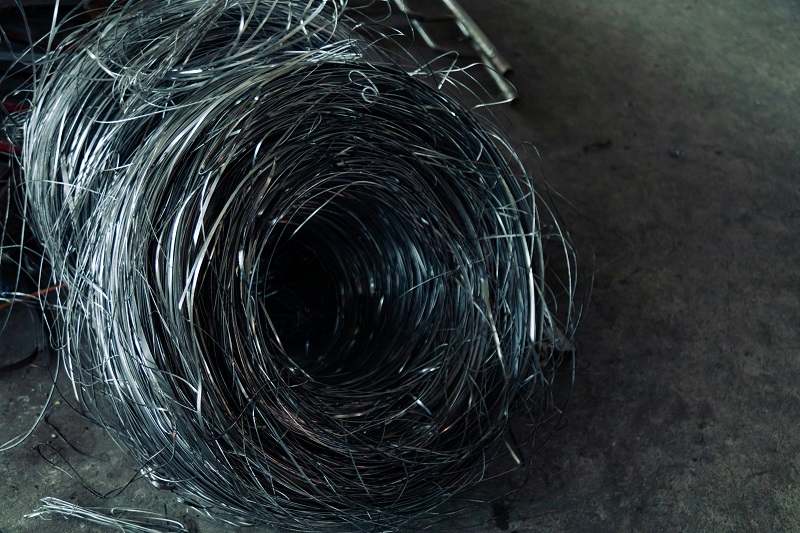
Top 10 countries by nickel mine production — BGS 2023 data
This page presents the country ranking of nickel mine production based on the latest consolidated edition of the British Geological Survey's World Mineral Production 2019–23 (published March 2025). All values refer to nickel metal content in tonnes, here rounded and shown in thousand tonnes (kt). Some BGS values are flagged as estimated in the original tables; those rows are marked here with an asterisk (∗).
Overview — what this ranking shows and what year it represents
Nickel is an industrial and battery metal. The bulk of mined nickel still feeds stainless steel (corrosion resistance, strength), while a strategically important share is upgraded into intermediates (matte, mixed hydroxide precipitate, nickel sulfate) used in some lithium-ion battery chemistries and energy storage. Because these end uses require very different forms of nickel, the geography of mining is not the same as the geography of processing — and the country ranking below reflects mining only.
Continue exploring
More StatRanker pages connected by topic, category or ranking theme.
Iron Ore Mine Production by Country 2026: 2025 USGS Estimates
Open rankingGold Production by Country 2026: 2025 USGS Mine-Production Estimates
Open rankingTop 20 Countries by Rare Earth Mine Production, 2025
Open rankingThe figures shown here come from BGS World Mineral Production 2019–23, released by the British Geological Survey in March 2025. This is the latest consolidated multi-country dataset available from BGS at the time of writing. BGS reports total world mine production at 3,756,000 tonnes of nickel metal content in 2023, a roughly 15% increase on 2022, driven mainly by Indonesia.
About the data year. This is a 2023 data snapshot from BGS, not a 2025 estimate. For an early indication of 2025 mine output, the U.S. Geological Survey publishes the Mineral Commodity Summaries 2026 volume each January, which contains preliminary 2025 country figures. The BGS edition shown here is the most recent consolidated country-by-country dataset and is the standard reference used by industry and government publications. See Sources for both.
A key interpretation rule when reading any mining ranking: mine production ≠ refined supply. A country can rank high in mining but export ore or concentrate, while another can rank high in refining by importing feedstock. Indonesia, for example, mined 2,030 kt of contained nickel but exported the bulk of it as upgraded intermediates (Indonesia's ministry of mining reported 535,200 t of nickel in ferronickel and 71,400 t of nickel in matte produced domestically in 2023). The mining ranking and the refining ranking therefore answer different questions. The section Mining vs processing below shows the gap explicitly.
Top 10 countries by nickel mine production, 2023 (BGS)
The Top 10 producers together account for roughly 92.7% of the BGS-reported world total in 2023. Indonesia alone is responsible for about 54% — more than the next nine combined.
| Rank | Country | Mine production (kt Ni) | Share of world (%) |
|---|---|---|---|
| 1 | Indonesia ∗ | 2,030.0 | 54.05 |
| 2 | Philippines ∗ | 387.0 | 10.30 |
| 3 | Russia | 256.3 | 6.82 |
| 4 | New Caledonia | 231.2 | 6.15 |
| 5 | Canada | 158.7 | 4.22 |
| 6 | Australia | 149.1 | 3.97 |
| 7 | China ∗ | 112.6 | 3.00 |
| 8 | Brazil | 72.4 | 1.93 |
| 9 | Colombia | 42.4 | 1.13 |
| 10 | Finland | 41.9 | 1.12 |
∗ Value marked by BGS as estimated in the original table. Shares are computed against the BGS world total of 3,756 kt Ni.
Top 10 producers, kt Ni (mine output, 2023)
All reporting countries — full ranking, BGS 2023
BGS publishes nickel mine production for a limited set of countries — those that report or for which BGS produces a credible estimate. In the 2023 table there are 27 reporting entries; this is the complete list, not a Top 100. The smallest entries fall below half a kilotonne and round to zero in the displayed precision.
| Rank | Country | Mine production (kt Ni) | Cumulative share (%) |
|---|---|---|---|
| 1 | Indonesia ∗ | 2,030.0 | 54.05 |
| 2 | Philippines ∗ | 387.0 | 64.35 |
| 3 | Russia | 256.3 | 71.17 |
| 4 | New Caledonia | 231.2 | 77.33 |
| 5 | Canada | 158.7 | 81.55 |
| 6 | Australia | 149.1 | 85.52 |
| 7 | China ∗ | 112.6 | 88.52 |
| 8 | Brazil | 72.4 | 90.45 |
| 9 | Colombia | 42.4 | 91.58 |
| 10 | Finland | 41.9 | 92.69 |
| 11 | Madagascar | 38.9 | 93.73 |
| 12 | Cuba ∗ | 37.9 | 94.74 |
| 13 | Papua New Guinea | 33.6 | 95.63 |
| 14 | South Africa | 29.8 | 96.43 |
| 15 | Côte d’Ivoire | 26.3 | 97.13 |
| 16 | Guatemala | 20.3 | 97.67 |
| 17 | Turkey | 18.4 | 98.16 |
| 18 | Dominican Republic | 17.2 | 98.62 |
| 19 | United States | 17.0 | 99.07 |
| 20 | Zimbabwe | 16.3 | 99.50 |
| 21 | Myanmar ∗ | 8.0 | 99.72 |
| 22 | Zambia | 8.0 | 99.93 |
| 23 | Solomon Islands | 1.1 | 99.96 |
| 24 | Poland | 0.8 | 99.98 |
| 25 | Albania | 0.6 | 99.99 |
| 26 | Norway | 0.3 | 100.00 |
| 27 | Kosovo | 0.0 | 100.00 |
∗ Value marked by BGS as estimated. BGS may flag additional country values as estimated; the marks shown here cover the most relevant cases for top producers and entries called out in the source text. Refer to the BGS PDF (page 49 of the 2019–23 volume) for the authoritative list.
Concentration curve — how fast the global total accumulates
Nickel mining is unusually top-heavy. Each row of the chart below shows one country's share of mine output (blue bar, scaled to Indonesia = 100%) and the red vertical marker shows the cumulative share of the world total reached by including that country and everything above it. Cumulative passes 50% at rank 1, 80% by rank 5, and 95% by rank 13.
Pareto view of nickel mine production, BGS 2023
Rows 21–27 (Myanmar, Zambia, Solomon Islands, Poland, Albania, Norway, Kosovo) together add about 0.5% to the cumulative total and are omitted from the chart for legibility — they appear in the full table above.
Mining vs processing — where nickel is upgraded
Mining is only half the story. The smelter and refinery ranking, which captures refined nickel plus nickel in ferronickel and other intermediates, looks different from the mining ranking. China refines roughly nine times what it mines; Norway refines large volumes despite almost no domestic mining; Indonesia mines vastly more than it refines but is rapidly building its own upgrading capacity.
| Country | Mine (kt Ni) | Smelter/refinery (kt Ni) | Refining / mining |
|---|---|---|---|
| Indonesia | 2,030.0 | 1,410.0 | 0.69× |
| China | 112.6 | 970.0 | 8.6× |
| Russia | 256.3 | 156.0 | 0.61× |
| Canada | 158.7 | 130.0 | 0.82× |
| Australia | 149.1 | 92.3 | 0.62× |
| New Caledonia | 231.2 | 71.9 | 0.31× |
| Finland | 41.9 | 90.9 | 2.17× |
| Norway | 0.3 | 95.0 | 316× |
| Brazil | 72.4 | 57.0 | 0.79× |
| South Africa | 29.8 | 39.6 | 1.33× |
| Cuba | 37.9 | 13.7 | 0.36× |
Mine output vs smelter/refinery output, selected countries (2023, kt Ni)
Points above the dashed diagonal refine more than they mine (processing hubs); points below mine more than they refine (raw-material exporters). Indonesia is the largest single point and sits below the diagonal; China sits far above it.
Methodology and definitions
What is being measured
"Mine production" here means the nickel metal content of ore and concentrates produced at a country's mining operations. It is reported in tonnes in the BGS source table; this page rounds those values to one decimal place in thousand tonnes (kt). World total is reported by BGS at 3,756,000 tonnes Ni for 2023.
BGS symbols and what the asterisk means
BGS uses a small set of conventional symbols in its World Mineral Production tables:
| Symbol | Meaning |
|---|---|
| ∗ (asterisk) | Estimated value (not officially reported, derived by BGS or partner organisations) |
| … | Figures not available |
| 0 | Quantity less than half the unit shown (rounds to zero) |
| — | Nil |
Rows on this page where the country value carries an asterisk in the source are flagged with ∗. This page explicitly marks the values BGS describes or treats as estimates in the nickel mining context — for example, Indonesia, the Philippines, China, Cuba and Myanmar. The complete BGS table may flag additional country values as estimated; the authoritative list is the PDF cited under Sources.
Units
All headline values on this page are in thousand tonnes of nickel metal content (kt Ni). To compare with sources that report in tonnes, multiply by 1,000 (Indonesia 2,030 kt = 2,030,000 t). To compare with reports that quote percentages, the BGS world total for 2023 is 3,756 kt Ni.
Derived metrics
Shares (Top 1 / 3 / 5 / 10), cumulative percentages and the Herfindahl–Hirschman Index (HHI) are computed from the same 27-country list shown above, against the BGS world total of 3,756 kt. HHI is calculated as the sum of squared country shares expressed in percentage points; values above 2,500 indicate a highly concentrated market.
Why "2023" and not "2025"
BGS publishes its consolidated multi-year volumes with a lag; the latest available edition at the time of writing is World Mineral Production 2019–23, released in March 2025 and covering up to 2023. For an earlier indication of 2025 values, the U.S. Geological Survey's Mineral Commodity Summaries 2026 (published January 2026) provides preliminary 2025 country estimates with a smaller country list and broader rounding. This page deliberately uses the BGS 2023 snapshot because it is the most complete consolidated dataset.
Limitations
Country totals can be revised in subsequent BGS editions. Definitions of "mine production" can differ between sources — some report nickel-in-ore, others nickel content after wet processing, and some count smelter feed. The BGS table cited here uses metal content. Sub-sea operations, secondary recovery and unreported small-scale workings are not included.
Insights — six things this ranking tells you
1. Single-country dominance
Indonesia alone supplies 54% of mined nickel. The global supply curve is essentially the Indonesian investment cycle, plus the rest of the world.
2. Shallow diversification
Top 10 captures 92.7%. Adding rank 11–27 only adds ~7 percentage points combined. A "Top 20" diversification strategy is mostly Top 5.
3. Mining ≠ refining
China refines ≈8.6× what it mines; Norway refines ≈316× its tiny domestic output. The processing map is independent of the geology map.
4. Laterite share is rising
Indonesia and the Philippines are predominantly laterite producers. The growth of HPAL and matte routes makes processing technology, not ore tonnage, the binding constraint.
5. Sanctions and unrest are visible
Russian output and New Caledonia have moved on geopolitical and policy events (Russia ban risk for LME deliveries; New Caledonia unrest in 2024) — visible in adjacent-year reports.
6. HHI says "highly concentrated"
HHI ≈ 3,166. By competition-policy thresholds this is a highly concentrated market — even more concentrated than several headline-grabbing critical minerals.
What this means for readers
For procurement and OEMs
If your supply chain is exposed to nickel for stainless steel or battery precursors, the ranking implies that single-country risk (Indonesia) and single-hub risk (China-refining) dominate the diversification problem. Adding small producers does not meaningfully reduce upstream concentration; sourcing strategies that target refining provenance (Class I metal from Canada, Norway, Australia) are more effective than chasing additional mining countries.
For investors and analysts
Marginal supply changes from Indonesia move global price and balance more than equivalent changes elsewhere combined. Indonesian permitting (RKAB quotas), domestic value-added policy (export bans on ore) and FDI flows into HPAL projects are the variables to track. New Caledonia and the Philippines act as second-tier swing supply but with smaller volumes.
For policy and ESG
Laterite-heavy supply has structurally higher energy intensity than sulfide supply, and nickel is repeatedly flagged in responsible-sourcing frameworks (IRMA, Copper Mark's Nickel Mark) for land use, tailings management and Indigenous-rights issues in producing regions. Policy moves on critical minerals (EU CRMA, US IRA) can re-rank competitive supply by attaching processing-provenance requirements.
For researchers and journalists
If you cite this ranking, cite the BGS source directly (page 49 of World Mineral Production 2019–23) and flag which rows are BGS estimates — a common mistake is to treat all values as equally hard data. For a forward-looking view, cross-reference USGS MCS 2026 (preliminary 2025) and the International Nickel Study Group factbook.
FAQ
Why does this page use BGS data for 2023 instead of a 2025 figure?
BGS publishes a consolidated multi-country dataset with a lag of about 18 months. The latest BGS edition at the time of writing covers up to 2023 and was released in March 2025. For 2025 values you can consult USGS Mineral Commodity Summaries 2026 (preliminary, smaller country list) — see Sources.
What does the asterisk (∗) next to some country names mean?
The asterisk follows the original BGS notation and marks values that BGS reports as estimated rather than officially reported. Indonesia, the Philippines, China, Cuba and Myanmar are explicitly flagged for nickel. Other values can also be partially estimated; the canonical reference is the BGS PDF.
Why is Indonesia's share so large?
Two reasons: very large, near-surface laterite resources concentrated in Sulawesi and Halmahera, and a deliberate policy of moving up the value chain via export bans on unprocessed ore and aggressive FDI promotion in smelting and HPAL plants. Indonesian mine output multiplied roughly 12× between 2016 and 2023.
Why does China appear in mining at 112.6 kt but in refining at 970 kt?
China imports very large volumes of nickel feedstock — ore, nickel pig iron, matte and intermediates — and processes them domestically. Its refining capacity is therefore far larger than its domestic mining base. The same pattern is visible for Norway and Finland on a smaller scale.
Why doesn't the ranking show 100 countries?
BGS only reports nickel mine production for a limited set of countries — those that publish official statistics or for which BGS produces an estimate. In 2023 that set contains 27 entries, and the smallest fall below half a kilotonne. There simply isn't a meaningful "Top 100" for nickel mining.
How were the shares and HHI calculated?
Each country's share is its mine output divided by the BGS world total of 3,756 kt. Cumulative share is the running sum of those individual shares. HHI is the sum of squared shares expressed in percentage points; the ≈3,166 value places nickel mining well into the "highly concentrated" band of standard competition-policy thresholds.
Are sanctions on Russian nickel reflected in these numbers?
The 2023 BGS figure for Russia (256.3 kt) predates the April 2024 UK and US measures restricting trade in new Russian nickel on the LME and CME. Those policy effects show up in later USGS bulletins and in 2024–2025 trade statistics, not in the 2023 BGS mining snapshot.
Where can I find the original BGS table?
The nickel mining table is on page 49 of World Mineral Production 2019–23. A direct link to the PDF is in the Sources block below.
Sources
-
British Geological Survey — World Mineral Production 2019–23 (Idoine, N. E. et al., 2025;
BGS, Keyworth, Nottingham; ISBN 978-0-85272-802-4). Authoritative country-level mining and smelter/refinery
data used throughout this page.
https://nora.nerc.ac.uk/id/eprint/539285/1/WMP_2019-2023_COMPLETE.pdf -
BGS release note (April 2025) — context on the 2019–23 volume and its commodities coverage.
https://www.bgs.ac.uk/news/latest-mineral-production-statistics-for-2019-to-2023-released/ -
U.S. Geological Survey — Mineral Commodity Summaries 2026 (nickel). Earliest comprehensive
source for preliminary 2025 mine production by country, with a smaller country list and broader rounding
than BGS. Use this if you specifically need a 2025 view.
https://www.usgs.gov/centers/national-minerals-information-center/nickel-statistics-and-information -
International Nickel Study Group — World Nickel Factbook 2024. Industry context on trends, processing,
end-use mix and supply-chain structure.
https://insg.org/wp-content/uploads/2024/09/publist_The-World-Nickel-Factbook-2024.pdf - Indonesian Ministry of Energy and Mineral Resources, January 2024 — official Indonesian ferronickel (535,200 t) and nickel matte (71,400 t) output for 2023, used to illustrate the gap between mine output and domestic processing volume.
-
World Mining Data 2025 (Federal Ministry of Finance, Austria). Long-run mining context and
cross-checks for headline country totals.
https://www.bmf.gv.at/dam/jcr%3Ab778238b-9952-4fee-84ab-f3293b00c4e9/WMD%202025.pdf
Related rankings
More StatRanker pages connected by topic, category or ranking theme.