Top 100 Countries by Container Port Traffic (TEU), Latest Year
How to read the latest World Bank container port traffic ranking
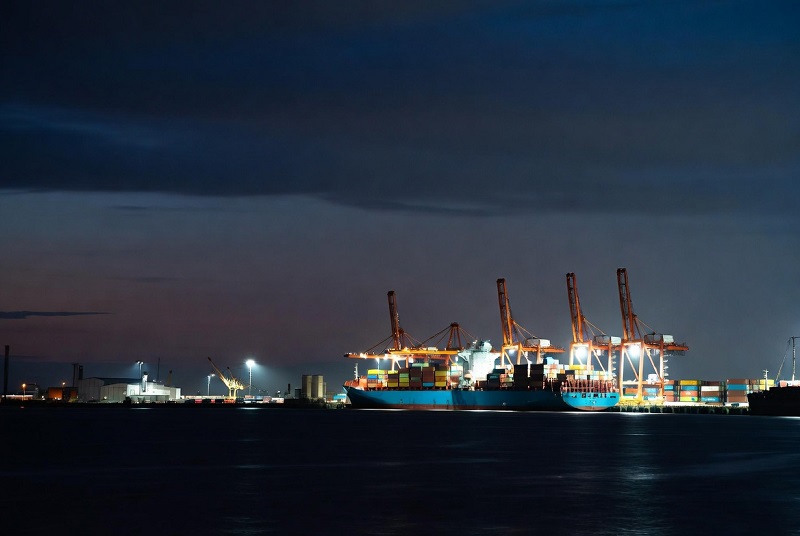
Container port traffic is one of the cleanest high-level indicators for judging a country’s role in global trade networks. Measured in twenty-foot equivalent units, or TEU, it captures how many standard containers move through a country’s ports. At the top end of the ranking, the numbers are not just a story about port size. They reflect manufacturing depth, domestic market scale, transshipment geography, inland transport links and the ability to turn a coastline into a trade platform.
For this article, the ranking is built from the latest World Bank value surfaced for each economy under indicator IS.SHP.GOOD.TU. That means the table is anchored mostly in 2022 data, but not every economy has the same latest observation year. This is why the piece is framed as a latest-available ranking rather than a strict same-year 2022 league table.
The World Bank definition includes coastal shipping, international journeys and transshipment traffic. Because transshipment is counted as two lifts at the intermediate port, major hub systems can look much larger than local market size alone would suggest.
Top 10 economies by container port traffic
The top of the ranking is heavily Asian, with China far ahead of every other economy. The pattern is revealing. China combines an immense domestic market with export-oriented port clusters, while economies such as Singapore and the United Arab Emirates convert strategic location into hub status. The United States stays near the top through sheer market scale, even though its traffic is spread across multiple coastal systems rather than one ultra-dominant transshipment gateway.
China sits in a category of its own because it combines export manufacturing, dense domestic consumption, and a multi-port system that includes several of the world’s busiest gateways. It is not just a port leader. It is a supply-chain ecosystem leader.
The United States ranks second on the back of market size and diversified coast-to-coast cargo demand. Its position shows how domestic consumption can keep throughput high even without matching East Asia’s export concentration.
Singapore is the clearest example of a location-driven trade machine. Its ranking reflects hub economics, transshipment, reliability and a deep integration of port services into the broader logistics and finance complex.
South Korea couples advanced manufacturing with strong maritime infrastructure. Its volume shows the power of industrial exports when backed by efficient gateway systems.
Malaysia’s high rank reflects both trade manufacturing and its role in transshipment. It is one of the clearest cases where logistics geography amplifies national throughput.
Japan’s traffic remains large because of industrial depth, import complexity and containerized trade intensity, even in a lower-growth macro environment.
Vietnam’s place in the top tier reflects its rapid rise inside global manufacturing chains. It is one of the most important catch-up stories in trade logistics.
The UAE ranks as a hub economy rather than a purely domestic-volume economy. Its position is tied to corridor strategy, re-export activity and long-running investment in logistics infrastructure.
India’s ranking shows the scale effect of a huge domestic market and expanding external trade. The next question is not whether India is large, but how quickly it can improve speed and network quality per container handled.
Spain closes the top ten through a mix of domestic trade, Mediterranean location and strong gateway connectivity between Europe, Africa and Atlantic routes.
Table 1. Top 10 economies by container port traffic
| Rank | Country / Economy | Latest year | Container port traffic |
|---|---|---|---|
| 1 | China | 2022 | 268,990,000 |
| 2 | United States | 2022 | 62,214,119 |
| 3 | Singapore | 2022 | 37,289,600 |
| 4 | South Korea | 2022 | 28,502,044 |
| 5 | Malaysia | 2022 | 27,293,935 |
| 6 | Japan | 2022 | 22,515,870 |
| 7 | Vietnam | 2022 | 20,518,926 |
| 8 | United Arab Emirates | 2022 | 20,300,000 |
| 9 | India | 2022 | 19,717,168 |
| 10 | Spain | 2022 | 17,161,676 |
Inside the Top 100 sample used in this article, the top 3 account for about 43.9% of total TEU, the top 10 for 62.5%, and the top 20 for roughly 77.5%. This is a highly concentrated logistics hierarchy.
Chart 1. Top 20 economies by container port traffic
The first chart is intentionally a volume chart, not an efficiency chart. A bigger bar means more handled containers, not necessarily faster turns, lower dwell time or better service quality.
Methodology
The article is built from the World Bank World Development Indicators series for container port traffic, indicator code IS.SHP.GOOD.TU. The metric records the flow of containers between land and sea transport modes in TEU. Because the World Bank notes that transshipment is counted as two lifts, container hub systems can appear especially large relative to the size of their domestic economies.
For the ranking, I use the latest available value surfaced for each economy. In practice, most of the upper part of the table is based on 2022 values, but not every country has a 2022 observation. Some latest entries come from 2021, 2020, 2019 or earlier. That makes the ranking strong for comparing structural scale, but less suitable for narrow year-on-year performance judgment.
Values are kept in raw TEU units with thousands separators for readability. The article does not convert the series into port-level rankings, value per container, efficiency scores or per-capita measures. Economies reported separately by the World Bank, including some territories and special administrative areas, are left separate in the ranking rather than merged into parent countries.
Key insights
The first clear pattern is concentration. China alone contributes roughly 32% of the Top 100 sample total, which is extraordinary for a single economy. The broader top tier is also narrow: once China, the United States and Singapore are added together, almost 44% of the Top 100 sample is already accounted for.
The second pattern is Asian dominance. Asia combines manufacturing intensity, dense trade corridors and global hub locations in a way no other region can currently match. This matters because the ranking is not driven by one model only. China and India are giant domestic-plus-export systems, Singapore and Hong Kong are classic transshipment nodes, and South Korea, Japan, Malaysia and Vietnam represent industrial trade specialization.
The third pattern is that volume and efficiency are not the same story. Large-volume systems can still struggle with congestion, inland bottlenecks or customs frictions, while smaller hub economies can punch above their domestic weight because they are built for flow. This is why TEU rankings should be read alongside port performance, corridor resilience and supply-chain quality indicators.
What this means for the reader
For exporters, importers and B2B readers, this ranking is a map of logistical gravity. Countries near the top are more likely to sit inside major vessel networks, attract more frequent services and support larger logistics ecosystems. That can improve routing options, shorten lead-time risk on some lanes and expand the number of viable suppliers or customers.
For investors and policy readers, the table separates scale from narrative. A country may look dynamic in trade headlines but still rank modestly in handled TEU. Another may rank high because it is a hub rather than a huge end market. The strategic question is not just where containers move, but why they move there: domestic demand, export industry, re-export design or corridor position.
FAQ
Why is China so far ahead of everyone else?
Because China combines multiple advantages at once: vast export manufacturing, huge domestic consumption, large coastal urban clusters and a dense network of container ports. No other economy currently matches that full combination.
Does higher TEU automatically mean a better port system?
No. TEU measures throughput volume, not operational quality. A country can move a lot of containers and still face congestion, long dwell times or weak hinterland connections.
Why do some relatively small economies rank so high?
Because hub economies handle containers for other countries too. Singapore is the classic case. The same logic helps explain why some Gulf and canal-linked systems rank above economies with much larger populations.
Why is the latest year not always 2022 for every entry?
The World Bank indicator page does not update every economy on the same schedule. This article therefore uses the latest available value by economy rather than forcing a smaller same-year sample.
Is TEU the same as trade value?
No. A container count tells you about physical flow, not dollar value. High-value goods and lower-value goods can both occupy container space, so TEU should not be read as a direct measure of export earnings.
What is the biggest limitation of this ranking?
The main limitation is interpretation. Transshipment can inflate national totals, and mixed latest years can blur same-year comparison. The ranking is best used to understand scale and trade geography, not to declare one port system universally superior.
Full ranking of the top 100 economies by latest available container port traffic
This table ranks economies by the latest value publicly surfaced for World Bank indicator IS.SHP.GOOD.TU. In this Top 100 sample, 65 entries use 2022 data, 21 use 2021, 8 use 2020, 4 use 2019, one uses 2017, and one uses 2011. That makes the ranking useful for structural scale comparison, but not a pure same-year league table.
Table 2. Top 100 economies by container port traffic, latest available year
Share values are calculated against the Top 100 sample total, not against every economy in the full World Bank database. Economies such as Hong Kong and Puerto Rico are shown separately because the World Bank reports them separately in the indicator.
| Rank | Country / Economy | Latest year | Container port traffic |
|---|---|---|---|
| 1 | China | 2022 | 268,990,00032.04% |
| 2 | United States | 2022 | 62,214,1197.41% |
| 3 | Singapore | 2022 | 37,289,6004.44% |
| 4 | South Korea | 2022 | 28,502,0443.40% |
| 5 | Malaysia | 2022 | 27,293,9353.25% |
| 6 | Japan | 2022 | 22,515,8702.68% |
| 7 | Vietnam | 2022 | 20,518,9262.44% |
| 8 | United Arab Emirates | 2022 | 20,300,0002.42% |
| 9 | India | 2022 | 19,717,1682.35% |
| 10 | Spain | 2022 | 17,161,6762.04% |
| 11 | Hong Kong | 2022 | 16,573,0001.97% |
| 12 | Netherlands | 2022 | 14,929,3331.78% |
| 13 | Germany | 2022 | 13,733,8671.64% |
| 14 | Indonesia | 2022 | 12,380,5841.47% |
| 15 | Turkey | 2022 | 12,366,1721.47% |
| 16 | Belgium | 2022 | 12,303,8221.47% |
| 17 | Brazil | 2022 | 11,683,2391.39% |
| 18 | Italy | 2022 | 11,577,4951.38% |
| 19 | Thailand | 2022 | 10,497,1121.25% |
| 20 | Saudi Arabia | 2022 | 10,459,7651.25% |
| 21 | United Kingdom | 2022 | 9,738,6761.16% |
| 22 | Australia | 2022 | 9,375,9921.12% |
| 23 | Philippines | 2022 | 9,249,4511.10% |
| 24 | Morocco | 2022 | 8,835,1811.05% |
| 25 | Panama | 2022 | 8,518,4251.01% |
| 26 | Mexico | 2022 | 8,307,8840.99% |
| 27 | Egypt | 2022 | 7,765,4820.92% |
| 28 | Canada | 2022 | 7,010,7040.84% |
| 29 | Sri Lanka | 2022 | 6,860,0000.82% |
| 30 | France | 2022 | 6,467,2420.77% |
| 31 | Oman | 2022 | 5,228,4560.62% |
| 32 | Greece | 2022 | 5,166,6290.62% |
| 33 | Colombia | 2022 | 4,480,6700.53% |
| 34 | Chile | 2022 | 4,158,2600.50% |
| 35 | South Africa | 2022 | 4,053,3500.48% |
| 36 | Russia | 2022 | 3,914,3040.47% |
| 37 | New Zealand | 2022 | 3,426,0300.41% |
| 38 | Pakistan | 2022 | 3,383,5800.40% |
| 39 | Bangladesh | 2022 | 3,200,2360.38% |
| 40 | Poland | 2022 | 3,061,8480.36% |
| 41 | Malta | 2022 | 2,993,7990.36% |
| 42 | Israel | 2022 | 2,951,0000.35% |
| 43 | Peru | 2022 | 2,865,2390.34% |
| 44 | Portugal | 2022 | 2,794,4540.33% |
| 45 | Ecuador | 2022 | 2,682,6000.32% |
| 46 | Jamaica | 2022 | 2,137,5000.25% |
| 47 | Dominican Republic | 2022 | 2,043,3260.24% |
| 48 | Togo | 2022 | 1,952,8790.23% |
| 49 | Bahamas | 2022 | 1,724,0000.21% |
| 50 | Argentina | 2022 | 1,667,1610.20% |
| 51 | Guatemala | 2022 | 1,660,5040.20% |
| 52 | Sweden | 2022 | 1,631,2480.19% |
| 53 | Costa Rica | 2022 | 1,594,3230.19% |
| 54 | Nigeria | 2022 | 1,566,1090.19% |
| 55 | Algeria | 2021 | 1,553,3620.19% |
| 56 | Iran | 2021 | 1,550,3040.18% |
| 57 | Qatar | 2021 | 1,543,6000.18% |
| 58 | Puerto Rico | 2021 | 1,490,2180.18% |
| 59 | Kenya | 2022 | 1,450,0000.17% |
| 60 | Finland | 2022 | 1,446,0040.17% |
| 61 | Ghana | 2022 | 1,244,2450.15% |
| 62 | Ireland | 2022 | 1,154,8030.14% |
| 63 | Myanmar | 2021 | 1,090,0000.13% |
| 64 | Uruguay | 2022 | 1,080,4450.13% |
| 65 | Denmark | 2022 | 1,079,6490.13% |
| 66 | Lithuania | 2022 | 1,047,9410.12% |
| 67 | Ukraine | 2021 | 1,022,3760.12% |
| 68 | Slovenia | 2022 | 1,017,7880.12% |
| 69 | Ivory Coast | 2021 | 1,015,6240.12% |
| 70 | Republic of the Congo | 2021 | 1,003,7340.12% |
| 71 | Iraq | 2019 | 932,7290.11% |
| 72 | Norway | 2021 | 881,2380.10% |
| 73 | Kuwait | 2020 | 863,6180.10% |
| 74 | Honduras | 2021 | 772,8710.09% |
| 75 | Jordan | 2021 | 765,6620.09% |
| 76 | Tanzania | 2020 | 709,8810.08% |
| 77 | Senegal | 2020 | 696,8990.08% |
| 78 | Lebanon | 2021 | 675,0770.08% |
| 79 | Angola | 2022 | 654,5900.08% |
| 80 | Djibouti | 2022 | 635,0000.08% |
| 81 | Romania | 2021 | 631,9640.08% |
| 82 | Cambodia | 2020 | 600,1070.07% |
| 83 | Georgia | 2020 | 553,3020.07% |
| 84 | Croatia | 2022 | 544,0150.06% |
| 85 | Benin | 2019 | 510,8960.06% |
| 86 | Tunisia | 2021 | 469,5680.06% |
| 87 | Sudan | 2019 | 469,5260.06% |
| 88 | Mozambique | 2021 | 440,5820.05% |
| 89 | Mauritius | 2020 | 438,0780.05% |
| 90 | Latvia | 2021 | 434,3880.05% |
| 91 | South Sudan | 2011 | 430,0000.05% |
| 92 | Yemen | 2021 | 418,7110.05% |
| 93 | Trinidad and Tobago | 2021 | 410,3950.05% |
| 94 | Bahrain | 2021 | 404,9040.05% |
| 95 | Cameroon | 2020 | 366,6670.04% |
| 96 | Cuba | 2019 | 322,0000.04% |
| 97 | Cyprus | 2021 | 319,1310.04% |
| 98 | Iceland | 2020 | 297,2630.04% |
| 99 | El Salvador | 2021 | 294,3260.04% |
| 100 | Austria | 2017 | 285,9000.03% |
Source note: compiled from the World Bank container port traffic indicator, latest available observation by economy. Values are raw TEU counts and are rounded only where the public source presents rounded figures.
Figure 2. Regional distribution of the Top 100 sample
Asia dominates the throughput map because it combines giant domestic markets, export manufacturing hubs and major transshipment gateways in a single region. Europe and the Americas are close to each other in aggregate volume inside the Top 100 sample, while MENA is lifted by Gulf hubs, Egyptian canal-linked traffic and North African gateway systems.
What the latest TEU hierarchy says about world trade
The ranking shows that container logistics are still concentrated in a relatively small set of economies that control the main arteries of manufactured trade. China dominates because it is simultaneously a production base, consumer market and multi-port coastal system. The United States remains huge because import demand alone can sustain enormous throughput. Singapore, the UAE, Panama and Malta demonstrate a different model: strategic geography plus hub design can produce traffic levels far above what domestic population size would suggest.
Europe looks strong not because one economy overwhelms the table, but because multiple countries operate as specialized gateways across the North Sea, the Mediterranean and Atlantic approaches. The Americas show a split structure: the United States leads by scale, while Panama, Mexico, Brazil, Chile, Colombia, Peru and Caribbean systems reveal a mix of transit corridors, consumption flows and commodity-linked container demand.
Africa’s footprint in the Top 100 remains comparatively small in aggregate TEU terms, but the ranking still highlights important nodes such as South Africa, Togo, Nigeria, Kenya, Ghana, Djibouti and Angola. That matters because logistics concentration can create both opportunity and vulnerability. A few well-functioning gateways can lift a region’s trade reach, but chokepoints, congestion and weak inland corridors can also make trade systems fragile.
One of the most important interpretation rules is that throughput and efficiency are different dimensions. A country can handle very large volumes and still face delays, weak hinterland integration or customs frictions. This is exactly why the World Bank’s Container Port Performance Index should sit next to TEU volume rankings in serious analysis. The first tells you how much container traffic is handled. The second helps tell you how well the system handles it.
Policy takeaway
The most useful way to read this ranking is not as a trophy table, but as a map of trade architecture. Large TEU volumes usually reflect one or more of four structural strengths: scale of domestic demand, strength of export manufacturing, success in transshipment, or geographic control of major routes.
- For industrial economies, port scale must be matched by rail, road, customs and warehousing efficiency or throughput turns into congestion pressure.
- For transshipment hubs, the key risk is overdependence on route geography. Corridor disruptions or new competing hubs can shift flows faster than many people expect.
- For emerging markets, the next level of trade competitiveness comes from reliability, digitization and inland connectivity, not from quay expansion alone.
- For policymakers, mixed latest years in the public ranking are a reminder to separate long-run structural scale from near-term operational performance.
- For investors and trade planners, TEU leaders deserve attention, but so do improving mid-tier systems where capacity, resilience and routing optionality are still expanding.
The ranking also carries a measurement warning. Transshipment is economically real, but it does not have the same domestic value-added profile as locally originated or locally consumed trade. A hub economy may therefore rank above a much larger end-market economy in container volume while generating a very different distribution of domestic gains.
How to interpret the ranking correctly
Start with volume, then ask what drives it. China’s position is rooted in industrial scale. Singapore’s is rooted in gateway function. The United States reflects market size. Panama reflects canal and corridor logic. These are not interchangeable stories, even when all produce large TEU counts.
Next, separate latest-available from same-year comparison. The public World Bank series makes it possible to build a broad Top 100 latest-value table, but not every economy is updated to the same year. For strategic analysis, that is acceptable. For tight benchmarking, it means a same-year subset is cleaner.
Finally, use TEU together with complementary indicators. Port throughput tells you where containers move. CPPI tells you more about operational performance. UNCTAD’s maritime transport work adds the wider context: chokepoints, rerouting risks, freight-cost pressure and the resilience challenge facing global trade corridors.