Globe Artichoke Production by Country 2026 Snapshot
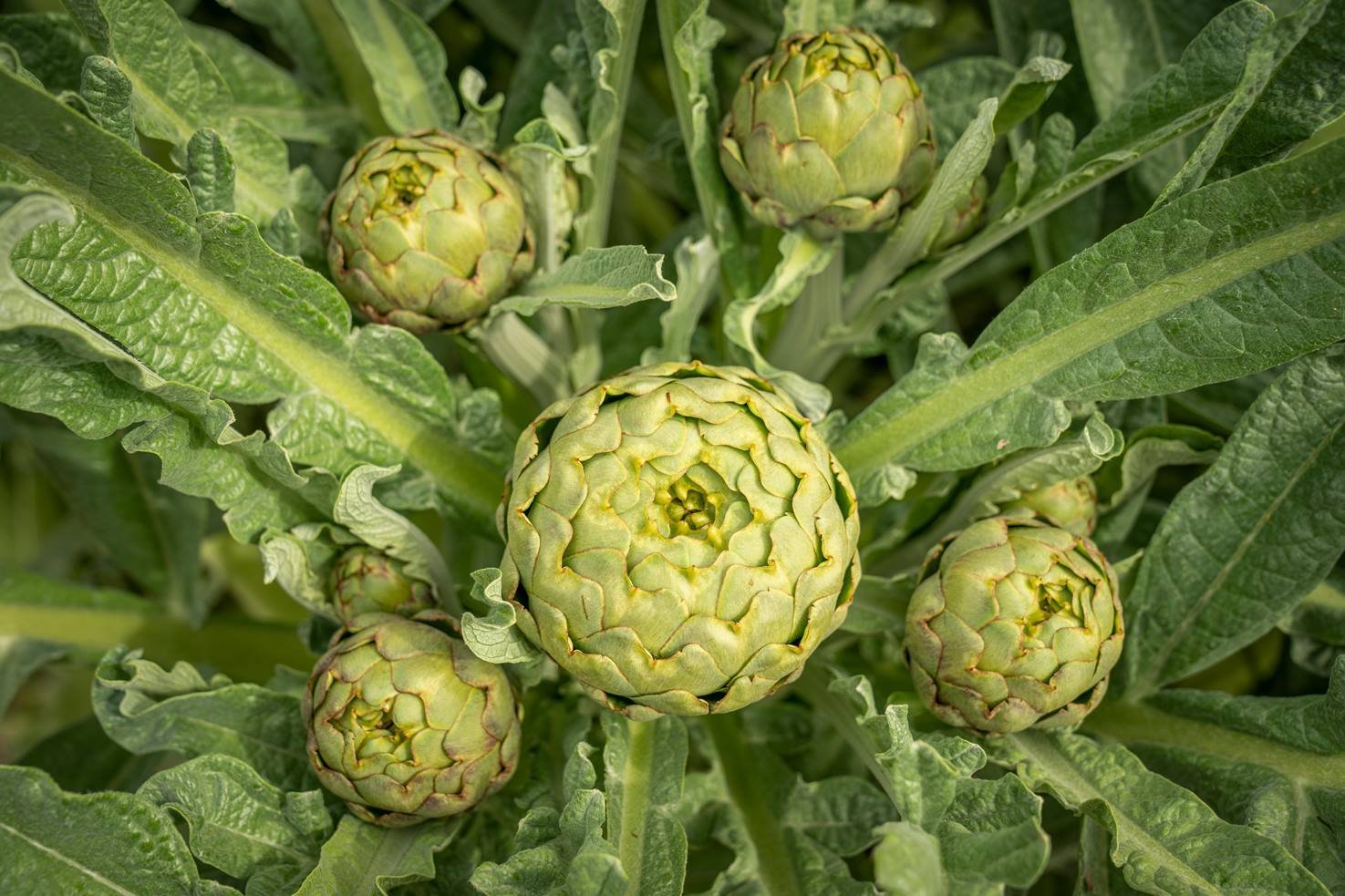
Globe artichoke production by country: 2026 snapshot based on 2024 FAOSTAT data
This ranking measures national production of artichokes / globe artichokes in tonnes. It does not rank Jerusalem artichoke, also known as topinambur or Helianthus tuberosus. These are different crops, and combining them would make the country ranking unreliable.
The table is a compiled research dataset using FAOSTAT as the primary numeric source. Public FAOSTAT-derived row-level pages and UNdata’s FAOSTAT record view are used only for source checking and context. The page includes only rows where a 2024 production value could be checked clearly enough for publication.
Metric: production quantity. Unit: tonnes. Target year: 2024. Publication snapshot: 2026. Data checked: June 18, 2026. Direction: higher production ranks higher. Row status in the visible table is written as observed FAOSTAT value; no forecast or modelled values are included.
Egypt leads the checked 2024 table with 601,272 tonnes of globe artichoke production.
Only checked 2024 country rows are included. The table is not presented as a full global Top 31.
Sum of the 15 visible country rows, not a world total.
Egypt, Italy and Spain account for 1,149,852 tonnes within the confirmed table.
Overview: where globe artichoke production is concentrated
The 2024 snapshot shows a highly concentrated crop geography. Egypt, Italy and Spain form the leading tier, followed by Algeria, Peru and China. Morocco and Türkiye sit below that group but still report much larger crops than most lower-ranked producers in the checked table.
The ranking answers one narrow question: which countries reported the largest globe artichoke harvest in the checked 2024 source year? It does not measure export value, retail demand, yield, harvested area, processing volume or Jerusalem artichoke production.
The distinction matters for search intent. Globe artichoke belongs to the Cynara crop group used in FAOSTAT’s artichokes item, while Jerusalem artichoke is Helianthus tuberosus, a tuber crop that is not safely comparable with the globe artichoke production series.
Top 10 globe artichoke-producing countries
The Top 10 contains countries from Africa, Europe, the Americas and Asia. The upper tier is not purely European: Egypt ranks first, Algeria ranks fourth, Peru ranks fifth and China ranks sixth. Italy and Spain remain central to the crop’s Mediterranean production base.
Top 10 countries by globe artichoke production, tonnes, 2024
| Rank | Country | Value | Source note |
|---|---|---|---|
| 1 | Egypt | 601,272 t | Observed FAOSTAT value, 2024, item: Artichokes, element: Production. |
| 2 | Italy | 373,960 t | Observed FAOSTAT value, 2024, item: Artichokes, element: Production. |
| 3 | Spain | 174,620 t | Observed FAOSTAT value, 2024, item: Artichokes, element: Production. |
| 4 | Algeria | 137,704 t | Observed FAOSTAT value, 2024, item: Artichokes, element: Production. |
| 5 | Peru | 122,918 t | Observed FAOSTAT value, 2024, item: Artichokes, element: Production. |
| 6 | China | 83,705 t | Observed FAOSTAT value, 2024, item: Artichokes, element: Production. |
| 7 | Morocco | 43,391 t | Observed FAOSTAT value, 2024, item: Artichokes, element: Production. |
| 8 | Türkiye | 38,077 t | Observed FAOSTAT value, 2024, item: Artichokes, element: Production. |
| 9 | United States | 30,481 t | Observed FAOSTAT value, 2024, item: Artichokes, element: Production. |
| 10 | Argentina | 28,195 t | Observed FAOSTAT value, 2024, item: Artichokes, element: Production. |
Table note: this is a globe artichoke ranking. Jerusalem artichoke / topinambur is excluded because it is a different crop and was not available as a verified country production series for this ranking.
Chart: Top 15 confirmed entries
The confirmed 2024 values drop sharply after Egypt and Italy. Egypt is used as the 100% reference bar; all other bars are scaled against Egypt’s 601,272 tonnes.
Methodology
The metric is national production quantity of globe artichokes, expressed in tonnes. Countries are sorted from highest to lowest production. The target year is 2024 because FAOSTAT’s agricultural production release covers crop and livestock production volumes up to 2024, and public FAOSTAT-derived pages identify 2024 artichoke production values for the rows included here.
The primary numeric source is FAOSTAT, domain: Crops and livestock products, item: Artichokes, element: Production. Public FAOSTAT-derived country pages and UNdata’s older FAOSTAT record view are used as secondary checks and context, not as a replacement for FAOSTAT. The article deliberately avoids presenting unchecked rows as a full Top 31.
Inclusion rule: a country is included only when the row has country name, value, unit, source year, source name and a clear method note. Regions, world totals, incomplete fragments, older-only rows and rows without a checked 2024 value are excluded from the ranking. Values are shown as whole tonnes, except source pages that present small values with decimals; none of those decimal-only bottom rows are included in the ranked table.
Ranking formula: rank equals position after sorting 2024 production quantity in tonnes from highest to lowest. No forecast formula, CAGR extrapolation or modelled projection is applied. Ties would be left as equal values with the same metric note; there are no ties among the 15 included rows.
Value status
Observed FAOSTAT value means a historical production value for the 2024 source year, not a forecast.
Crop boundary
The ranking covers globe artichokes under the artichokes crop item. Jerusalem artichoke / topinambur is excluded.
What the metric excludes
It excludes yield, harvested area, farmgate value, export value, processed output, domestic consumption and crop quality.
Limits
The table is a checked 2024 subset, not a claim that only 15 countries produce artichokes or that every FAOSTAT country row was republished in the visible source pages.
Main ranking table: 15 confirmed countries by globe artichoke production
Use the controls to search, filter by broad region or change the visible subset. The original rank is based only on the value column. Without JavaScript, all rows remain visible in the HTML table.
Countries by globe artichoke production, tonnes, 2024
| Rank | Country | Value | Source / method note |
|---|---|---|---|
| 1 | Egypt | 601,272 t | Observed FAOSTAT value; 2024; Africa; item Artichokes; element Production. |
| 2 | Italy | 373,960 t | Observed FAOSTAT value; 2024; Europe; item Artichokes; element Production. |
| 3 | Spain | 174,620 t | Observed FAOSTAT value; 2024; Europe; item Artichokes; element Production. |
| 4 | Algeria | 137,704 t | Observed FAOSTAT value; 2024; Africa; item Artichokes; element Production. |
| 5 | Peru | 122,918 t | Observed FAOSTAT value; 2024; Americas; item Artichokes; element Production. |
| 6 | China | 83,705 t | Observed FAOSTAT value; 2024; Asia; item Artichokes; element Production. |
| 7 | Morocco | 43,391 t | Observed FAOSTAT value; 2024; Africa; item Artichokes; element Production. |
| 8 | Türkiye | 38,077 t | Observed FAOSTAT value; 2024; Asia; item Artichokes; element Production. |
| 9 | United States | 30,481 t | Observed FAOSTAT value; 2024; Americas; item Artichokes; element Production. |
| 10 | Argentina | 28,195 t | Observed FAOSTAT value; 2024; Americas; item Artichokes; element Production. |
| 11 | Tunisia | 25,438 t | Observed FAOSTAT value; 2024; Africa; item Artichokes; element Production. |
| 12 | France | 21,550 t | Observed FAOSTAT value; 2024; Europe; item Artichokes; element Production. |
| 13 | Iran | 18,675 t | Observed FAOSTAT value; 2024; Asia; item Artichokes; element Production. |
| 14 | Syria | 11,910 t | Observed FAOSTAT value; 2024; Asia; item Artichokes; element Production. |
| 15 | Chile | 9,002 t | Observed FAOSTAT value; 2024; Americas; item Artichokes; element Production. |
Table note: total confirmed production in this table is 1,720,898 tonnes. This is a sum of the visible checked rows, not a world production total.
Insights from the 2024 confirmed table
Egypt alone accounts for 34.9% of confirmed production in the 15-row table, making it the clear leader by volume.
The Top 3 countries produce 1,149,852 tonnes, equal to 66.8% of the confirmed table total.
Africa contributes 807,805 tonnes across four rows, or 46.9% of the confirmed table. Europe contributes 570,130 tonnes across three rows.
Peru is the strongest non-Mediterranean-style outlier in the upper tier, ranking fifth with 122,918 tonnes.
What this ranking means
Globe artichoke production is shaped by climate suitability, irrigation, crop traditions and domestic market structure. A high rank means a country reports a large harvested volume, but it does not automatically mean the country is the largest exporter or the most profitable producer.
The ranking is most useful for understanding where the crop is grown at scale. For trade analysis, it should be paired with export quantity, import demand, fresh-market prices and processing data. For agronomy, it should be paired with harvested area and yield.
The result should not be used as evidence about Jerusalem artichoke / topinambur. That crop belongs to a different botanical and agricultural category, and a separate verified production series would be needed before a country ranking could be published responsibly.
Download the Globe Artichoke Production by Country 2026 Snapshot dataset
Globe Artichoke Production by Country 2026 Snapshot
15 ranked entries · Excel + CSV + methodology + sources + chart · Snapshot: 2024 dataset; row source years preserved: 2024 · Version 1.0
No signup required. The archive includes machine-readable data, methodology and source documentation. Quick human verification is required before the ZIP is delivered.
Download Excel + CSV Data PackFAQ
Is this a Jerusalem artichoke production ranking?
No. It ranks globe artichokes under the artichokes crop item. Jerusalem artichoke, also called topinambur, is a different crop and is excluded from the ranking.
Why does the page use 2024 data for a 2026 snapshot?
The page is published as a 2026 data-availability snapshot, while the latest checked production values in the table are for the 2024 source year. This avoids presenting a same-year 2026 harvest value that does not exist in the checked source data.
Why are only 15 countries included?
The table includes only rows where the 2024 value could be checked clearly enough for publication. Older-only rows and incomplete fragments are excluded instead of being mixed into a 2024 ranking.
Does a higher production rank mean a larger export market?
No. Production quantity measures harvested volume. Export leadership depends on domestic consumption, processing, logistics, trade policy, product quality and destination-market demand.
What unit is used?
The unit is tonnes. All table values are shown as production quantity in tonnes for the 2024 source year.
Are the rows forecasts?
No. The included rows are observed historical values for 2024. No forecast, CAGR-based projection or modelled estimate is used in the ranking table.
Why are some known artichoke producers missing?
Some countries may appear in older records or in other source views, but this table does not mix years. If a row was not checked as a 2024 production value, it was excluded from the ranking.
Sources
FAOSTAT — Crops and livestock products
Primary numeric source for crop production quantity, item Artichokes, element Production, unit tonnes.
FAO agricultural production release 2010–2024
Used to verify that FAOSTAT agricultural production data cover crop production volumes up to 2024.
Helgi Library — Artichoke Production
Secondary FAOSTAT-derived row-level check for public 2024 country values and update context. It is not treated as the primary source.
https://www.helgilibrary.com/indicators/artichoke-production/
UNdata — FAOSTAT record view for Artichokes
Used as older FAOSTAT record-view context for item Artichokes, not as the 2024 numeric source.
Related rankings
Closely related StatRanker pages selected by topic. If no strong match exists, fewer links are shown instead of unrelated recommendations.