TOP 10 Countries by Staple Crop Output per Capita (2025)
Top 10 Countries by Staple Crop Output per Capita (2025 Snapshot)
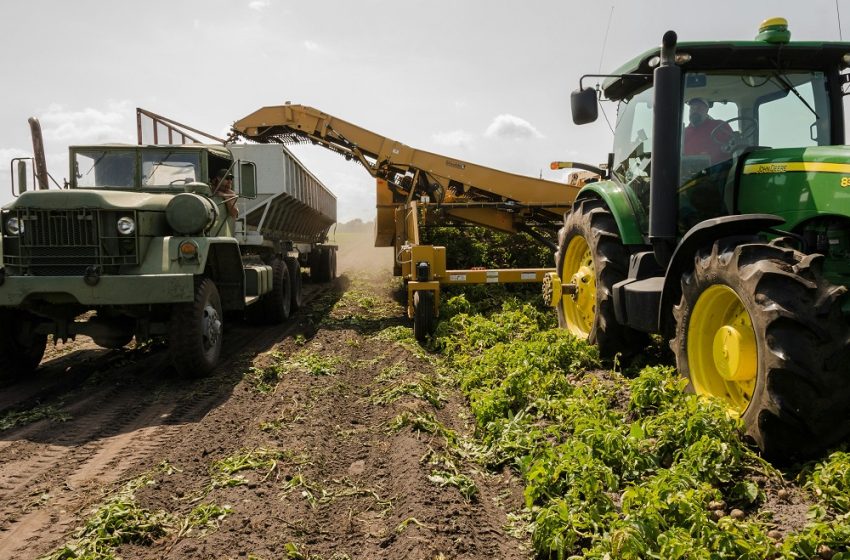
Staple crops — mainly wheat, rice and maize plus other cereals — still supply a large share of calories globally. A per-capita lens highlights countries that produce large cereal surpluses relative to population and therefore tend to matter disproportionately for export availability and market stability.
Key takeaways
- Per-capita output concentrates among countries with strong cereal sectors and smaller populations.
- Europe’s cereal belt shows up prominently (Baltics / Central & Eastern Europe).
- Frontier exporters (Argentina, Canada, Australia, Kazakhstan) shape global availability when weather shocks hit.
- High per-capita output is not the same as household food security (exports, feed, biofuels, losses).
Definition. “Staple crop output per capita” here means total cereal production divided by mid-year population, expressed in kilograms per person. Values are rounded and intended for dashboard use; exact figures vary with reference year, data revisions, and cereal coverage.
How this 2025 per-capita ranking is built
International agriculture statistics typically group staple grains under cereals. To approximate a “2025 snapshot”, the ranking uses the most recent FAO-style cereal production window commonly available around 2023–2024 (released with a lag) and treats it as the latest stable view for comparison.
Use total cereals production (wheat, rice, maize, barley, rye, oats, millet/sorghum and other minor cereals where available).
Compute: kg/person/year = (tonnes × 1,000) ÷ population.
Exclude micro-states to keep the list focused on countries that can plausibly affect regional or global grain flows.
Global benchmark for the toggle: the “vs global avg (%)” view uses an approximate world cereal output benchmark of 375 kg/person/year (rounded; derived from ~3.0 bn tonnes global cereals divided by ~8.0 bn people).
Table 1. Top countries by staple crop output per capita (2025 snapshot)
| Rank | Country | Staple crop output per capita (kg/person/year) | Typical cereal trade position |
|---|---|---|---|
| 1 | Lithuania | 2,700 720.00% | Large net exporter within the EU (wheat & other cereals). |
| 2 | Argentina | 2,200 586.67% | Major global exporter of maize and wheat; surplus producer. |
| 3 | Hungary | 2,000 533.33% | Strong maize & wheat surplus in Central Europe; frequent net exporter. |
| 4 | Canada | 1,900 506.67% | Key exporter of wheat & barley; major supplier to world markets. |
| 5 | Serbia | 1,900 506.67% | Regional exporter of maize and wheat in the Western Balkans. |
| 6 | Denmark | 1,700 453.33% | High-yield feed-grain producer; surplus tied to intensive livestock systems. |
| 7 | Kazakhstan | 1,300 346.67% | Large exporter of wheat & flour across Eurasia via rail corridors. |
| 8 | Australia | 1,100 293.33% | Major wheat & barley exporter; volumes swing with drought cycles. |
| 9 | Poland | 1,100 293.33% | Large EU grain producer; recurring surplus supports regional exports. |
| 10 | Romania | 1,100 293.33% | Black Sea exporter; wheat & maize shipments exceed domestic demand. |
Updated: 2026-01-28. Values are rounded “dashboard” estimates aligned with recent FAO-style cereal production ranges. Per-capita output does not imply domestic consumption; exports, feed, biofuels and losses can be substantial.
Chart 1. Staple crop output per capita — Top 10
The chart mirrors the table. Use the toggle to switch between Units (kg/person/year) and vs global avg (%) (index relative to the global benchmark).
Chart fallback (table-style list)
- Lithuania — 2,700 kg/person/year
- Argentina — 2,200 kg/person/year
- Hungary — 2,000 kg/person/year
- Canada — 1,900 kg/person/year
- Serbia — 1,900 kg/person/year
- Denmark — 1,700 kg/person/year
- Kazakhstan — 1,300 kg/person/year
- Australia — 1,100 kg/person/year
- Poland — 1,100 kg/person/year
- Romania — 1,100 kg/person/year
What this ranking tells us about export capacity and food-security risk
1) Per-capita surplus is about “exportable slack”
Countries producing one to three tonnes of cereals per person typically have room to supply external markets after meeting domestic food and feed needs. That matters because many import-dependent economies can’t easily replace a lost supplier in the short run when weather, logistics or policy disruptions hit.
2) Europe’s grain belt shows up strongly
Lithuania, Hungary, Poland and Romania combine high yields with market access. For global risk analysis, that makes logistics (ports, rail corridors, river levels, and storage capacity) almost as important as agronomy.
3) “Frontier exporters” amplify climate volatility
Argentina, Canada, Australia and Kazakhstan cover huge land areas with comparatively smaller populations. When multi-year droughts or heat waves hit these systems, global balance sheets tighten quickly — even if other producers have average harvests.
4) Per-capita output is not household food security
High national output does not guarantee that all households have secure access to food. Distribution, incomes, infrastructure, price dynamics, and social protection remain essential for real food security outcomes.
FAQ: staple crop output per capita
What exactly is included in “staple crops” here?
Does a high per-capita value mean people eat better?
Why do smaller countries often rank higher?
How stable are these ranks year to year?
Why are trade position notes “typical” rather than exact?
What’s the difference between “Units” and “vs global avg (%)”?
What should I use alongside this metric for a stronger food-security view?
Primary sources and further reading
For reproducible work, record the reference year(s), cereal coverage and population series used. Official datasets below provide country production time series and global market context.
-
FAO — FAOSTAT (Production: Crops and livestock products)
https://www.fao.org/faostat/en/#data/QCL -
FAO — FAOSTAT (Population)
https://www.fao.org/faostat/en/#data/OA -
Our World in Data — Agricultural production and trade (FAO-based)
https://ourworldindata.org/agricultural-production -
OECD-FAO Agricultural Outlook (market balances, risks, scenarios)
https://www.oecd.org/en/publications/oecd-fao-agricultural-outlook_19991142.html -
FAO — Food Outlook / cereal market briefs (global supply-demand)
https://www.fao.org/markets-and-trade/publications/food-outlook/en/
Download the dataset & charts (ZIP)
This asset pack includes ready-to-use tables (CSV/XLSX) and chart images (PNG) for the Staple Crops Output per Capita ranking.
Tip: keep this ZIP in your page assets folder so you can reuse the same tables and charts in related rankings.