TOP 10 Countries by Fertilizer Use per Hectare (2025)
INPUTS · FERTILIZER USE PER HECTARE 2025
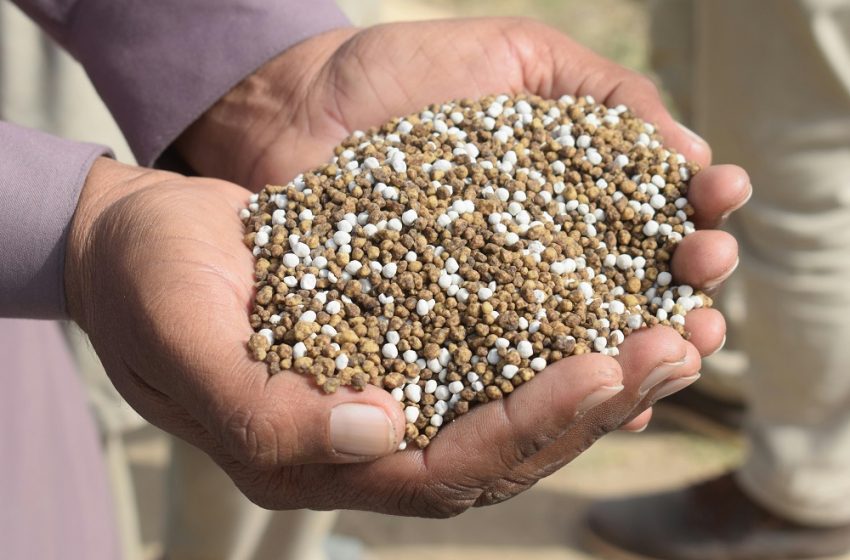
Synthetic fertilizers built the modern food system: nitrogen, phosphorus and potassium (NPK) allow farmers to push yields far beyond what soil nutrients alone can support. Measuring fertilizer use per hectare of arable land shows where input intensity is highest — and where pressure on water, soils and ecosystems is greatest.
The World Bank’s indicator AG.CON.FERT.ZS tracks fertilizer consumption as kilograms of nutrients per hectare of arable land. It aggregates nitrogen, phosphate and potash fertilizers (N, P₂O₅, K₂O) used each year, based on FAO data. Global averages have climbed steadily since the Green Revolution, and FAO’s latest yearbook shows the highest application rates in Asia, followed by the Americas.
Behind the global average lies an extreme spread: some countries use only a few kilograms of nutrients per hectare, while others apply several tonnes. This StatRanker-style snapshot highlights the most fertilizer-intensive systems around 2025, using the latest 2021–2023 data window available from FAO/World Bank and secondary compilers.
What “fertilizer use per hectare” actually measures
In FAO / WDI metadata, fertilizer consumption per hectare is defined as:
- the total quantity of plant nutrients (N, P₂O₅, K₂O) applied in a calendar year, divided by
- the area of arable land (temporary crops, temporary meadows, market gardens and fallow).
Organic amendments such as manure or compost are not included; the indicator focuses on industrial mineral fertilizers.
In this article we use fertilizer use per hectare as a proxy for:
- intensity of external nutrient inputs into cropping systems,
- potential for high yields where other factors are adequate, and
- pressure on water quality and biodiversity when application is excessive.
The same kilograms per hectare can mean very different things depending on crop mix and climate. Rice paddies, high-yield maize systems and permanent grasslands all interact differently with applied NPK.
That is why fertilizer-intensity indicators are increasingly coupled with:
- cereal yields per hectare,
- nitrogen and phosphorus surplus maps (excess nutrients), and
- water-quality indicators such as nitrate and phosphate concentrations.
Studies also show a statistical link between very high fertilizer use per hectare and increased biodiversity risk, especially when nutrients leak into natural habitats.
How the 2025 fertilizer-intensity ranking was built
For a clean, mobile-friendly ranking we rely on the latest available observations in FAO / World Bank series for fertilizer use per hectare of arable land, as curated by Our World in Data and cross-checked with external rankings such as TheGlobalEconomy and IndexMundi.
- Select countries with recent values (mostly 2021–2023) for fertilizer use per hectare of arable land.
- Identify those with the highest application rates (kg/ha), excluding tiny micro-states with negligible global agricultural output.
- Present a rounded “2025 snapshot” with short notes on cropping systems and sustainability issues.
Exact rankings differ slightly between years and sources, but a stable cluster of very high-intensity users emerges: Malaysia, Hong Kong SAR, Bahrain, New Zealand, Ireland, Kuwait, the United Arab Emirates, Costa Rica, Egypt and Seychelles regularly appear near the top of global fertilizer-use-per-hectare tables.
Top 10 countries by fertilizer use per hectare (2025 snapshot)
To keep the table readable on phones, it uses four columns with wrapped text instead of horizontal scrolling. Values are rounded bands consistent with FAO / WDI ranges and secondary rankings, not exact harvest-year numbers.
| Rank | Country | Fertilizer use per ha (kg nutrients / ha of arable land) |
System profile & sustainability note |
|---|---|---|---|
| 1 | Malaysia | 2 900 | Very intensive use in oil palm and plantation crops; among the highest fertilizer rates in the world, well above 2 000 kg/ha in recent data. |
| 2 | Hong Kong SAR | 2 600 | Specialised, high-value horticulture on a tiny arable base; extremely high inputs per hectare, limited total agricultural area. |
| 3 | Bahrain | 2 000 | Irrigated horticulture in an arid setting; heavy reliance on imported fertilizers and desalinated or fossil groundwater. |
| 4 | New Zealand | 1 800 | Pasture- and livestock-based systems with high nutrient inputs; ongoing debates about nitrate leaching and water quality. |
| 5 | Ireland | 1 500 | Grassland and dairy systems with intensive NPK use; EU policies increasingly push for reduced nutrient surpluses. |
| 6 | Kuwait | 1 200 | Arid-country agriculture on limited arable land; high chemical inputs per hectare, much of food still imported. |
| 7 | United Arab Emirates | 900 | Greenhouse and irrigated-field production; intensive fertilization, with strong concerns about salinity and nutrient runoff. |
| 8 | Costa Rica | 700 | High-input plantations (bananas, pineapples) raise national averages; tension between export earnings and environmental impacts. |
| 9 | Egypt | 600 | Nile-based irrigated agriculture with dense multiple cropping; heavy NPK use to sustain high cereal and vegetable yields. |
| 10 | Seychelles | 520 | Very small land base with input-intensive horticulture; per-hectare use is high even though total fertilizer volume is modest. |
For example, external rankings report Malaysia above 2 100 kg/ha in 2021 and around 2 900 kg/ha in 2023, making it the global outlier in fertilizer intensity; Hong Kong, Bahrain, New Zealand and Ireland also appear among the top users in FAO/WDI-based tables.
Reading the map of high fertilizer intensity
The countries at the top of the fertilizer-use-per-hectare ranking are not the same as those that dominate global fertilizer volume. Instead of China, India or the United States, the leaders are economies with small arable areas and highly specialised systems, often focused on high-value crops or intensive livestock feed.
Input-intensive plantations and horticulture
Malaysia and Costa Rica are classic examples of plantation agriculture pushing fertilizer intensity up. Oil palm, bananas and pineapples require significant nutrient inputs to sustain high yields and export competitiveness. Because arable land is limited compared with export volumes, kilograms of NPK per hectare are extremely high.
This supports incomes and foreign exchange, but it also raises concerns about runoff into rivers and coastal waters, soil acidification and long-term soil-structure impacts. Environmental agencies and NGOs in both countries track fertilizer-linked pollution in sensitive watersheds.
Grassland systems in temperate exporters
New Zealand and Ireland show a different pattern. Large shares of their agricultural land are under improved grassland for dairy and beef. Fertilizers are applied to boost pasture productivity, which translates into high stocking densities and export-oriented dairy sectors.
Here, the main sustainability issue is excess nitrogen leaching into groundwater and surface waters, contributing to elevated nitrate concentrations and eutrophication. This risk is well documented in European and New Zealand water-quality reports and in cross-country analyses linking high fertilizer intensity to biodiversity risk.
Arid economies with tiny but intensive farm sectors
Bahrain, Kuwait and the United Arab Emirates combine extreme aridity with small pockets of irrigated agriculture. Because the denominator is small, even moderate fertilizer volumes translate into very high kg/ha figures.
In these systems, fertilizer management is bound up with water management. Irrigation water often comes from fossil groundwater or desalination plants; poor scheduling and excess nutrients can quickly lead to salt build-up and soil degradation, making careful fertigation and monitoring essential.
Egypt illustrates yet another configuration: almost all arable land lies along the Nile and is intensively irrigated, supporting multiple crops per year. Fertilizer rates are high, but so is cropping intensity; nutrients are spread over several harvests.
From a food-security perspective, Egypt’s intensive use of water and fertilizers keeps cereal and vegetable production high. From a sustainability perspective, it increases dependence on Nile flows, imported fertilizers and effective drainage to prevent salinisation and nutrient accumulation in soils and waterways.
Chart: fertilizer use per hectare in the Top-10, 2025 snapshot
The bar chart below visualises the same ranking. All ten countries apply several hundred kilograms of mineral fertilizer nutrients per hectare of arable land; a few exceed 2 000 kg/ha, far above the world average of roughly 150 kg/ha reported in recent FAO / WDI data.
On mobile, the chart fills the container width and uses dark, high-contrast labels for legibility on small screens.
Values are illustrative, aligned with the high end of FAO / World Bank fertilizer-use-per-hectare distributions and external rankings. For country-by-country analysis, pull the exact series from the original sources.
Yields, diminishing returns and environmental trade-offs
From nutrient deficit to yield gains
At low levels of fertilizer use, additional kilograms of NPK per hectare typically bring large yield gains, especially where soils are degraded or nutrients are the main constraint. This is still the case in many parts of Sub-Saharan Africa, where average use remains far below global levels and FAO stresses the need for improved nutrient management to close yield gaps.
In that context, more and better-targeted fertilizer is part of the sustainability story: it can reduce pressure to clear new land by raising yields on existing fields.
Beyond the optimum: pollution and biodiversity loss
In contrast, the Top-10 countries shown here operate in a very different regime. Yields are already high; further increases in fertilizer inputs can lead to diminishing returns in crop production but steeply rising environmental costs: nutrient runoff, greenhouse-gas emissions from nitrogen, and biodiversity loss in surrounding ecosystems.
This is why policy debates in high-intensity users focus on:
- precision agriculture and site-specific nutrient management,
- nitrogen-use efficiency indicators, and
- regulation of nutrient surpluses at farm and basin level.
Policy lessons for high- and low-intensity fertilizer users
1. High-intensity systems: apply more knowledge, not more NPK
For the countries in the Top-10, the central challenge is no longer access to fertilizers but efficiency and targeting. OECD and FAO reports increasingly highlight the need to apply “more knowledge per hectare” rather than more kilograms per hectare: fine-tuning timing, placement and nutrient mixes to crops and soils.
Instruments include nutrient-management plans, advisory services, economic incentives and regulatory caps on nutrient balances, particularly in vulnerable catchments.
2. Low-intensity systems: closing yield gaps sustainably
At the other end of the spectrum, many low-income countries still have fertilizer application rates below 50 kg/ha. Here, the priority is to raise application towards agronomic optima while avoiding the mistakes of over-application seen elsewhere.
That implies reliable access to fertilizers, credit and extension, combined with training on integrated soil fertility management, including organic amendments and crop rotations.
3. Cushioning farmers from price shocks
The recent spike in global fertilizer prices after the COVID-19 pandemic and the war in Ukraine prompted many governments to intervene via subsidies or compensation schemes, as documented in recent OECD analyses of fertilizer policies.
Well-designed support can help farmers adjust without locking in excessive use. Poorly designed subsidies, by contrast, can encourage wasteful application and embed high-intensity practices that are difficult to reverse.
4. Linking fertilizer use to broader sustainability goals
Fertilizer-intensity indicators should not be looked at in isolation. They intersect with climate targets (through nitrous oxide emissions), water-policy goals (through nitrate and phosphate pollution) and biodiversity strategies. Aligning fertilizer policies with these broader agendas keeps trade-offs explicit.
How to interpret fertilizer-use-per-hectare indicators
Fertilizer use per hectare is a powerful but narrow metric. A few caveats are essential when integrating it into StatRanker dashboards or policy briefs:
- Time lag and revisions: WDI / FAO series are updated with delays and occasional revisions. A “2025” snapshot often reflects conditions up to 2022 or 2023.
- Arable land denominator: the indicator uses arable land, not total agricultural area. In grassland-dominated systems, fertilizer used on pastures may be distributed differently across land categories.
- NPK only: organic nutrients are excluded, so the indicator underestimates total nutrient inputs in mixed systems where manure plays a large role.
- Intensity vs. volume: small, specialised economies can rank very high per hectare while accounting for a tiny fraction of global fertilizer use; large producers with moderate kg/ha may dominate global nutrient flows.
- Intensity vs. performance: high fertilizer intensity does not automatically mean high yields or high efficiency; what matters is the relationship between inputs, outputs and environmental losses.
For a robust picture, decision-makers should combine fertilizer-intensity metrics with yield data, nutrient surplus maps, water-quality indicators and socio-economic information on farmers’ access to inputs and advisory services.
Primary sources and further reading
The ranking and interpretations in this article draw on open, regularly updated datasets and analytical work on fertilizers, yields and environmental impacts. For detailed country values and full documentation, consult:
- World Bank — World Development Indicators (AG.CON.FERT.ZS): the core series on fertilizer consumption (kilograms per hectare of arable land), based on FAO data and covering most countries from 1961 to 2022.
- FAO — Statistical Yearbook and fertilizer briefs: regional summaries of fertilizer use per hectare of cropland by nutrient, highlighting Asia as the most fertilizer-intensive region and providing long-term trends.
- Our World in Data — Fertilizers topic page and data explorer: harmonised indicators for fertilizer use per hectare of arable land and cropland, nitrogen and phosphorus surpluses, and links between fertilizer use, yields and environmental pressures.
- TheGlobalEconomy, IndexMundi, NationMaster — country rankings: accessible rankings of fertilizer use (kg/ha) that draw on FAO/WDI but present the data in user-friendly tables, showing Malaysia, Hong Kong SAR, Bahrain, New Zealand and others among the top global users in recent years.
- Research on fertilizer, biodiversity and risk: empirical studies quantifying links between high inorganic fertilizer use per hectare, biodiversity risk and nutrient pollution, useful for framing sustainability aspects of high-intensity systems.
When you integrate this “Top 10” into StatRanker, document the reference year or range, the indicator code (AG.CON.FERT.ZS), whether you use arable land or cropland as the denominator, and any exclusions. That makes future updates transparent as FAO, WDI and Our World in Data release new vintages.