Top 10 Cassava Producing Countries in 2025
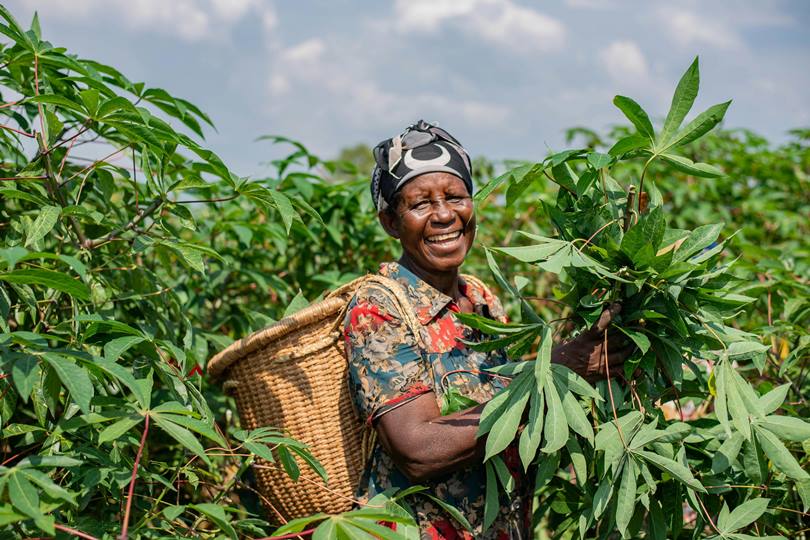
Cassava (Manihot esculenta), also known as manioc or yuca, is a tropical root crop valued for its resilience, calorie density, and dual role in food security and industry (starch, flour, chips). It is widely grown by smallholders and can perform under conditions where other staples struggle.
Official country totals for 2025 are not yet fully consolidated in the main global production releases. This page uses the latest complete year available in FAOSTAT (2023) as a practical proxy snapshot for “2025 rankings.” Values are shown in million metric tonnes and rounded to one decimal for readability.
Methodology (data, processing, limits)
This snapshot is designed for cross-country comparability and fast reading. It prioritizes consistent definitions across economies rather than “latest partial year” updates.
- Metric: Cassava production (fresh roots), reported in metric tonnes and presented here in million tonnes (Mt).
- Year logic: 2023 is used as the latest complete year available in the FAOSTAT production series and treated as a 2025 snapshot proxy.
- Source: FAOSTAT production data (Crops and livestock products), supplemented by FAO background material for crop context.
- Processing: Values are rounded to one decimal. “Share of world” is calculated as country / 333.7M × 100 and rounded to one decimal.
- Comparability limits: Agricultural statistics can be revised; informal production may be undercounted; reporting practices differ across countries; some totals reflect estimation where surveys are sparse.
- Interpretation limit: Total production is influenced by both harvested area and yield. High output does not necessarily imply high productivity per hectare.
Top 10 Cassava Producing Countries (2025 snapshot)
Ranking is based on 2023 production volumes (latest complete year in FAOSTAT), used as a proxy snapshot for 2025.
1) Nigeria — Africa
Nigeria’s scale reflects cassava’s role in everyday diets and local processing (gari, flour, starch) across a vast smallholder base. Output stability often depends on planting material quality, extension coverage, and post-harvest handling as much as on farm inputs.
2) Democratic Republic of the Congo (DRC) — Africa
Cassava is central to food security in the DRC, but production can be constrained by disease pressure and market frictions. Viral threats (including CMD and CBSD in parts of the region) can materially reduce yields where clean planting material is limited.
3) Thailand — Asia
Thailand is a major processing hub: dried cassava, chips, and starch connect farms to industrial demand. Commercialization and processor capacity can translate production into tradable products and steadier farmgate demand.
4) Ghana — Africa
Ghana’s large output is anchored in domestic consumption and small-to-mid scale processing. Where transport, aggregation, and drying improve, cassava becomes more marketable and less vulnerable to post-harvest loss.
5) Brazil — South America
Brazil’s cassava sector spans traditional food uses and industrial starch. Output is shaped by regional production systems and domestic processing demand more than by a single export channel.
6) Indonesia — Asia
Indonesia’s cassava supports both food consumption and starch processing, with performance sensitive to rainfall variability, planting material quality, and price signals from processors.
7) Cambodia — Asia
Cambodia’s role is closely tied to industrial demand and cross-border processing networks. Ranking positions can shift with weather conditions and changes in regional buyer demand.
8) Angola — Africa
Cassava remains a key staple and resilience crop across many Angolan farming systems. Practical production gains often come from improved varieties, better extension, and improved drying/storage to reduce losses.
9) Viet Nam — Asia
Vietnam’s production is strongly linked to industrial starch, with supply responding to processor capacity and export demand. Disease management and consistent planting material remain key for stable marketed volumes.
10) Mozambique — Africa
Mozambique rounds out the top 10, reflecting cassava’s role in household food security. Where processing and drying capacity is limited, post-harvest losses can matter as much as field yields for income.
Cassava Production by Country — Top 10 (2025 snapshot)
| Rank | Country | Production (Mt) | Share of world |
|---|---|---|---|
| 1 | Nigeria | 62.7 | 18.8% |
| 2 | DR Congo | 45.2 | 13.5% |
| 3 | Thailand | 30.6 | 9.2% |
| 4 | Ghana | 26.5 | 7.9% |
| 5 | Brazil | 18.5 | 5.5% |
| 6 | Indonesia | 17.2 | 5.2% |
| 7 | Cambodia | 13.9 | 4.2% |
| 8 | Angola | 11.2 | 3.4% |
| 9 | Viet Nam | 10.4 | 3.1% |
| 10 | Mozambique | 7.6 | 2.3% |
Notes: “Production (Mt)” = million metric tonnes. Shares are computed against the global total of 333.7M tonnes (2023, proxy snapshot). Top-10 combined output is 243.8M tonnes (≈73.1% of the global total).
Insights (what the snapshot reveals)
- Concentration is structural, not accidental. When the top producers account for most global supply, localized shocks (weather, disease, policy) can affect international starch and feed markets as well as local food prices.
- Africa leads in volume; parts of Asia lead in commercialization. Many African producers grow cassava primarily for domestic food security, while Southeast Asian producers are closely connected to processing, standardization, and trade-linked demand.
- Yield gains often come from “systems fixes.” Clean planting material, disease monitoring, and extension coverage can deliver large improvements without requiring high input intensity.
- Post-harvest capacity determines income, not just output. Cassava deteriorates quickly after harvest; drying, storage, and processing capacity often decide how much production becomes marketable supply rather than loss.
What this means for readers
Cassava is a “quiet giant” in global calories and rural livelihoods. If you track food inflation, agricultural investment, or supply-chain risk, three practical angles matter:
- Food security lens: Where cassava is a staple, policy prioritizes stability (disease-resistant varieties, seed systems, and local processing) over export maximization.
- Business lens: Processing hubs can convert roots into stable, tradable products (starch, flour, chips). Bottlenecks are often logistics, drying, and consistent quality rather than farm area alone.
- Risk lens: Disease outbreaks and climate variability can swing marketed supply. Diversified sourcing and better processing/storage reduce exposure to seasonal volatility.
FAQ
Why is Nigeria consistently #1?
Scale and necessity. Cassava is embedded in daily diets and local food processing across a large smallholder base. Large planted area plus steady domestic demand keeps Nigeria at the top.
Why does Thailand rank high with a smaller population than Nigeria?
Thailand’s cassava is strongly linked to industrial value chains (chips and starch), which supports aggregation, processing capacity, and high marketed volumes.
Are these “2025” numbers actual 2025 harvest totals?
No. This is a 2025 snapshot based on the latest fully consolidated year available in FAOSTAT (2023), used as a proxy when the current year’s official dataset is incomplete.
Why not rank by yield (tonnes per hectare) instead of total production?
Total production answers “who supplies the most cassava.” Yield answers “who farms most efficiently.” The rankings differ because production is heavily influenced by harvested area and the crop’s role in local diets.
What are the biggest risks to cassava output?
Viral diseases (notably CMD and CBSD in affected regions), extreme weather (droughts/floods), and post-harvest losses. Where drying and processing are limited, losses can be as important as field yields.
Is cassava mainly a food crop or an industrial crop?
Both. In many African countries it is primarily a staple food, while in parts of Asia it is tightly linked to industrial starch, feed, and other value-added products.
What should I compare beyond the top 10?
Look at whether production is mainly domestic or export-linked, whether processing capacity is expanding, and whether disease pressure is rising or being contained through clean planting material and improved varieties.