Top 100 Countries by EV Share in New Car Sales in 2025
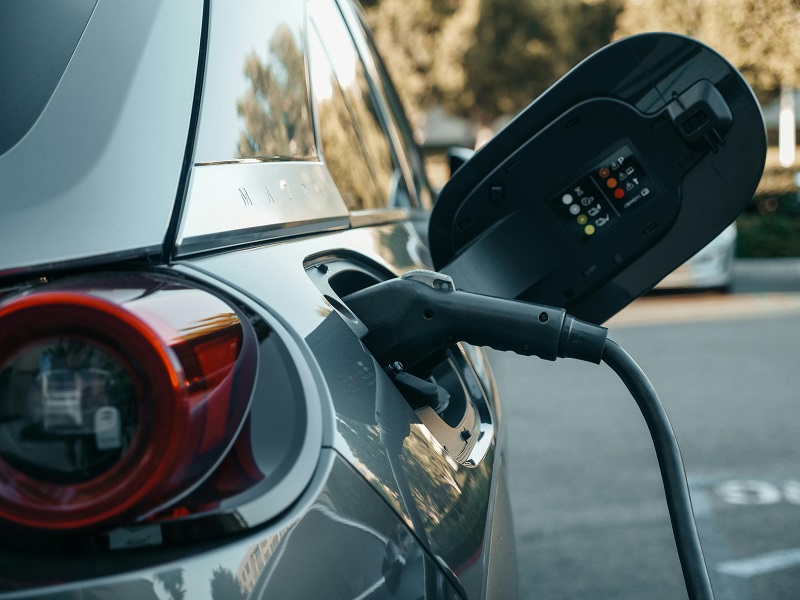
EV share in new car sales shows which markets are moving fastest from niche adoption to mass-market electrification
The electric-vehicle share in new car sales measures the percentage of newly sold passenger cars that are plug-in electric: battery-electric vehicles and plug-in hybrids combined. For tracking the speed of transition, this is one of the clearest short-run indicators available. It reacts faster than vehicle-stock data because it captures what buyers, fleets, and dealers are doing now rather than what accumulated over the last decade.
Thank you for reading this post, don't forget to subscribe!This 2025 edition uses the latest harmonised full-year country data, which in practice is mostly 2024. That matters because the indicator is already far from marginal: the IEA says electric cars took more than one-fifth of global new-car sales in 2024, and the share is expected to rise above one-quarter in 2025.
Top 10 markets by EV share in new car sales
Norway remains the global outlier. The market is no longer proving that EVs can scale; it is showing what near-complete transition looks like when tax policy, charging coverage, model availability, and buyer expectations all align.
Continue exploring
More StatRanker pages connected by topic, category or ranking theme.
Largest Car Manufacturers by Vehicle Sales: 2026 Snapshot
Open rankingMost Popular Fuel-Powered Car Brands in the U.S. by Sales (2025)
Open rankingGlobal Best-Selling Car Models (All-Time): Ranking by Cumulative Unit Sales
Open rankingHong Kong’s position reflects a compact city structure, shorter average trip patterns, strong premium-brand presence, and policy support that made EVs more visible in the urban sales mix.
Sweden combines strong EV familiarity with a market where plug-in hybrids still play a notable role. It remains one of the clearest examples of a country where electrification is mainstream, not experimental.
China is the most important market in the table. Its share is slightly lower than the Nordic leaders, but its scale is vastly larger, which makes it decisive for battery demand, price competition, manufacturing, and the global model pipeline.
Denmark shows how a focused policy package can move a market very quickly. Once fiscal signals became clearer and EV supply broadened, adoption accelerated sharply.
The Netherlands remains one of Europe’s most advanced charging and fleet markets. The result is a sales mix where EVs are highly visible across both private and business registrations.
Finland sits below Norway and Sweden, but the broader message is similar: high consumer familiarity, predictable policy, and improving charging access lower the practical barriers to switching.
Iceland illustrates a recurring pattern in this ranking: small markets can move much faster than large ones when regulation, infrastructure, and the consumer proposition become clear at the same time.
Belgium’s result is strongly linked to corporate and fleet buying. That matters because fleet renewal often pushes electrification faster than household demand alone.
The United Kingdom is important because it is both large and relatively advanced. A market share near 30% signals that electrification is no longer confined to a small premium niche.
Table 1. Top 10 countries by EV share in new car sales
| Rank | Country | EV share (%), year |
|---|---|---|
| 1 | Norway | 92.0% • 2024 |
| 2 | Hong Kong | 70.0% • 2024 |
| 3 | Sweden | 58.0% • 2024 |
| 4 | China | 48.0% • 2024 |
| 5 | Denmark | 45.0% • 2024 |
| 6 | Netherlands | 37.0% • 2024 |
| 7 | Finland | 35.0% • 2024 |
| 8 | Iceland | 33.0% • 2024 |
| 9 | Belgium | 32.0% • 2024 |
| 10 | United Kingdom | 28.0% • 2024 |
Chart 1. Top 20 EV shares in new car sales
The bar chart highlights how steeply the market drops after the first cluster of leaders. The top ranks are dominated by European markets plus China and Hong Kong, but the structure is very different across them: some are BEV-heavy, others rely more on plug-in hybrids, fleet channels, or imported supply.
Methodology
This ranking is built around the latest full-year country data available in the 2025 data edition, which mostly means calendar year 2024. The core definition is the share of new passenger-car sales that are plug-in electric: battery-electric vehicles plus plug-in hybrids. The main source base is the International Energy Agency’s Global EV Outlook 2025 and the associated country dataset, with Our World in Data used as a convenient harmonised public layer for the same underlying series. The article presents the latest full-year values as a 2025 snapshot because that is the most comparable country coverage currently available.
Values are rounded for readability. Country names are standardised, and the emphasis is on cross-country comparison rather than month-to-month registration noise. Readers should keep several limitations in mind. First, this is a sales-flow metric, not a stock metric, so it does not show how electric the total vehicle fleet already is. Second, very small markets can move sharply because the denominator is small. Third, policy changes, tax timing, fleet renewals, and import availability can shift annual shares quite quickly. Fourth, a high EV share does not automatically mean a high number of EVs sold; China matters much more than smaller leaders by volume.
Insights and conclusions
The first big pattern is concentration. The top of the ranking is still dominated by a relatively small set of high-income markets where charging, incentives, and buyer familiarity have already crossed the threshold from early adoption to routine purchase behavior. The Nordic countries remain crucial because they demonstrate what happens when EVs become the default option for a large part of the market rather than an environmentally motivated premium purchase.
The second pattern is that volume leadership and share leadership are different stories. Norway remains the share champion, but China is the market that really shapes the global industry. Its near-half EV share on an enormous base matters for battery prices, scale economies, model competition, and export pressure in ways that no small market can match. That is why any serious reading of EV adoption has to look at both rank by share and absolute market size.
The third pattern is divergence inside Europe. Europe still dominates the upper half of the table, but 2024 was not a uniformly strong year across the region. Some markets kept scaling, while others felt the drag from subsidy rollbacks, weaker consumer confidence, or pricing pressure. The result is a much more uneven European landscape than the headline “Europe is advanced in EVs” suggests.
The fourth pattern is the rise of emerging adopters. Thailand, Vietnam, Brazil, Colombia, Costa Rica, and several Gulf markets are still far below the Nordic leaders, yet they are important because they show where the next wave of adoption is forming. In these markets, cheaper imported models, urban fleet demand, and targeted policy support can push shares up faster than many analysts expected only a few years ago.
What this means for readers
For consumers, this ranking is a practical clue about market maturity. A high EV sales share usually means better model choice, deeper dealer familiarity, stronger second-hand development, and fewer uncertainties around charging. For businesses, it points to where charging, maintenance, fleet services, grid upgrades, and battery logistics are likely to expand first. For investors and industry observers, it helps separate two different stories: markets that already lead by share, and markets that may matter more by scale.
For anyone comparing countries, the main lesson is not to read the table as a simple “best versus worst” scoreboard. A 10% share in a very large market can be strategically more important than a 30% share in a small one. The ranking works best when combined with market size, income level, charging build-out, and policy durability.
FAQ
Why is Norway still first by such a wide margin?
Because electrification there has been reinforced for years by tax treatment, charging convenience, consumer familiarity, and a market where EVs are already normal. Norway is no longer in the “trial phase” of adoption.
Why is China more important than some countries ranked above it?
Because China combines a very high EV share with enormous sales volume. It influences battery costs, manufacturing scale, export pressure, and the global model pipeline far more than smaller high-share markets.
What does this indicator measure better than EV stock share?
It captures current momentum. Stock reflects many years of old purchases, while new-sales share reacts quickly to incentives, charging coverage, model launches, and price changes.
Does a high EV share mean the whole national fleet is already electric?
No. Sales share tells you what buyers are choosing now. The total fleet changes much more slowly because cars stay on the road for years.
Why do small countries often rank so high?
Because a focused policy package can move a small denominator very quickly. Small-market leadership is real, but it should not be confused with global industrial weight.
Do plug-in hybrids count here?
Yes. This article follows the standard IEA definition for electric-car sales share: battery-electric vehicles plus plug-in hybrids.
Full ranking: 100 markets, searchable and filterable in the page source
The full table below keeps all 100 rows in the HTML so the ranking remains visible even if JavaScript does not run. Search, sorting, and filters only hide or reorder existing rows. By default, the enhanced view shows the Top 20, but the underlying markup contains the full Top 100.
| Rank | Country | EV share (%), year |
|---|---|---|
| 1 | Norway | 92.0% • 2024 |
| 2 | Hong Kong | 70.0% • 2024 |
| 3 | Sweden | 58.0% • 2024 |
| 4 | China | 48.0% • 2024 |
| 5 | Denmark | 45.0% • 2024 |
| 6 | Netherlands | 37.0% • 2024 |
| 7 | Finland | 35.0% • 2024 |
| 8 | Iceland | 33.0% • 2024 |
| 9 | Belgium | 32.0% • 2024 |
| 10 | United Kingdom | 28.0% • 2024 |
| 11 | Switzerland | 28.0% • 2024 |
| 12 | Germany | 24.0% • 2024 |
| 13 | Austria | 23.0% • 2024 |
| 14 | France | 22.0% • 2024 |
| 15 | Portugal | 22.0% • 2024 |
| 16 | Israel | 21.0% • 2024 |
| 17 | Spain | 20.0% • 2024 |
| 18 | Italy | 18.0% • 2024 |
| 19 | Singapore | 18.0% • 2024 |
| 20 | Canada | 17.0% • 2024 |
| 21 | Ireland | 16.0% • 2024 |
| 22 | Luxembourg | 16.0% • 2024 |
| 23 | Vietnam | 15.0% • 2024 |
| 24 | Australia | 13.0% • 2024 |
| 25 | New Zealand | 12.0% • 2024 |
| 26 | Estonia | 12.0% • 2024 |
| 27 | Thailand | 12.0% • 2024 |
| 28 | United States | 10.0% • 2024 |
| 29 | Romania | 10.0% • 2024 |
| 30 | Lithuania | 9.0% • 2024 |
| 31 | Turkey | 8.0% • 2024 |
| 32 | Malta | 8.0% • 2024 |
| 33 | Latvia | 8.0% • 2024 |
| 34 | Uruguay | 8.0% • 2024 |
| 35 | South Korea | 7.0% • 2024 |
| 36 | Slovenia | 7.0% • 2024 |
| 37 | United Arab Emirates | 6.5% • 2024 |
| 38 | Japan | 6.0% • 2024 |
| 39 | Hungary | 6.0% • 2024 |
| 40 | Greece | 6.0% • 2024 |
| 41 | Cyprus | 6.0% • 2024 |
| 42 | Colombia | 6.0% • 2024 |
| 43 | Costa Rica | 6.0% • 2024 |
| 44 | Czechia | 5.0% • 2024 |
| 45 | Taiwan | 4.5% • 2024 |
| 46 | Poland | 4.0% • 2024 |
| 47 | Slovakia | 4.0% • 2024 |
| 48 | Chile | 4.0% • 2024 |
| 49 | Malaysia | 3.5% • 2024 |
| 50 | Croatia | 3.0% • 2024 |
| 51 | Mexico | 3.0% • 2024 |
| 52 | Brazil | 3.0% • 2024 |
| 53 | Bulgaria | 2.5% • 2024 |
| 54 | Indonesia | 2.5% • 2024 |
| 55 | Qatar | 2.0% • 2024 |
| 56 | Ukraine | 2.0% • 2024 |
| 57 | India | 2.0% • 2024 |
| 58 | Saudi Arabia | 1.5% • 2024 |
| 59 | Georgia | 1.5% • 2024 |
| 60 | Nepal | 1.5% • 2024 |
| 61 | South Africa | 1.2% • 2024 |
| 62 | Philippines | 1.2% • 2024 |
| 63 | Peru | 1.2% • 2024 |
| 64 | Ecuador | 1.2% • 2024 |
| 65 | Kuwait | 1.0% • 2024 |
| 66 | Armenia | 1.0% • 2024 |
| 67 | Morocco | 1.0% • 2024 |
| 68 | Mongolia | 1.0% • 2024 |
| 69 | Argentina | 1.0% • 2024 |
| 70 | Panama | 1.0% • 2024 |
| 71 | Kenya | 0.9% • 2024 |
| 72 | Russia | 0.8% • 2024 |
| 73 | Rwanda | 0.8% • 2024 |
| 74 | Cambodia | 0.8% • 2024 |
| 75 | Dominican Republic | 0.8% • 2024 |
| 76 | Egypt | 0.7% • 2024 |
| 77 | Sri Lanka | 0.7% • 2024 |
| 78 | Laos | 0.7% • 2024 |
| 79 | Kazakhstan | 0.6% • 2024 |
| 80 | Tunisia | 0.6% • 2024 |
| 81 | Ethiopia | 0.6% • 2024 |
| 82 | Pakistan | 0.6% • 2024 |
| 83 | Ghana | 0.5% • 2024 |
| 84 | Paraguay | 0.5% • 2024 |
| 85 | Jamaica | 0.5% • 2024 |
| 86 | Azerbaijan | 0.4% • 2024 |
| 87 | Senegal | 0.4% • 2024 |
| 88 | Bangladesh | 0.4% • 2024 |
| 89 | Nigeria | 0.3% • 2024 |
| 90 | Uganda | 0.3% • 2024 |
| 91 | Namibia | 0.3% • 2024 |
| 92 | Botswana | 0.3% • 2024 |
| 93 | Bolivia | 0.3% • 2024 |
| 94 | Algeria | 0.2% • 2024 |
| 95 | Côte d’Ivoire | 0.2% • 2024 |
| 96 | Cameroon | 0.2% • 2024 |
| 97 | Tanzania | 0.2% • 2024 |
| 98 | Zambia | 0.2% • 2024 |
| 99 | Zimbabwe | 0.2% • 2024 |
| 100 | Myanmar | 0.2% • 2024 |
Chart 2. EV share vs PPP income, selected economies
The scatter chart below adds economic context. Richer markets often have higher EV shares because affordability, charging, and fleet renewal are easier to support at high income levels. But the relationship is not mechanical. China sits well below the richest countries by income, yet far above most peers by EV share because industrial strategy, scale, and domestic competition changed the economics of adoption.
How to interpret the ranking in 2025: market maturity, policy durability, and the next wave of growth
The full ranking makes one point very clearly: electrification is no longer a single-country story. The earliest leaders are still ahead, but the transition has moved into a more complex stage. A few countries now look structurally electric, several large markets are scaling unevenly but meaningfully, and a long tail of emerging adopters is beginning to matter because policy, imports, and local affordability are finally interacting in ways that can lift market share out of the low single digits.
That is why the ranking should not be read as a simple moral scoreboard. It is better understood as a map of transition stages. Norway is at the near-endgame of passenger-car electrification. China is in the industrial and mass-market scaling phase. Much of Europe is in a contested middle stage where policy and economics still matter intensely. Markets in Southeast Asia, Latin America, and parts of the Middle East are in the acceleration phase, where growth can look dramatic from a low base. Many African and lower-income markets are still in the experimental stage, with electrification visible but not yet self-sustaining.
Policy takeaways
High EV shares usually appear when four things reinforce each other: price competitiveness, charging reliability, model availability, and policy predictability. If one of these weakens, adoption can slow quickly even in otherwise advanced markets.
- Do not treat sales share as a full-system outcome. A strong new-sales share is a momentum signal, not proof that the whole fleet or infrastructure base is already transformed.
- Separate scale from percentage leadership. A smaller market can lead by share, while a much larger market shapes the industry by volume, manufacturing, and battery demand.
- Watch the composition of adoption. BEV-heavy markets imply different charging needs and fuel-displacement outcomes than PHEV-heavy markets.
- Policy durability matters more than one-off incentives. Buyers, fleets, and charging operators respond best when rules are legible for several years, not just one budget cycle.
- Emerging-market growth deserves more attention. In 2024, the IEA highlighted much faster growth outside the traditional advanced-market core, especially in parts of Asia and Latin America.
Industry reading
For manufacturers, the ranking reinforces a strategic split in the global market. One group of countries already requires competitive EV line-ups simply to participate in the mainstream market. Another group still allows internal-combustion dominance, but the direction of travel is clear enough that product planning cannot ignore electrification. This matters for battery sourcing, dealership strategy, after-sales service, residual-value forecasting, charging partnerships, and factory location choices.
The biggest change since the early 2020s is that electrification is no longer dependent on a single narrative. In some markets the driver is tax design. In others it is domestic manufacturing and price competition. Elsewhere it is corporate fleets, city regulation, or simply better model choice. That diversity makes the transition more resilient globally, even if some countries pause or reverse temporarily.
2025 watch points
The IEA’s 2025 outlook suggests the global transition is still speeding up, even if it no longer looks equally strong everywhere. The main questions for the rest of the year are straightforward. Will Europe re-accelerate broadly rather than in selected countries? Can China sustain very high share growth without destabilising pricing and margins? Will emerging markets keep gaining access to affordable models? And will charging growth keep up with adoption in places where EV sales are moving from early adopters to ordinary households?
These are not side issues. They determine whether the next stage of electrification is broad-based and durable, or concentrated in the same group of advanced markets plus China. The 2025 ranking already shows the answer is becoming more global, but not yet evenly distributed.
Sources
-
International Energy Agency — Global EV Outlook 2025
https://www.iea.org/reports/global-ev-outlook-2025 -
International Energy Agency — Global EV Outlook 2025 data product
https://www.iea.org/data-and-statistics/data-product/global-ev-outlook-2025 -
Our World in Data — Share of new cars sold that are electric
https://ourworldindata.org/grapher/electric-car-sales-share -
Our World in Data — Tracking global data on electric vehicles
https://ourworldindata.org/electric-car-sales -
World Bank — GDP per capita data
https://data.worldbank.org/indicator/NY.GDP.PCAP.CD -
European Alternative Fuels Observatory — selected national EV market updates
https://alternative-fuels-observatory.ec.europa.eu/
Related rankings
More StatRanker pages connected by topic, category or ranking theme.
Largest Car Manufacturers by Vehicle Sales: 2026 Snapshot
Open rankingMost Popular Fuel-Powered Car Brands in the U.S. by Sales (2025)
Open rankingGlobal Best-Selling Car Models (All-Time): Ranking by Cumulative Unit Sales
Open ranking
StatRanker (Website)
administrator