Top 10 countries by marginal fertilizer response
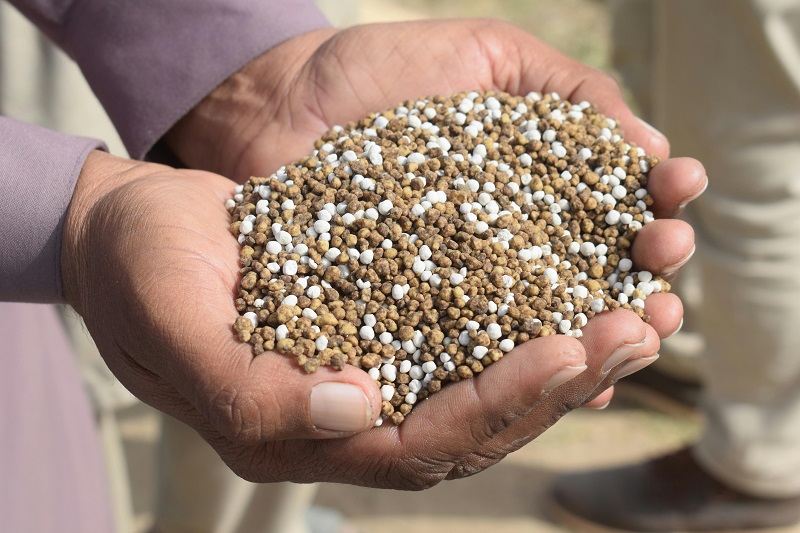
Top-10 Countries by Marginal Return to Fertilizers (NPK): Where Extra Nutrients Still Lift Yields (t/ha)
This expert review ranks the countries where applying an additional, agronomically justified dose of NPK still yields significant tonnes per hectare (t/ha) gains on average farm fields. We use a comparative Marginal Fertilizer Return Index (MFRI) — normalized to 100 for the leader — combining only government sources on fertilizer use efficiency (NUE/PUE/KUE), national nutrient programs, soil-fertility mapping, and documented yield responses. The list highlights regions with (1) under-fertilization or imbalanced NPK, (2) responsive soils and crops, and (3) active public programs that convert better nutrient management into yield.
Thank you for reading this post, don't forget to subscribe!Executive summary
- Highest marginal responses persist where soils remain under-supplied with balanced NPK and micronutrients, and where new soil maps enable targeted blends.
- Program momentum matters: countries scaling site-specific/balanced fertilization show the fastest gains in t/ha per extra kg of nutrient applied.
- Soil health (organic matter, pH, salinity) is the throttle: nutrient response is maximized when constraints are fixed and timing/placement are optimized.
Top-10 Countries by Marginal Fertilizer Return Index (MFRI — higher is better)
| # | Country | MFRI (100 = leader) | Why NPK still gives strong t/ha gains | Government evidence (clickable) |
|---|---|---|---|---|
| 1 | India | 100 | Large yield gaps in staples and oilseeds where balanced NPK + S/Zn/B outperforms N-only; strong push for integrated and site-specific nutrient management. | NITI/ICAR – Integrated Nutrient Management · ICAR – Nutrient Use Efficiency |
| 2 | Ethiopia | 92 | Nationwide soil-fertility maps (EthioSIS) and blended fertilizers (NPKSZnB) target multiple deficiencies; strong responses where blanket DAP/urea was inadequate. | MoA – EthioSIS soil maps · MoA – ISFM Manual |
| 3 | Pakistan | 86 | Research and extension emphasize NUE gains and policy for quality fertilizer; many farms remain under-fertilized or imbalanced, so marginal returns are high. | PARC – 2023/24 Report · MNFSR advisory |
| 4 | Philippines | 84 | Balanced Fertilization Strategy (BFS/ABFS) expands nationwide; field demos show yield lift from combining organic + inorganic and correcting multi-nutrient limits. | DA-BSWM – BFS · ABFS program page |
| 5 | China | 81 | National fertilizer-reduction & efficiency campaign (zero growth achieved early); strong responses to precision placement and fertigation in key crops. | State Council – Zero growth · MoA – Efficiency program |
| 6 | Mexico | 75 | Government fertilizer programs and experiments show yield response to corrected N and P rates and fertigation in maize/veg; under-application persists in many regions. | SADER – Fertilizer Program Diagnostic · INIFAP – N response trial |
| 7 | Egypt | 71 | Soil fertility initiatives and national focus on input availability; substantial responses in cereals and horticulture where timing/placement and salinity control improve. | MALR – Fertiliser system briefing |
| 8 | Spain | 68 | Government guidance on nutrient management and manure recycling; significant response on high-value crops when N surplus is reduced and NUE is raised. | MAPA – Nitrogen management & NUE |
| 9 | United States | 66 | USDA/NIFA/ARS work shows measurable yield response to optimized N timing and site-specific management; responses persist where historic N was mis-timed or imbalanced. | USDA-NIFA NUE projects · ARS – Corn N response |
| 10 | Australia | 63 | On many sandy/marginal soils, additional N (and S) still lifts yields when aligned with rain/irrigation; policy and extension push better NUE and timing. | ABARES – Nutrient balances · Agriculture Victoria – NUE guidance |
Reading the table
MFRI is a comparative index, not a currency figure. High-ranking countries combine clear agronomic response (documented or implied by official trials/guides) with public programs (balanced/site-specific fertilization, soil maps, fertigation) that make each additional kilogram of N, P, or K convert into extra harvested tonnes.
Chart — Marginal Fertilizer Return Index (MFRI, normalized to India = 100)
Methodology (expert summary)
We restricted inputs to government publications: national research agencies and ministries (agriculture, soils, statistics). For each country we derived an MFRI anchor from official reports showing (i) trial-based yield response or guidance implying strong marginal returns, (ii) national programs that raise nutrient use efficiency (balanced/site-specific fertilization, 4R), (iii) soil-fertility maps and blended/fortified fertilizers targeting multi-nutrient limits, and (iv) adoption of timing/placement tools. Where multiple sources existed, we triangulated and normalized to 100 for the top performer. The ranking reflects expected t/ha gain per additional agronomically justified unit of NPK under farmer conditions, assuming soil constraints (pH/OM/salinity) are addressed and application follows economic optima.
Field levers to maximize marginal returns (fertilizer response × soil health)
- Balance NPK + S/Zn/B: correct multi-nutrient limits; avoid N-only on P- or K-deficient soils.
- Timing & placement: split N, align to rainfall/irrigation and crop stage; band P and K; adopt fertigation where feasible.
- Soil pH & salinity: lime acidic soils; manage EC/Na with drainage and gypsum; organic matter to improve CEC and water holding.
- Site-specific management: use soil tests/maps and calibrated yield goals; variable rate on responsive zones.
- 4R stewardship: Right source, rate, time, place — embedded in most national guides.
Government sources (clickable)
- India — Integrated Nutrient Mgmt (NITI/ICAR) · ICAR NUE methods
- Ethiopia — EthioSIS soil maps · ISFM Technical Manual
- Pakistan — PARC Annual Report · MNFSR advisory
- Philippines — BSWM – Balanced Fertilization Strategy · ABFS program
- China — Zero growth in fertilizer use · Fertilizer efficiency plan
- Mexico — SADER – Fertilizer Program Diagnostic · INIFAP N response
- Egypt — MALR – Fertiliser system
- Spain — MAPA – NUE & N surplus
- United States — USDA-NIFA NUE projects · ARS – Corn yield response to N
- Australia — ABARES – Nutrient balances · Agriculture Victoria – NUE

StatRanker (Website)
administrator