Top 10 electric vehicle producing countries in 2025: Global Leaders in the EV Revolution
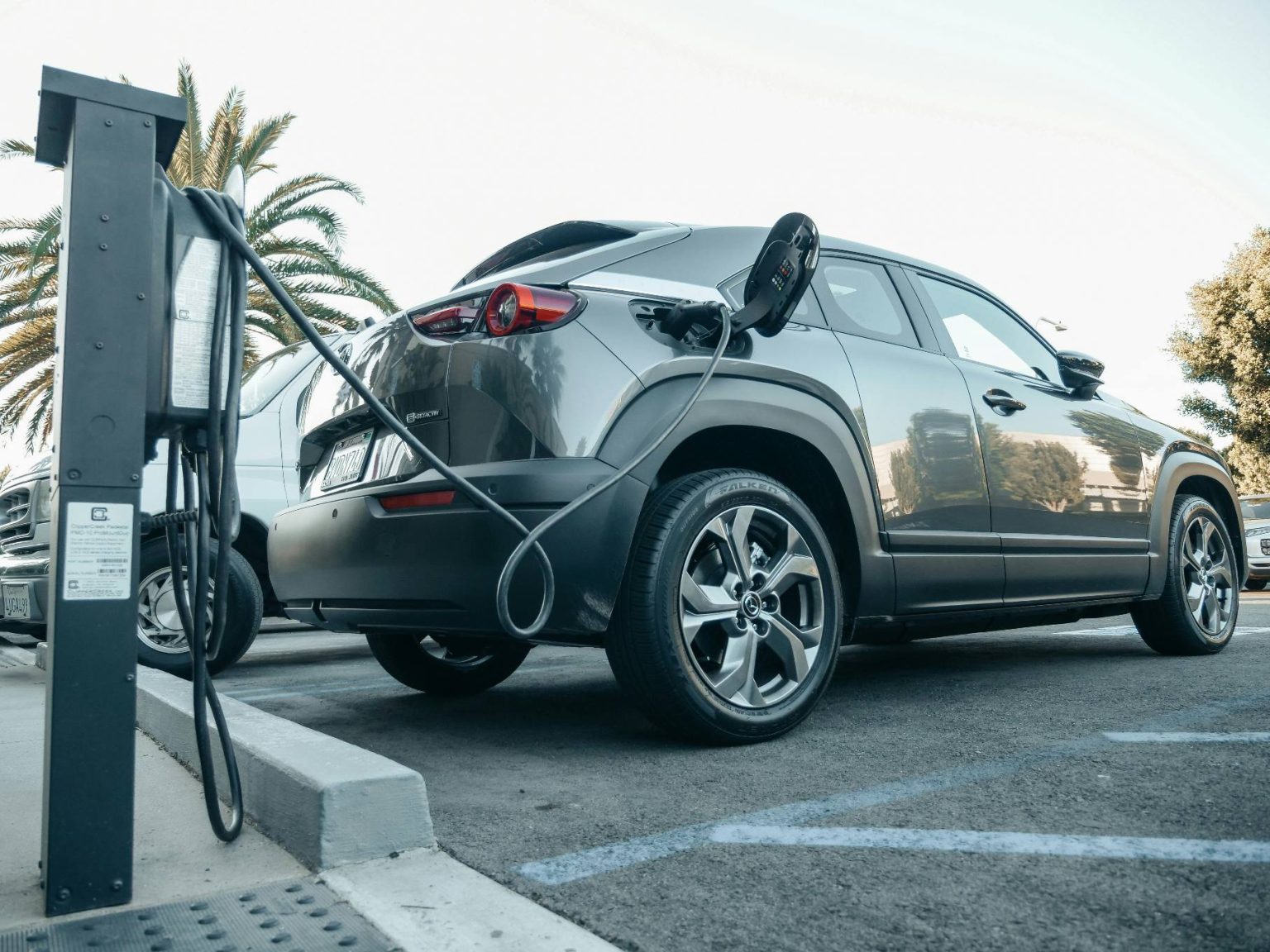
Electric vehicle manufacturing is now a supply-chain story as much as a consumer story. The countries at the top of the ranking are not simply those with strong EV demand. They are the places that combine battery capacity, supplier depth, export infrastructure, policy support, and factory scale. This page tracks electric passenger cars — battery-electric vehicles (BEVs) plus plug-in hybrids (PHEVs) — and uses a 2025 snapshot built from the latest synchronized official releases and rounded harmonised estimates.
The headline is concentration. China sits in a class of its own, while Germany and the United States form a much smaller second tier. After that, the ranking becomes a contest between specialised export hubs, platform-scale legacy manufacturers, and countries trying to convert domestic policy into industrial output.
Because there is still no single official global country-by-country table published on one timetable for 2025, the lower half of the ranking is rounded for comparability. That is deliberate: the page is designed to be accurate in direction and transparent about limitations, rather than falsely precise.
Top 10 countries by EV production
China is the clear industrial centre of gravity for EVs. Scale, battery integration, aggressive model turnover, and export reach give Chinese plants a cost and learning-curve advantage that no other market currently matches.
Germany remains Europe’s heavyweight producer. Its strength comes from legacy premium OEMs, dense supplier networks, and large-scale assembly lines that now produce both BEVs and PHEVs at record levels.
The United States remains a major EV producer, but the market is increasingly split between strong demand for high-margin models and a more cautious investment cycle as manufacturers rebalance capacity.
South Korea’s role is bigger than its unit count suggests. Hyundai-Kia, advanced battery makers, and export orientation make Korea one of the most strategically important EV manufacturing ecosystems outside China.
Japan still trails its broader automotive weight in plug-in manufacturing, but domestic battery investment and the gradual shift by Toyota, Nissan, Subaru and Honda keep it inside the leading group.
Mexico is the breakout manufacturing bridge in North America. It benefits from proximity to the U.S. market, lower assembly costs, and new allocations from U.S.-headquartered manufacturers.
France combines industrial policy with the Renault-Ampere ecosystem and Stellantis capacity. The country remains one of Europe’s more credible candidates for expanding affordable small-EV output.
Spain’s EV manufacturing role is strengthening as the country links competitive assembly, export logistics, and new battery-chain investment. It matters especially for the broader European value chain.
Sweden’s importance is tied less to sheer size and more to engineering, premium electrified platforms, and its role in Europe’s higher-value EV segment.
India remains small in global EV car output today, but its strategic relevance is rising quickly. If local production economics improve, India could become one of the most important growth stories of the next cycle.
Table 1. Top 10 EV-producing countries, 2025 snapshot
| Rank | Country | Production | Share of Top 10 |
|---|---|---|---|
| 1 | China | 16,100,000 | 78.6% |
| 2 | Germany | 1,670,000 | 8.1% |
| 3 | United States | 1,040,000 | 5.1% |
| 4 | South Korea | 407,000 | 2.0% |
| 5 | Japan | 360,000 | 1.8% |
| 6 | Mexico | 240,000 | 1.2% |
| 7 | France | 220,000 | 1.1% |
| 8 | Spain | 190,000 | 0.9% |
| 9 | Sweden | 170,000 | 0.8% |
| 10 | India | 100,000 | 0.5% |
Top 10 total used for share calculations: 20,497,000 vehicles. Shares are within this page’s Top 10 total, not within an unsynchronised global total.
Chart 1. Production scale gap across the Top 10
Chart fallback:
- China — 16,100,000
- Germany — 1,670,000
- United States — 1,040,000
- South Korea — 407,000
- Japan — 360,000
- Mexico — 240,000
- France — 220,000
- Spain — 190,000
- Sweden — 170,000
- India — 100,000
The visual point is not subtle: this is not a flat race. China is operating at a different industrial order of magnitude.
Methodology
This ranking measures electric passenger car production, defined here as BEV + PHEV passenger vehicles. It does not mix in conventional hybrids, trucks, buses, or two-wheelers. That narrower definition improves cross-country comparability because reporting standards differ widely once broader “NEV” or “electrified vehicle” categories are used.
The reference period is a 2025 snapshot. Where a country-level 2025 figure has already been published by an industry body or official market source, that figure anchors the entry. Where a single official 2025 total is not yet synchronised internationally, the page uses rounded harmonised estimates built from the latest full-year production data, trade and plant signals, and published industry updates. The purpose is to keep the ranking honest and comparable without pretending that all countries report on the same timetable.
The lower half of the Top 10 is therefore best read as order-of-magnitude output, not as a contest decided by a few thousand units. That is especially important in Europe, where multinational production footprints, cross-border supply chains, and model reallocation can shift annual country totals quickly.
Insights
The biggest insight is concentration. EV manufacturing has not diffused evenly across the world. It has become more clustered around countries that already control batteries, upstream materials, electronics, and high-volume assembly know-how. Once a country reaches very large scale, it tends to widen its lead because supplier pricing improves, defect rates fall, logistics become denser, and engineering changes are rolled out faster.
A second insight is that sales leadership and production leadership are not the same thing. Some countries are attractive EV consumer markets but still import a large share of vehicles. Others are export-heavy manufacturing platforms that build far more EVs than they sell at home. Mexico is the clearest example of a country whose role is shaped by geography and supply-chain economics more than by its domestic market.
Third, policy now shapes factory maps almost as much as engineering does. Subsidy rules, tariffs, local-content thresholds, and battery incentives influence where a model gets allocated. That means the ranking is partly a reflection of industrial policy, not just private sector competitiveness.
What this means for the reader
For consumers, production concentration usually means cheaper EVs over time because the largest producers push faster cost-down cycles. But it also means higher exposure to tariff risk and supply-chain disruptions when trade tensions rise.
For investors and business readers, the map highlights where supplier ecosystems are likely to deepen first — batteries, thermal systems, charging hardware, software integration, repair networks, and recycling. If a country is already producing at scale, adjacent services usually become cheaper and more dependable there before they do elsewhere.
For policy watchers, the ranking shows that the EV race is not only about climate targets. It is also about jobs, export capacity, grid equipment, raw-material strategy, and national industrial positioning for the next decade.
FAQ
Why is China so far ahead?
Because the country combines battery scale, supplier density, domestic competition, strong model rollout speed, and a domestic market large enough to keep factories running at high utilisation.
Does this ranking measure sales?
No. It measures where EVs are manufactured, not where they are registered or sold.
What counts as an EV here?
This page uses BEV + PHEV passenger cars. Conventional hybrids are excluded from the core ranking.
Why are some values rounded?
Because official country totals are not always released on one common timetable and definitions differ. Rounded values are more honest than false precision.
Can lower-ranked countries move quickly?
Yes. A new plant, a model allocation, or a policy shift can change the lower half of the Top 10 relatively fast.
Is production the best indicator of EV leadership?
It is the best indicator for industrial capacity. For consumer adoption, pair it with sales share, charging density, and electricity-mix data.
Deeper view: production table and momentum scatter
This section keeps the ranking machine-readable and readable in plain HTML. All rows are present directly in the markup, and JavaScript only improves the experience through search, filtering, sorting, and a simple units-versus-share toggle. Because this page is a Top 10 production ranking rather than a full world inventory, the share toggle shows share of the Top 10 total.
Table 2. Top 10 EV-producing countries with search and filters
Top 10 total used for share calculations: 20,497,000 vehicles. YoY figures are rounded harmonised growth rates, especially in the lower half of the ranking.
| Rank | Country | Value | YoY |
|---|---|---|---|
| 1 | China | 16,100,00078.55% | +29.8% |
| 2 | Germany | 1,670,0008.15% | +23.0% |
| 3 | United States | 1,040,0005.07% | −17.1% |
| 4 | South Korea | 407,0001.99% | +1.5% |
| 5 | Japan | 360,0001.76% | +8.0% |
| 6 | Mexico | 240,0001.17% | +9.1% |
| 7 | France | 220,0001.07% | +5.0% |
| 8 | Spain | 190,0000.93% | +7.3% |
| 9 | Sweden | 170,0000.83% | +10.4% |
| 10 | India | 100,0000.49% | +33.3% |
Source note: 2025 snapshot using latest official and industry-body releases; lower-ranked entries are rounded harmonised estimates built for cross-country comparability.
Chart 2. Production scale versus annual growth
The scatter makes the structure of the market easier to read. China and Germany combine size and positive momentum. The United States remains large but shows a softer near-term growth profile in this harmonised snapshot. India is still small in absolute terms, but its growth rate is faster than that of most established producers.
Chart fallback: China (16.1M, +29.8%), Germany (1.67M, +23.0%), United States (1.04M, −17.1%), South Korea (407k, +1.5%), Japan (360k, +8.0%), Mexico (240k, +9.1%), France (220k, +5.0%), Spain (190k, +7.3%), Sweden (170k, +10.4%), India (100k, +33.3%).
Interpretation: what the EV production ranking really says
The ranking shows that EV manufacturing is becoming more concentrated, not less. The biggest winners are the countries that have managed to align five things at once: battery cell access, electronics and component supply, policy predictability, high-volume assembly, and export routes. That combination is difficult to replicate quickly, which is why the gap between the leader and the rest remains so wide.
China’s dominance does not simply reflect strong consumer demand at home. It reflects an entire industrial stack. Germany’s position shows that established automotive powers can still scale plug-in production when they combine engineering depth with capital-intensive plant conversion. The United States demonstrates another pattern: large manufacturing scale can coexist with a more uneven near-term growth path when the market is pulled between incentives, pricing pressure, and model-mix strategy.
The lower half of the ranking is where future movement is most likely. Mexico matters because it is turning geography into industrial leverage. France and Spain matter because Europe’s affordable-EV and battery strategy cannot succeed without more regional assembly depth. South Korea and Japan matter because technology, batteries, and export capability can outweigh modest domestic sales shares. India matters because its current output is still small, but its long-run upside is much larger than the present rank suggests.
Policy takeaways
1. Battery ecosystems matter more than isolated car plants.
Vehicle assembly can scale only when cells, pack integration, power electronics, and thermal systems scale with it.
2. Trade rules are now part of industrial strategy.
Rules of origin, subsidy eligibility, anti-subsidy probes, and tariffs increasingly decide where future EV models are built.
3. The affordable-EV race is becoming decisive.
Countries that can manufacture lower-cost compact EVs profitably will have the strongest chance of widening volume leadership.
4. Lower-ranked countries should focus on niches first.
Trying to copy China’s volume model immediately is unrealistic. Specialised exports, regional platforms, and battery-chain segments may be a better starting point.
For governments, that means EV policy cannot stop at purchase incentives. It has to address electricity costs, grid upgrades, permitting, battery investment, supplier training, and trade access. For companies, it means plant location decisions now have to balance cost, market access, and geopolitical resilience at the same time.
Reader takeaway
If you read this page as a consumer, the message is simple: the biggest production hubs are likely to shape future pricing, model availability, and delivery speed. If you read it as an investor or operator, the ranking is a practical map of where adjacent EV services — charging, logistics, fleet management, repair, software, battery recycling, and components — are most likely to deepen first.
In other words, EV production leadership is not just about cars. It is about who controls the industrial architecture around the next phase of mobility.
Sources
- International Energy Agency — Global EV Outlook 2025
- International Energy Agency — Trends in the electric car industry
- VDA — Germany EV production outlook and industry release
- Germany Trade & Invest — Germany is world’s second-largest EV maker
- China Association of Automobile Manufacturers (CAAM)
- U.S. International Trade Administration — South Korea Electric Vehicles Market
- European Automobile Manufacturers’ Association (ACEA)
- Eurostat — Trade and production of hybrid and electric cars
- OICA — Global motor vehicle production statistics
- SMMT — UK automotive data and production releases
Data note: because country-level 2025 EV production totals are not published globally on one harmonised timetable, this page uses a transparent 2025 snapshot approach. Where a national or industry body already published a country figure, that figure anchors the estimate. Where not, the value is rounded from the latest comparable production, trade, and plant-output evidence.
Related rankings
Closely related StatRanker ranking and data pages selected by topic, entity scope and category. Fewer links are shown when strong matches are limited.