Top 10 Countries for Hydropower Production in 2025
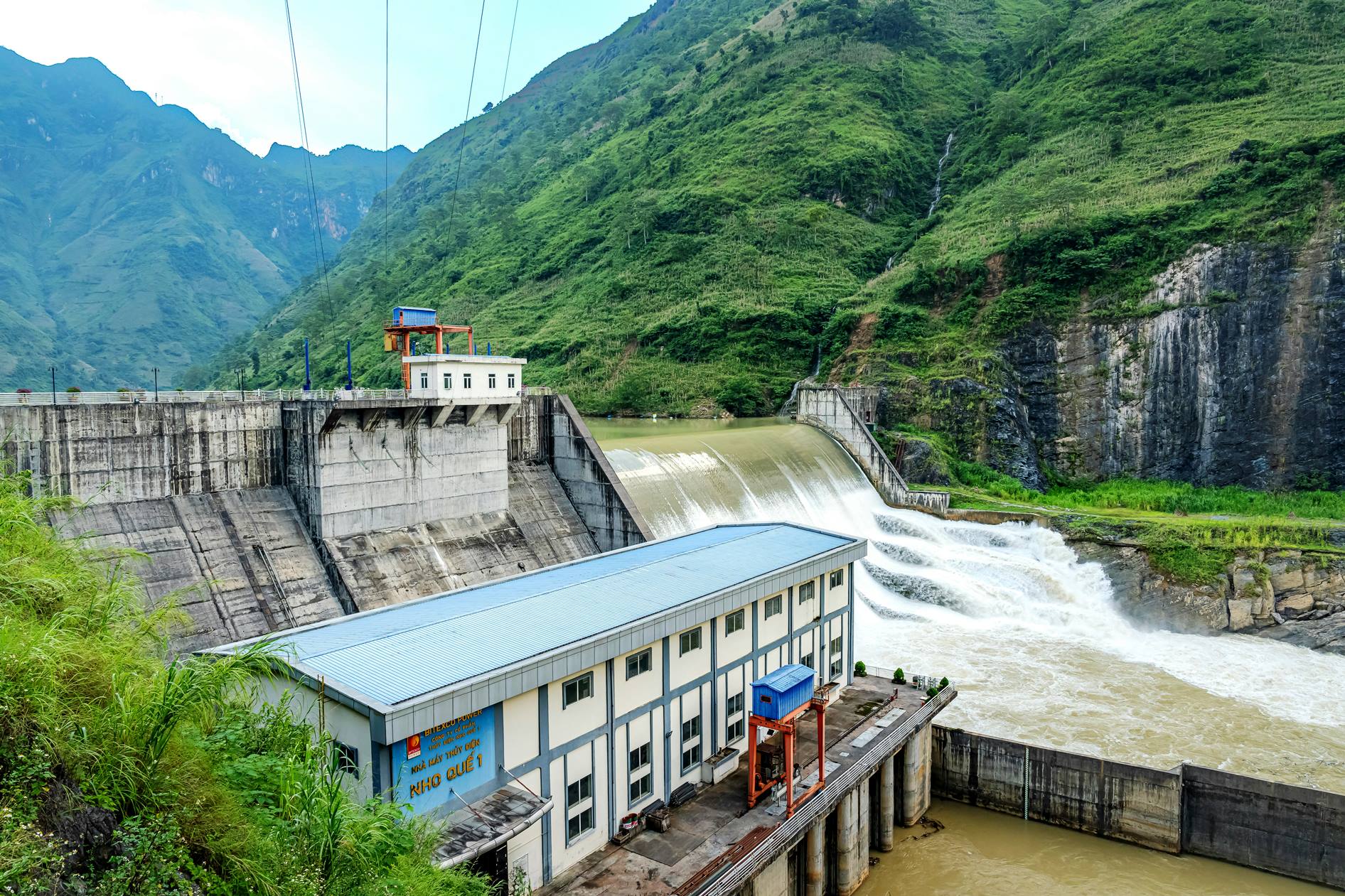
Hydropower remains the backbone of renewable electricity in many regions because it provides large-scale, dispatchable low-carbon power and supports grid stability. For comparability, this ranking uses the latest broadly harmonised full-year country totals (mostly 2023 generation) as a practical proxy for a 2025 snapshot.
Thank you for reading this post, don't forget to subscribe!Context: global hydropower generation fell to roughly 4,250 TWh in 2023 during drought-affected conditions in multiple hydropower-rich systems, then recovered in 2024 as hydrology improved in several regions. Country figures below are rounded and compiled for cross-country comparison.
Top 10: who generates the most hydropower (and why)
The top of the table is dominated by countries with a combination of (1) large river basins and storage, (2) decades of capital-intensive dam build-out, and (3) power systems where hydro is a core balancing asset. A key caveat: hydropower output is weather-sensitive — drought years can reshuffle ranks without any meaningful change in installed capacity.
China leads by a wide margin due to its massive installed base, long-distance transmission, and multi-river development strategy. In dry years, utilisation falls, but scale still keeps China at the top.
Brazil’s power system historically relies on hydro reservoirs across large basins. Variability in rainfall is a key operational risk, which is why diversification with wind/solar is accelerating.
Canada combines large reservoirs and mature hydropower provinces. Output can dip in drought years, but the fleet remains one of the world’s largest and most flexible low-carbon assets.
The U.S. has significant hydro capacity concentrated in the West and Pacific Northwest. Nationally, hydro is a smaller slice of the mix compared with Canada or Brazil, so drought impacts are very visible in totals.
Russia’s hydropower output is anchored by big Siberian and Far Eastern assets. Geography and climate shape development economics and grid integration.
India’s hydro output is meaningful but constrained by long development timelines and regional risks. It plays a valuable role in peaking and balancing, especially as variable renewables expand.
Norway is a global reference case for a hydro-dominated system with strong balancing capacity and interconnections that support exports and system resilience.
Japan’s hydro is constrained by geography, land availability, and high project costs. Still, a large installed base supports flexibility alongside a diversified generation portfolio.
Venezuela relies heavily on a small number of major hydro assets. This concentration can amplify vulnerability to operational and hydrological shocks.
Sweden’s hydropower is a key balancing asset in the Nordic system and supports integration of wind power. Environmental regulation shapes operational constraints and upgrades.
Table 1. Top 10 countries by hydropower generation (latest harmonised full-year proxy)
Values are in terawatt-hours (TWh) and rounded. “Share of national electricity” is indicative and depends on domestic load, imports/exports, and hydrological variation.
| Rank | Country | Generation (TWh) | Share of national electricity (%) |
|---|---|---|---|
| 1 | China | 1,245.17 | ≈ 28.0 |
| 2 | Brazil | 431.28 | ≈ 63.1 |
| 3 | Canada | 365.39 | ≈ 60.4 |
| 4 | United States | 240.00 | ≈ 6.0 |
| 5 | Russia | 197.41 | ≈ 20.0 |
| 6 | India | 175.00 | ≈ 9.4 |
| 7 | Norway | 143.00 | ≈ 87.5 |
| 8 | Japan | 85.00 | ≈ 8.0 |
| 9 | Venezuela | 81.00 | ≈ 77.6 |
| 10 | Sweden | 78.00 | ≈ 40.4 |
Tip: interpret “share” together with drought exposure and diversification (wind/solar, interconnectors, storage).
Figure 1. Hydropower generation for the Top 10 countries (TWh)
Chart unavailable. Here is a compact data view instead.
| Country | TWh |
|---|---|
| China | 1,245 |
| Brazil | 431 |
| Canada | 365 |
| United States | 240 |
| Russia | 197 |
| India | 175 |
| Norway | 143 |
| Japan | 85 |
| Venezuela | 81 |
| Sweden | 78 |
Fixed-height chart to avoid layout bugs. If scripts are blocked, the fallback table is displayed automatically.
Capacity vs. generation: why installed GW does not translate 1:1 into TWh
Installed hydropower capacity (GW) measures the maximum instantaneous output, while generation (TWh) reflects how much electricity is actually produced over a year. The gap is driven by hydrology (rain/snowpack), reservoir constraints, environmental flows, grid demand patterns, and the role of hydro as balancing power.
Table 2. Top 10 countries by installed hydropower capacity (GW)
Capacity is shown in gigawatts (GW). Major facility is included for context; values are rounded and harmonised.
| Rank | Country | Installed capacity (GW) | Major facility (MW) |
|---|---|---|---|
| 1 | China | 421.54 | Three Gorges (22,500) |
| 2 | Brazil | 109.80 | Itaipu (14,000) |
| 3 | United States | 102.12 | Grand Coulee (6,809) |
| 4 | Canada | 83.00 | Robert-Bourassa (5,616) |
| 5 | Russia | 56.00 | Sayano–Shushenskaya (6,400) |
| 6 | India | 52.00 | Tehri (2,400) |
| 7 | Japan | 50.00 | Kurobe (1,000) |
| 8 | Norway | 33.00 | Kvilldal (1,240) |
| 9 | Venezuela | 17.66 | Guri / Simón Bolívar (10,235) |
| 10 | Sweden | 16.00 | Harsprånget (450) |
Figure 2. Installed capacity (GW) vs annual generation (TWh) — Top 10
The scatter plot shows why countries with similar GW can produce different TWh: reservoir size, hydrology, operational constraints, and whether hydro runs as baseload or mainly as peaking/balancing power.
Chart unavailable. Interpretation tips:
- High TWh per GW often reflects favourable hydrology and higher utilisation.
- Lower TWh per GW can indicate drought, peaking operation, or stricter flow constraints.
- Compare the same country across years to see hydrology-driven swings.
Axes are fixed and responsive. If Chart.js is blocked, the fallback explanation is shown automatically.
Insights: what this hydropower ranking really says about energy systems
A “Top 10 by hydropower generation” list is not just a map of rivers and dams — it is a map of grid strategy. Countries at the top typically use hydro as a cornerstone of reliability: it can ramp quickly, provides inertia and balancing services, and reduces fossil peaking needs. But it also exposes systems to hydrological volatility that is becoming more frequent in a warming climate.
Key takeaways (analytical)
1) Drought risk is now a first-order factor.
- In dry years, large hydro fleets can under-deliver even when capacity is unchanged.
- This can shift rankings and push systems to import power or burn more thermal generation.
2) Capacity (GW) ≠ generation (TWh).
- Reservoir size, river inflows, environmental flow rules, and dispatch strategy determine utilisation.
- Peaking-oriented hydro may have lower annual TWh but higher system value for flexibility.
3) Hydro-heavy countries are diversifying.
- Wind/solar growth reduces dependence on rainfall while preserving hydro for balancing.
- Interconnectors and storage (including pumped storage) strengthen resilience.
Practical interpretation: use the ranking as a “capacity-to-deliver” snapshot, then validate with multi-year trends (to separate structural leadership from weather-driven swings).
Methodology
This page follows StatRanker’s standard methodology requirements: clear definition of the indicator, data year, harmonisation rules, and limitations.
- Indicator: annual electricity generation from conventional hydropower, measured in TWh.
- Why “2025” uses a proxy year: the latest fully consolidated cross-country datasets are typically available with a lag. We use the latest harmonised full-year totals (mostly 2023) as a practical 2025 snapshot.
- Installed capacity: nameplate conventional hydropower capacity in GW (context metric).
- Processing: values are rounded; ordering is strictly by generation for Table 1 and by capacity for Table 2.
- Exclusions / caveats: pumped-storage hydropower is treated separately in many datasets; reported generation can differ by whether net pumping is subtracted. Country methodologies and revisions may change historical series.
- Comparability limits: hydrology-driven variability can be large year-to-year; national “share of electricity” depends on total demand and net trade.
For policy or investment work, always cross-check with the original databases and national statistical notes.
What this means for readers
If you are using this ranking to understand “who is cleanest” or “who is most secure,” don’t stop at the rank. The same hydropower output can imply very different realities:
- Energy security: hydro can lower fuel-import needs, but increases exposure to drought.
- Decarbonisation: hydro is low-carbon, yet large reservoirs can have ecological and social trade-offs that must be managed.
- System flexibility: hydro’s biggest value is often balancing variable renewables — not just raw TWh.
- Resilience strategy: countries that combine hydro with wind/solar + interconnectors + storage tend to be more robust under climate stress.
FAQ: hydropower production (plain-language)
Why is this called “2025” if the table uses mostly 2023 numbers?
Because internationally harmonised datasets typically arrive with a delay. Using the latest consolidated full-year totals provides the most comparable “state of the world” snapshot available for 2025-style analysis.
What is the difference between hydropower capacity (GW) and generation (TWh)?
GW is “how much power you could produce at once.” TWh is “how much you actually produced across the year.” Hydrology, dispatch strategy, reservoir constraints, and environmental rules determine how much of the GW becomes TWh.
Does more hydropower automatically mean a cleaner electricity system?
Often yes, but not always. The net climate impact depends on what hydro displaces (coal, gas, oil), the broader mix, and sustainability practices. Environmental and social impacts also matter for “clean” in the broader sense.
Why can rankings change a lot from year to year?
Droughts and changes in inflows can sharply reduce generation even when capacity is unchanged. That is why multi-year averages and reservoir levels are essential context for “true” structural ranking.
Is pumped-storage hydropower included?
In many global datasets pumped storage is reported separately because it both generates and consumes electricity. This page focuses on conventional hydro generation for comparability; pumped storage is best analysed as a storage asset.
Which metric should I use for planning: capacity or generation?
Use both: generation (TWh) for energy supply, capacity (GW) for peak capability and flexibility. For grid adequacy, look at dispatchability, drought exposure, and how hydro interacts with wind/solar and interconnectors.
Sources (official / international datasets)
Sources below are provided for transparency and reader verification. Where country-level totals differ across providers, use the original databases and national methodological notes as the source of truth.
-
IEA — Hydroelectricity (global generation context, incl. 2023 total):
https://www.iea.org/energy-system/renewables/hydroelectricity -
International Hydropower Association — 2025 World Hydropower Outlook (2024 recovery headline & pipeline):
https://www.hydropower.org/news/flagship-2025-world-hydropower-outlook-out-now -
International Hydropower Association — 2024 World Hydropower Outlook (capacity context):
https://www.hydropower.org/publications/2024-world-hydropower-outlook -
U.S. Department of Energy — Hydropower Market Reports (U.S. context):
https://www.energy.gov/eere/water/hydropower-market-reports -
REN21 — Hydropower market & industry trends (country highlights incl. U.S. 2023 level):
https://www.ren21.net/gsr-2024/modules/energy_supply/02_market_and_industry_trends/05_hydropower/ -
Statistics Canada — Electricity year in review 2023 (Canada hydro generation):
https://www.statcan.gc.ca/o1/en/plus/5776-hydroelectricity-generation-dries-amid-low-precipitation-and-record-high-temperatures -
Our World in Data — Share of electricity from hydropower (cross-country shares):
https://ourworldindata.org/grapher/share-electricity-hydro -
IEA — Country electricity profile example (structure of generation mix):
https://www.iea.org/countries/venezuela/electricity

StatRanker (Website)
administrator