
Top 10 Countries Leading Shipping Container Production
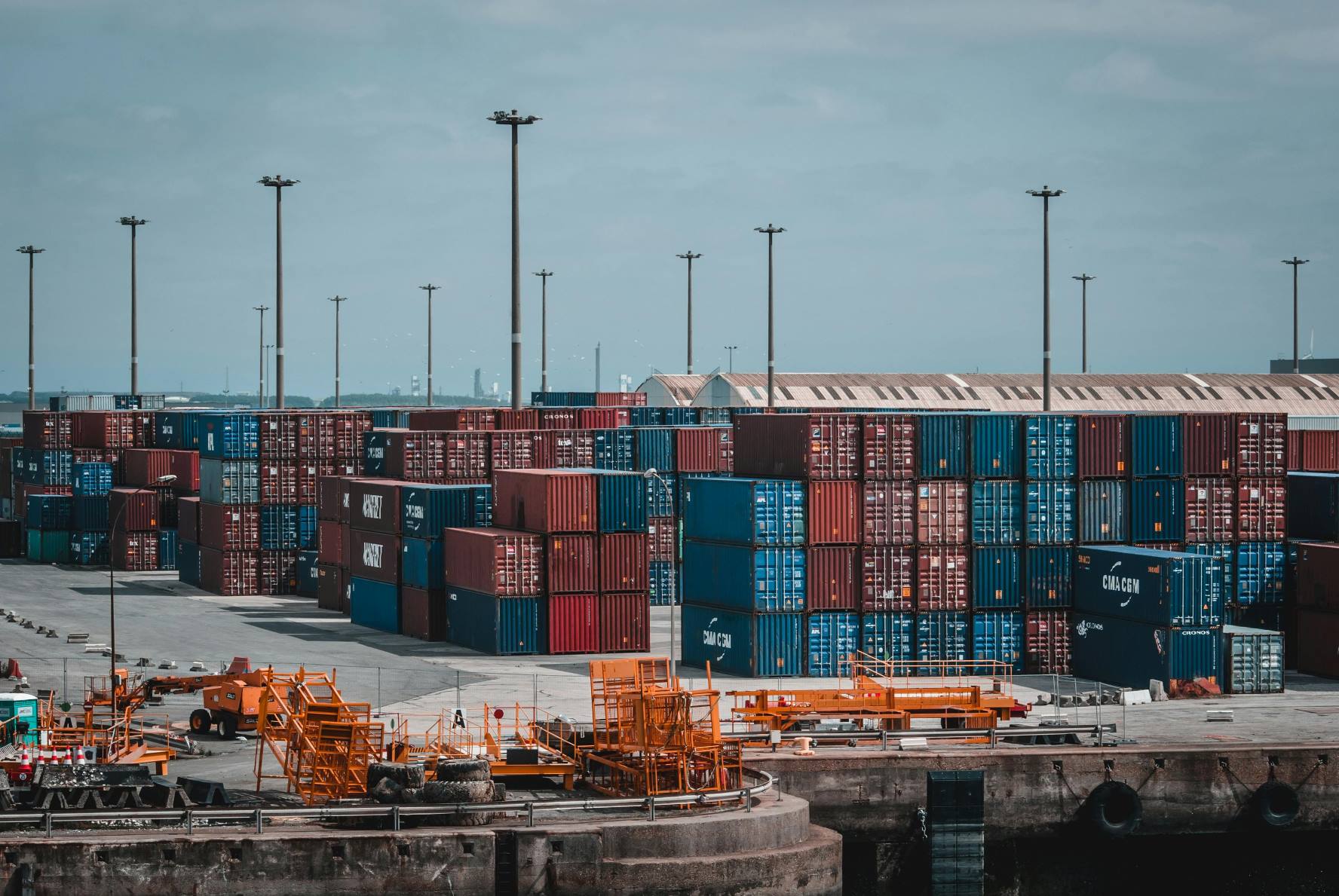
Shipping container manufacturing in 2025 is still overwhelmingly a China story
The old version of this article used neat country-by-country TEU estimates that are not well supported in public sources. The updated version takes a stricter approach. It anchors the ranking in what can actually be verified: China’s documented dominance in mass dry-box output, disclosed plant capacity in emerging alternatives such as Vietnam, and clearly identified specialized manufacturing ecosystems in countries that focus on reefers, offshore containers, defense-grade modifications, or custom ISO units.
In market terms, the shipping container industry remains solid. The global market was valued at about USD 11.88 billion in 2024 and is projected at roughly USD 12.32 billion in 2025, while global container trades reached 183.2 million TEUs in 2024. That means the world still needs more boxes, but the supply base remains much more concentrated than many earlier country rankings implied.
2025 snapshot rule used here: realized 2024 production and latest disclosed 2024–2025 plant data are treated as the best public proxy for current manufacturing leadership.
Top 10 countries by verified manufacturing footprint
China is the only country with truly overwhelming scale in standard dry and reefer container output. Vietnam is now the clearest alternative standard-box manufacturing base in Southeast Asia, while India remains an early-stage challenger with much smaller current output but rising policy support. The rest of the ranking is shaped mostly by specialization rather than by mass-volume dry-box production.
China remains the indispensable base for dry containers, reefers, and many specialized units. The country’s manufacturing depth is reinforced by huge producers such as CIMC, DFIC, CXIC, and Singamas-linked factory networks.
Hòa Phát has moved Vietnam from “future possibility” to real alternative production base. The group’s first operating phase gives the country the most substantial publicly visible standard-container capacity outside China in Southeast Asia.
India’s footprint is still small compared with China and Vietnam, but it has both legacy producers and active policy momentum after earlier container shortages exposed dependence on imports.
Singapore’s role is less about commodity dry boxes and more about high-spec offshore, modular, and project cargo units backed by a powerful maritime-services ecosystem.
South Korea is not a mass-volume rival to China, but it retains a real manufacturing and technical base in standardized and specialized containers, with strong industrial and maritime integration.
Japan’s contribution is concentrated in technical quality, special dry units, and the broader reefer and cold-chain equipment ecosystem rather than in giant dry-box output.
Malaysia stands out in customized offshore containers, industrial modules, and energy-linked units. It is important in specialty fabrication even if it does not compete with China in mass dry freight boxes.
Denmark’s role comes through Maersk Container Industry and its reefer-focused engineering base. That makes the country highly relevant in refrigerated logistics even without Chinese-style scale.
The UK remains visible through specialist manufacturing of multi-purpose and industrial-use containers rather than through large-volume standard export box production.
The U.S. is significant mainly in custom-built, modified, or government-oriented units. It remains strategically relevant, but not as a top-tier mass producer of standard marine boxes.
Table 1. Updated top 10 snapshot
| Rank | Country | 2025 production signal | Manufacturing profile |
|---|---|---|---|
| 1 | China | ~95% global production; 8.1m TEU in 2024 | Mass dry boxes, reefers, tank and special containers |
| 2 | Vietnam | 200,000 TEU phase-one annual capacity; 500,000 TEU design | Fastest-rising alternative base for standard 20–40ft boxes |
| 3 | India | 15,000 containers/year at APPL; broader industry still small | Emerging domestic dry-box ecosystem with policy support |
| 4 | Singapore | Strong offshore and modular container platform | High-spec offshore and project containers |
| 5 | South Korea | Specialized ISO manufacturing presence | Engineering-led standard and special units |
| 6 | Japan | Special dry and reefer-capable units | Technical and specialty manufacturing |
| 7 | Malaysia | Large custom offshore-container fabrication base | Offshore, industrial, and energy-linked units |
| 8 | Denmark | Reefer manufacturing and cold-chain leadership | Advanced refrigerated containers and systems |
| 9 | United Kingdom | Two-factory multi-purpose manufacturing footprint | Niche ISO and industrial containers |
| 10 | United States | Manufacture and modification of standard and special units | Custom ISO, government, and industrial applications |
This is intentionally not a fake country TEU league table. It is a verified footprint update built from public output disclosures, plant capacity, and active manufacturer evidence.
Chart 1. Verified manufacturing footprint score (China = 100)
Because open public data do not provide a clean official TEU series for every country outside China, this chart uses a comparative footprint score. The score combines disclosed scale where available, product breadth, and evidence of active manufacturing in 2024–2025.
Score values are analytical and comparative. They are not official national TEU output data.
Methodology
This page uses the latest verifiable evidence available as of March 2026 and treats 2024 realized data as the best practical proxy for a 2025 ranking. China is anchored in hard public evidence: official U.S. trade documents describing China’s control of roughly 95% of world container production, Drewry commentary on extraordinary 2024 manufacturing volumes from Chinese factories, and industry reporting on record 2024 output. For Vietnam and India, the article relies on disclosed plant or company capacity. For the remaining countries, the ranking rests on documented active manufacturing ecosystems, with emphasis on standard ISO containers, reefer solutions, offshore containers, and specialized industrial units.
Two limitations matter. First, plant capacity is not the same as actual realized output. Second, specialized offshore, reefer, and custom containers are not perfectly comparable with standard dry-box TEU production. That is why the article avoids invented national TEU figures and instead separates hard-volume leadership from broader manufacturing relevance.
Key insights
The first big takeaway is concentration. Global trade may be diversified, but container manufacturing still is not. China’s dominance is so large that even a fast-rising Southeast Asian alternative such as Vietnam remains small by comparison. In practice, that means shipping lines, lessors, and exporters still depend on Chinese plants for standard box replenishment, pricing discipline, and delivery speed.
The second takeaway is segmentation. Once the ranking moves below China, leadership is no longer about who can flood the market with millions of standard dry containers. It becomes a story about specialization: reefers in Denmark-linked manufacturing, offshore and modular units in Singapore and Malaysia, and custom or government-grade container fabrication in the UK and the United States. India sits between those worlds: not yet a scale producer, but no longer absent from the map.
The third takeaway is supply-chain resilience. Vietnam’s rise matters less because it immediately threatens China, and more because it shows that alternative capacity can actually be built when steel integration, plant investment, and shipping-line orders align. That matters for carriers and policymakers worried about concentration risk after years of freight shocks and container shortages.
What this means for readers
For exporters and importers, this ranking is really about risk concentration. A world where one country still supplies most standard containers is a world where pricing, lead times, and box availability can swing sharply when that manufacturing base tightens.
For investors, the clearer story is not “who beats China tomorrow,” but “where credible diversification is starting to form.” Vietnam has become the most concrete alternative standard-box story. India remains a longer policy and industrialization story, not yet a finished competitor.
For general readers, the practical point is simple: those steel boxes look standardized, but the production ecosystem behind them is not. Container availability, freight pricing, and supply-chain resilience still depend heavily on a very narrow manufacturing base.
FAQ
Why is China still so dominant?
Because China combines scale, steel supply, factory networks, skilled labor, export demand, and decades of industrial clustering. Other countries may build containers, but very few can match that integrated system.
Why did you stop using exact TEU estimates for every country?
Because most of those country-by-country figures are not cleanly published in open official datasets. Keeping unsupported precision would look neat but would be less truthful than a verified footprint approach.
Why is Vietnam ranked so high now?
Because Vietnam now has visible, disclosed standard-container capacity through Hòa Phát. That makes it the clearest alternative manufacturing base in Southeast Asia rather than just a theoretical challenger.
Is India already a major global producer?
Not yet. India is still small in current output, but it has an established manufacturing presence and an active policy push to expand domestic box production over the next several years.
Are offshore and reefer containers comparable to standard dry boxes?
Not perfectly. A standard dry box is the commodity backbone of world trade, while offshore or reefer units are more specialized and higher value. That is exactly why this article separates mass volume from manufacturing relevance.
Does a strong container-manufacturing base automatically mean a country is a top trading nation?
No. Production leadership, port throughput, shipping-line strength, and export scale overlap, but they are not the same thing. Container manufacturing is only one layer of maritime power.
Interactive comparison of the tracked manufacturing footprint
This table keeps every tracked country visible in the source HTML and lets readers search, filter, and sort the manufacturing landscape without pretending that a harmonized public TEU series exists for every national producer. The values below are comparative footprint scores. They summarize current relevance in 2024–2025 based on disclosed scale, active plants, product breadth, and evidence of real market participation.
Table 2. Verified manufacturing footprint tracker
Tracked footprint total: 120 score points
| Rank | Country | Footprint | 2025 production signal |
|---|---|---|---|
| 1 | China | 100.0 83.33% | Controls roughly 95% of global production; 2024 output reported at 8.1m TEU |
| 2 | Vietnam | 6.0 5.00% | Hòa Phát phase one at 200,000 TEU/year; full design capacity 500,000 TEU/year |
| 3 | India | 3.0 2.50% | APPL discloses 15,000 containers/year; broader industry output remains modest |
| 4 | Singapore | 2.0 1.67% | TLS and related ecosystem anchor a high-value offshore and modular-container niche |
| 5 | South Korea | 2.0 1.67% | Engineering-led ISO and specialized container manufacturing presence remains active |
| 6 | Japan | 2.0 1.67% | Special dry, open-top, and reefer-capable units; strong technical quality position |
| 7 | Malaysia | 1.5 1.25% | Major role in custom-made offshore and industrial containerized solutions |
| 8 | Denmark | 1.5 1.25% | Reefer-container manufacturing and cold-chain engineering via MCI |
| 9 | United Kingdom | 1.0 0.83% | Two-factory multi-purpose ISO and industrial-container footprint |
| 10 | United States | 1.0 0.83% | Standard and special-unit manufacturing plus modification for industrial and public-sector use |
Source logic: public production where available, public plant capacity where disclosed, and verified active manufacturer footprint for specialized countries. Updated for 2025 using the latest available 2024–2025 evidence.
Figure 2. Comparative positioning matrix: scale vs specialization
The horizontal axis uses the same footprint score as the table. The vertical axis shows specialization depth, where higher values indicate stronger concentration in reefers, offshore containers, or custom industrial solutions rather than commodity dry-box output. This figure is analytical, not official.
Read the chart this way: countries farther right matter more in current manufacturing footprint; countries higher up are more specialized in higher-spec niches rather than pure dry-box scale.
How to interpret the 2025 ranking correctly
The most important correction to the old article is conceptual. Shipping container production is not a balanced top-10 race in the way that steel, cars, or semiconductors sometimes are. It is a highly concentrated manufacturing system with one overwhelming center of gravity. That center is China. The updated ranking therefore draws a hard line between genuine mass-volume leadership and countries whose importance comes from niche specialization, engineering, or regional strategic diversification.
On that basis, China is the world’s indispensable producer. Vietnam matters because it is now the clearest visible alternative for standard marine boxes in Southeast Asia. India matters because it has moved from near absence to early-stage industrial strategy. Singapore and Malaysia matter because offshore and energy-linked containerized solutions remain commercially important. Denmark, Japan, South Korea, the UK, and the U.S. stay relevant mainly through higher-spec or more customized production, not through commodity-scale dry-box output.
That distinction matters for readers. A country can be very important in container engineering, cold chain, offshore logistics, or military-grade fabrication without being a major supplier of standard 20-foot and 40-foot export boxes. The updated article treats those realities honestly instead of compressing them into one false TEU table.
Policy and industry takeaways
- Concentration risk remains the core story. If one country still supplies most standard boxes, freight systems remain vulnerable to price swings, geopolitical friction, and supply shocks.
- Vietnam is the most tangible diversification case. It is no longer just discussed as an alternative; it now has disclosed large-scale standard-container capacity.
- India is a policy-led buildout story. Its current base is still small, but government interest and domestic manufacturing platforms could reshape regional supply over time.
- Specialization will remain important outside China. Reefers, offshore units, and custom industrial containers give advanced or niche producers a viable role even without mass dry-box scale.
- Steel integration matters. Countries that can connect container production to reliable weathering steel supply and port-adjacent logistics will have a better chance of scaling.
Bottom line
The updated picture is much sharper than the old draft. China is not merely first; it is structurally dominant. Vietnam is the first meaningful standard-box alternative story that now has visible scale. India is still small, but strategically important because it is trying to build a domestic ecosystem instead of relying fully on imports. Beyond that, the rest of the field is best understood as a set of specialist manufacturing niches rather than as a pack of equal-volume rivals.
For StatRanker readers, that makes this ranking more useful. It is no longer a neat but weak table of unsupported country TEUs. It is a realistic 2025 map of where shipping containers are actually made, where scale really exists, and where diversification may gradually emerge.
Sources
Used for the concentration benchmark that China controls about 95% of global shipping container production.
https://ustr.gov/sites/default/files/files/Press/Releases/2025/Ships%20Proposed%20Action%20FRN.pdfUsed for 2024 production acceleration and the 850,000+ TEU monthly output signal from factories in China.
https://www.drewry.co.uk/maritime-research-opinion-browser/maritime-research-opinions/dry-freight-container-production-surpasses-earlier-all-time-highUsed for the reported 8.1 million TEU production figure for China in 2024.
https://theloadstar.com/china-hit-new-record-in-container-production-last-year/Used for global maritime trade context, growth conditions, and chokepoint risk discussion.
https://unctad.org/publication/review-maritime-transport-2024Used for global container trade volume of 183.2 million TEUs in 2024.
https://containerstatistics.com/annual-2024-press-release/Used for market-size context: 2024 market value and 2025 forward projection.
https://www.fortunebusinessinsights.com/shipping-container-market-102242Used for Vietnam’s phase-one annual capacity of 200,000 TEUs and long-run design capacity of 500,000 TEUs.
https://www.hoaphat.com.vn/news/hoa-phat-delivers-first-batch-of-containers-to-saigon-newport-corporation.htmlUsed for India’s current disclosed production capacity and broader industry size discussion.
https://www.applcontainers.com/https://www.applcontainers.com/documents/investors-downloads/global-and-india-shipping-industry.pdf
These were used to confirm active manufacturing presence in specialized segments rather than to claim unsupported national TEU output.
https://dcmcontainers.com/company-profile/https://www.tls-containers.com/tls-profile.html
https://kuk-dong.kr/
https://www.helms.co.jp/en/container/
https://vgoffshore.com/
https://www.mcicontainers.com/about-us/about-us/
https://www.oceancontainer.com/

StatRanker (Website)
administrator