
Global Microchip Production in 2025: A Comprehensive Overview
How to read the 2025 microchip cycle without confusing revenue with manufacturing depth
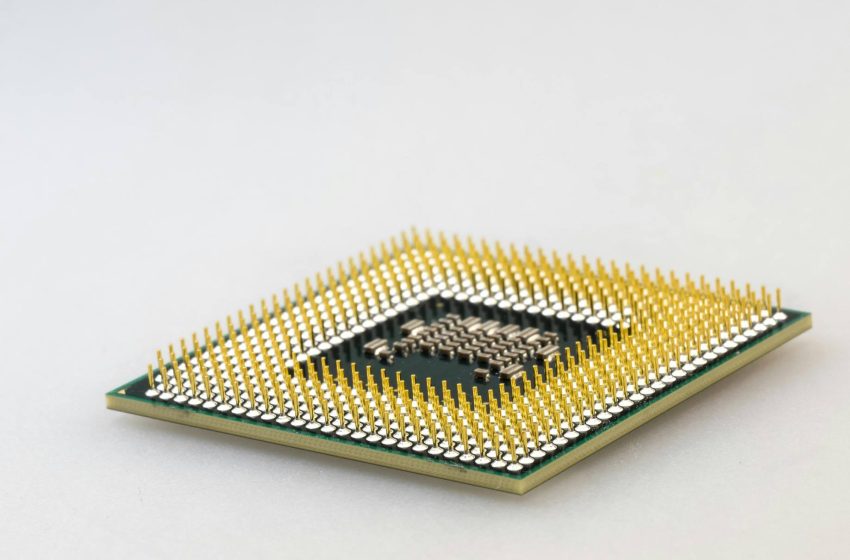
“Microchip production” is often used as if it were a single global number, but the industry should be read through two different lenses. One is market value: how large semiconductor sales became in 2025. The other is production structure: where fabs, tools and critical bottlenecks remain concentrated. The first tells us how powerful the rebound was. The second tells us how exposed the world still is.
For the market side, the clean 2025 anchor is the official full-year WSTS result. Global semiconductor sales reached USD 795.6 billion in 2025 after a much weaker USD 630.5 billion baseline in 2024, while the latest published WSTS outlook referenced here puts 2026 at USD 975.5 billion. That is a strong growth story, but it is not the same as saying production became geographically broad or strategically safe.
Key takeaways
- 2025 ended far stronger than the early-year market narrative suggested, with AI servers, data-center buildout and higher-performance compute driving the cycle.
- Logic and memory were the main engines of expansion, while the broader mix improved enough to move the industry close to the USD 800 billion mark.
- Growth in market value did not remove structural risk. Revenue surged, but the most important fabrication layers stayed concentrated.
- The near-term baseline is still expansion rather than stagnation, yet resilience depends on tools, yields, packaging, utilities and workforce depth, not on demand alone.
Global semiconductor market value
| Year | Market value | Status |
|---|---|---|
| 2024 | USD 630.5 billion | Actual WSTS baseline |
| 2025 | USD 795.6 billion | Official full-year result |
| 2026 | USD 975.5 billion | Latest published WSTS forecast referenced here |
The comparison above is a market-value series. It shows the scale of semiconductor sales, not a country ranking of physical chip output.
Chart 1. Market value rose sharply, but that does not settle the production question
The chart below isolates the cleanest comparable framing for the cycle: 2024 actual, 2025 actual, 2026 forecast. If Chart.js does not load, the fallback table remains visible under the canvas.
| Year | USD billion | Reading |
|---|---|---|
| 2024 | 630.5 | Pre-rebound baseline |
| 2025 | 795.6 | Strong AI-led expansion |
| 2026 | 975.5 | Forecast still points upward |
Source basis: WSTS official full-year 2025 result and the latest published WSTS 2026 forecast used in this article.
Where the industry is still narrow: fabs, tools, packaging and upstream choke points
A strong sales year does not automatically mean the production base became diversified. That is the central structural point for 2025. Semiconductor demand broadened and revenue climbed sharply, but the physical map of manufacturing capacity remained concentrated in a relatively small number of East Asian hubs and in a small set of equipment, materials and engineering bottlenecks.
The concentration question also works by layer. Total wafer capacity is one issue. Leading-edge logic is a much narrower issue. Advanced packaging is another. Equipment availability, process yields, water, power, supplier clusters and labour depth add still more constraints. This is why the industry can look healthy on the top line while staying strategically fragile underneath.
The right reading is not “chips are only made in one place.” It is that the most critical layers of advanced production remain much more concentrated than a simple revenue headline would suggest.
Production map in one view
| Layer | Verified signal | Why it matters |
|---|---|---|
| Wafer fabrication | Roughly three-quarters of wafer-fabrication capacity was concentrated in East Asia in the WTO’s 2018–2023 framing. | A regional shock can spill into autos, servers, industrial equipment, telecoms and consumer electronics at the same time. |
| Leading-edge logic | The most advanced capacity was much narrower than total wafer capacity, with Chinese Taipei and Korea dominating the frontier map in the WTO report. | AI accelerators, premium smartphones, advanced CPUs and high-end data-center chips depend on the narrowest part of the system. |
| EUV lithography | EUV technology remains unique to ASML. | Even with money and customer demand, frontier-node scaling cannot be accelerated freely if the tool chain is limited. |
| Onshoring projects | The U.S. and Europe are expanding local ecosystems, but new capacity still depends on long construction, qualification and ramp-up cycles. | Policy announcements matter, yet resilience improves only when fabs, packaging, utilities, suppliers and workforce grow together. |
| Upstream inputs | Neon remains a reminder that very small upstream markets can become strategic bottlenecks. | Modern chip supply can be constrained by gases and materials long before demand runs out. |
Chart 2. Illustrative split of fabrication concentration
This is a structural reading rather than a fake annual country ranking. It shows how large the East Asian share of wafer-fabrication capacity remained in the WTO framing and why resilience is still a layer-by-layer issue.
| Group | Illustrative share | Interpretation |
|---|---|---|
| East Asia | 75% | Main center of wafer-fabrication capacity in the WTO framing |
| Rest of world | 25% | Much smaller combined share outside the main East Asian cluster |
The 75% figure is used here as an illustrative structural benchmark drawn from the WTO’s summary of wafer-fabrication concentration in East Asia.
Why the bottlenecks still matter in a strong year
The policy push is real. In the United States, the CHIPS and Science Act provided the Department of Commerce with USD 52.7 billion over five years for semiconductor manufacturing, research and related programs. In Europe, the Chips Act is framed around more than EUR 43 billion of public investment and more than EUR 100 billion of policy-driven investment through 2030 when public and private capital are taken together.
Even so, money does not erase the slow parts of the system. Advanced lithography tools are scarce. Yield learning cannot be rushed indefinitely. Utilities, water treatment, site readiness, packaging depth, vendor ecosystems and technician pipelines all determine whether a fab is merely announced or actually productive. That is why a new facility can improve long-term resilience without changing the short-term reality of concentration.
TSMC’s Arizona project illustrates the point. It strengthened the case for U.S. onshoring, but it also showed how long semiconductor localization takes in practice: site development, process ramp, supplier coordination and advanced packaging all have to mature together. The same logic applies across the Atlantic. Policy can widen the map, but it cannot compress the physics, engineering and qualification timeline into a few quarters.
What the 2025 microchip story means for policy, business planning and everyday readers
The most accurate reading of 2025 is not that semiconductors suddenly became broad-based and risk-free. It is that the industry became much larger while the most sensitive layers of the supply chain remained narrow. That is why resilience has to be judged in layers rather than through a single headline number.
A country can attract a new fab and still remain exposed in packaging, gases, substrate supply, utilities or skilled labour. A company can benefit from strong revenue growth and still face risk if it depends on a very narrow set of advanced compute suppliers or on mature-node components that are easy to underestimate until shortages appear.
Revenue tells you how large the semiconductor business became. Production structure tells you how hard it would be to replace lost capacity, tools or inputs when the system is under stress.
Policy takeaway
- For advanced-node strategy, slogans about “bringing chips home” matter less than access to tools, process maturity, packaging capability and supplier depth.
- For autos, industrial equipment and infrastructure, mature-node reliability remains crucial because disruption often comes through analog, power and controller shortages rather than only through frontier chips.
- For industrial policy, fabs cannot be treated as stand-alone trophies. Utilities, workforce pipelines, local suppliers, packaging and long qualification cycles are part of the same system.
- For resilience planning, governments and firms need redundancy by layer: front-end capacity, back-end capacity, materials, gases, tools, logistics and engineering talent.
What this means for the reader
For consumers, semiconductor concentration shows up through device prices, launch timing and product mix. When advanced-node supply is tight, the pressure usually appears first in premium smartphones, GPUs, AI hardware and high-end laptops. When mature-node supply is tight, the effects spread more widely into cars, appliances, industrial controls, connectivity equipment and medical devices.
For businesses, the practical lesson is that semiconductor risk management is no longer only about chasing the lowest price. It is about qualifying alternates, understanding which node and package you depend on, securing procurement visibility earlier, and knowing whether your exposure sits in advanced logic, memory, power devices, sensors or more mature controller categories.
FAQ
Is “microchip production” the same thing as semiconductor market size?
No. Market size measures the value of semiconductor sales. Production structure describes where fabs, tools and critical bottlenecks are located. Both are important, but they answer different questions.
Why does fab location matter if global revenue is rising?
Because a strong sales year does not tell you how easily production can be replaced if a major hub is disrupted. Concentration still matters for supply security, lead times and the speed of recovery after a shock.
What remains the hardest bottleneck at the leading edge?
The hardest bottleneck is not one single thing. EUV access, process-yield learning, packaging capability, engineering talent and customer qualification all interact. A fab ramp can stall even when capital is already in place.
Are mature-node chips still strategically important in 2025?
Yes. Mature-node devices remain essential in vehicles, industrial systems, energy equipment, medical hardware, appliances and connectivity products. A shortage in these categories can cause widespread economic disruption even when frontier chips are still available.
Does onshoring mean East Asia is no longer central to the industry?
No. Onshoring and diversification are real, but they are gradual. East Asia remains central to wafer capacity, supplier depth and the advanced manufacturing ecosystem. New projects improve resilience over time rather than rewriting the map overnight.
Official and primary sources
Official release confirming global semiconductor sales of USD 795.6 billion in 2025 and the broad product and regional growth pattern.
https://www.wsts.org/76/Global-Semiconductor-Market-grows-26-in-2025-to-796BReference for structural concentration in wafer fabrication and the broader geography of semiconductor production.
https://www.wto.org/english/res_e/booksp_e/07_gvc23_ch4_dev_report_e.pdfOfficial product and technology pages confirming EUV lithography as a technology unique to ASML.
https://www.asml.com/technology/lithography-principles/light-and-lasersOfficial U.S. fact sheet on CHIPS and Science Act funding and program structure.
https://www.nist.gov/document/chips-america-fact-sheet-federal-incentivesOfficial EU pages on the investment framework and policy architecture behind the Chips Act.
https://digital-strategy.ec.europa.eu/en/factpages/chips-acthttps://digital-strategy.ec.europa.eu/en/policies/european-chips-act
Official timeline for the Arizona site, including the first fab ramp and later expansion statements.
https://pr.tsmc.com/english/news/3122https://pr.tsmc.com/english/news/3210
Official U.S. policy framing for domestic semiconductor expansion and the Arizona ecosystem.
https://www.commerce.gov/news/press-releases/2024/04/biden-harris-administration-announces-preliminary-terms-tsmc-expandedOfficial note on the strategic relevance of semiconductor-grade neon and the vulnerability of upstream inputs.
https://www.usitc.gov/publications/332/executive_briefings/ebot_decarlo_goodman_ukraine_neon_and_semiconductors.pdf