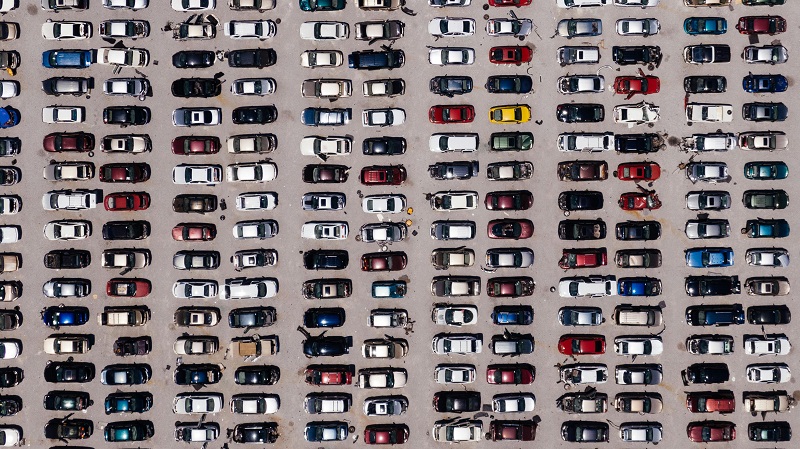
Top 100 Countries by Passenger Car Ownership per 1,000 People, 2025
Passenger car ownership per 1,000 people: what this metric reveals in 2025
“Passenger cars per 1,000 people” is a classic motorization indicator: it expresses the size of a country’s registered passenger-car fleet relative to population. Because it is normalized per 1,000 residents, it makes very different-sized countries comparable and is often cited in infrastructure debates (roads, parking capacity, safety), economic discussions (household purchasing power, credit markets), and climate policy (vehicle emissions).
In World Bank terminology, passenger cars are road motor vehicles (other than two-wheelers) designed primarily for passenger transport and to seat no more than nine people including the driver. That definition matters: countries with high motorcycle use can look “low” by this measure, even when overall personal mobility is high.
Table 1 — Top 100 countries by passenger cars per 1,000 people (latest observation)
| Rank | Country | Passenger cars per 1,000 (latest year) |
|---|
Source note: World Bank World Development Indicators (indicator code IS.VEH.PCAR.P3), with underlying compilation commonly attributed to International Road Federation (World Road Statistics). Values shown are used for comparative analysis and may be rounded.
Bar chart — Top 20 countries (from the table above)
This ranking is a high-linkability statistic because it is easy to define, easy to compare, and directly connected to urban planning, road safety, and emissions discussions.
Drivers of car ownership: why similar countries can rank far apart
Passenger cars per 1,000 people is shaped by more than purchasing power. Two countries can have comparable incomes yet diverge widely if they operate different “mobility models.” Dense urban regions with strong rail and transit can achieve high accessibility with fewer cars, while dispersed settlement patterns and limited public transport push households toward car dependence. Policy choices—taxation, registration rules, parking supply, fuel pricing—can compress or expand fleets even when incomes are stable.
A practical way to read the ranking
Think of the metric as the balance of three forces: (1) household resources (income, credit, used-car market), (2) alternatives (public transport, walkability, rail), and (3) constraints (taxes, insurance, parking, land use). Countries move within the table when these forces change—often gradually, sometimes abruptly after policy shifts or shocks.
Ownership is a registered-stock statistic. It does not directly measure distance driven, congestion, or time lost in traffic.
Table 2 — Regional summary (compact)
| Region | Summary | Interpretation cue |
|---|
Histogram — distribution of passenger-car ownership (Top 100)
Scatter — passenger cars per 1,000 vs GDP per capita (embedded subset)
Table 3 — Outliers & notes (selected)
| Country | Cars per 1,000 (latest year) | Why it stands out |
|---|
FAQ
Why is the “latest year” not the same for every country?
Are motorcycles included in “passenger cars per 1,000”?
Does this reflect households or population?
What this ranking implies for policy, infrastructure, and society
Passenger-car ownership per 1,000 people is often treated as a simple score, but its real value is diagnostic. It describes how strongly a country’s daily mobility depends on private passenger vehicles and, by extension, what kinds of constraints and trade-offs are likely to appear: road capacity versus congestion, parking versus urban land use, traffic safety versus speed, and emissions reduction versus the realities of household travel.
A high position in the ranking tends to correlate with greater demand for road maintenance and parking supply, stronger political sensitivity to fuel pricing, and higher exposure to congestion costs in major metros. Lower positions are more ambiguous: they can indicate limited household purchasing power, but they can also reflect strong public transport, compact cities, and policy choices that discourage car ownership without necessarily reducing mobility.
Policy takeaway
When passenger-car ownership rises, the binding constraint usually shifts from “vehicle access” to “system capacity.” The most durable responses are those that manage demand (land use, transit alternatives, pricing) while improving safety and reliability, rather than treating road expansion as the only lever.
How to interpret the Top 100 without over-reading it
Three cautions improve interpretation. First, the indicator tracks registered stock, not actual kilometers driven; ownership can rise while usage falls in dense cities. Second, cross-border commuting, company fleets, and registration rules can shift per-capita values, especially in very small countries. Third, the “latest year” differs across countries, so comparisons are best read as a snapshot of relative motorization rather than a synchronized global census.
Summary
In 2025, passenger-car ownership (cars per 1,000 people) shows large cross-country gaps, reflecting differences in income, urban form, transport alternatives, and policy choices. The Top 100 range spans from very high motorization levels in the leading countries to mid-range ownership where private cars coexist with public transport and other modes.
If you use this ranking in a report, cite the indicator definition and the “latest year varies by country” concept to avoid implying a single common reference year.
Primary data sources and technical notes
- World Bank Open Data — Indicator page (IS.VEH.PCAR.P3): public landing page for passenger cars (per 1,000 people), including downloads and metadata.
- World Bank DataBank metadata glossary (WDI) — definition & source attribution: formal definition of passenger cars and the cited source organization.
- World Bank Indicators API documentation: how the World Bank structures indicator endpoints and responses for programmatic access.
- World Bank API call structures: reference for query formats and parameters used across indicator datasets.
- International Road Federation — terms and licensing (context for underlying compilation): licensing reference linked from World Bank metadata.
This page is built as a comparative analytical snapshot. Values are displayed as embedded on-page data for consistent rendering and fast loading.
Download data pack: Passenger car ownership (Top 100), 2025
Download the prepared archive with the ranking tables and chart images used in this article.