
Internal Migration in China and India: Urbanization and Economic Impacts
Internal migration in China and India, driven by rapid urbanization, is transforming demographic, economic, and social landscapes in 2025. As the world’s two most populous nations, their migration patterns—primarily rural-to-urban—fuel economic growth while posing challenges like infrastructure strain and social inequality. In China, 277.5 million migrant workers existed in 2015, with projections estimating an additional 243 million urban migrants by 2025. India anticipates 300 million urban residents added between 2000 and 2030. This article examines internal migration in China and India, its role in urbanization, and its economic impacts, supported by data, expert insights, and projections for 2025.
Internal Migration and Urbanization: An Overview
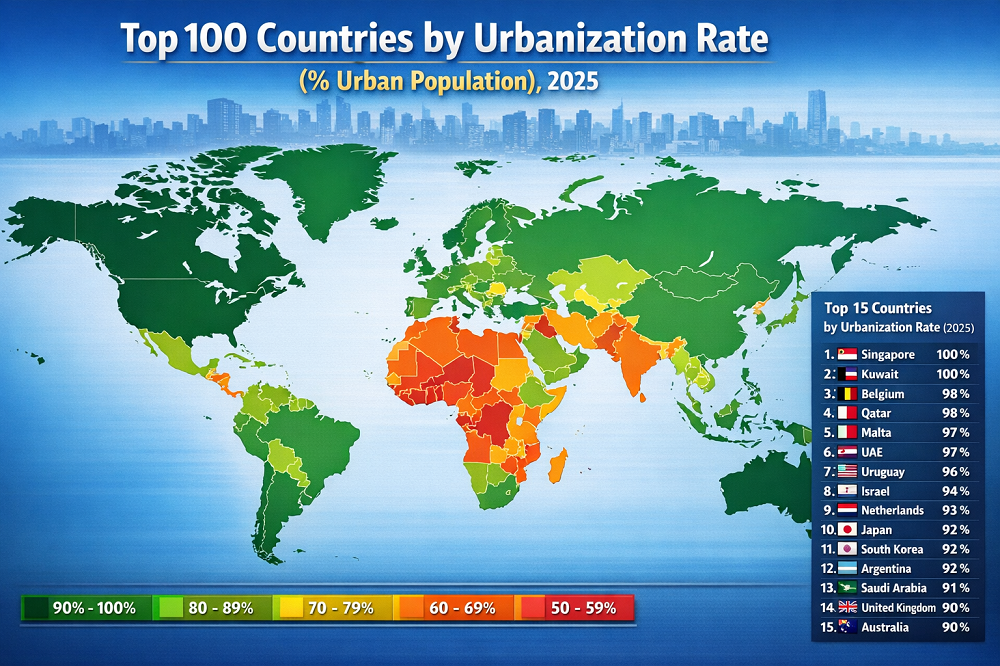
Internal migration refers to population movements within a country, often from rural to urban areas, driven by economic opportunities, education, and improved living standards. In China and India, urbanization is a key driver, with China’s urbanization rate reaching 67% in 2024 and India’s at 36% in 2023, per UN estimates. Urbanization fosters economic development by concentrating labor and resources, but it also strains housing, healthcare, and infrastructure. McKinsey’s 2010 report highlights that China and India will account for 40% of global urban population growth from 2005 to 2025, underscoring their global significance.
Key aspects of internal migration include:
- Economic pull factors: Urban centers offer higher wages, with Chinese urban workers earning 2.5–3 times more than rural counterparts.
- Policy influences: China’s hukou system and India’s urban governance shape migration patterns.
- Social impacts: Migration boosts remittances but creates challenges like social exclusion and urban overcrowding.
- Environmental effects: Urbanization increases carbon footprints, with China’s urban areas contributing 70% of national emissions.
Internal Migration in China
China’s internal migration is among the largest in history, with 261 million rural-to-urban migrants by 2010, per census data. The 2020 National Population Census notes a shift toward urban-to-urban migration, reflecting a mature urbanization stage. The hukou system, which ties social benefits to household registration, historically restricted rural-urban mobility but has been relaxed since 2014, enabling 100 million rural residents to gain urban hukou by 2020. By 2025, China aims to urbanize 250 million citizens, targeting smaller cities to ease pressure on megacities like Shanghai and Beijing.
Economic Impacts: Rural-urban migration has driven China’s economic boom, contributing to 10% annual GDP growth from 1980 to 2010. Migrants fuel manufacturing and services, with cities like Guangzhou generating 20% of national GDP. However, urban poverty remains low (4–6%), and unemployment is 3–4%, per World Bank data. Challenges include wage disparities and limited access to urban services for non-hukou migrants. Bloomberg’s 2025 outlook notes that China’s focus on smaller cities aims to boost consumption, but job creation lags due to automation.
Urbanization Challenges: China’s urban population is projected to reach 1 billion by 2030. While the country has avoided widespread slums, overcrowding and environmental degradation persist. The 2014 National New-Type Urbanization Plan emphasizes green development, but eastern cities face higher pollution levels than western ones.
Internal Migration in India
India’s urbanization is slower, with 36% of its population urban in 2023, but the absolute growth is staggering—300 million urban residents added from 2000 to 2030, per the Centre for Social and Economic Progress (CSEP). Rural-to-urban migration drives this, motivated by manufacturing and service sector jobs. Unlike China, India lacks a centralized migration control system, leading to organic but uneven urban growth. Cities like Delhi and Mumbai are among the world’s largest, yet rural manufacturing accounts for 51% of industrial output, slowing urbanization.
Economic Impacts: Urban areas contribute 55% of India’s GDP, with urban per capita GDP growing at 6% annually from 2005 to 2025, per McKinsey. Migrants boost sectors like construction and textiles, but the manufacturing share in GDP stagnates at 14–16%. Rural-urban wage gaps are significant, with urban workers earning twice as much as rural ones. PwC’s 2024 report warns that India’s capital-intensive industrialization limits job creation, constraining urban migration’s economic potential.
Urbanization Challenges: India’s urban infrastructure struggles to keep pace, with 41% of urban households lacking adequate housing, per the 2011 Census. Governance issues and high urban land prices push industries to rural areas, reducing agglomeration economies. The Urban Land Ceiling Act (repealed in 1999) historically limited urban industrial growth, and weak labor laws discourage large-scale urban manufacturing.
Comparative Analysis
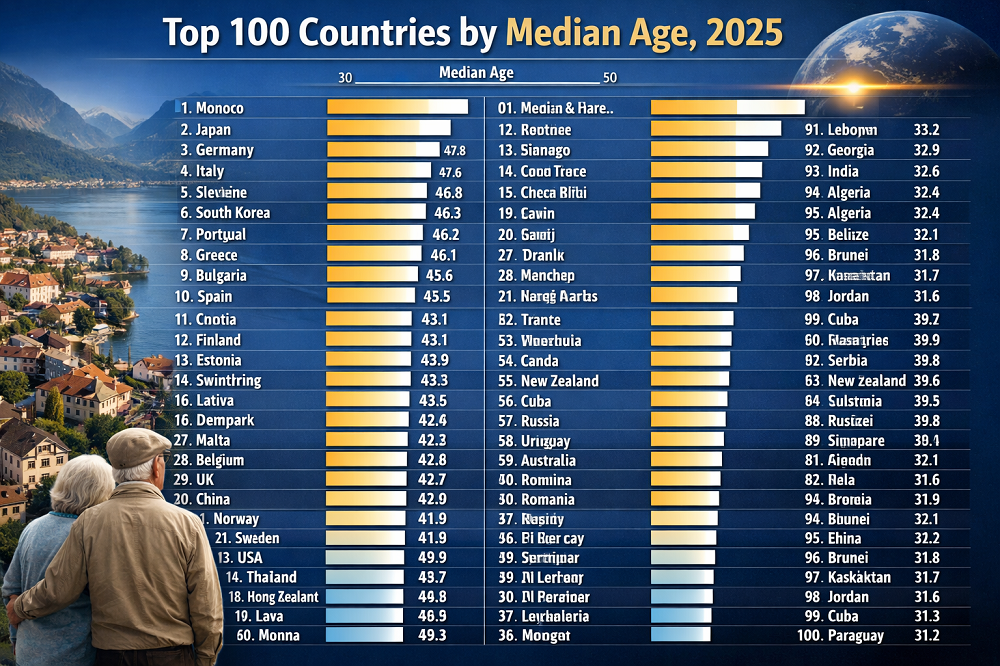
China’s state-led urbanization contrasts with India’s market-driven approach. China’s hukou reforms and infrastructure investments have channeled migration effectively, while India’s decentralized governance leads to uneven development. China’s urban GDP growth outpaces India’s (7.3% vs. 6% annually), but India’s youthful demographic—16% aged 55+ by 2025 vs. China’s 28%—offers a larger labor pool. Both face environmental challenges, with urban air pollution affecting 80% of Chinese cities and 70% of Indian ones, per WHO data.
| Year | China Urban Population (millions) | India Urban Population (millions) |
|---|---|---|
| 2000 | 459 | 291 |
| 2010 | 669 | 377 |
| 2020 | 866 | 481 |
| 2025 (projected) | 950 | 538 |
Economic and Social Implications
Economic Benefits: In China, migration has reduced rural poverty by 50% since 1990, with remittances supporting rural economies. India’s urban migrants drive consumption, with urban households projected to increase sevenfold by 2025, per McKinsey. Agglomeration economies in cities like Shenzhen and Bangalore enhance productivity, with urban density correlating to 20% higher wages in both nations.
Social Challenges: Migrants face exclusion, with 60% of Chinese migrant children lacking urban school access and 30% of Indian urban migrants living in slums. Mental health issues are rising, though China’s “healthy migrant effect” shows resilience due to economic gains. Gender dynamics shift, with women comprising 33% of China’s migrant workforce and 40% in India, per ILO data.
Policy Responses and Future Outlook
China’s 2024 Third Plenum relaxed hukou restrictions for smaller cities, aiming to boost urban consumption. However, automation and manufacturing overcapacity limit job growth, per Bloomberg. India’s Smart Cities Mission and AMRUT scheme target urban infrastructure, but implementation lags, with only 50% of projects completed by 2024. PwC recommends labor-intensive industrialization to accelerate India’s urbanization.
By 2030, China’s urbanization rate is expected to hit 75–80%, while India’s may reach 40%. Both nations must address environmental sustainability, with China investing worst (10% of cities failing air quality standards) and India facing similar issues (14 cities in WHO’s top 20 for pollution). Green urban planning and job creation are critical to sustaining economic gains.
Conclusion
Internal migration in China and India drives urbanization and economic growth but poses significant challenges. China’s state-led approach ensures rapid urbanization but struggles with social integration, while India’s organic growth faces governance and infrastructure hurdles. By 2025, both nations will see unprecedented urban populations, necessitating sustainable policies to balance economic benefits with social and environmental demands.
Sources
- United Nations Department of Economic and Statistical Affairs - World Urbanization Prospects 2024
- Census of India - Urbanization Data 2011
- National Bureau of Statistics of China - 2020 Census
- Global Migration Data Portal - Internal Migration Trends