
Top 10 countries with the smallest/largest number of households
Demography • Household size • Multigenerational
Latest internationally comparable figures (mixed years by source). Values are average people per household.
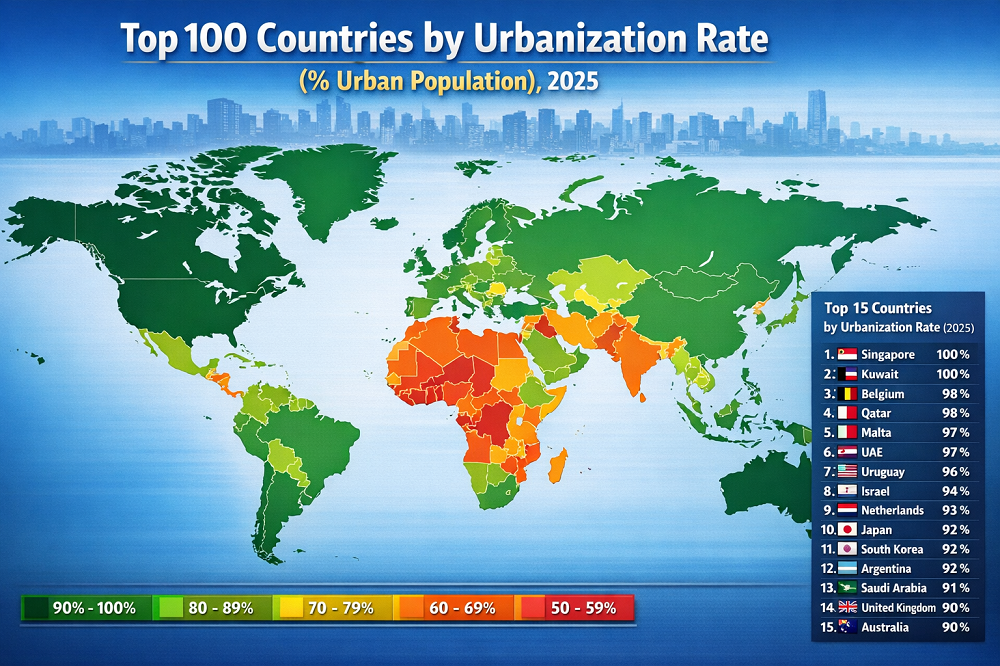
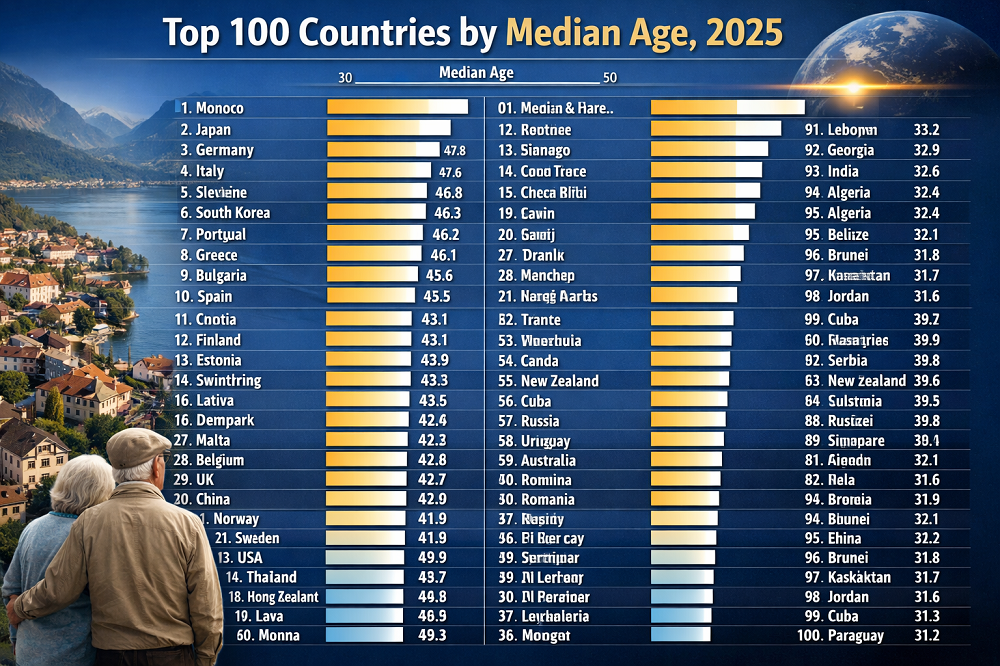
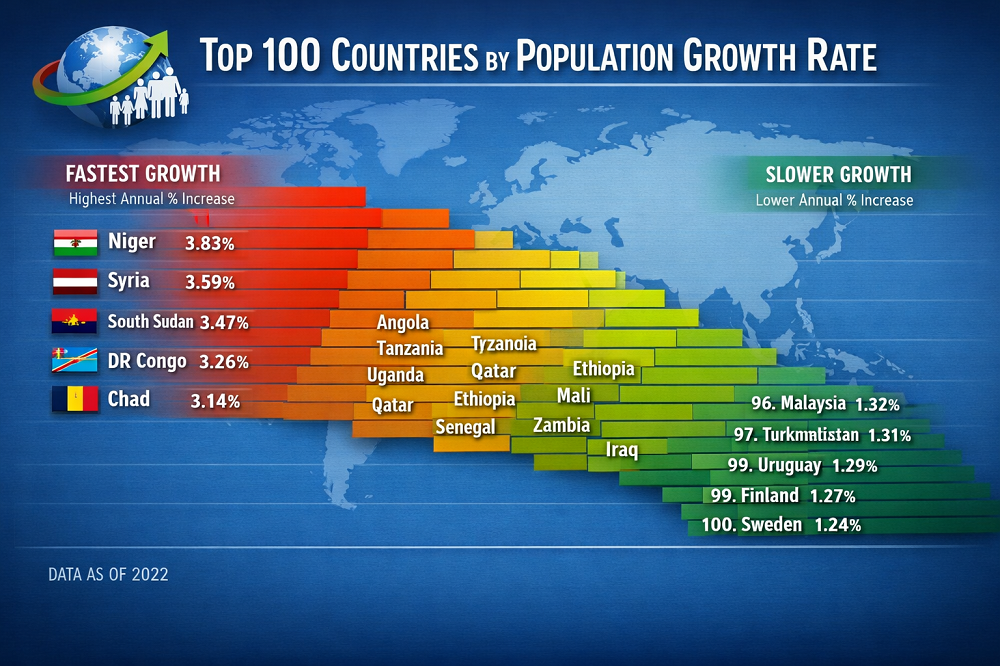
Household size reflects culture, housing markets, fertility and the balance between nuclear and multigenerational living. Urbanization tends to reduce household size (smaller dwellings, higher costs, more single-adult homes), while rural settings often sustain larger, extended families and farm-oriented co-residence.
Top-10: Smallest household size
- Germany — 2.05 (2011)
- South Korea — 2.18 (2022)
- France — 2.22 (2015)
- Netherlands — 2.23 (2011)
- Japan — 2.26 (2020)
- United Kingdom — 2.27 (2011)
- Italy — 2.40 (2011)
- Canada — 2.45 (2016)
- United States — 2.49 (2020)
- Australia — 2.50 (2011)
Top-10: Largest household size
- Pakistan — 6.80 (2013)
- Sudan — 5.59 (2008)
- DR Congo — 5.30 (2013)
- Morocco — 5.24 (2004)
- Uzbekistan — 5.24 (1996)
- Nigeria — 4.90 (2015)
- Tanzania — 4.85 (2015)
- Angola — 4.82 (2016)
- Ethiopia — 4.61 (2016)
- Bangladesh — 4.47 (2014)
City vs. countryside (why it matters)
- Urban: more one-person and couple-only homes; delayed marriage; space constraints; high housing costs → smaller households.
- Rural: more multigenerational and extended families; kin support for childcare/eldercare; agricultural livelihoods → larger households.
- Regions with the smallest household sizes are typically high-income, urbanized (≈2.4 persons). The largest are in Sub-Saharan Africa and Middle East & North Africa (≈5–5.1 persons).
Notes & sources
Values above draw on the UN Household Size & Composition database and compilations where the latest year differs by country; some entries reference national censuses (methodology varies; use with care for strict rankings).
- UN Population Division, Household Size & Composition (2022 update).
- Country table with “Number in household” (incl. years) — Wikipedia compilation.
- Global patterns & multigenerational co-residence: Esteve et al. (2024), CORESIDENCE database study.
Sources: UN Household Size & Composition (latest available year per country); national censuses.
City vs. countryside: Urban housing costs and space constraints favor smaller, nuclear households, while rural areas more often keep multigenerational homes. Use ranks as indicative: underlying reference years differ by country.
Sources: UN Household Size & Composition; national censuses; CORESIDENCE 2024.