
Top 10 countries by age at first marriage (m/f)
The mean age at first marriage is a compact way to track how social norms, education, housing, and labor markets shape the timing of family formation. Where people study longer, rent or buy homes later, and build careers before formalizing partnerships, first marriages tend to happen in the early 30s for women and the mid-30s for men. In countries where schooling is shorter or where early unions remain a strong norm, the same indicator can sit far lower.
How to read the numbers (and what this ranking is not)
A Top 10 list is easy to scan, but age-at-first-marriage data have one important nuance: reference years differ by country. This page follows a “latest available” approach commonly used in international dashboards: for each country we take the most recent value available from national or harmonized regional sources.
Methodology (summary):
We compile “mean age at first marriage” values for women and men from international datasets that aggregate official national statistics (for example, UN World Marriage Data, UNECE/Eurostat country tables, and OECD family indicators). If multiple sources exist, the most recent and most comparable series is preferred. Values are presented as means (not medians) because that is the most common format in international series.
Limitations: (1) different country years; (2) registration practices differ; (3) cohabitation trends can decouple partnership timing from marriage timing; (4) “mean” can be pulled upward by a long tail of later marriages.
- Mean vs. median: the mean is standard in international series; medians are rarer and may be lower.
- Comparability: use the ranking as an indicator of “later vs earlier” marriage regimes, not as an exact contest.
- Context matters: rising ages may reflect education and careers, but also housing constraints or delayed stability.
Top 10 — Women: countries where first marriage happens latest
The women’s Top 10 is led by Northern and Southern Europe, plus advanced Asian economies. These settings typically combine long education pathways, high urbanization, and social acceptance of later family formation. Importantly, “later marriage” does not necessarily mean “later partnership”: in many high-income countries, cohabitation precedes marriage and can last for years before a wedding.
| Rank | Country | Women — mean age at first marriage (years) |
|---|---|---|
| 1 | Sweden | 33.3 |
| 2 | Spain | 32.6 |
| 3 | Italy | 32.4 |
| 4 | Ireland | 32.2 |
| 5 | Netherlands | 31.9 |
| 6 | South Korea | 31.6 |
| 7 | Switzerland | 31.5 |
| 8 | Japan | 31.2 |
| 9 | Canada | 30.9 |
| 10 | Germany | 30.7 |
Values are means and come from the latest available country year in major international series. Because country years differ, treat the list as indicative of “later-marriage settings,” not a strict league table.
Figure 1 — Women’s mean age at first marriage (Top 10)
The chart visualizes the same Top 10 list as the table. Use it to quickly compare how tightly clustered the group is: the entire women’s Top 10 sits within a narrow band around the low-30s, which is typical for high-income countries where marriage is no longer an early-adulthood norm.
Chart unavailable — quick view
If the chart does not render in your browser, the table above is the primary reference. Here is the same list:
Tip: compare this chart with the men’s Top 10 (Part 2) to see how the gender gap stays fairly stable across late-marriage countries.
Men’s Top 10 and the gender gap in late-marriage countries
Men tend to marry later than women in almost all settings. In late-marriage countries, the typical gap is around 2–3 years, reflecting differences in earnings trajectories, educational timing, and age norms in partner selection. The men’s Top 10 overlaps heavily with the women’s Top 10, but it is not identical: for example, the United Kingdom appears among men while Canada appears among women. These differences can be driven by source coverage, the “latest year available” rule, and how quickly national series update.
The key analytic takeaway is not the exact ordering, but the overall regime: in these countries, first marriage is typically a post-education, post-establishment milestone. Where long-term partnerships begin earlier, they often do so via cohabitation rather than early marriage, which shifts the age at marriage upward without necessarily shifting the age at partnership by the same amount.
Top 10 — Men: countries where first marriage happens latest
| Rank | Country | Men — mean age at first marriage (years) |
|---|---|---|
| 1 | Sweden | 35.0 |
| 2 | Italy | 34.9 |
| 3 | Spain | 34.8 |
| 4 | Ireland | 34.5 |
| 5 | United Kingdom | 34.2 |
| 6 | Netherlands | 34.2 |
| 7 | South Korea | 33.9 |
| 8 | Germany | 33.8 |
| 9 | Switzerland | 33.6 |
| 10 | Japan | 33.5 |
Same comparability note as for women: country years differ across sources and releases. Interpret the list as a “late-marriage cluster.”
Figure 2 — Men’s mean age at first marriage (Top 10)
Men’s values sit roughly in the mid-30s at the top end. In practical terms, this means a larger share of first marriages happens after completing higher education and after several years in the labor market. That pattern often coincides with delayed parenthood, stronger reliance on dual incomes, and a housing market where forming an independent household is expensive.
Chart unavailable — quick view
The table above is the main reference. Here is the same list:
Next: the gender gap chart focuses only on countries that appear in both Top 10 lists, to avoid mixing incomplete pairs.
Gender gap — how much older are men at first marriage in the shared Top 10?
For countries that appear in both Top 10 lists, the gap is generally stable and informative: it captures the “typical” age difference at first marriage in late-marriage settings. A bigger gap does not automatically mean inequality is higher; it can also reflect labor-market sequencing, conscription patterns (where relevant), or cultural norms around men “settling down” later.
In this shared group, the gap ranges from about 1.7 years (Sweden) up to about 3.1 years (Germany). These are averages, so individual couples can differ widely.
| Country | Women (mean) | Men (mean) | Gap (men − women) |
|---|---|---|---|
| Sweden | 33.3 | 35.0 | 1.7 |
| Spain | 32.6 | 34.8 | 2.2 |
| Italy | 32.4 | 34.9 | 2.5 |
| Ireland | 32.2 | 34.5 | 2.3 |
| Netherlands | 31.9 | 34.2 | 2.3 |
| South Korea | 31.6 | 33.9 | 2.3 |
| Switzerland | 31.5 | 33.6 | 2.1 |
| Japan | 31.2 | 33.5 | 2.3 |
| Germany | 30.7 | 33.8 | 3.1 |
This comparison uses only countries with both women’s and men’s values in the Top 10 lists shown on this page.
Figure 3 — Gender gap (men − women) in shared Top 10 countries
The gap chart makes it easier to spot where the distance between men’s and women’s ages is larger. In high-income contexts, gaps around 2–3 years are common. If a country shows a much larger gap, analysts often look for different educational timing, labor-market patterns, or social norms around partner age differences.
Chart unavailable — quick view
The table above includes the gender gap for each country.
What later first marriage tells us about society (and what it does not)
Age at first marriage is not just a “relationship statistic.” In many countries it behaves like a summary signal of life-course sequencing: education → early employment → housing → stable partnership → marriage → parenthood. When one of these steps becomes harder, marriage can shift later even if people still want long-term relationships.
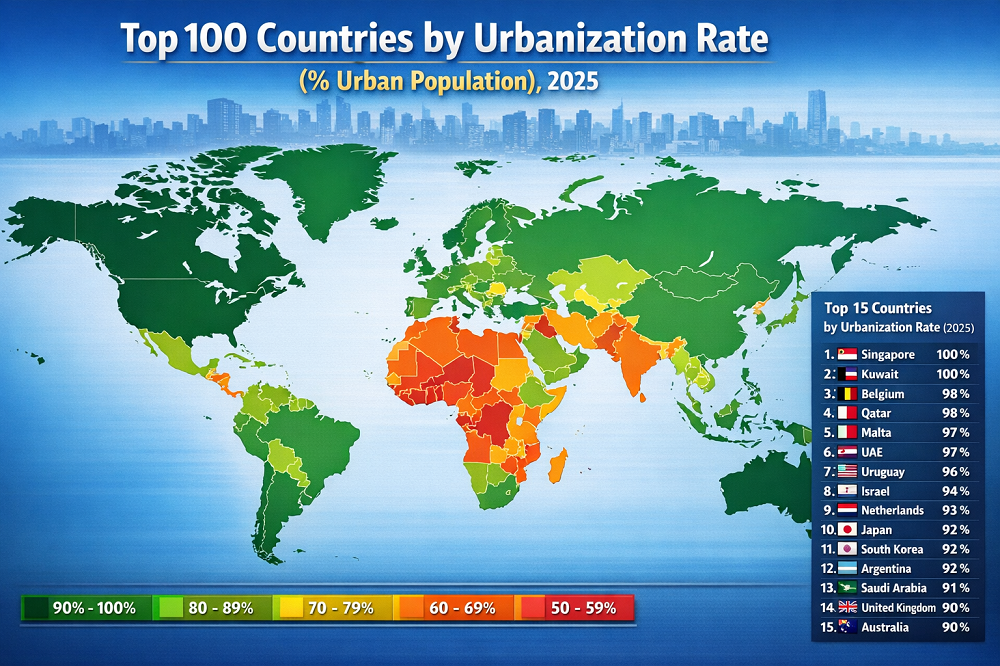
This is why late-marriage countries frequently share a familiar combination of drivers: high urbanization, high housing costs, longer schooling, and a labor market where stable contracts arrive later for young adults. At the same time, cultural shifts matter: where cohabitation is widespread and socially accepted, couples can form stable unions earlier without marrying, effectively moving “marriage” later on the timeline.
Global picture: why “late marriage” clusters in advanced economies
In high-income settings, delayed marriage often reflects a mix of incentives and constraints. Longer education means later financial independence. Career building can push major commitments later, especially in cities where both partners prioritize stability before marrying. Housing markets amplify this: if renting is expensive and homeownership requires large down payments, couples may postpone marriage until they can afford an independent household.
In contrast, earlier marriage regimes can persist where economic life supports earlier household formation or where social norms strongly favor marriage as the default pathway into adulthood. Importantly, this does not automatically imply “better” or “worse” outcomes. The same marriage timing can reflect very different realities depending on education access, gender equality, labor-market opportunities, and social protection.
City vs. countryside: the same country can contain two different regimes
National averages often hide large internal gaps. Urban centers typically push first marriage later through higher education participation and higher housing costs. Rural areas may sustain earlier marriage through stronger kinship networks, earlier access to housing (including family land or intergenerational support), and different expectations around leaving the parental home.
Interpretation tips:
If a country looks “late” on this indicator, check whether cohabitation is common. Late marriage can mean: (1) people partner later, or (2) people partner earlier but marry later, or (3) both.
If you are comparing countries for policy or research, focus on trends over time and within-region comparisons (e.g., Southern Europe vs Northern Europe) rather than a strict rank order.
What this means for readers
For individuals, this indicator is best read as “typical timing” in a society rather than a recommended timeline. A higher mean age at first marriage does not mean people are “less committed”; it can mean commitments are sequenced differently (education, careers, and housing first).
For businesses and planners, later marriage often correlates with later parenthood and shifting demand for housing types, childcare, and household formation services. For governments, it can signal pressure points: youth housing affordability, job stability for young adults, and the availability of family policy supports that reduce the cost of forming households.
Methodology (detailed)
This page uses the mean age at first marriage for women and men from large, harmonized international statistical systems. In practice, “mean age at first marriage” is generally derived from first-marriage rates by age, producing a weighted average age at first marriage in a given year.
- Selection rule: latest available value per country within the referenced series.
- Units: years (one decimal place shown).
- Comparability: reference years differ; definitions and coverage can differ; treat as indicative.
- Presentation: tables + charts for readability; tables are the authoritative display if charts fail.
FAQ: age at first marriage
Is this the mean or the median age at first marriage?
The lists on this page use the mean age because it is the standard format in many international series and statistical databases. Medians are sometimes published nationally, but cross-country median series are much less common. Because age distributions can have a “late tail,” means can be somewhat higher than medians.
Why are men usually older at first marriage than women?
The most common reasons are life-course sequencing and partner-age norms. Men often reach earnings stability later, and many societies still have norms where male partners are slightly older. In late-marriage countries, the typical gap is often around 2–3 years, though it can be smaller or larger depending on the context.
Does “late marriage” mean people form partnerships late?
Not necessarily. In many high-income countries, long-term cohabitation is common and socially accepted, so partnership formation can happen earlier than marriage. In those cases, “late marriage” can mean marriage is delayed relative to partnership, not that relationships start late.
Why do housing costs matter for marriage timing?
Forming an independent household is easier when housing is affordable. When rent is high and homeownership requires large down payments, couples may delay “formal” steps (including marriage) until financial and housing conditions feel stable. This effect is strongest in large urban labor markets.
Can different reference years change the Top 10?
Yes. Because countries update their series in different years, a country might appear in a Top 10 at one moment and drop out later simply because a newer observation becomes available elsewhere. That’s why this page emphasizes the regime (“late-marriage countries”) more than the exact ordering.
How should I compare countries fairly?
Best practice is to compare (1) countries with similar statistical systems and coverage, (2) trends over time rather than a single year, and (3) complementary indicators such as cohabitation rates, median age at leaving home, and fertility timing. A simple rank is a useful headline, but it is not a full explanation.
What is the single biggest limitation of this indicator?
The biggest limitation is that marriage is only one institutional form of partnership. Where cohabitation is widespread, age at first marriage reflects the timing of a legal/ceremonial step, not necessarily the timing of commitment, household formation, or childbearing.
Sources (official & international datasets)
The ranking is compiled from major international statistical systems that aggregate national official data. Below are the core references used for definitions, metadata, and cross-country comparability.
-
United Nations (UN DESA) — World Marriage Data (2019 series)Global marriage indicators compiled by the UN Population Division; commonly cited reference for “mean age at first marriage” and related marriage timing measures.https://www.un.org/development/desa/pd/data/world-marriage-data
-
UNECE Statistical Database — Mean age at first marriage by sexHarmonized table compiled from official national and international sources; includes a clear definition and coverage notes.https://w3.unece.org/PXWeb2015/pxweb/en/STAT/STAT__30-GE__02-Families_households/052_en_GEFHAge1stMarige_r.px/
-
Eurostat — Mean age at first marriage (dataset)EU-level dataset for mean age at first marriage for men and women; useful for consistency across European countries.https://ec.europa.eu/eurostat/databrowser/view/tps00014/default/table?lang=en
-
OECD Family Database — Marriage and divorce indicators (SF3.1)OECD family indicators, including mean age at first marriage; includes cross-country averages and charted comparisons.https://webfs.oecd.org/els-com/Family_Database/SF_3_1_Marriage_and_divorce_rates.pdf
-
OECD — Society at a Glance 2024 (marriage and divorce section)Context on how marriage timing has shifted across OECD countries since the 1990s and how it relates to broader social trends.https://www.oecd.org/en/publications/society-at-a-glance-2024_918d8db3-en/full-report/marriage-and-divorce_63dd0a7d.html
-
World Bank Gender Data Portal — Mean age at first marriageIndicator page with metadata referencing UN World Marriage Data; useful for definitions and quick cross-country lookup.https://genderdata.worldbank.org/en/indicator/sp-dyn-smam
Source caveat: international datasets may lag national releases, and countries differ in the timing of updates. For strict research, always verify the latest country-year value in the original national statistical publication.
Download assets: Age at first marriage (2025)
CSV tables + PNG chart images used on the page (women Top 10, men Top 10, and gender gap).