World grain production 2025
Grain production is a cornerstone of global food security, feeding billions and supporting industries like animal feed and biofuels. As the world navigates climate challenges and population growth, understanding grain production trends in 2025 is critical. Simultaneously, cement production drives the construction sector, shaping infrastructure but posing environmental challenges. This article examines global grain production forecasts for 2025, key producing regions, and sustainability issues, alongside cement’s role in construction, supported by authoritative data and visualizations.
Global Grain Production: Trends and Forecasts for 2025
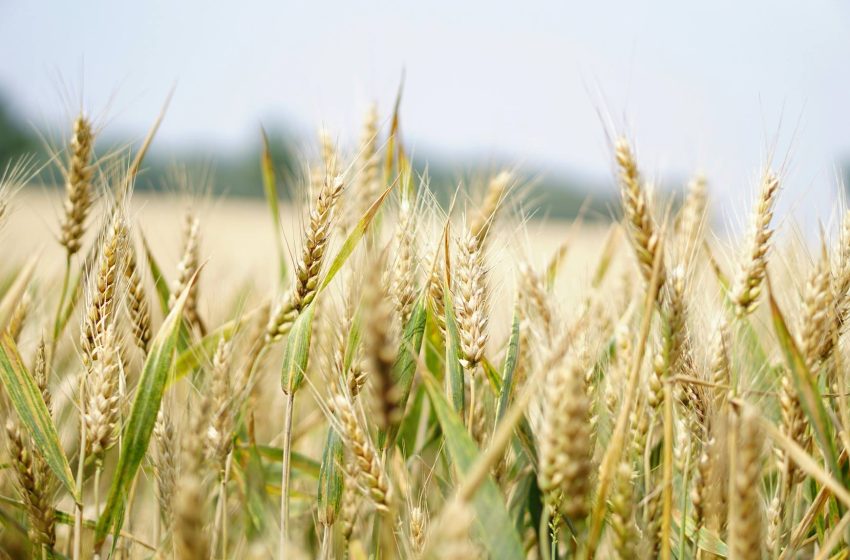
In the 2023/24 crop year, global grain production reached 2,847 million metric tons, a 1.2% increase from 2,794 million metric tons in 2022/23, according to the Food and Agriculture Organization (FAO). For 2025/26, the International Grains Council (IGC) projects a record 2,368 million metric tons, driven by maize (1,269 million tons), wheat (806.7 million tons), and barley. This growth reflects improved yields in the European Union, United States, and Brazil, despite challenges like adverse weather and trade disruptions. Corn, wheat, and rice remain the dominant grains, comprising over 85% of production, with corn leading at 1,217 million tons in 2023/24.
Grain demand is rising, with global utilization projected to reach 2,851 million metric tons in 2024/25, a 0.5% increase, driven by food (50%), animal feed (30%), and biofuels (10%). Population growth, projected to hit 8.5 billion by 2030, and urbanization fuel this demand. However, ending stocks are expected to tighten to 576.6 million tons in 2025/26, up slightly by 1.4 million tons, due to increased consumption outpacing supply in some regions.
Key Grain-Producing Regions
United States is the world’s largest corn producer, with 15.3 billion bushels (389 million metric tons) in 2023/24, a 12% increase from 2022/23, driven by a 10% expansion in acreage to 86.5 million acres and yields of 177.3 bushels per acre. For 2025/26, maize production is forecast to rise to 394 million metric tons, supported by a 5% increase in plantings. The U.S. also produced 1.81 billion bushels of wheat in 2023/24, with North Dakota, Kansas, and Montana leading.
China leads in wheat (136.9 million tons) and rice (149 million tons) production in 2023/24, with total grain output of 577 million metric tons. For 2025/26, China’s corn production is projected at 280 million metric tons, driven by higher feed use. India produced 329.7 million metric tons of foodgrains in 2022/23, including 109.6 million tons of wheat and 135 million tons of rice, with a record wheat crop expected in 2025/26 due to expanded area and higher yields. European Union wheat production is forecast to recover to 140 million metric tons in 2025/26, up 13.9 million tons, after weather challenges in 2024/25. Brazil and Argentina are key maize producers, with Brazil’s 2025 output pegged at 132 million metric tons, above the five-year average.
Challenges in Grain Production
Grain production faces climate, economic, and geopolitical hurdles. Droughts, like those impacting U.S. winter wheat in 2023/24, reduced yields to 44.7 bushels per acre, down 2.3 bushels. In Argentina, maize stunt disease cut plantings, keeping 2025 output below average. Extreme weather, including floods in India and heatwaves in Europe, threatens yields. Trade disruptions, such as China’s 36-million-ton drop in coarse grain imports in 2024/25, and geopolitical tensions, like Russia’s invasion of Ukraine, which reduced Ukraine’s grain exports by 20% in 2023, impact markets. The FAO notes that global cereal stocks will decline by 1.9% to 868.2 million tons by 2025, raising food security concerns.
Environmental impacts are significant. Grain farming consumes 70% of global freshwater and contributes 13% of greenhouse gas emissions from agriculture. Nitrogen fertilizers, used on 80% of grain crops, cause soil acidification and water contamination. Organic farming, which avoids synthetic chemicals, is growing but accounts for only 1.5% of global grain production. Innovations like precision agriculture and drought-resistant seeds could boost yields by 10–15% by 2030, per McKinsey, but adoption is slow in developing regions.
Grain Production Data: Regional Breakdown
The table below summarizes grain production by key regions in 2023/24, with projections for 2025/26.
| Region | 2023/24 Production (Mt) | 2025/26 Projected (Mt) | Main Grain |
|---|---|---|---|
| United States | 430 | 450 | Corn |
| China | 577 | 590 | Wheat, Rice |
| EU | 270 | 290 | Wheat |
Visualization: Grain Production by Region (2023/24 vs. 2025/26)
Cement Production: Backbone of Construction
Global cement production reached 4.1 billion tonnes in 2023, with China producing 51% (2.1 billion tonnes), followed by India (400 million tonnes) and the European Union (180 million tonnes). The industry supports a $10.7 trillion construction sector, providing concrete for buildings, roads, and infrastructure. Demand is projected to grow by 12–23% by 2050, reaching 4.5–5.2 billion tonnes, driven by urbanization in Asia and Africa, where urban populations will increase by 2.5 billion.
Cement production is energy-intensive, consuming 100 kWh of electricity per tonne and relying on coal for 60% of thermal energy. This contributes to 5–8% of global CO2 emissions, with 2.6 billion tonnes emitted in 2023. Fuel combustion accounts for 40% of emissions, and limestone calcination 50%. Innovations like low-carbon cement and carbon capture could reduce emissions by 50% by 2050, but high costs limit adoption, with only 10% of global production using alternative fuels in 2023.
Cement’s Role in Construction and Sustainability
Cement’s durability makes it essential for concrete, used in 80% of global construction projects. In 2023, the construction industry grew by 3.2%, with cement demand rising in emerging economies like Ethiopia, where consumption is projected to reach 19.97 million tons by 2025. Environmental regulations, such as the EU’s Carbon Border Adjustment Mechanism (effective 2026), are pushing the industry toward sustainability. Recycled materials and waste-derived fuels, used in 15% of cement kilns globally, reduce coal reliance. Bloomberg notes that green cement could cut emissions by 20% by 2030 if scaled effectively.
Cement Production Data: Key Regions
The table below outlines cement production and environmental impact in 2023.
| Region | Production (Mt) | CO2 Emissions (Mt) | Electricity Intensity (kWh/t) |
|---|---|---|---|
| China | 2,100 | 1,200 | 100 |
| India | 400 | 240 | 95 |
| EU | 180 | 100 | 90 |
Interconnection: Grain and Cement in Global Development
Grain and cement industries intersect in supporting global development. Grain production relies on infrastructure like storage facilities and transport networks, which depend on cement. For example, the U.S. has 1.2 billion bushels of off-farm grain storage capacity, built with concrete. Conversely, agricultural expansion drives construction demand, with cement used in irrigation systems and rural roads. Both sectors face environmental pressures, with grain farming contributing to deforestation and cement to CO2 emissions. Sustainable practices, like organic grain farming and low-carbon cement, are critical for long-term viability.
Future Trends and Policy Implications
Grain production is projected to reach 2.59 billion tons by 2034, growing at a CAGR of 1.2%, per the FAO. However, climate change could reduce yields by 10% by 2050 without adaptation. Policies promoting precision agriculture, which boosts efficiency by 20%, and organic farming can enhance resilience. For cement, emissions must fall 16% by 2030 to meet Paris Agreement targets, requiring $50 billion in investments for carbon capture and alternative materials. Global cooperation, including trade agreements to stabilize grain markets and subsidies for green cement, is essential to balance food security and infrastructure growth.
Diversifying grain production beyond major exporters like the U.S. and China can mitigate supply risks, while scaling recycled cement materials could cut emissions by 30% by 2040. Governments must prioritize infrastructure investments, from grain silos to green cement plants, to ensure sustainable development.
Sources
- FAO Cereal Supply and Demand Brief
https://www.fao.org/worldfoodsituation/csdb/en/
Provides global grain production, consumption, and stock forecasts for 2024/25. - USDA Foreign Agricultural Service - Grain: World Markets and Trade
https://www.fas.usda.gov/data/grain-world-markets-and-trade
Details U.S. and global grain trade, production, and consumption data.