Global Nut Production: Top 10 Countries in 2025
Overview of the global nut market
The global nut industry continues to expand as consumers shift toward nutrient-dense snacks, plant-based proteins, and versatile ingredients used in dairy alternatives, spreads, and confectionery. In this 2025 snapshot, global nut production is estimated at ~23.5 million metric tons, reflecting steady growth since 2019 and highlighting how strongly supply is shaped by climate, irrigation access, and processing capacity.
How to read this ranking: the list aggregates major nut categories (tree nuts and groundnuts where relevant) using recent official releases and industry reporting.
Figures are best interpreted as order-of-magnitude estimates for cross-country comparison (not as a single unified “official” global total across all classifications).
Driven by snack demand, ingredient use, and expanding processing markets.
Growth is strongest where irrigation, logistics, and cold-chain support quality.
Water scarcity and climate volatility increasingly define cost curves for orchards.
Top 10 countries leading nut production in 2025
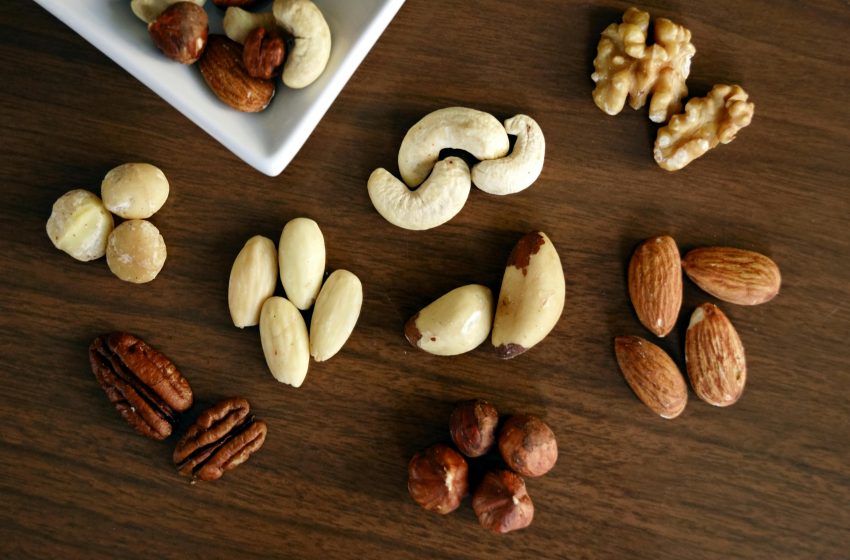
The leaders combine scale (large cultivated area), crop specialization (e.g., hazelnuts or almonds), and value-chain strength (shelling, grading, roasting, and export-ready processing). Regional dominance differs by nut type: peanuts and walnuts are heavily concentrated in parts of Asia, almonds and pistachios are shaped by high-tech irrigation regions, and cashew supply depends on tropical belts with improving processing capacity.
China’s leadership reflects scale and diversity: strong groundnut volumes, major walnut output, and a large domestic market that supports both raw consumption and value-added processing.
Vietnam’s role is especially strong in cashew processing and export ecosystems. Production, processing throughput, and imported raw nuts for value-added exports together help explain its outsized influence in the cashew supply chain.
The U.S. dominates several premium tree nut categories, supported by mechanized harvesting, agronomic R&D, and large-scale orchard management—especially in California’s irrigation-dependent regions.
India’s strength is breadth: high groundnut volumes and a major cashew economy. Weather variability and orchard age are key constraints, while processing capacity supports export competitiveness.
Nigeria’s groundnut belt is strategically important for food security and regional trade. The upside is significant if local processing expands and yield gaps narrow through improved seed and agronomy.
The country is central to global cashew supply. Policy focus is shifting toward local processing to retain more value domestically rather than exporting raw nuts.
Indonesia’s tropical profile supports multiple nut-related crops. Investment in sorting, drying, and processing infrastructure is a key lever for export-grade consistency.
Turkey’s hazelnut ecosystem is globally dominant, with a highly specialized region and strong export linkages into confectionery and food manufacturing value chains.
Brazil combines orchard production (cashews) with unique wild-harvest supply chains (Brazil nuts), where environmental conditions and forest governance influence long-run stability.
Australia’s comparative advantage is modern orchard management and counter-seasonal supply. Irrigation reliability and water costs are the pivotal constraints.
Table 1. Top 10 countries by total nut production (2025, projected)
Production figures are in metric tons and represent a comparative 2025 snapshot derived from recent releases and projections (2023–2024 as the main proxy window).
| Rank | Country | Production (tons) | Key nuts produced |
|---|---|---|---|
| 1 | China | 4,200,000 | Peanuts, Walnuts |
| 2 | Vietnam | 2,800,000 | Cashews |
| 3 | United States | 2,500,000 | Almonds, Pistachios |
| 4 | India | 2,300,000 | Peanuts, Cashews |
| 5 | Nigeria | 1,200,000 | Peanuts |
| 6 | Ivory Coast | 1,100,000 | Cashews |
| 7 | Indonesia | 900,000 | Coconuts, Cashews |
| 8 | Turkey | 850,000 | Hazelnuts |
| 9 | Brazil | 700,000 | Brazil nuts, Cashews |
| 10 | Australia | 600,000 | Almonds, Macadamias |
Source basis: FAO/FAOSTAT, USDA Foreign Agricultural Service, and sector reporting (compiled from 2023–2024 releases; used as a 2025 snapshot proxy).
Chart 1. Top 10 nut production (2025, projected)
Bar chart visualizes Table 1. If the chart library fails to load, a static fallback remains visible.
Units: metric tons. Values are rounded for clarity.
Fallback view (Top 10, metric tons)
-
China4,200,000
-
Vietnam2,800,000
-
United States2,500,000
-
India2,300,000
-
Nigeria1,200,000
-
Ivory Coast1,100,000
-
Indonesia900,000
-
Turkey850,000
-
Brazil700,000
-
Australia600,000
Table 2. Selected flagship nut types by country (recent official proxy window)
This table highlights key country–nut specializations using recent releases around 2023/24 as the proxy window for the 2025 snapshot.
| Country | Nut type | Production (tons) | Global share (%) |
|---|---|---|---|
| China | Walnuts | 1,400,000 | 40 |
| United States | Almonds | 1,100,000 | 80 |
| Vietnam | Cashews | 970,000 | 25.2 |
| India | Peanuts | 7,500,000 | 14 |
| Turkey | Hazelnuts | 670,000 | 66 |
| United States | Pistachios | 475,000 | 50 |
| Brazil | Brazil nuts | 40,000 | 90 |
| Australia | Macadamias | 60,000 | 30 |
Source basis: FAO/FAOSTAT, USDA FAS, and sector summaries (recent releases used as the proxy window).
Key trends and challenges shaping nut supply in 2025
Demand is broadening. Nuts are no longer a niche category: they sit at the intersection of snack foods, nutrition, and plant-based product innovation.
Supply is tightening structurally. Water costs, pest pressure, and orchard replant cycles increasingly define long-run production capacity and prices.
Three forces dominate the 2025 nut landscape. First, consumer demand continues to reward products that are protein-rich and minimally processed, which supports premium categories (almonds, pistachios, macadamias) and value-added formats (roasted, flavored, nut butters). Second, climate volatility pushes producers toward precision agriculture, better irrigation scheduling, and resilient varietals. Third, trade rules and quality standards influence which producers capture the highest margins—especially where processing and grading capacity is limited.
Methodology
This resource presents a practical 2025 snapshot built from the latest available official releases and widely used sector datasets. Because full-year global production data often arrives with a lag, the 2025 ranking uses a 2023–2024 proxy window (the most recent harmonized period) and applies trend-based projections for the current year where needed.
Sources: production and country rankings are compiled from FAO/FAOSTAT series, USDA Foreign Agricultural Service market summaries, and sector reporting (including International Nut & Dried Fruit Council materials where available). The definition of “nuts” can differ across databases (tree nuts vs. groundnuts, in-shell vs. shelled, fresh vs. processed). To keep the ranking readable, values are harmonized into comparable country totals and rounded. Where a country’s influence is primarily through processing (e.g., cashew value chains), the narrative highlights that distinction to avoid mixing farm output with processing throughput.
Limitations: cross-country comparisons are sensitive to classification rules, post-harvest losses, and revisions in national reporting. Climate shocks can also shift annual outputs materially, especially for water-intensive orchards. As a result, the ranking should be treated as a structured comparative view rather than a definitive “single-source” global ledger.
Insights from the 2025 ranking
The top 10 list highlights a consistent structural pattern: the highest volumes come from countries that either (a) produce at huge scale in groundnuts and walnuts, or (b) specialize in high-value orchard crops with advanced agronomy and reliable irrigation. The production frontier is increasingly defined by yield stability rather than just acreage.
A second insight is the growing importance of the processing layer. For cashews, value capture depends heavily on sorting, shelling, food safety compliance, and export-ready grading. This is why supply-chain hubs can exert global influence even when farm output is shared across multiple producing countries. Finally, climate pressure is accelerating a shift toward smarter water use, pest management, and varietal innovation— especially in almond- and pistachio-heavy regions where water availability is the binding constraint.
What this means for readers
For consumers, the ranking helps explain why prices and availability can change quickly: nut supply is sensitive to harvest outcomes, water policy, and shipping costs, and some premium categories are concentrated in a small set of regions. For businesses and investors, the key signal is where margin is created—often not only on farms, but in processing, branding, and quality assurance. For policymakers, the takeaway is that improving yields and resilience (irrigation efficiency, extension services, phytosanitary control) can deliver outsized gains in farm incomes and export quality.
FAQ: global nut production (2025 snapshot)
Does “nut production” include peanuts?
In many agricultural datasets, peanuts (groundnuts) are tracked separately from tree nuts. This ranking uses a practical aggregation where relevant, and the methodology section explains the proxy approach and classification limits.
Why do some countries dominate one nut type but not overall volume?
“Overall” totals depend on scale and classification. A country can lead the world in a premium tree nut (like hazelnuts or macadamias) but still rank lower in total tonnage if groundnut volumes elsewhere are much larger.
Why is water such a big issue for nuts?
Many high-value nuts come from orchards that require steady water supply across multiple years. Water scarcity affects both yield and quality, and orchard replant cycles make supply less flexible than annual crops.
Is processing the same as production?
No. Farm output measures what is harvested domestically, while processing can include imported raw nuts that are shelled, graded, and exported. In nut trade (especially cashews), processing hubs can be globally influential even if farm production is more dispersed.
What can move a country up or down the ranking in a single year?
Weather shocks, pest outbreaks, water policy changes, replant cycles, and shifts in reporting definitions can all change annual outputs. Because this is a 2025 snapshot using recent proxy data, the ranking is best used to understand structure and direction rather than micro-changes.
Which metrics should I check alongside production volume?
For market insight, combine volume with export value, processed share, yield per hectare, and quality grades. These often explain profitability better than tonnage alone.
Sources (official and sector datasets)
Links point to primary datasets and widely used institutional references for agricultural production and nut markets.
- FAO / FAOSTAT (production by item and country): https://www.fao.org/faostat/
- USDA Foreign Agricultural Service (market and commodity reporting): https://www.fas.usda.gov/
- International Nut & Dried Fruit Council (sector references): https://inc.nutfruit.org/
Update basis: 2025 snapshot compiled from 2023–2024 releases and projections; values rounded for readability.