

Top Artichoke Producing Countries in the World
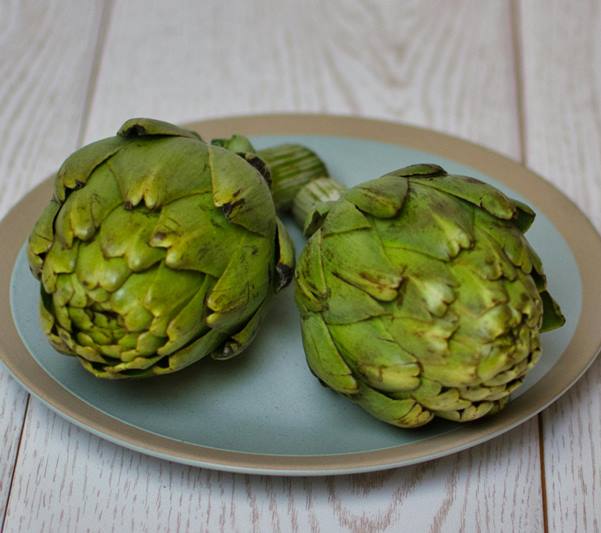
Global artichoke production reached 1,584,514 tonnes in 2022, distributed across the 30 countries that report the crop to FAOSTAT. Output is concentrated: the top three producers — Egypt, Italy and Spain — control 65.5% of world volume, and the top ten reach 93.8%. The map of production tracks the Mediterranean climate band, with a smaller export-oriented tier in Latin America.
Global Output and Market Concentration (2022)
Ranking by Production Volume
The table lists the ten largest producing countries in 2022, ranked by harvested production reported to FAOSTAT in tonnes. Shares are calculated against the stated global total of 1,584,514 t. Figures refer to fresh artichoke output only — not harvested area or yield.
| # | Country | Production (t) | Share |
|---|---|---|---|
| 1 | Egypt | 459,962 | 29.03% |
| 2 | Italy | 378,110 | 23.86% |
| 3 | Spain | 200,070 | 12.63% |
| 4 | Algeria | 124,305 | 7.85% |
| 5 | Peru | 97,131 | 6.13% |
| 6 | China | 81,023 | 5.11% |
| 7 | Morocco | 41,025 | 2.59% |
| 8 | Türkiye | 40,815 | 2.58% |
| 9 | United States | 33,679 | 2.13% |
| 10 | Argentina | 30,417 | 1.92% |
Share Distribution Across Top Producers
Source: FAOSTAT, Crops and Livestock Products (item 0366 Artichokes), 2022. Static SVG; renders without JavaScript.
Structural Patterns
Mediterranean dominance
Six of the top ten producers — Egypt, Italy, Spain, Algeria, Morocco and Türkiye — border the Mediterranean. Combined, they supply 1,244,287 t, or 78.5% of world output. The crop's mild-winter cycle, irrigation requirement and hand-cut harvest favour this climate band, and established processing capacity in Sicily, Apulia, Sardinia and Murcia reinforces the regional concentration.
Latin American export tier
Peru and Argentina together produced 127,548 t (8.0% of global volume) in 2022 but carry outsized weight in the processed-artichoke trade — canned hearts, brined bottoms, marinated product. Peru's coastal valleys in Ica, La Libertad and Arequipa ship counter-seasonal volume to North American and European canners, complementing rather than competing with Mediterranean fresh-market supply.
Egypt's lead has widened
Egypt overtook Italy in the late 2010s after coordinated expansion in the Buhaira governorate and the wider Nile Delta. By 2022 the gap between the two had reached 81,852 t in Egypt's favour. Italian volumes have trended lower under pressure from labour costs and field consolidation in Sicily, Apulia and Sardinia.
Thin tail outside the top 10
The 20 remaining FAOSTAT-reporting countries — from Tunisia (24,000 t) and France (21,750 t) down to Switzerland (2 t) — contribute 97,977 t between them, or 6.2% of world output. Outside the top ten the crop is commercial in only a handful of cases; elsewhere it serves niche fresh markets or specialty processing lines.
Key Questions on Global Artichoke Production
Which country produces the most artichokes?
Egypt. It produced 459,962 t in 2022, equal to 29.0% of world output. Egypt overtook Italy in the late 2010s following expansion in the Buhaira governorate and other Nile Delta production zones.
Where are most artichokes grown globally?
In the Mediterranean basin. Six of the top ten producers — Egypt, Italy, Spain, Algeria, Morocco and Türkiye — border the Mediterranean and together supply 78.5% of world output. South America (Peru and Argentina) adds a further 8.0%.
What is the total world artichoke production?
1,584,514 tonnes in 2022, according to FAOSTAT. This is 4.6% below the 2021 peak of 1,660,298 t. The crop is reported by 30 countries.
Is the United States a major artichoke producer?
The United States ranks ninth globally with 33,679 t in 2022, or 2.1% of world output. About 99% of U.S. production comes from California, concentrated around Castroville in Monterey County.
Which countries supply the processed-artichoke trade?
Peru and Spain. Peru's 97,131 t in 2022 is directed predominantly to canned-heart and brined-bottom exports for North American and European buyers. Spain channels significant volume from Murcia and Navarre (including the Alcachofa de Tudela PGI) into both fresh export and processing.
How has artichoke production changed over time?
Long-run growth since 1961 averages about 1.0% per year. Global output peaked at 1,660,298 t in 2021 before easing to 1,584,514 t in 2022. The structural shift over the last decade is Egypt's rise to the top of the ranking.
Notes on Data
Figures reflect production of fresh artichokes (FAO item code 0366), measured in tonnes, harvested in calendar year 2022. Production is reported separately from harvested area and yield in FAOSTAT; only production volume is used here. Shares are computed against the stated world total of 1,584,514 t. The top ten countries sum to 93.8%; the remaining 6.2% is distributed across 20 smaller producers.
Sources
- FAO. FAOSTAT — Crops and Livestock Products, item 0366 Artichokes, 2022 dataset (fao.org/faostat).
- List of countries by artichoke production, Wikipedia, citing FAOSTAT 2022 (accessed 2024).
- Helgi Library, Which Country Produces the Most Artichokes? — 2022 ranking based on FAOSTAT.
Related rankings
Closely related StatRanker pages selected by topic. If no strong match exists, fewer links are shown instead of unrelated recommendations.
