Countries by Current Account Balance (% of GDP) — 2025
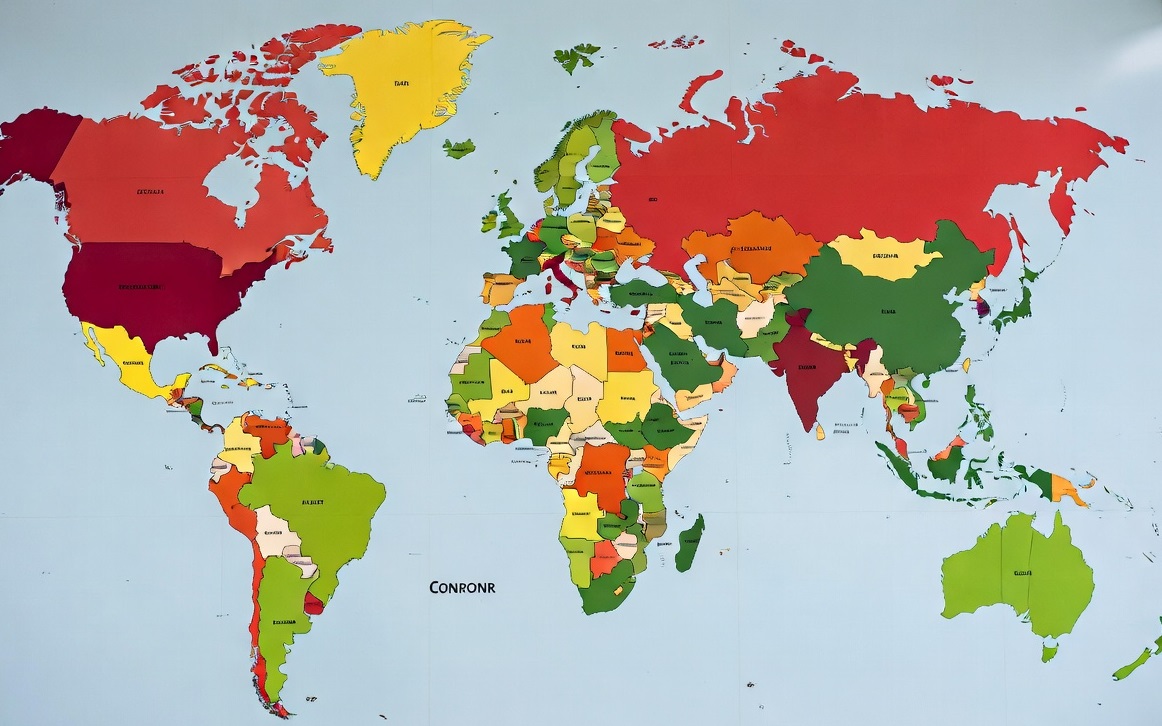
Countries by current account balance (% of GDP) — 2025 snapshot (latest full-year data as proxy)
The current account is the economy’s net flow of goods and services trade, primary income (such as investment income), and secondary income (such as remittances and transfers) with the rest of the world. Expressed as a share of GDP, it is a compact way to compare external surpluses and deficits across very different-sized economies.
Top 10 surpluses (share of GDP)
Positive values mean net lending to the rest of the world; parentheses show the balance in current US dollars.
| Rank | Country | Current account |
|---|---|---|
| 1 | Qatar | +31.8%(+62.6B) |
| 2 | Kuwait | +31.5%(+51.0B) |
| 3 | Norway | +26.7%(+139.6B) |
| 4 | Oman | +24.8%(+26.4B) |
| 5 | Saudi Arabia | +20.0%(+222.4B) |
| 6 | Iraq | +17.8%(+49.4B) |
| 7 | Singapore | +17.5%(+92.6B) |
| 8 | United Arab Emirates | +17.0%(+91.7B) |
| 9 | Azerbaijan | +16.4%(+12.0B) |
| 10 | Algeria | +15.8%(+29.9B) |
Top 10 deficits (share of GDP)
Negative values often reflect high investment, import dependence, or a temporary shock; financing structure matters.
| Rank | Country | Current account |
|---|---|---|
| 1 | Maldives | −24.3%(−1.5B) |
| 2 | Mozambique | −23.9%(−4.6B) |
| 3 | Greece | −18.0%(−43.1B) |
| 4 | Egypt | −17.0%(−69.0B) |
| 5 | Georgia | −16.7%(−3.3B) |
| 6 | Romania | −16.4%(−47.9B) |
| 7 | Tunisia | −16.2%(−8.4B) |
| 8 | Pakistan | −16.1%(−53.6B) |
| 9 | Sri Lanka | −15.9%(−13.5B) |
| 10 | Hungary | −15.7%(−28.6B) |
Bar chart: the biggest surpluses and deficits (% of GDP)
This chart compares the largest positive and negative balances. Surplus-heavy economies tend to be energy exporters and global services hubs; deficit-heavy economies are often small importers, tourism-dependent countries, or places running an investment-led catch-up cycle.
Alternative view: top balances
- Qatar: +31.8% of GDP
- Kuwait: +31.5% of GDP
- Norway: +26.7% of GDP
- Oman: +24.8% of GDP
- Saudi Arabia: +20.0% of GDP
- Iraq: +17.8% of GDP
- Singapore: +17.5% of GDP
- United Arab Emirates: +17.0% of GDP
- Azerbaijan: +16.4% of GDP
- Algeria: +15.8% of GDP
- Maldives: −24.3% of GDP
- Mozambique: −23.9% of GDP
- Greece: −18.0% of GDP
- Egypt: −17.0% of GDP
- Georgia: −16.7% of GDP
- Romania: −16.4% of GDP
- Tunisia: −16.2% of GDP
- Pakistan: −16.1% of GDP
- Sri Lanka: −15.9% of GDP
- Hungary: −15.7% of GDP
Values are current account balance as a share of GDP (latest available full year, used as a 2025 snapshot).
Methodology: what the figures represent (and what they don’t)
This ranking uses the World Bank’s World Development Indicators series for current account balance as a share of GDP and in current US dollars. The latest complete annual observation available in the dataset (mostly 2024) is used as a practical proxy for a “2025 snapshot” because many international macro series are published with a reporting lag. The table rounds values for readability, but the ordering is computed from the underlying series.
The current account is measured under the IMF’s balance of payments framework. It can be revised as countries update trade records, improve tourism and remittance estimates, reclassify income flows, or adopt methodological changes. Cross-country comparisons are informative, but they are not a verdict on policy: a deficit financed by long-term foreign direct investment looks very different from a deficit financed by short-term external debt.
Insights: patterns that show up across the ranking
The distribution is lopsided: most economies cluster near balance, while the tails are dominated by small economies and specialized exporters.
- Very large surpluses are common among oil and gas exporters during favorable price cycles, and among high-productivity services hubs.
- Deep deficits concentrate in small, import-dependent economies and in places where tourism or remittance inflows swing sharply with global conditions.
- A persistent deficit is frequently the mirror image of high domestic investment; when institutions and financing are solid, it can coexist with fast growth.
What this means for readers
For households and investors, the current account is a risk-context indicator. Countries with large, persistent deficits tend to be more exposed to global financing conditions: when foreign capital becomes expensive or scarce, exchange rates and domestic interest rates can adjust quickly. Countries with large surpluses often accumulate foreign assets or reserves, which can cushion shocks — but surpluses can also signal weak domestic demand or under-investment.
FAQ
What does the current account balance actually measure?
Is a deficit always bad?
Why do some small economies show extremely high surpluses?
Why can tourism and remittances change the ranking so much?
Why use % of GDP and also show US dollars?
Why is this called a “2025 snapshot” if the reference year is 2024?
Part 2 · Full ranking table + chart
Top-50 current account extremes (percent of GDP)
A “2025 snapshot” built from the latest full-year readings (2024 where available). The table includes the top 25 surpluses and bottom 25 deficits by current account balance as a share of GDP.
| Rank | Country | CA (% GDP) | Status |
|---|---|---|---|
| 1 | Macao | +31.21% | Surplus |
| 2 | Kuwait | +27.01% | Surplus |
| 3 | Singapore | +26.56% | Surplus |
| 4 | Ireland | +26.48% | Surplus |
| 5 | Qatar | +23.59% | Surplus |
| 6 | Andorra | +16.06% | Surplus |
| 7 | Papua New Guinea | +14.99% | Surplus |
| 8 | Norway | +14.82% | Surplus |
| 9 | Djibouti | +14.80% | Surplus |
| 10 | Brunei | +14.69% | Surplus |
| 11 | United Arab Emirates | +14.25% | Surplus |
| 12 | Hong Kong | +12.28% | Surplus |
| 13 | Denmark | +11.84% | Surplus |
| 14 | Netherlands | +11.18% | Surplus |
| 15 | Switzerland | +10.86% | Surplus |
| 16 | Malta | +10.54% | Surplus |
| 17 | Nigeria | +10.41% | Surplus |
| 18 | Azerbaijan | +10.32% | Surplus |
| 19 | Angola | +9.91% | Surplus |
| 20 | Tajikistan | +9.64% | Surplus |
| 21 | Sweden | +8.70% | Surplus |
| 22 | Vietnam | +8.19% | Surplus |
| 23 | Germany | +7.26% | Surplus |
| 24 | Ecuador | +6.98% | Surplus |
| 25 | Samoa | +6.37% | Surplus |
| 124 | Bahamas | −5.69% | Deficit |
| 125 | Tonga | −5.77% | Deficit |
| 126 | Mauritius | −5.78% | Deficit |
| 127 | Greece | −5.95% | Deficit |
| 128 | Ukraine | −6.54% | Deficit |
| 129 | Uganda | −6.63% | Deficit |
| 130 | Seychelles | −6.78% | Deficit |
| 131 | Cyprus | −7.11% | Deficit |
| 132 | Romania | −7.13% | Deficit |
| 133 | Antigua and Barbuda | −7.28% | Deficit |
| 134 | Mauritania | −7.38% | Deficit |
| 135 | Mongolia | −7.68% | Deficit |
| 136 | Mozambique | −7.80% | Deficit |
| 137 | Rwanda | −8.44% | Deficit |
| 138 | St. Vincent and the Grenadines | −8.65% | Deficit |
| 139 | Burundi | −15.41% | Deficit |
| 140 | Moldova | −16.55% | Deficit |
| 141 | Montenegro | −16.98% | Deficit |
| 142 | Maldives | −18.68% | Deficit |
| 143 | Malawi | −18.78% | Deficit |
| 144 | Kiribati | −19.34% | Deficit |
| 145 | Grenada | −19.74% | Deficit |
| 146 | Bhutan | −20.01% | Deficit |
| 147 | Palestine | −21.14% | Deficit |
| 148 | Dominica | −23.24% | Deficit |
Data shown: current account balance as a percent of GDP (2024). This block intentionally avoids horizontal scrolling; on phones, rows convert into stacked “cards”.
Current account vs FX reserves change
X-axis: current account (% of GDP, 2024). Y-axis: change in total reserves (includes gold, current USD; latest year-to-year where available).
Chart preview is shown once the browser loads the chart engine. If scripts are blocked, the table above remains fully usable.
Reserves reference points (examples used in the plot): Macao, Kuwait, Singapore, Ireland, Qatar, Norway (latest year-to-year available from the same source series).
How to interpret current account surpluses and deficits
The current account is best read as the external mirror of an economy’s saving–investment balance. A surplus means that, in aggregate, residents save more than they invest at home and lend the difference abroad. A deficit means domestic investment and consumption exceed saving and are financed by foreign capital inflows.
Why do some countries run persistent surpluses?
Persistent surpluses usually combine export capacity with high saving. The largest surplus shares often show up in:
- Energy exporters during favorable price cycles, especially when domestic absorption rises more slowly.
- Global services hubs exporting finance, shipping, business services, or high-value manufacturing.
- High-saving economies where demographics and institutions keep national saving high relative to investment.
Signal: A large surplus can strengthen buffers (assets and reserves), but it can also reflect weak domestic demand or under-investment.
Why do some countries run persistent deficits?
Deficits can be normal during development, but risks rise when financing is short-term and reserves are thin:
- Small, import-dependent economies where fuel, food, and capital goods imports are large relative to GDP.
- Tourism-dependent countries when travel cycles soften or measurement updates shift services exports.
- Investment-led catch-up cycles where capital deepening raises imports now in exchange for future capacity.
Signal: A deficit is most fragile when it is financed by short-term external debt in foreign currency with limited reserves.
Policy takeaways
- Separate cyclical from structural: commodity prices and temporary demand shocks can move the balance quickly.
- Check financing quality: FDI and equity flows are usually more resilient than short-term debt financing.
- Look at buffers: reserves adequacy and debt maturity often explain whether a deficit is risky in a tightening cycle.
- Watch competitiveness: widening deficits plus weak export growth can raise exchange-rate and inflation pressure.
Limitations and revisions to keep in mind
Balance of payments statistics are revised. Tourism services, remittances, investment income, and offshore corporate flows can be hard to measure. Small economies can look extreme because % of GDP has a narrow denominator. Use this ranking alongside external debt and reserve metrics.
Sources
Primary datasets and methodology references used for the metric definitions and data extraction.
-
World Bank WDI: Current account balance (% of GDP)
Annual current account balance as a share of GDP, compiled in World Development Indicators and aligned to balance-of-payments statistics.
-
World Bank WDI: Current account balance (BoP, current US$)
Scale measure in current US dollars, useful for comparing the global weight of balances.
-
World Bank WDI: Total reserves (including gold), current US$
Reserve stock series used to compute YoY change in the scatter chart.
-
IMF Data: Balance of Payments (BOP)
IMF balance of payments dataset and metadata for cross-country current account compilation.
-
IMF: Balance of Payments and IIP Manual (BPM6)
Methodological standard defining current account components and international accounts concepts.