Top 10 Asparagus-Producing Countries in 2025
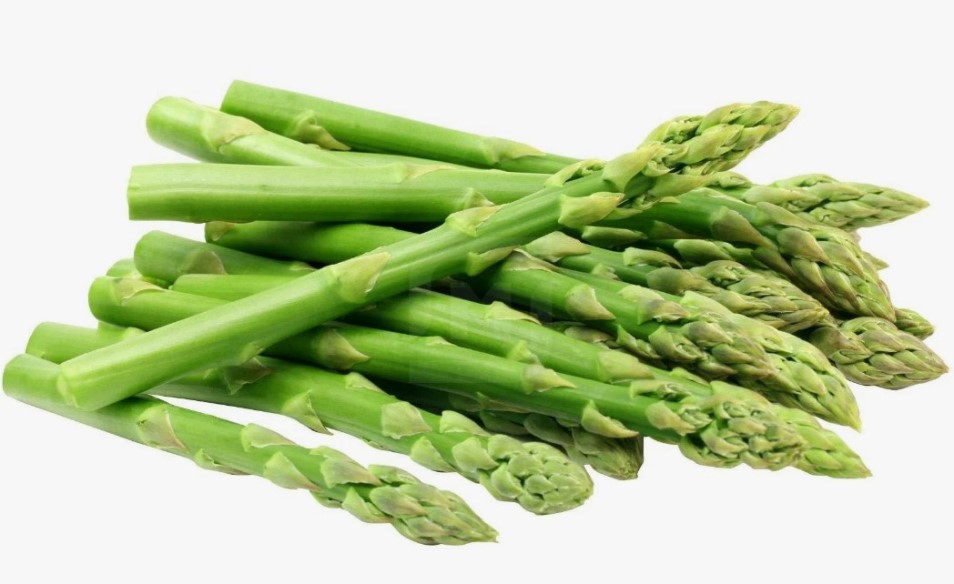
A rigorous, data-driven ranking of the world's leading asparagus producers — covering output volumes, trade dynamics, regional strengths and the structural forces reshaping global supply through 2025 and beyond.
How this ranking was compiled
The 2025 production figures used in this article are composite estimates derived from several openly available international data sources cross-validated against each other. Because FAO publishes production statistics with a 12–18 month lag, the 2023 verified figures serve as the empirical foundation; forward projections to 2025 are calculated using a country-specific trend extrapolation model that weights the three most recent annual growth rates, adjusted for known structural changes (new area under cultivation, policy changes, disease events).
Primary data source
FAO FAOSTAT Crops and Livestock Products database. Verified production data through 2023; released figures used without modification.
Projection methodology
Weighted 3-year compound annual growth rate applied to 2023 baseline. National agricultural ministry reports consulted for structural breaks (Germany, Peru, China).
Trade data
ITC Trade Map and UN Comtrade (HS 0709.20) used to validate production estimates via export and import balances. Significant discrepancies flagged and reviewed.
Limitations
China's self-reported figures cover only commercially registered cultivation; smallholder and subsistence production may be partially underreported. Thailand data carry higher uncertainty due to inconsistent national reporting cadence.
Unit of measure
All production figures are in metric tonnes (MT) of fresh-weight equivalent. Processed volumes (frozen, canned, freeze-dried) are excluded from production totals but discussed in the text.
Year of data
Baseline: FAO 2023 (verified). 2024 and 2025 figures are analytical estimates. YoY% refers to the 2022–2023 verified FAO change unless stated otherwise.
The structural geography of global asparagus supply
Global asparagus production has grown at a compound annual rate of approximately 3.4% over the past decade, reaching a verified 8.61 million metric tonnes in 2023 according to FAO. The trajectory toward an estimated 8.96 million tonnes by 2025 reflects continued expansion in established growing regions and the entry of new producers in sub-Saharan Africa and Central America. However, the extreme concentration of supply remains the defining structural characteristic of this market: a single country, China, accounts for roughly 87% of all production worldwide — a degree of geographic concentration rarely seen in any major global crop.
The asparagus value chain is bifurcated in ways that pure volume figures obscure. The fresh and chilled segment — where Peru and Mexico compete most intensely for the North American and European shelf — operates on entirely different economics from the processed segment (frozen IQF, canned, freeze-dried) dominated by China. Understanding this split is essential to interpreting the rankings: a country with a small volume of premium fresh asparagus can generate higher export revenues than a large processor operating on thin margins.
Three structural forces are currently reshaping supply. First, water scarcity is placing growing pressure on Peru's coastal desert production systems, which rely almost entirely on Andean glacier meltwater channelled through irrigation infrastructure. Second, European labour cost inflation continues to erode the competitiveness of Germany, Spain and France, prompting accelerated mechanisation investment. Third, Southeast Asian emergence — Thailand above all — is rapidly expanding the production frontier into markets that were negligible five years ago.
Top 10 asparagus-producing countries in 2025
The following profiles combine production estimates with structural analysis of each country's competitive position, trade orientation and near-term trajectory. Figures are 2025 estimates based on FAO 2023 baselines.
China
Asia · Processed & domestic marketChina's structural dominance in asparagus is without parallel in global horticulture. With an estimated 7.80 million metric tonnes in 2025, it accounts for roughly 87% of world output — and this figure likely understates true production given the scale of smallholder cultivation that escapes FAO registration. The five provinces of Shandong, Shanxi, Hebei, Henan and Fujian alone contribute around 80% of national output, with a 70/30 split between white and green varieties. Crucially, China has evolved from a raw-material exporter into a vertically integrated processor: the majority of domestically consumed asparagus is now processed (frozen, canned, freeze-dried) before reaching the consumer, and its export mix has shifted decisively toward higher value-added forms. Labour cost pressures are beginning to emerge in coastal provinces, nudging new cultivation inland toward lower-cost Yunnan and Sichuan.
Peru
Latin America · Premium fresh export leaderPeru occupies a unique structural position: despite producing barely 5.5% of global volume, it is the world's largest fresh asparagus exporter by value, consistently supplying more than 130,000 MT per year to the United States and EU. The Ica and La Libertad coastal regions benefit from year-round growing conditions enabled by drip irrigation of Andean meltwater — a resource base that is simultaneously the industry's greatest asset and its most material long-term risk. The 60/40 green-to-white production split reflects buyer preferences in export markets. An estimated 490,000 MT in 2025 represents modest year-on-year growth constrained by water allocation pressure, with area expansion increasingly shifting toward higher-altitude cultivation zones.
Mexico
Latin America · Fresh market, US-adjacentMexico's asparagus sector has delivered the fastest sustained growth of any top-five producer, expanding at roughly 9–10% per annum since 2014 to reach an estimated 355,000 MT in 2025. Proximity to the US market — by far the world's largest asparagus import destination — is the central competitive advantage, enabling just-in-time fresh delivery that Peru cannot match on transit time. The Caborca region in Sonora and the Yaqui Valley concentrate the majority of cultivation, almost exclusively in green asparagus for the fresh export channel. Mexico's main structural vulnerability is its near-total dependence on one export market; diversification toward Japan and the EU is underway but remains limited in scale.
Germany
Europe · White asparagus, premium domestic marketGermany is the world's pre-eminent white asparagus producer and its most culturally embedded consumer market. The Spargelzeit (asparagus season, April–June) generates an estimated €180–220 million in annual farm-gate revenues, with roughly half sold direct-to-consumer through roadside stands and farm shops — a distribution model that commands significant price premiums. An estimated 115,000 MT in 2025 represents a sector under structural pressure: minimum wage increases have raised harvesting costs by 40–60% since 2015, and cultivated area has contracted from a peak of 22,000 ha to approximately 18,000 ha. Selective mechanisation of white asparagus harvesting — historically considered impossible — is advancing, with three German equipment manufacturers now offering commercial systems.
Italy
Europe · Culinary tradition, intra-EU tradeItaly ranks fifth globally with an estimated 52,000 MT in 2025, produced across approximately 10,000 hectares in Veneto, Emilia-Romagna and Puglia. Italian production is predominantly green asparagus destined for domestic consumption and export within the EU. Several protected designation of origin (PDO) products — including Asparago di Badoere and Asparago Bianco di Cimadolmo — command significant price premiums in specialist channels. The sector's structural challenge is fragmentation: the average Italian asparagus farm is under 3 hectares, limiting economies of scale and investment capacity. Consolidation through cooperative marketing has improved packing and cold-chain infrastructure in Veneto, the most export-oriented producing region.
Spain
Europe · Mediterranean green, EU exportSpain produces an estimated 46,000 MT of primarily green asparagus in 2025, concentrated in Andalusia and Extremadura. The Spanish sector has undergone a decade-long structural adjustment, with cultivated area declining from 18,000 ha in the early 2000s to approximately 12,000 ha today, driven by competition from lower-cost non-EU producers and domestic labour market pressures. However, Spain maintains a strong position in the premium EU retail segment, where its PDO products (Esparragos de Navarra) continue to command price premiums. A notable recent development is the increased deployment of seasonal non-EU workers under managed migration schemes, which has partially stabilised harvest costs.
United States
North America · Declining producer, major importerThe United States is one of the most instructive cases of production-to-import transition in global horticulture. An estimated 36,500 MT of domestic production in 2025 represents a 55% decline from the peak levels of the mid-1990s, driven by the structural inability to compete with Peruvian and Mexican cost structures in the fresh market. California, Michigan and Washington are the remaining production centres, with Michigan's cool-climate green asparagus retaining a loyal regional consumer base. Against this, US import volumes exceed 95,000 MT annually, placing it firmly among the world's largest net asparagus importers. The domestic sector's relevance increasingly lies in niche premium production, agro-tourism and supply-chain resilience arguments rather than volume competitiveness.
France
Europe · White asparagus specialist, premium freshFrance produces an estimated 28,500 MT in 2025, predominantly white asparagus (70% of output) from the Loire Valley, Alsace and Landes regions. French asparagus is overwhelmingly consumed domestically in the fresh market, where premium pricing ($4–8/kg at retail) supports the economics of small-to-medium family farms. Cultivated area has remained relatively stable at approximately 6,000 ha over the past five years, supported by modest area payment subsidies under the EU Common Agricultural Policy. France's asparagus sector is exposed to one key risk: the market is highly seasonal (April–June accounts for 85% of annual consumption), creating sharp demand peaks that challenge logistics and storage capacity.
Japan
Asia · High-quality niche, domestic consumptionJapan's asparagus sector — estimated at 27,500 MT in 2025 — operates at the quality extreme of the global market. Hokkaido and Nagano are the primary production zones, with cultivation practices focused on achieving consistent diameter, colour uniformity and pack presentation standards that command retail prices 3–5× higher than standard EU supermarket asparagus. Japan is simultaneously a significant importer, sourcing approximately 7,000 MT annually, predominantly from Australia and the US. The domestic sector is stable but faces a structural challenge common to Japanese horticulture: an ageing farmer population with limited succession, partially offset by the rollout of automated harvesting and sensor-based quality grading in larger cooperative packing operations.
Thailand
Asia · Rapid growth, export-orientedThailand is the most dynamic entrant in the global top 10. An estimated 25,500 MT in 2025 represents a volume that has approximately doubled in five years, underpinned by a documented 85.5% increase in export value since 2022 according to ITC Trade Map data. Northern highland provinces — Chiang Mai, Chiang Rai and Phetchabun — provide the cooler temperatures that asparagus requires. Thailand's competitive positioning is built around green asparagus for the East and Southeast Asian fresh market (Japan, South Korea, Hong Kong) where it enjoys a freight-time advantage over Peruvian and European suppliers. Government support under Thailand's agricultural export promotion framework has contributed to infrastructure investment in cold-chain and phytosanitary certification capacity.
Table 1. Top 10 asparagus producers — full data, 2025 estimates
Global total 2025 estimate: 8,960,500 MT. Use the controls below to search, sort, filter by region or limit the view. Toggle between production volumes and share of global output.
| Rank | Country | Region | Production (2025 est.) | YoY % | Key regions |
|---|---|---|---|---|---|
| 1 | China | Asia | 7,800,00087.06% | +2.6% | Shandong, Shanxi, Hebei, Henan |
| 2 | Peru | Americas | 490,0005.47% | +1.1% | Ica, La Libertad |
| 3 | Mexico | Americas | 355,0003.96% | +8.4% | Caborca, Yaqui Valley |
| 4 | Germany | Europe | 115,0001.28% | −1.7% | Bavaria, Lower Saxony |
| 5 | Italy | Europe | 52,0000.58% | +0.4% | Veneto, Emilia-Romagna |
| 6 | Spain | Europe | 46,0000.51% | −0.9% | Andalusia, Extremadura |
| 7 | United States | Americas | 36,5000.41% | −1.3% | California, Michigan, Washington |
| 8 | France | Europe | 28,5000.32% | +0.7% | Loire Valley, Alsace, Landes |
| 9 | Japan | Asia | 27,5000.31% | 0.0% | Hokkaido, Nagano |
| 10 | Thailand | Asia | 25,5000.28% | +12.1% | Chiang Mai, Chiang Rai, Phetchabun |
Source: FAO FAOSTAT (2023 verified); 2024–2025 values are analytical estimates. YoY refers to the 2022–2023 FAO-verified change. Global total 2025 est.: 8,960,500 MT.
Chart 1. Asparagus production by country, 2025 estimates
The logarithmic-scale bar chart below is the appropriate visualisation for a distribution this skewed: China's output is more than 15 times that of Peru (second place), so a linear scale renders all non-Chinese producers visually indistinguishable. The log scale correctly conveys the relative magnitude of each country's contribution.
Note: Y-axis is on a logarithmic scale to accommodate the extreme concentration of production in China. Values are 2025 estimates in metric tonnes. Source: FAO FAOSTAT (2023 baseline) + author estimates.
What the 2025 ranking tells us about global asparagus supply chains
The 2025 asparagus production ranking is not merely a league table of volumes — it is a compressed map of five distinct competitive logics operating simultaneously in a single global commodity. Understanding these logics is essential for producers, traders, food manufacturers and policy analysts who need to interpret supply-side signals.
The central structural fact: China's 87% share means the global asparagus market is one of the most geographically concentrated of any major horticultural commodity. Any material disruption to Chinese production — drought, disease, export policy change — has no credible short-term substitute at scale. This concentration carries systemic supply chain risk that is largely unpriced in current global trade flows.
1. Volume ≠ value: the Peru paradox
Peru ranks second in volume but arguably first in strategic trade importance. Its fresh export revenues consistently exceed those of any other non-Chinese producer. The implication: raw production volume is a poor proxy for economic significance in this market. Peru's export value per tonne is 3–5× that of China's processed shipments.
2. European producers face a structural cost ceiling
Germany, Italy, Spain and France together produce around 241,500 MT (2.7% of world output) but employ a disproportionate share of the industry's seasonal agricultural labour force. With EU minimum wages rising and harvest mechanisation nascent, these sectors face a productivity-or-exit dynamic over the next decade. The sectors most likely to survive are those with strong PDO brand equity that justifies premium pricing.
3. Mexico's trajectory points toward top-3 export value
At 8–10% annual volume growth, Mexico could surpass Peru in total production volume by 2028–2030. However, its near-complete dependence on the US market is a concentration risk. Diversification into Japan and the EU — where fresh Mexican asparagus is available but undermarketed — is the logical strategic next step and is beginning to materialise.
4. Thailand signals a new Southeast Asian production cluster
Thailand's 12.1% year-on-year growth rate in 2025 is the highest in the top 10 and follows a documented structural shift: government-backed export promotion, investment in cold-chain infrastructure and proximity to the lucrative East Asian fresh market. Colombia, Vietnam and Ecuador are following a similar development model, suggesting that the top 10 by 2030 may look materially different from today.
5. Water is the binding constraint, not land
Both the world's largest export-oriented producers — Peru and Mexico — rely on irrigated cultivation in arid or semi-arid environments. FAO data indicate that asparagus cultivation requires 600–900mm of water-equivalent per season. As both countries face increasing competition for irrigation allocations (urban expansion, other export crops), asparagus area expansion will encounter a water ceiling before a land ceiling in most productive zones.
6. Processing vs. fresh: a bifurcated market dynamic
Approximately 33–35% of global asparagus production enters processing (frozen, canned, freeze-dried). China dominates this segment, while Peru, Mexico, the EU producers and Thailand compete in the fresh/chilled segment. These are effectively two separate markets with different pricing mechanisms, buyer structures and risk profiles. A price decline in processed asparagus (a frequent occurrence when Chinese export volumes rise) does not necessarily transmit to fresh market pricing.
What does this ranking mean for you?
The answer depends entirely on your vantage point. Production rankings are raw inputs to decision-making — they gain meaning only when interpreted through the lens of a specific question.
- Food industry buyers and procurement teams: The ranking underscores that diversification of asparagus sourcing away from China is possible only at a cost premium and with lead times. For processed product, no single alternative supplier can replicate Chinese capacity. For fresh product, Peru and Mexico represent viable dual-source strategies for North American and European retailers.
- Agricultural investors and development finance: The fastest-growing producer (Thailand, +12% YoY) and the emerging cluster behind it (Colombia, Vietnam) represent the highest-return investment frontier, but also the highest agronomic and institutional risk. Water infrastructure and cold-chain logistics are the priority investment categories.
- Policymakers in producing countries: European programmes aimed at sustaining domestic asparagus production face a genuine economic trade-off. Direct area payments can slow the contraction of the sector but do not address the underlying competitiveness gap. Mechanisation co-investment and PDO market development programmes offer better long-run ROI.
- Consumers and nutrition-focused readers: The global supply shift toward year-round fresh availability — driven by Peru and Mexico — has made asparagus a near-perennial fixture in retail for the first time. However, the environmental footprint of air-freighted fresh asparagus in off-season windows is substantially higher than seasonal local produce; a nuance that environmental labels rarely communicate adequately.
- Researchers and analysts: The production concentration ratio in asparagus (CR1 = 87%) is an outlier in horticulture and merits attention as a case study in commodity supply chain fragility. Comparative study with other high-CR crops (pyrethrum, vanilla) may yield transferable insights for supply chain resilience policy.
Frequently asked questions about global asparagus production
Several reinforcing factors explain China's dominance. First, asparagus has been a commercial crop in China's major farming provinces for over 40 years, giving producers deep agronomic knowledge and established supply chains. Second, China's labour cost advantage — historically significant, though eroding in coastal provinces — enabled very low breakeven prices for commodity-grade production. Third, the scale of China's food processing industry (frozen vegetables, canned goods) created an enormous domestic demand pull that international producers cannot easily satisfy. Fourth, Chinese state and provincial agricultural bureaux actively promoted asparagus as an export crop from the 1980s through the early 2000s, establishing research stations, seed programmes and packaging infrastructure. The combination of scale, cost, logistics and institutional support produced a self-reinforcing dominance that is structurally very difficult for any other country to replicate.
It depends on the destination market and the time of year. For North American buyers, Mexico wins on logistics: overland road transport from Sonora to major US distribution centres takes 24–48 hours versus 5–7 days by sea from Peru, which means significantly better shelf life on arrival and lower airfreight costs in premium delivery windows. For European buyers, Peru has the advantage: its year-round harvest season (which Mexico cannot fully match) makes it a more reliable supply partner for continuity contracts. On quality, both origins are capable of producing premium-grade asparagus; the determining factor is the specific farming operation, cold chain management and packing standard — not origin per se.
The root cause is the same in all three cases: the economics of labour-intensive asparagus harvesting have become structurally unviable in high-wage economies without compensating mechanisms. Asparagus — particularly white asparagus grown underground — cannot yet be harvested mechanically at commercial scale (though Germany is making progress). In Germany, the introduction of the statutory minimum wage in 2015 and subsequent increases raised harvesting costs by an estimated 40–60%, pushing many smaller farms below their breakeven threshold. In Spain, similar pressures apply, compounded by competition from Peruvian and Moroccan fresh imports in the EU retail market. In the US, competition from Mexico — which entered the trade-preference-free NAFTA/USMCA framework — made domestic fresh production largely uncompetitive outside regional niche markets by the late 2000s.
FAO collects annual production data from national agricultural ministries, typically expressed in metric tonnes of fresh-weight harvestable yield. The main limitations are: (1) reporting lag — FAO data for any given year are typically published 12–18 months later, meaning the most recent verified year in mid-2025 is 2023; (2) self-reporting bias — countries with weaker statistical capacity may under- or over-report; China's figures, in particular, exclude much smallholder production that escapes formal registration; (3) definitional variation — some countries report only commercial-scale operations, others include subsistence production; (4) harvest timing — because asparagus is a perennial crop with a multi-week harvest window, the precise annual figure depends on how national enumerators define the harvest year. All figures in this article should be treated as analytical estimates, not official statistics.
Based on current growth trajectories and structural conditions, the strongest candidates are Colombia (15%+ production growth in 2023 per FAO; expanding export infrastructure), Vietnam (emerging fresh export sector targeting East Asian markets; government support for highland cultivation), and Morocco (expanding supply to the EU under the trade association agreement; significant cost advantage over Spain and France). Poland is a longer-shot candidate: it has expanded green asparagus cultivation substantially since EU accession and benefits from lower labour costs than Western Europe, but faces seasonal climate constraints. For any of these to displace a current top-10 member, it would most likely be one of the European declining producers (Spain, France) rather than an Asian or Latin American competitor.
White asparagus is produced by excluding all light during the growing period (typically by mounding soil over the emerging shoots), preventing chlorophyll development. Green asparagus grows above ground in normal light. The agronomic difference is significant: white asparagus requires substantially more labour per kilogram of yield (hand-harvesting under earthen mounds), commands higher retail prices in Europe, and has a shorter shelf life. Trade data (HS 0709.20) does not systematically distinguish between white and green asparagus in most countries' customs declarations, which means aggregate export and import statistics combine two economically distinct products. This is a meaningful limitation for price analysis: a country that shifts its export mix from processed to fresh white asparagus will show rising export value without any change in volume as recorded by FAO.
Data sources and technical references
All figures used in this article are derived from or cross-validated against the sources listed below. Readers conducting formal research or policy work should consult the primary databases directly and review the accompanying methodological documentation.
The primary source for verified annual production data by country. Covers asparagus (HS-equivalent: 0709.20) with data through 2023 at time of publication.
https://www.fao.org/faostat/en/#data/QCLUsed for export volume and value data (HS 0709.20: fresh or chilled asparagus; HS 0710.80: frozen). Cross-validation source for production estimates via trade balances.
https://www.trademap.orgBilateral trade flow data for HS 0709.20 and 0710.80 used to construct import/export balances and validate national production figures.
https://comtradeplus.un.orgMarket size ($36.2B) and CAGR (3.9%) projections through 2030. Used for market value context only; production data cross-checked against FAO.
https://www.mordorintelligence.com/industry-reports/asparagus-marketUS domestic production data, import figures and market structure analysis. Used for US country profile and for contextualising North American trade flows.
https://www.ers.usda.gov/topics/crops/vegetables-pulses/Official German asparagus area and production data. Used for the Germany country profile, including area under cultivation and harvest cost trends.
https://www.destatis.deLong-run time series for historical context and convergence analysis. Used to construct trend extrapolations to 2025.
https://ourworldindata.org/agricultural-productionAll production figures in this article are estimates and should not be cited as official statistics. For formal or policy use, consult the primary FAO FAOSTAT database and its methodological notes directly. Last content review: July 2025.
Related rankings
Closely related StatRanker pages selected by topic. If no strong match exists, fewer links are shown instead of unrelated recommendations.