
Top 10 Avocado Producing Countries in 2025: A Comprehensive Analysis
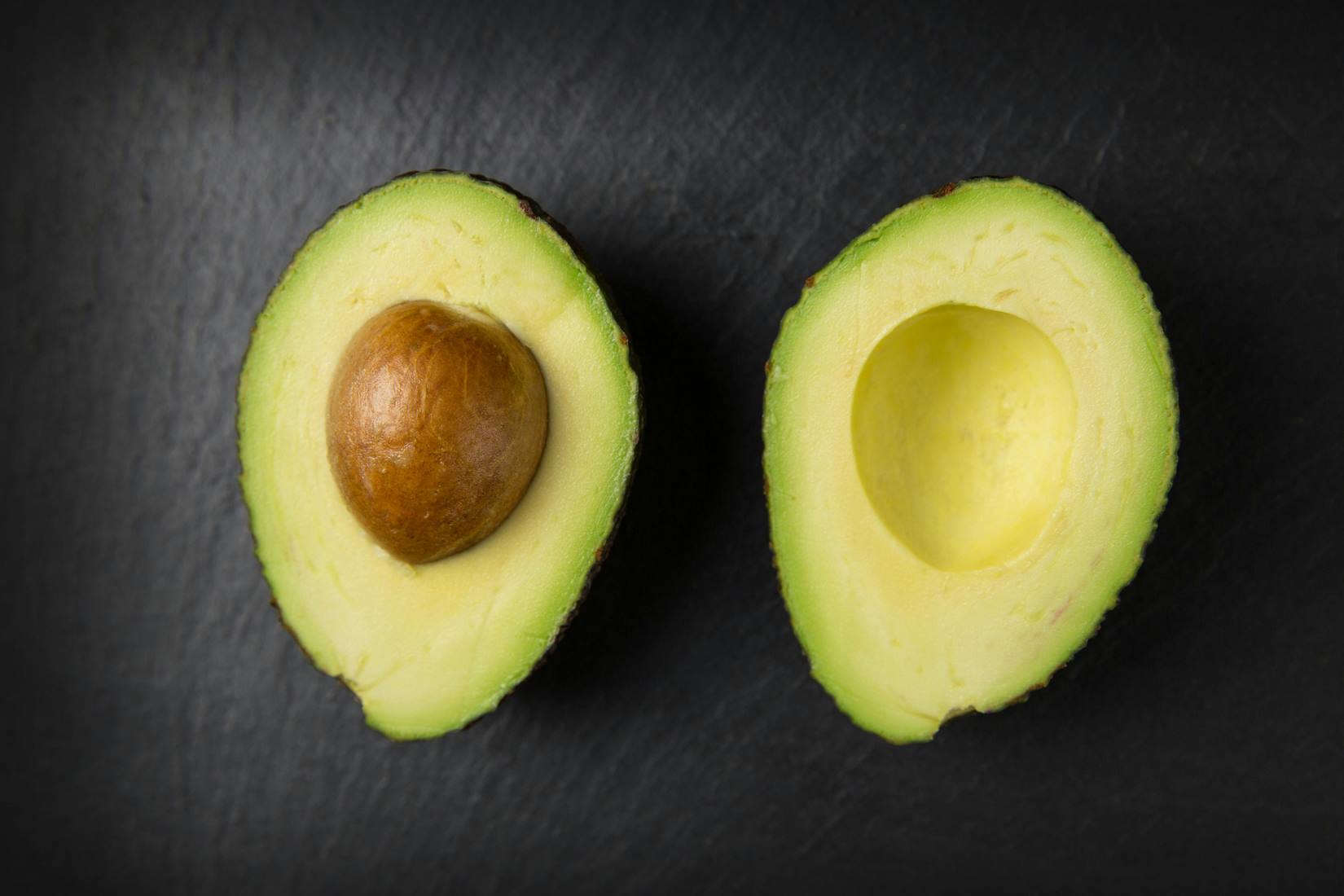
Top avocado producing countries in 2025
Avocados have shifted from a niche fruit to a year-round staple in many markets. The ranking below summarizes the largest producing countries using a 2025 production estimate built from the latest widely cited FAO baseline year (2022) and stated growth trends in the draft dataset. These figures are best read as a practical, comparable snapshot rather than audited 2025 totals (official country-by-country 2025 production typically arrives with a publication lag).
Top 10 countries (cards)
Mexico
Estimated production (2025): 2,600,000 tons
Colombia
Estimated production (2025): 1,150,000 tons
Peru
Estimated production (2025): 900,000 tons
Dominican Republic
Estimated production (2025): 760,000 tons
Kenya
Estimated production (2025): 480,000 tons
Indonesia
Estimated production (2025): 400,000 tons
Brazil
Estimated production (2025): 350,000 tons
Vietnam
Estimated production (2025): 220,000 tons
Israel
Estimated production (2025): 195,000 tons
Haiti
Estimated production (2025): 180,000 tons
Top 10 table (2025 estimate)
| Rank | Country | Production (tons) | Share of global |
|---|---|---|---|
| 1 | Mexico | 2,600,000 | 28.26% |
| 2 | Colombia | 1,150,000 | 12.50% |
| 3 | Peru | 900,000 | 9.78% |
| 4 | Dominican Republic | 760,000 | 8.26% |
| 5 | Kenya | 480,000 | 5.22% |
| 6 | Indonesia | 400,000 | 4.35% |
| 7 | Brazil | 350,000 | 3.80% |
| 8 | Vietnam | 220,000 | 2.39% |
| 9 | Israel | 195,000 | 2.12% |
| 10 | Haiti | 180,000 | 1.96% |
Chart: production volume (Top 10)
Methodology (how this ranking is built)
Metric: avocado production volume (metric tons).
Year: presented as a 2025 estimate. The draft dataset uses FAO/FAOSTAT-style production totals for 2022 as a baseline and applies stated growth trends to produce a comparable 2025 snapshot. This approach mirrors how many annual “current” rankings handle publication lags: the latest fully comparable year anchors the estimate, and the narrative focuses on relative scale and distribution rather than point-perfect audited totals.
Calculations: “Share of global” is computed as country production divided by the global production estimate (9.2 million tons). “Change vs 2022” compares the 2025 estimate to the 2022 baseline for the same country.
Limits: country totals can shift after revisions, methodology updates, and better coverage. Production also varies with weather, disease pressure, irrigation constraints, and orchard cycles, so short-horizon estimates should be read as directional.
Key insights
- Concentration is high: the top 4 producers account for ~59% of estimated global volume, so weather or policy shocks in a handful of regions can move global prices.
- Latin America dominates: Mexico, Colombia, Peru, the Dominican Republic, Brazil, and Haiti together account for ~66% of the top-10 total.
- Growth meets constraints: the biggest sustainability pressure points are irrigation demand, land conversion, and post-harvest loss—especially where logistics and cold chains are weak.
What this means for readers
- For consumers: supply is increasingly diversified, but global markets still react strongly to Mexico’s harvest and export flows.
- For businesses: logistics and quality consistency matter as much as farm output—countries expanding exports often invest in cold chain and grading.
- For sustainability: water-smart irrigation, orchard siting, and traceability are central to keeping avocado growth compatible with local ecosystems.
FAQ
Why is Mexico consistently #1?
Mexico combines scale, established orchards, suitable growing conditions in key regions, and a mature export ecosystem. That combination is hard to replicate quickly elsewhere.
Are these “official” 2025 production totals?
They are a structured 2025 estimate built from the latest baseline year used in the dataset (2022) plus stated growth trends. Official internationally comparable country totals typically arrive with a lag.
Does production equal exports?
No. Some large producers consume most output domestically, while others are highly export-oriented. Export rankings can look very different from production rankings.
Why do “share of global” numbers differ across sources?
Shares change with the chosen year, revisions, coverage, and whether the source uses audited totals, modeled estimates, or trade-based proxies.
What are the main sustainability risks?
Common pressure points include irrigation intensity in dry regions, land-use change when orchards expand, and losses from weak cold chains. The right interventions depend on local climate and governance.
Which countries are most likely to climb the ranking next?
Fast movers are usually countries that combine suitable agro-climates with investment in plant material, quality standards, and post-harvest infrastructure.
Interactive table and growth scatter
Controls filter and sort the rows client-side. Without JavaScript, all rows remain visible. “YoY” here is implemented as change vs 2022 (2025 estimate compared to the 2022 baseline used in the dataset).
Ranking table
| Rank | Country | Value | Change vs 2022 |
|---|---|---|---|
| 1 | Mexico | 2,600,000 — | +2.78% |
| 2 | Colombia | 1,150,000 — | +5.44% |
| 3 | Peru | 900,000 — | +3.87% |
| 4 | Dominican Republic | 760,000 — | +3.09% |
| 5 | Kenya | 480,000 — | +4.70% |
| 6 | Indonesia | 400,000 — | +2.83% |
| 7 | Brazil | 350,000 — | +3.48% |
| 8 | Vietnam | 220,000 — | +4.47% |
| 9 | Israel | 195,000 — | +2.81% |
| 10 | Haiti | 180,000 — | +3.74% |
Scatter: size vs change
Interpretation, sustainability, and what to watch
How to read the ranking
Production rankings measure scale, not necessarily market power. A country can be a top producer while exporting relatively little if domestic demand is high. Conversely, a smaller producer can be strategically important if it ships reliably into a high-value seasonal window.
- Scale: larger output tends to stabilize supply domestically but can amplify global volatility when concentrated in a few regions.
- Consistency: quality standards, cold chain, and phytosanitary compliance shape export outcomes beyond farm volumes.
- Risk profile: water stress, storms, and disease pressure can create year-to-year swings that a single-point ranking cannot show.
Sustainability lens
The sustainability conversation is not “one-size-fits-all.” The same crop can be rain-fed in one region and irrigation-intensive in another; expansion can mean orchard replacement in one country and land conversion in another.
- Water: in dry climates, irrigation efficiency (drip, scheduling, monitoring) is often the binding constraint.
- Land use: where new orchards expand into natural ecosystems, governance and traceability become critical to limit deforestation risks.
- Losses: post-harvest handling, packing, and refrigerated logistics reduce spoilage and lower the footprint per delivered fruit.
Policy takeaways
- Invest in water-smart production: irrigation modernization and basin-level planning reduce conflict between agriculture, cities, and ecosystems.
- Build export readiness: grading standards, traceability, and cold chain capacity often unlock more value than expanding acreage alone.
- Focus on smallholder productivity: extension services, disease management, and access to finance can raise yields without frontier expansion.
- Price stability comes from diversification: diversified sourcing across hemispheres and seasons reduces exposure to localized shocks.
Sources (official and widely used)
-
FAOSTAT — Production: Crops and livestock products (QCL)
Primary source for harmonized country production quantities (published with a lag, periodically revised).
-
Our World in Data — Avocado production (UN FAO)
Convenient access layer to FAO production series with consistent country naming and documentation.
-
UNdata — FAOSTAT record view for “Avocados”
Alternative interface to browse the FAO series by country, year, and element.
-
World Bank — country classifications and macro context
Reference for broad income-group framing used in the interactive table filters.
-
FAO Statistics portal
Release calendar and documentation for FAO statistical domains used in production series.

StatRanker (Website)
administrator