

Freight Railcar Production by Country: Verified 2025/2026 Data Audit
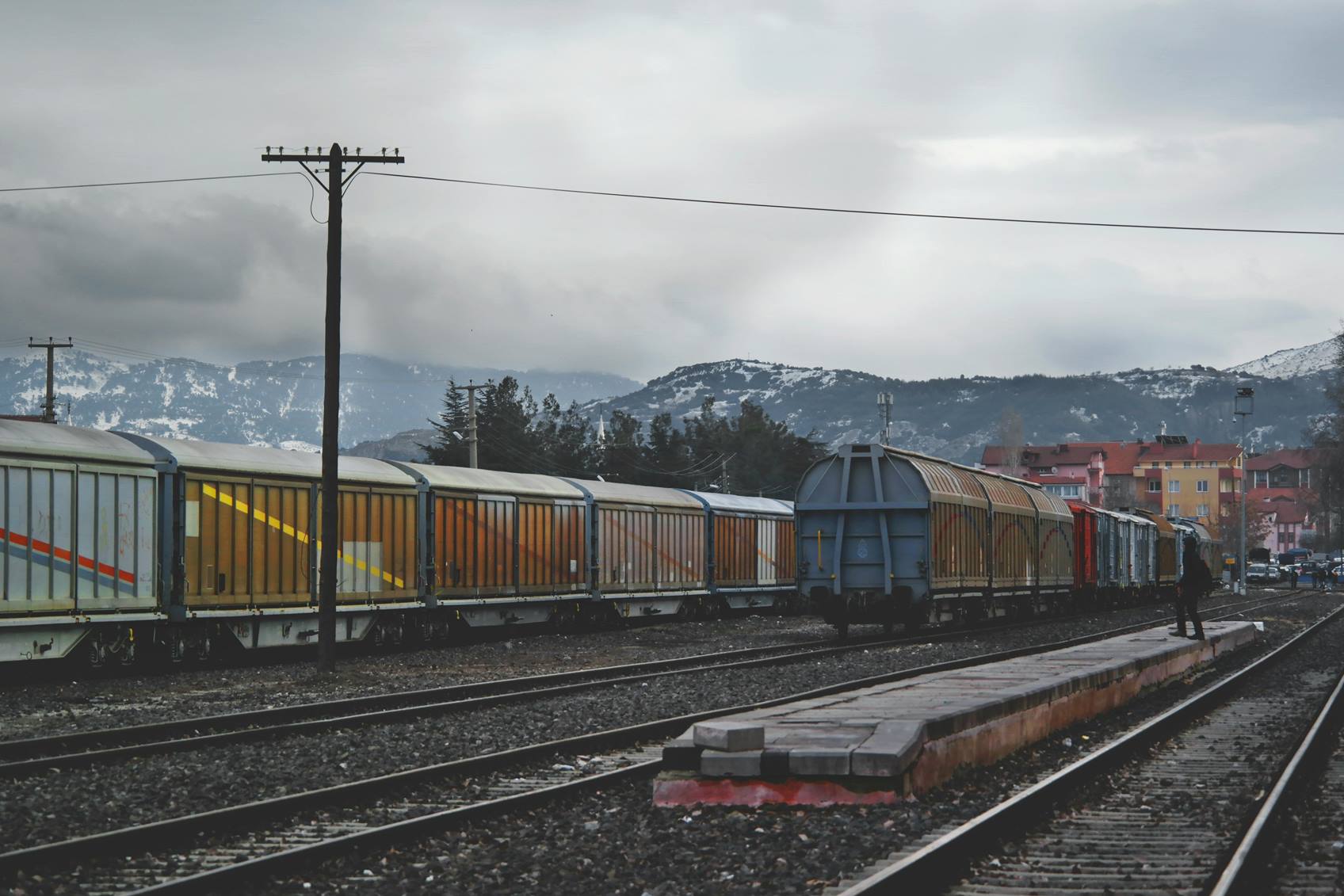
Freight Railcar Production by Country: Verified Open Data for 2025/2026
This research note checks whether a reliable country ranking of freight railcar production can be built from open data for the 2025/2026 snapshot period. The target metric is annual freight wagons or freight cars produced, measured in physical units. Higher production would rank higher, but a full Top 10 is not published because fewer than ten comparable country-level production values can be verified from open sources.
The page uses a compiled research dataset based on six reviewed sources. It separates confirmed numeric production values from sources that cover different rail-market metrics, such as orders, deliveries, backlog, rolling stock fleet, capacity, procurement plans or proprietary datasets.
Short answer
A safe Top 10 countries ranking for freight railcar production cannot be created from currently reviewed open data. India has an official FY 2024–25 wagon production value, and Russia has published industry-reported 2025 output. Other major rail markets cannot be added without mixing production with deliveries, orders, backlog, fleet size or closed proprietary statistics.
Continue exploring
More StatRanker pages connected by topic, category or ranking theme.
Russia’s 2025 freight wagon output is shown as a published industry-reported value from INFOLine / TAdviser, not as a government statistical row.
India’s FY 2024–25 wagon production is published by the Press Information Bureau and Ministry of Railways.
Only two country-level production values are safe to show as numbers without changing the metric.
This is a 2025/2026 open-data availability note, not a synthetic global Top 10 ranking.
Why a Top 10 is not shown
Freight railcar statistics are not published in one harmonized open country table. Some sources report production, others report deliveries, orders, backlog, fleet size, market value or procurement demand. These are not interchangeable measures. A ranking that combines them would be easy to build, but it would be misleading.
Overview: what this freight railcar production audit measures
The target metric is the annual number of freight railcars, freight cars or freight wagons produced by country. The unit is physical vehicles, not money, fleet size or tonnage. The ideal data pack would contain the same year, source quality and production definition for at least ten countries.
The reviewed open data do not meet that threshold. India publishes an official wagon production value for FY 2024–25. Russia has a 2025 industry-reported production value and a separate ministerial estimate range. North America has specialist freight car statistics, but detailed manufacturing data are not open row-level data. UIC RAILISA is useful for rail indicators, but it is not a freight railcar production-by-country table.
For that reason, this page reports confirmed production data points, explains why other sources are excluded from the numeric table, and lists the evidence needed for a future country ranking.
Confirmed numeric freight railcar production values
The table below contains only country-level numeric production values that can be used without changing the metric. It is ordered from larger to smaller confirmed value, but it should be read as a verified data sample rather than a complete global ranking.
Confirmed open production values reviewed for the 2025/2026 snapshot
| Order | Country | Value | Period | Source note |
|---|---|---|---|---|
| 1 | Russia | 51,900 | 2025 | Published industry value from INFOLine / TAdviser; freight wagons produced; not labeled here as an official government value. |
| 2 | India | 41,929 | FY 2024–25 | Official Ministry of Railways release through PIB; wagons produced by Indian Railways in FY 2024–25. |
Source snapshot: reviewed on June 30, 2026. Russia is a calendar-year industry value; India is a fiscal-year official value. The period difference is disclosed and not converted.
Compact comparison of confirmed values
The comparison below uses only the two confirmed numeric production values. It replaces a larger chart because the available open dataset is too small for a Top 10 visualization.
2025 published industry value; INFOLine / TAdviser.
FY 2024–25 official release; PIB / Ministry of Railways.
Why production, deliveries, orders, backlog and fleet are different
Freight railcar manufacturing data can look similar across sources, but the underlying metric often changes. A production number counts cars or wagons built during a period. A delivery number can depend on acceptance timing, buyer handover and accounting rules. Orders measure demand placed with manufacturers. Backlog measures work still waiting to be built or delivered. Fleet size measures the accumulated stock of railcars in use, not annual manufacturing output.
Production
Counts freight cars or wagons produced during a year or fiscal year. This is the target metric for the numeric table.
Deliveries
Counts cars handed over or delivered. It may be close to production in some systems, but it is not automatically the same metric.
Orders and backlog
Orders show new demand. Backlog shows remaining work. Both are forward-looking market indicators, not production.
Fleet size
Shows the number of freight cars in service or involved in rail operations. It reflects past production, retirements and utilization.
This separation is the main reason a quick global Top 10 would be unreliable. A country with a large fleet or large order book is not necessarily producing the most new freight railcars in the same year.
Methodology
The target metric is annual freight railcar or wagon production by country, measured in physical units. The intended sorting direction for confirmed numeric values is descending. The publication format is an open-data audit because the reviewed sources do not support a ten-country production ranking.
Metric and unit
Metric: freight railcars, freight cars or freight wagons produced. Unit: physical units. Market value, fleet size, orders, backlog and traffic volumes are excluded from the numeric comparison.
Inclusion rule
A country is included only when the source provides a production value, unit, period, country scope and source note clear enough for readers to understand what the number measures.
Source hierarchy
Government or railway ministry releases are preferred. Industry databases can be used with a visible label. Proprietary datasets are not converted into public row-level estimates.
Conflict handling
Conflicting values are not averaged. Russia’s 45,000–50,000 ministerial estimate is treated as context because the later INFOLine / TAdviser value gives a full-year figure of 51,900.
The page does not calculate artificial 2026 production values. It also does not treat a fiscal year and a calendar year as identical. India’s FY 2024–25 official figure and Russia’s calendar 2025 industry value are displayed with their original periods.
Limits: this research note does not measure passenger rolling stock, locomotives, rail manufacturing revenue, freight traffic, fleet utilization, order intake, leasing demand or replacement needs. It only checks whether open country-level freight railcar production values can support a defensible ranking.
Countries and sources reviewed but not added as production rows
The sources below are important for understanding the railcar market, but they are not used as numeric country production entries. They either cover a different metric, are proprietary, provide a range rather than a final value, or do not publish an open production-by-country table.
Reviewed sources and exclusion reasons
| Country / source | Metric found | Reason not used as a numeric production row |
|---|---|---|
| North America / RSI | Orders, deliveries, backlog | RSI confirms specialist freight car statistics, but detailed ARCI manufacturing statistics are proprietary and not open row-level country production data. |
| UIC RAILISA | Rail indicators | Useful for infrastructure, traffic, rolling stock, staff and finance indicators, but not a direct freight railcar production-by-country table. |
| Russia ministerial estimate | 45,000–50,000 | A ministerial estimate range reported by Prime / RIA context. It is not averaged with the later full-year INFOLine / TAdviser value. |
| 1520-space market note | Realization / sales | Reports sales or realization across several countries, not directly comparable annual national production values for this table. |
These entries are not ranked and have no production data-value attached. They explain source coverage and prevent non-production metrics from being mixed into the confirmed values table.
Insights from the freight railcar data audit
Key insight
The main finding is that open data support a small set of confirmed production values, not a defensible global Top 10 country ranking.
Notable pattern
India provides a clear official wagon production release, while Russia’s reviewed full-year value comes from an industry research source.
Source concentration
The strongest numeric evidence comes from country-specific releases and rail-industry databases rather than one international production dataset.
Outlier
North America has a mature freight car data ecosystem, but the detailed manufacturing statistics are not open enough to use as country-level rows here.
What this means for readers
This page should be read as a production-data reliability check. It confirms that some large freight railcar producers can be documented from open sources, but it also shows why a global ranking is fragile without harmonized annual production data.
For market research, the safest rule is to keep production, deliveries, orders, backlog and fleet size separate. Each answers a different question. Production tells you how many new freight cars were made. Orders and backlog tell you about demand and workload. Fleet size tells you about existing rolling stock.
For a future Top 10 ranking, each country would need a production value, unit, period, source URL, source type and concise method note. If any row used a forecast or calculation, it would also need a base year, base value, formula and assumptions.
FAQ
Which country has the highest confirmed freight railcar production value in this audit?
Among the reviewed open values, Russia has the highest confirmed numeric value at 51,900 freight wagons in 2025. It is labeled as a published industry value, not as an official government row.
What is India’s confirmed wagon production value?
India reported 41,929 wagons produced in FY 2024–25 through the Press Information Bureau and Ministry of Railways.
Why is there no Top 10 countries ranking?
A Top 10 would require at least ten comparable country-level production values. The reviewed open sources do not provide enough values using the same production metric.
Why not use freight car orders or backlog?
Orders and backlog measure demand and future workload. They do not count the number of freight railcars produced during a year.
Can North American freight car data be used?
North American freight car orders, deliveries and backlog are tracked by specialist sources, but the detailed ARCI manufacturing statistics are proprietary and not used here as open country-level production data.
Can UIC RAILISA be used for this ranking?
UIC RAILISA is useful for railway statistics, but the reviewed UIC source is not a direct open table of annual freight railcar production by country.
What data would make a real ranking possible?
A real ranking would need a verified data pack with at least ten countries, annual production values, units, periods, source URLs and notes that separate official releases, industry values, forecasts and calculations.
Sources
Source snapshot and access date: June 30, 2026. Sources were used for row values, source-type checks and exclusion notes.
Press Information Bureau / Ministry of Railways — India wagon production
Primary official source for India’s FY 2024–25 wagon production value of 41,929 units.
INFOLine / TAdviser — car building in Russia
Published industry source for Russia’s 2025 freight wagon production value of 51.9 thousand units.
https://tadviser.com/index.php/Article%3ACar_building_in_Russia
Prime / RIA context — Russia ministerial estimate
Context source for the 45,000–50,000 estimate attributed to Anton Alikhanov and Russia’s Ministry of Industry and Trade; not averaged with the later full-year industry value.
Russian Railways corporate note — wagon fleet renewal context
Context source referencing the ministerial estimate and the policy discussion around freight wagon fleet renewal.
https://company.rzd.ru/ru/9401/page/78314?accessible=true&id=225198
Railway Supply Institute — Freight Car Statistics
Source used to verify that North American freight car orders, deliveries and backlog statistics exist, while detailed ARCI manufacturing statistics are proprietary.
https://www.rsiweb.org/data-technical-resources/freight-car-statistics/
UIC — Railway statistics and RAILISA
Context source for railway statistics coverage; not used as a freight railcar production-by-country table.
Related rankings
More StatRanker pages connected by topic, category or ranking theme.
