

Military aircraft production in the world TOP10 countries 2025
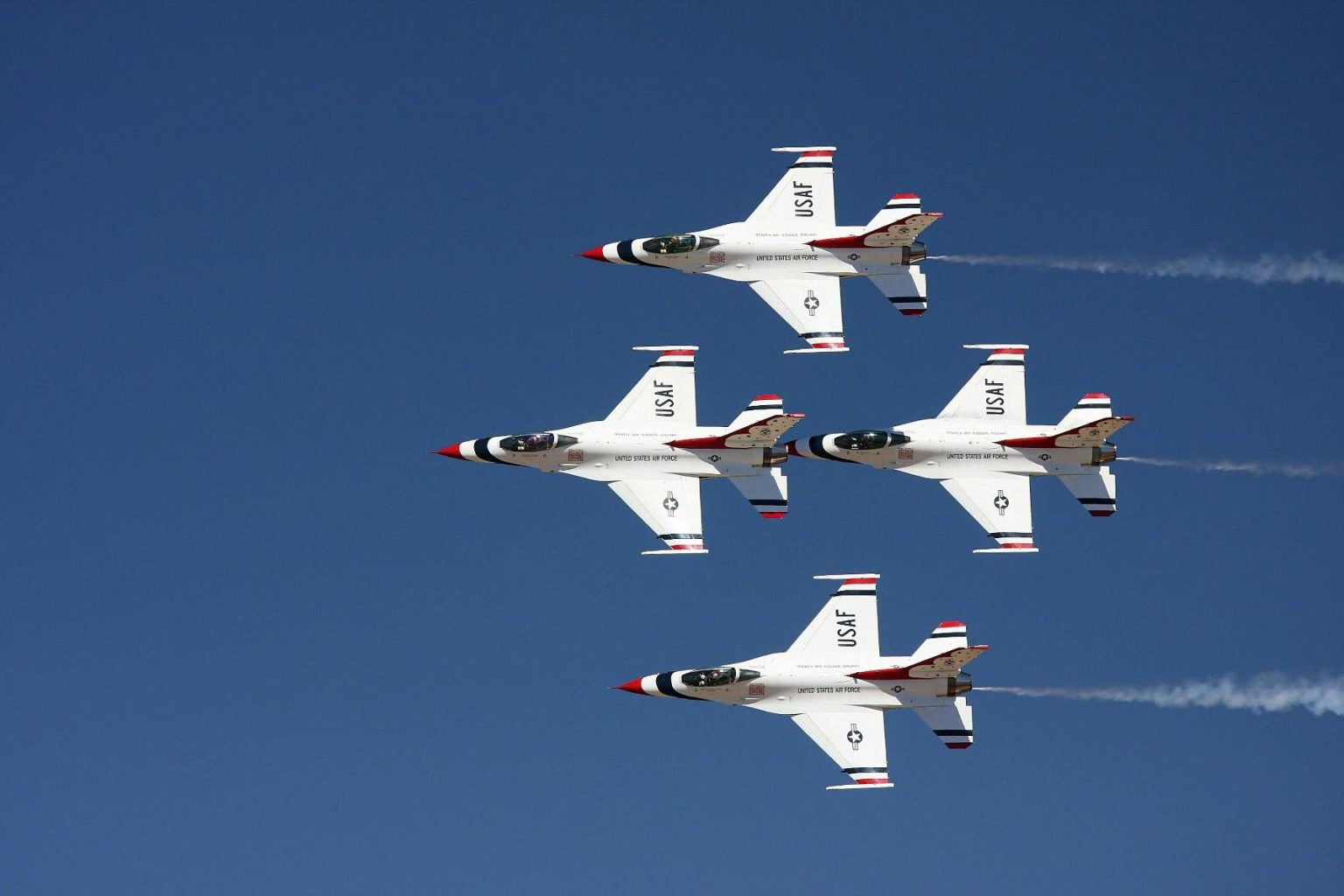
Top 10 countries shaping military aircraft production in 2025
Military aircraft production in 2025 is defined by two simultaneous shifts: rapid scaling of fifth-generation fighters and a sustained move toward uncrewed combat systems. The industrial story is not only about how many airframes leave a final-assembly line, but about whether a country can maintain engines, avionics, sensors, software upgrades, and a resilient supplier base at wartime speed.
The latest full-year snapshot also shows how strongly production follows strategic pressure. SIPRI estimates world military spending reached $2.718 trillion in 2024, the highest level in its series, creating persistent demand signals for aircraft, munitions, and enabling systems. In fighter output, the largest programs are now operating at scales that smaller national lines cannot easily match.
Methodology (how “production” is counted)
There is no single global statistical release that lists how many military aircraft each country manufactures per year. This ranking therefore uses a practical, transparent approach: when manufacturers publish delivery totals (for example, annual fighter deliveries), those figures are treated as the highest-confidence signal. When governments or state-owned firms announce “batches” without unit totals, production is described as not disclosed and only quantified where reputable, photo-based or batch-size estimates exist. For countries participating in multinational programs (for example, the Eurofighter consortium), we treat the aircraft as shared industrial output and avoid inventing country-by-country unit splits when partners do not publish them.
Limits: classified production, export restrictions, and mid-year delivery holds (for example, major software/hardware upgrade gates) can distort annual delivery counts. UAV volumes are also not directly comparable to crewed fighters, so drones are discussed as a parallel production track rather than forced into a single “one number” metric.
Key drivers behind the 2025 production cycle
- Geopolitical pressure raises procurement urgency and compresses production schedules.
- Fifth-generation requirements (stealth, sensors, secure data links) increase supply-chain complexity.
- Uncrewed systems shift volume toward drones, but also increase demand for ISR payloads, datalinks, and counter-UAS tech.
- Industrial resilience (workforce, engines, semiconductors, composites) becomes a strategic asset.
Top 10 military aircraft producers (country-by-country snapshot)
The U.S. remains the global scale leader in crewed combat-aircraft production. In 2025, Lockheed Martin reported a record 191 F-35 deliveries, a step-change from 2024 as backlog aircraft were released after upgrade gating. The U.S. also anchors the world’s densest military aviation supplier network.
China’s production story is dominated by stealth-fighter scaling and rapid modernization across multiple lines. Public reporting does not provide official annual delivery totals, but specialist analysis has discussed J-20 production at roughly around 100 aircraft per year in the mid-2020s (estimated).
Russia continues to deliver tactical aircraft to its air force, but unit totals are often not published. Official releases confirm repeated handovers of Su-35S fighters and Su-34 strike aircraft in 2025; independent estimates commonly place Su-35S deliveries in the mid-teens for the year, with Su-34 deliveries occurring in multiple small batches.
France’s core line is the Rafale multirole fighter. Dassault reported 26 Rafale delivered in 2025 (11 for France and 15 for export), reflecting sustained export demand and a clear production ramp versus 2024.
The UK is a prime partner in Eurofighter Typhoon and a critical engine/avionics contributor across allied aircraft programs. Eurofighter partners have discussed current production at around 14 aircraft per year for the consortium, with plans to ramp higher on new orders.
Germany’s fighter-industrial role is centred on Eurofighter development, major structures, and partner-nation assembly. The country is also maintaining and expanding the Typhoon program through future tranches and long-horizon upgrades.
India’s indigenous fighter push is concentrated in Tejas Mk1A industrialization. Public reporting has cited a 2025 delivery objective of 12 aircraft, alongside ongoing efforts to expand production capacity (including additional assembly lines) and reduce import dependency for key subsystems.
South Korea is transitioning from development to production in the KF-21 program. Serial production began in 2024 and final-assembly milestones were announced in 2025, with first delivery expected in 2026. In parallel, KAI’s trainer/light fighter family supports export ambitions.
Italy combines Eurofighter partnership with an important role in the F-35 global enterprise through the Cameri final-assembly and check-out facility. Italy expanded its F-35 program of record in 2025, reinforcing long-run throughput requirements for the domestic industrial base.
Sweden’s fighter production is smaller in volume but strong in engineering depth. In October 2025, the Swedish Air Force accepted its first Gripen E into operational service, marking the start of the platform’s service-phase deliveries.
Table 1. Top 10 countries by military aircraft production footprint (2025 snapshot)
“2025 production signal” uses confirmed annual deliveries where manufacturers publish totals; otherwise it summarizes the most visible public milestones and avoids inventing country-by-country unit splits for multinational programs.
| Rank | Country | Flagship fixed-wing programs | 2025 production signal |
|---|---|---|---|
| 1 | United States | F-35 (stealth fighter), large UAV ecosystem | 191 F-35 deliveries (confirmed) |
| 2 | China | J-20 (stealth fighter), J-16/J-10 families, UAV exports | J-20 output discussed as ≈100/year (estimated) |
| 3 | Russia | Su-35S (fighter), Su-34 (strike), Su-57 (stealth fighter) | Multiple “batch” handovers; unit totals often not disclosed |
| 4 | France | Rafale (fighter), sensors/engines supply chain | 26 Rafale deliveries (confirmed) |
| 5 | United Kingdom | Eurofighter Typhoon (partner), engines/components | Eurofighter consortium: ~14/year (shared output) |
| 6 | Germany | Eurofighter Typhoon (partner), upgrades and future tranches | Shared Eurofighter output; national split not published |
| 7 | India | Tejas Mk1A (fighter), domestic production expansion | Public target: 12 Tejas Mk1A deliveries in 2025 |
| 8 | South Korea | KF-21 (fighter), FA-50/T-50 family | KF-21 production phase; first deliveries start 2026 |
| 9 | Italy | Eurofighter partner; F-35 FACO at Cameri | Program expansion; facility output not published as an annual total |
| 10 | Sweden | Gripen E/F (fighter) | First Gripen E accepted into Swedish service (milestone) |
Chart 1. Comparable 2025 fighter-output signals (program-level, where numbers are visible)
The chart below visualizes a small set of headline fighter programs where annual delivery totals are published (confirmed) or widely discussed in specialist reporting (estimated). It is designed to show scale differences, not to replace official procurement reporting.
Confirmed values come from manufacturer delivery releases. Estimated values are labelled as such in tooltips and should be read as approximate.
Insights (what the 2025 landscape suggests)
Scale is concentrating: the largest fighter program now delivers at a tempo that can exceed the annual output of several national lines combined.
Europe’s aircraft story is collaborative: for fighters, multinational programs and shared supplier networks matter as much as final assembly.
Production visibility is strategic: some states publish detailed delivery totals; others disclose only “batches,” making comparisons less precise.
What this means for the reader
Aircraft production capacity influences export leverage, alliance interoperability, and the speed at which air forces can replace losses or retire aging fleets. For investors and analysts, annual delivery disclosures signal cash-flow timing and supply-chain pressure points. For policymakers, the key question is whether industrial capacity can support readiness without sacrificing sustainment and training throughput.
FAQ: military aircraft production
Why does “deliveries” matter more than “orders” for production rankings?
Orders show demand, but deliveries are the observable output of factories, suppliers, and acceptance processes. A large backlog can exist even when delivery tempo slows due to upgrades, testing gates, or parts constraints.
Is it fair to compare drones and fighter jets in one ranking?
Not directly. Drones range from inexpensive tactical systems to high-end MALE/HALE platforms. This ranking treats UAVs as a parallel production track and focuses on fixed-wing combat-aircraft lines when comparing scale.
Why are China and Russia often shown with “estimated” production numbers?
Some producers do not publish annual unit totals. In those cases, analysts rely on serial observations, satellite imagery, batch announcements, and other open-source methods. Estimates are useful for direction and scale but are not official statistics.
Does a higher production number guarantee air superiority?
No. Air superiority depends on training, doctrine, basing, logistics, munitions, sensors, and networking. Production matters for replenishment and modernization, but it is only one component of air power.
Why can annual deliveries jump sharply from one year to the next?
Deliveries can be held back by software/hardware upgrade gates, acceptance testing, and funding holds. When bottlenecks clear, backlog aircraft can be delivered in a single year, creating a visible jump even if factory build rate changes less dramatically.
Which indicator is most reliable for comparing countries?
The most reliable indicator is manufacturer-published annual deliveries for a defined aircraft program. Where those are unavailable, comparisons should explicitly separate confirmed totals from estimates and qualitative milestones.
Program tracker: what is actually visible in 2025 output data
This table focuses on aircraft programs where at least one of the following is publicly visible: an annual delivery figure (high confidence), a widely cited annual-rate estimate (medium confidence), or an official milestone (low confidence). Search and filters help separate confirmed deliveries from estimates and production milestones.
Table 2. Key combat-aircraft programs (2025 snapshot)
| Rank | Program (country) | 2025 output signal | Confidence |
|---|---|---|---|
| 1 |
F-35 Lightning II (United States)
Record annual deliveries reported for 2025; large multinational supply chain, U.S. prime.
|
191 deliveries (2025)
2024 reference: 110 deliveries
|
High Published total |
| 2 |
Chengdu J-20 (China)
Public reporting discusses an annual production rate around 100/year in the mid-2020s (estimate).
|
≈100/year (estimated rate)
Official annual deliveries are not published
|
Medium Rate estimate |
| 3 |
Dassault Rafale (France)
Manufacturer-published deliveries; ramp supported by export orders.
|
26 deliveries (2025)
2024 reference: 21 deliveries
|
High Published total |
| 4 |
Su-35S (Russia)
Multiple official “batch” handovers; unit totals typically not disclosed.
|
≈15–18 deliveries (estimate)
Based on open-source batch estimates
|
Medium Estimated |
| 5 |
Su-34 (Russia)
Official “batch” deliveries confirmed; reporting indicates small batch sizes.
|
≈12 deliveries (estimate)
Typical batches described as pairs in some reporting
|
Medium Estimated |
| 6 |
Eurofighter Typhoon (UK/Germany/Italy/Spain consortium)
Program-level output discussed around 14/year, with a plan to ramp to 20/year by mid-2028.
|
≈14/year (program-level)
National split not published
|
Medium Program-level |
| 7 |
Tejas Mk1A (India)
Public reporting cites a 2025 delivery objective while supply-chain constraints are addressed.
|
12 deliveries (public target)
Capacity expansions discussed up to 24/year
|
Medium Target |
| 8 |
KF-21 Boramae (South Korea)
Production phase began; first deliveries are scheduled from 2026.
|
Production milestone (no 2025 deliveries)
Delivery timeline starts 2026
|
Low Milestone |
| 9 |
Gripen E (Sweden)
First acceptance into Swedish operational service announced in October 2025.
|
Service entry milestone (first accepted)
Delivery tempo not published as an annual total
|
Low Milestone |
| 10 |
F-35 FACO sites (Italy & Japan)
Final assembly and check-out sites supporting national deliveries as part of the global program.
|
Facility role (annual site totals not published)
Output counted inside global F-35 deliveries
|
Low Facility |
Note: “Output signal” is shown as deliveries where published, as an estimated annual rate where widely cited, or as a milestone where deliveries are not yet occurring.
Figure 2. Defense spending vs. visible fighter-output signals (selected countries)
This scatter plot uses SIPRI’s 2024 military expenditure figures and pairs them with visible fighter-output signals where a numeric value is published or commonly estimated.
If the chart does not render, use these reference pairs (Spending 2024 → Output signal):
- United States: $997B → 191 (F-35 deliveries, 2025)
- China: $314B → ≈100 (J-20 annual rate, estimate)
- Russia: $149B → ≈28 (Su-35S + Su-34 midpoint estimate)
- France: $64.7B → 26 (Rafale deliveries, 2025)
- India: $86.1B → 12 (Tejas Mk1A public 2025 target)
Spending values are in current US$ billions (SIPRI). Output signals mix confirmed deliveries and labelled estimates/targets.
Interpretation: what the 2025 production hierarchy really means
Rankings can be misleading if they imply that “more aircraft” automatically equals “more power.” In practice, the decisive variables are the ability to produce, upgrade, and sustain complex aircraft over many years, while also building enough munitions, training capacity, and secure networking to make those aircraft effective.
How to read this ranking without over-interpreting it
- Deliveries are the strongest public signal of production throughput, but can be distorted by upgrade gates and acceptance holds.
- Multinational programs distribute production across borders; final assembly is only one part of the industrial footprint.
- Non-disclosure is common in defense production, which is why estimates are clearly labelled and never presented as official totals.
- UAV output is strategically important, but not directly comparable to crewed fighters in cost, complexity, and mission profile.
Practical takeaway: treat fighter delivery totals as a “throughput signal,” then pair them with defense spending, export controls, and sustainment capacity to understand real industrial power.
Policy takeaways
- Industrial resilience is strategic: engines, electronics, composites, and test capacity are now national-security constraints.
- Upgrade pipelines can bottleneck output: software/hardware refresh cycles increasingly determine when aircraft can be delivered.
- Europe’s leverage comes from coordination: shared programs and common standards can scale output faster than fragmented national lines.
- Emerging producers need “ecosystems,” not prototypes: moving from first flight to stable series output requires suppliers, QA, and MRO depth.
- Transparency varies: decision-makers should plan with uncertainty ranges when producers do not publish unit totals.
Primary sources used for the 2025 update
The links below are the specific releases and datasets used to update the figures and correct the 2025 production statements.
-
SIPRI — Trends in World Military Expenditure, 2024 (Fact Sheet)Global spending total ($2.718T) and country spending figures used in Figure 2.https://www.sipri.org/publications/2025/sipri-fact-sheets/trends-world-military-expenditure-2024
-
Lockheed Martin — 2025 F-35 delivery record (press release)Confirmed 191 F-35 deliveries in 2025.https://news.lockheedmartin.com/2026-01-07-F-35-Breaks-Delivery-Record%2C-Continues-Combat-Success-in-2025
-
Reuters — 2025 F-35 deliveries (context vs 2024)Confirms 191 in 2025 and references 110 delivered in 2024.https://www.reuters.com/business/aerospace-defense/lockheed-says-2025-f-35-deliveries-hit-191-demand-lifts-production-pace-2026-01-07/
-
Dassault Aviation — Deliveries and backlog as of Dec 31, 2025Confirmed 26 Rafale deliveries in 2025 and 21 in 2024.https://www.dassault-aviation.com/en/group/press/press-kits/deliveries-order-intakes-and-backlog-in-number-of-new-aircraft-as-of-december-31-2025/
-
Defense News — Eurofighter production rate and ramp planProgram-level production discussed around 14/year, with plans to reach 20/year by mid-2028.https://www.defensenews.com/global/europe/2026/02/19/bae-says-its-eurofighter-pipeline-is-filled-until-first-gcap-assembly/
-
The Diplomat — J-20 production-rate discussion (open-source analysis)Used as an explicit “estimated rate” source for the J-20 (no official annual totals published).https://thediplomat.com/2023/08/chinas-j-20-gets-another-upgrade/
-
Rostec — official notices of Su-35S / Su-34 batch deliveriesConfirms repeated handovers in 2025; unit totals not disclosed in releases.https://rostec.ru/en/media/news/uac-delivered-new-su-35s-to-the-ministry-of-defence-of-the-russian-federation/
https://rostec.ru/en/media/news/uac-delivered-a-batch-of-the-su-34-to-the-russian-aerospace-force/ -
Economic Times (India) — Tejas delivery target context (2025)Cites HAL’s 2025 delivery plan and engine delivery schedule context.https://economictimes.indiatimes.com/news/defence/lca-tejas-on-fast-track-ge-to-supply-two-f404-engines-a-month-india-plans-to-buy-javelin-missiles-stryker-vehicles-says-def-secy/articleshow/122429275.cms
-
Times of India — Tejas production-line expansion contextDiscusses expanded Tejas production capacity (including additional line capacity statements).https://timesofindia.indiatimes.com/city/nashik/rajnath-to-unveil-tejas-lca-mk1a-fighter-jet-today/articleshow/124611336.cms
-
The Aviationist — KF-21 production assembly milestone (2025)Confirms first production aircraft entering final assembly and delivery timing toward 2026.https://theaviationist.com/2025/05/20/first-kf-21-production-final-assembly/
-
AeroTime — KF-21 first deliveries in 2026Reinforces delivery start window as the program transitions to operational service.https://www.aerotime.aero/articles/south-korea-first-kf-21-boramae-delivery-2026
-
Euro-SD — Swedish Air Force accepts first Gripen E into service (Oct 2025)Used for the 2025 Gripen E service-entry milestone.https://euro-sd.com/2025/10/major-news/47338/swaf-accepts-first-gripen-e/
-
F-35 Global Enterprise — Italy (Cameri FACO context)Used to support Italy’s FACO role and program-of-record expansion statement; not used for annual unit totals.https://www.f35.com/f35/global-enterprise/italy.html
All quantitative statements are either manufacturer-published delivery totals, SIPRI expenditure data, or explicitly labelled estimates/targets where official unit totals are not available.