Global Natural Gas Exports in 2025
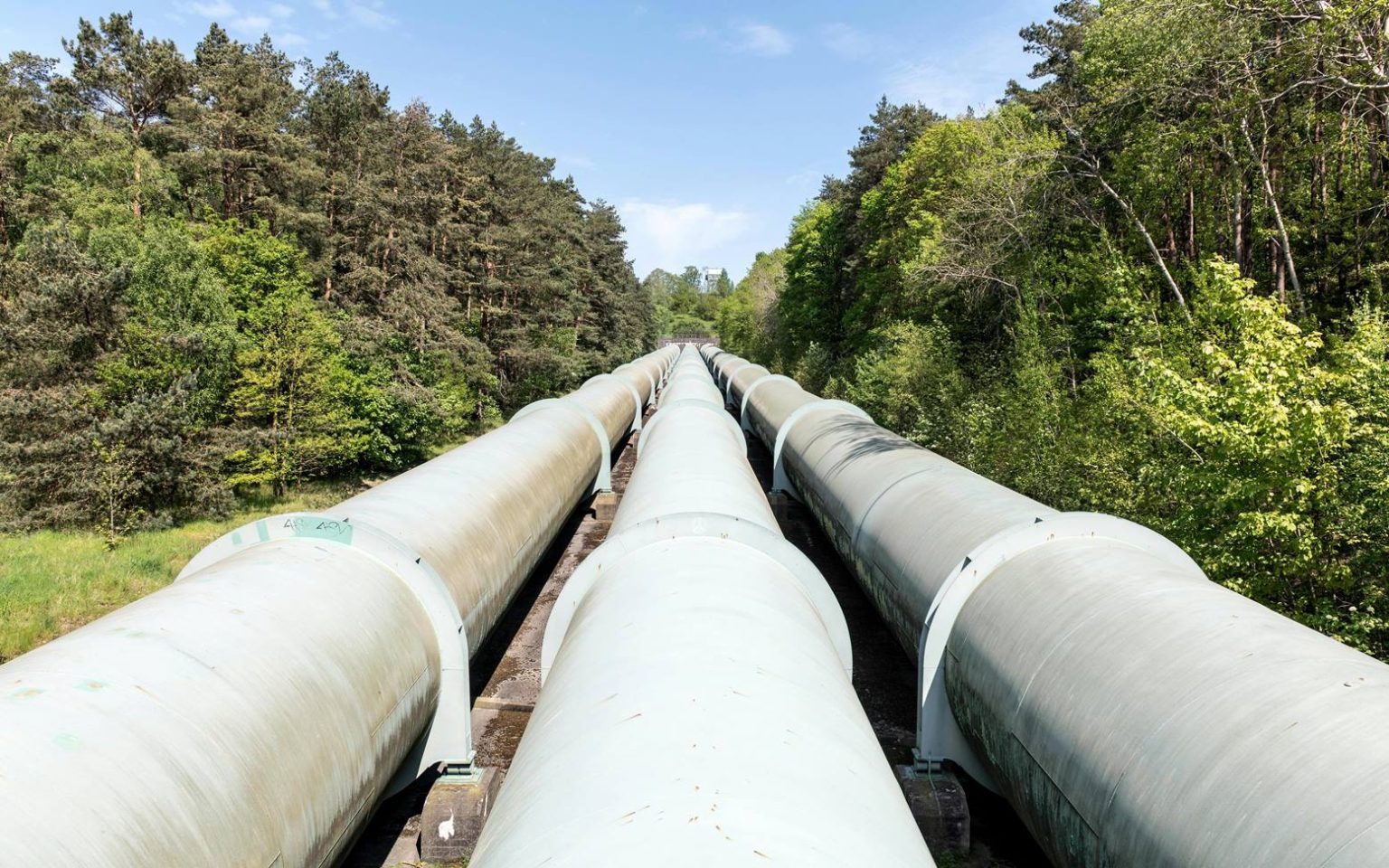
The 2025 natural gas story is no longer the one implied by older bullish drafts. The current picture is more disciplined: the last fully comparable country-level trade map is still the 2024 dataset, while 2025 updates show a stronger LNG wave, higher European LNG intake, softer Chinese LNG demand, and a wider gap between flexible LNG exporters and pipeline-dependent exporters.
On the latest comparable cross-country tables, the United States remains the largest LNG exporter and the largest combined gas exporter once pipeline and LNG flows are added together. Russia stays near the top because it still combines large pipeline exports with a meaningful LNG position. Qatar and Australia remain core LNG powers, while Norway is still one of the world’s biggest gas exporters even with only a small LNG component because its pipeline links into Europe are so large.
For 2025 itself, the short-term market direction changed in three visible ways. First, LNG supply expanded materially as North American projects ramped up. Second, Europe relied more heavily on LNG because lower Russian pipeline flows tightened the balance. Third, the export market became even more split between flexible seaborne LNG systems and region-locked pipeline systems. That distinction matters for prices, investment timing, shipping exposure and policy risk.
Method note: country ranking uses the latest comparable annual country tables. The text around 2025 reflects market developments and annual summaries released after the year closed.
Top 10 gas exporters in the current global map
The U.S. is the clearest example of scale plus flexibility. It exports heavily by pipeline to neighboring markets and also dominates global LNG through a fast-growing Gulf Coast export system.
Russia still ranks very high because pipeline exports remain large even after the collapse of much of its European business. LNG adds a second leg, but sanctions limit upside.
Qatar remains one of the most important LNG suppliers in the world. Its export model is seaborne, long-contract oriented and deeply linked to Asian demand.
Norway shows how powerful pipeline geography still is. Its LNG piece is small, but the pipeline system into Europe keeps the country near the very top of the global ranking.
Australia remains an LNG superpower. Its position is driven by seaborne exports to Asia rather than pipeline networks, making it a pure play on LNG trade flows.
Canada’s high ranking comes from cross-border pipeline trade. The export profile is much less diversified than the U.S., but the scale is still substantial.
Algeria matters because it can serve Europe through both pipelines and LNG. That dual structure makes it strategically more resilient than single-channel exporters.
Turkmenistan remains a major exporter even without LNG because pipeline trade to neighboring markets is large enough to keep it in the top tier.
Malaysia remains an important mid-tier LNG exporter, especially for Asian trade balances, even though it sits well below the top three LNG giants.
Azerbaijan’s export importance is larger than its absolute size suggests because marginal pipeline supply into Europe has strategic value in a tighter market.
Table 1. Top 10 exporters by combined natural gas exports
| Rank | Country | Total exports | Main export structure |
|---|---|---|---|
| 1 | United States | 206.2 bcm | 91.0 pipeline + 115.2 LNG |
| 2 | Russian Federation | 152.5 bcm | 108.2 pipeline + 44.3 LNG |
| 3 | Qatar | 125.8 bcm | 18.9 pipeline + 106.9 LNG |
| 4 | Norway | 125.1 bcm | 118.7 pipeline + 6.4 LNG |
| 5 | Australia | 106.8 bcm | Pure LNG exporter in this dataset |
| 6 | Canada | 87.6 bcm | Pipeline-led exporter |
| 7 | Algeria | 48.8 bcm | 32.8 pipeline + 16.0 LNG |
| 8 | Turkmenistan | 44.9 bcm | Pipeline-led exporter |
| 9 | Malaysia | 36.0 bcm | LNG-led exporter |
| 10 | Azerbaijan | 24.4 bcm | Pipeline-led exporter |
Latest comparable cross-country snapshot combines 2024 pipeline major-trade movements and 2024 LNG exports. That is the cleanest ranking base for a 2025 article with current market context.
Chart 1. Top 12 exporters by combined gas exports
Methodology
This page uses a deliberately conservative method. The exporter ranking is built from the latest fully comparable annual country tables: the 2025 Energy Institute Statistical Review for 2024 LNG exports, plus the 2024 major pipeline trade movements table. Country totals are constructed as pipeline exports plus LNG exports in billion cubic metres. That gives a clean exporter map without pretending that every 2025 country total is already available in one harmonised global table.
The 2025 update in the narrative comes from short-term market reports and annual summaries released after the year progressed or closed. That is why the text can discuss stronger LNG supply growth in 2025, Europe’s higher LNG pull, and record U.S. export performance, while the ranking itself still rests on the latest full country snapshot.
There are also limits readers should keep in mind. LNG tables are gross trade and can include re-exports. Pipeline tables and inter-regional trade tables do not always use exactly the same trade boundary. Pipeline systems are geographically locked, while LNG is much more flexible. So the combined totals are analytically useful, but they are not the same thing as a single customs-style merchandise export dataset.
Key insights
The first big insight is that the export market is no longer just a “largest producer” story. Export success increasingly depends on infrastructure type. The U.S. wins because it has both pipeline reach and scalable LNG. Norway wins because it is embedded in Europe’s pipeline balance. Qatar and Australia win because they dominate long-haul LNG.
The second insight is that flexibility now carries a premium. LNG-led systems can reroute cargoes, respond to regional price signals and absorb geopolitical dislocations more easily than pipeline-only systems. That helps explain why the market pays so much attention to U.S. Gulf Coast expansions, Qatar’s next LNG wave and shipping chokepoints such as the Strait of Hormuz.
The third insight is that mid-tier exporters matter more than they used to. Algeria, Azerbaijan, Oman, Nigeria and Malaysia are not top-three giants, but they can materially affect Europe’s or Asia’s balance at the margin. In a tight gas system, incremental export volumes from second-tier suppliers can have outsized price effects.
What this means for readers
For investors, the export map explains why natural gas is no longer one global market with one simple logic. Pipeline exposure, LNG exposure, shipping risk, sanctions risk and regional demand all matter. For policymakers, it reinforces that “security of supply” is really a question about infrastructure diversity, not just total reserves. For readers following inflation, electricity prices or industrial competitiveness, this ranking helps identify which suppliers still shape the gas balance in Europe and Asia.
The practical takeaway is simple: if an exporter is LNG-led, it influences optionality and global spot-market behavior; if it is pipeline-led, it matters most to its connected region; and if it is mixed, it usually has the strongest shock-absorbing role in the market.
FAQ
Why is the United States ranked first?
The U.S. combines very large pipeline exports with the world’s biggest LNG export platform. That mix gives it both scale and flexibility.
Why are Qatar and Australia still so high even without large pipeline systems?
Because LNG is the most flexible traded form of gas. Both countries are export specialists with large liquefaction systems aimed mainly at Asian buyers.
Why does Norway rank near the top with very little LNG?
Norway’s importance comes from pipelines into Europe. It shows that regional pipeline dominance can still rival global LNG leadership.
Why is 2024 used for the ranking in a 2025 article?
Because 2024 is the latest full country-level dataset that is broadly comparable across exporters. The 2025 story is added through IEA and EIA market updates.
Are pipeline exports and LNG exports directly comparable?
They are comparable in volume terms, but not identical in market behavior. LNG is seaborne and flexible; pipeline gas is regional and infrastructure-bound.
Does a bigger export number always mean a stronger economy?
No. Some exporters are highly dependent on gas rents, while others use gas exports as just one part of a much broader economy. The ranking measures trade volume, not overall economic quality.
Full table of leading gas exporters
The table below covers 20 named exporters from the current cross-country trade map. The value column can switch between bcm and share of the tracked table total. Search, sort and filters work with vanilla JavaScript only; without JavaScript, all rows remain visible in source and on page.
Table 2. Leading 20 exporters by combined natural gas exports
| Rank | Country | Value | Export structure |
|---|---|---|---|
| 1 | United States | 206.2 bcm19.09% | 91.0 pipeline · 115.2 LNG |
| 2 | Russian Federation | 152.5 bcm14.12% | 108.2 pipeline · 44.3 LNG |
| 3 | Qatar | 125.8 bcm11.64% | 18.9 pipeline · 106.9 LNG |
| 4 | Norway | 125.1 bcm11.58% | 118.7 pipeline · 6.4 LNG |
| 5 | Australia | 106.8 bcm9.89% | 0.0 pipeline · 106.8 LNG |
| 6 | Canada | 87.6 bcm8.11% | 87.6 pipeline · 0.0 LNG |
| 7 | Algeria | 48.8 bcm4.52% | 32.8 pipeline · 16.0 LNG |
| 8 | Turkmenistan | 44.9 bcm4.16% | 44.9 pipeline · 0.0 LNG |
| 9 | Malaysia | 36.0 bcm3.33% | 0.0 pipeline · 36.0 LNG |
| 10 | Azerbaijan | 24.4 bcm2.26% | 24.4 pipeline · 0.0 LNG |
| 11 | Indonesia | 20.4 bcm1.89% | 3.9 pipeline · 16.5 LNG |
| 12 | Nigeria | 18.4 bcm1.70% | 0.0 pipeline · 18.4 LNG |
| 13 | Oman | 16.0 bcm1.48% | 0.0 pipeline · 16.0 LNG |
| 14 | Iran | 15.0 bcm1.39% | 15.0 pipeline · 0.0 LNG |
| 15 | Papua New Guinea | 11.1 bcm1.03% | 0.0 pipeline · 11.1 LNG |
| 16 | Trinidad and Tobago | 10.3 bcm0.95% | 0.0 pipeline · 10.3 LNG |
| 17 | Myanmar | 10.0 bcm0.93% | 10.0 pipeline · 0.0 LNG |
| 18 | United Arab Emirates | 8.6 bcm0.80% | 0.0 pipeline · 8.6 LNG |
| 19 | Brunei | 6.4 bcm0.59% | 0.0 pipeline · 6.4 LNG |
| 20 | Bolivia | 6.1 bcm0.56% | 6.1 pipeline · 0.0 LNG |
Source base: Energy Institute country LNG export table and country pipeline major-trade table for 2024. Shares are calculated against the tracked 20-country table total of 1,080.4 bcm, not against a universal customs-style global total.
Chart 2. Export scale vs LNG share
This scatter chart separates pure LNG players from pipeline-led exporters. Countries in the upper-right quadrant combine large export volumes with a high LNG share. Countries with low LNG share but large total exports are structurally tied to regional pipeline systems.
How to interpret the 2025 export hierarchy
The current gas export hierarchy is telling us less about raw reserves and more about delivery architecture. The old assumption that “big reserves equal export dominance” no longer works on its own. Export leadership now depends on whether a country can place gas into the market through scalable liquefaction, resilient pipeline corridors, or ideally both.
That is why the United States sits in a class of its own. It is not just a large producer. It can sell into a continental pipeline network and into the global LNG market at the same time. That dual-channel system gives it unusual commercial resilience. Norway reaches the top tier from the opposite direction: its export system is less flexible globally, but it is deeply embedded in Europe’s pipeline balance. Qatar and Australia, meanwhile, show the power of highly specialized LNG export models built around seaborne trade rather than regional pipe geography.
The 2025 update also reinforces that Europe and Asia are no longer moving in the same direction at the same speed. Europe has had to pull in more LNG because Russian pipeline supply into Europe stayed lower, while Asian demand looked less uniformly strong than in earlier recovery years. That divergence matters for cargo pricing, destination flexibility and contracting behavior.
Policy takeaways
The market is not short of gas everywhere in the same way. It is short of optionality in some places and short of regional infrastructure in others. That distinction should shape policy.
For importers, the main lesson is that diversification must mean more than “buy from more countries.” It must also mean more infrastructure types. LNG terminals, storage, regasification, interconnectors and flexible contracts matter because they reduce dependence on a single corridor.
For exporters, the lesson is that channel diversity matters almost as much as geological endowment. Pipeline-only exporters remain important, but they are more exposed to regional politics and route concentration. LNG-led exporters are more flexible, but they are more exposed to shipping bottlenecks, vessel availability and spot-market volatility.
For governments thinking about energy security, the ranking also shows why mid-tier exporters deserve attention. Algeria, Azerbaijan, Oman, Nigeria and Malaysia may not dominate headline volume rankings, but they can meaningfully influence marginal balances and pricing when major systems are disrupted.
Bottom line
The cleanest way to read the 2025 gas export map is this: the world is moving toward a larger LNG system, but pipeline geography still matters enormously. The countries with the most strategic weight are those that either dominate LNG outright, dominate a key regional pipeline corridor, or can do both. That is the real structure behind today’s gas market.
Sources
-
Energy Institute — Statistical Review of World Energy 2025
Country LNG exports for 2024 and major 2024 pipeline trade movements used for ranking construction.
https://www.energyinst.org/statistical-review -
IEA — Gas Market Report, Q2 2025
Used for 2025 market balance, LNG supply growth expectations, and Europe’s higher LNG pull.
https://www.iea.org/reports/gas-market-report-q2-2025 -
IEA — Gas Market Report, Q3 2025
Used for Europe’s record-level LNG import outlook in 2025 and the 2025–2026 supply narrative.
https://www.iea.org/reports/gas-market-report-q3-2025 -
IEA — Gas Market Report, Q1 2026
Used for the final 2025 update that global LNG production increased by almost 7% in 2025.
https://www.iea.org/reports/gas-market-report-q1-2026 -
U.S. Energy Information Administration — Natural Gas Monthly
Used for the annual 2025 U.S. summary, including record export and LNG-export levels.
https://www.eia.gov/naturalgas/monthly/ -
GIIGNL — Annual Report 2025
Used for 2024 global LNG trade context, liquefaction capacity, and sector structure.
https://www.giignl.org/annual-report
Related rankings
Closely related StatRanker pages selected by topic. If no strong match exists, fewer links are shown instead of unrelated recommendations.