Diabetes in America: A Growing Epidemic
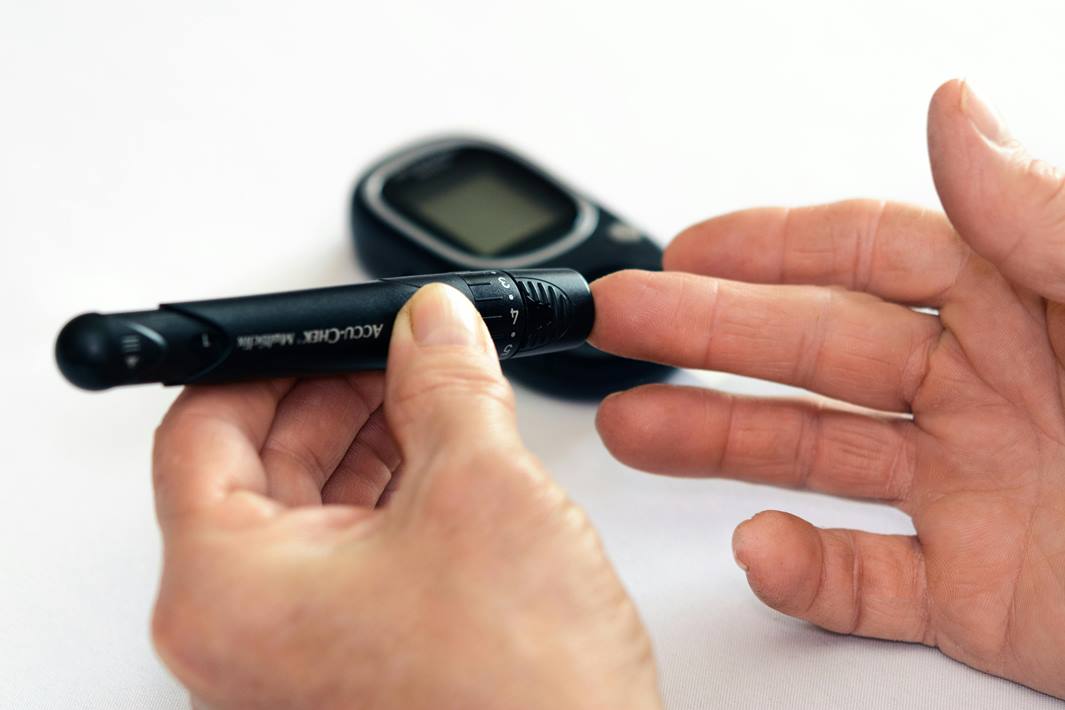
Diabetes in America 2026: CDC Statistics and State Prevalence Ranking
About 40.1 million people in the United States had diabetes in 2023, including diagnosed and undiagnosed disease, equal to about 12.0% of the population. CDC also estimates that 115.2 million U.S. adults had prediabetes in 2023, based on NHANES data collected from August 2021 through August 2023.
At the state level, this page ranks the 50 states and District of Columbia by 2023 age-adjusted diagnosed diabetes prevalence among adults aged 18 or older. West Virginia has the highest published prevalence at 15.0%, while Vermont has the lowest at 7.7%. Higher prevalence ranks higher.
The national estimates and state ranking measure different things. The 40.1 million national estimate includes diagnosed and undiagnosed diabetes across all ages; the state table measures self-reported diagnosed diabetes among adults and is age-adjusted for geographic comparison.
The ranking is a compiled research dataset using CDC U.S. Diabetes Surveillance System and BRFSS prevalence estimates plus U.S. Census Bureau regional classifications. The latest clearly identified update for state-level diagnosed diabetes prevalence is 2023. CDC added 2024 data to county-level diagnosed diabetes surveillance in 2026, but those county updates are not substituted for the state series used here.
West Virginia leads the 2023 CDC state ranking.
Vermont has the lowest published point estimate among the 50 states and DC.
CDC estimate for diagnosed plus undiagnosed diabetes in 2023.
2023 estimate based on NHANES data collected during August 2021–August 2023.
All 50 states plus the District of Columbia.
Latest clearly identified state-level diagnosed diabetes update in USDSS.
The national diabetes picture
Diabetes affects about one in eight Americans
CDC estimates that 40.1 million people of all ages had diabetes in 2023. The total includes people whose diabetes had been diagnosed and people living with diabetes without a diagnosis.
Prediabetes affects an even larger population
CDC estimates that 115.2 million adults had prediabetes in 2023. Prediabetes means blood glucose levels are higher than normal but below the threshold used to diagnose diabetes.
Long-term prevalence has increased
CDC's national trend analysis shows a statistically significant long-term increase in age-adjusted total adult diabetes prevalence, from 11.2% in 2001–2004 to 13.5% in 2021–2023.
Prevalence and incidence are different measures
A higher prevalence does not mean that new diagnoses are rising continuously every year. CDC's incidence series has followed a more complex pattern, so the strongest evidence for a growing national burden is the long-term prevalence trend rather than a claim of uninterrupted growth in annual incidence.
Economic burden
A 2021 estimate referenced by CDC placed economic costs attributable to diagnosed diabetes at approximately $640 billion, including direct medical costs and indirect productivity losses. This estimate applies to diagnosed diabetes and should not be treated as the cost of all diagnosed and undiagnosed disease combined.
Top 10 states with the highest diagnosed diabetes prevalence
The highest published state estimates are concentrated in the South. Nine of the Top 10 states are in the Census South region; Indiana is the only Top 10 state from another region.
2023 age-adjusted diagnosed diabetes prevalence among adults aged 18+
| Rank | State | Prevalence | Source / method note |
|---|---|---|---|
| 1 | West Virginia | 15.0% | Official observed value; CDC USDSS/BRFSS; source and target year 2023; 95% CI 13.8–16.2; South. |
| 2 | Mississippi | 14.7% | Official observed value; CDC USDSS/BRFSS; source and target year 2023; 95% CI 13.4–16.2; South. |
| 3 | Louisiana | 14.5% | Official observed value; CDC USDSS/BRFSS; source and target year 2023; 95% CI 13.3–15.7; South. |
| 4 | Alabama | 13.7% | Official observed value; CDC USDSS/BRFSS; source and target year 2023; 95% CI 12.5–15.0; South. |
| 5 | Arkansas | 13.0% | Official observed value; CDC USDSS/BRFSS; source and target year 2023; 95% CI 11.8–14.2; South. |
| 6 | Kentucky | 12.9% | Official observed value; CDC USDSS/BRFSS; source and target year 2023; 95% CI 11.6–14.2; South. |
| 7 | Tennessee | 12.7% | Official observed value; CDC USDSS/BRFSS; source and target year 2023; 95% CI 11.7–13.8; South. |
| 8 | South Carolina | 12.6% | Official observed value; CDC USDSS/BRFSS; source and target year 2023; 95% CI 11.8–13.4; South. |
| 9 | Texas | 12.0% | Official observed value; CDC USDSS/BRFSS; source and target year 2023; 95% CI 10.9–13.3; South. |
| 10 | Indiana | 11.5% | Official observed value; CDC USDSS/BRFSS; source and target year 2023; 95% CI 10.9–12.2; Midwest. |
Ranking is based on CDC's published point estimates. Confidence intervals often overlap, so a higher position does not necessarily mean that the difference from a neighboring state is statistically significant.
Chart: Top 20 rank positions by diagnosed diabetes prevalence
The Top 20 rank positions contain 21 jurisdictions because Missouri and Nevada are tied at rank T20 with the same published prevalence of 10.6%. Equal published values share the same rank.
Methodology
Metric
Age-adjusted diagnosed diabetes prevalence among adults aged 18 years or older. Respondents are counted as having diagnosed diabetes when they report that a health professional told them they had diabetes; diabetes reported only during pregnancy is excluded.
Target year
The ranking uses 2023 state-level prevalence estimates. This is a 2026 publication snapshot, not a 2026 prevalence estimate.
Source hierarchy
CDC U.S. Diabetes Surveillance System and BRFSS provide the official prevalence estimates. U.S. Census Bureau regional classifications are added only for geographic grouping and do not affect rank.
Age adjustment
State percentages are age-adjusted to the 2000 U.S. standard population, improving comparability between jurisdictions with different age structures.
Ranking rule
Higher prevalence ranks higher. Equal published values share the same competition rank. For tied rows, alphabetical order is used only to make table display consistent.
Top N rule
A Top 20 filter means all jurisdictions with a rank of 20 or better. Because Missouri and Nevada are tied at T20, the Top 20 rank positions contain 21 jurisdictions.
Coverage
Included: all 50 states and District of Columbia. U.S. territories are not included because this page is designed as a states-plus-DC comparison.
Data status
Every ranked row is an official_value directly published through CDC surveillance. No state prevalence value is calculated, forecast or modeled on this page.
Uncertainty
CDC publishes 95% confidence intervals for these survey estimates. Overlapping intervals mean small rank differences should not automatically be treated as statistically significant differences.
Survey limitations
BRFSS relies on self-report from the non-institutionalized adult population. Undiagnosed diabetes is not captured in the state diagnosed-diabetes prevalence measure.
County versus state updates
USDSS added 2024 county-level diagnosed diabetes data in 2026. The latest update explicitly identified for the state-level diagnosed diabetes series remains 2023, so county estimates are not mixed into this state ranking.
What this metric does not measure
It does not measure total diabetes including undiagnosed cases, absolute case counts, incidence, mortality, complications, obesity, health-care quality or the causes of geographic differences.
Full ranking: diagnosed diabetes prevalence by state and DC
Use the controls to search the 51 jurisdictions, filter by Census region or status, sort the estimates, or display the Top 10 ranks, Top 20 ranks or the complete table.
2023 age-adjusted diagnosed diabetes prevalence among adults aged 18+
| Rank | State / DC | Prevalence | Source / method note |
|---|---|---|---|
| 1 | West Virginia | 15.0% | Official observed value; CDC USDSS/BRFSS; 2023; 95% CI 13.8–16.2; South. |
| 2 | Mississippi | 14.7% | Official observed value; CDC USDSS/BRFSS; 2023; 95% CI 13.4–16.2; South. |
| 3 | Louisiana | 14.5% | Official observed value; CDC USDSS/BRFSS; 2023; 95% CI 13.3–15.7; South. |
| 4 | Alabama | 13.7% | Official observed value; CDC USDSS/BRFSS; 2023; 95% CI 12.5–15.0; South. |
| 5 | Arkansas | 13.0% | Official observed value; CDC USDSS/BRFSS; 2023; 95% CI 11.8–14.2; South. |
| 6 | Kentucky | 12.9% | Official observed value; CDC USDSS/BRFSS; 2023; 95% CI 11.6–14.2; South. |
| 7 | Tennessee | 12.7% | Official observed value; CDC USDSS/BRFSS; 2023; 95% CI 11.7–13.8; South. |
| 8 | South Carolina | 12.6% | Official observed value; CDC USDSS/BRFSS; 2023; 95% CI 11.8–13.4; South. |
| 9 | Texas | 12.0% | Official observed value; CDC USDSS/BRFSS; 2023; 95% CI 10.9–13.3; South. |
| 10 | Indiana | 11.5% | Official observed value; CDC USDSS/BRFSS; 2023; 95% CI 10.9–12.2; Midwest. |
| 11 | Georgia | 11.4% | Official observed value; CDC USDSS/BRFSS; 2023; 95% CI 10.6–12.2; South. |
| 12 | Ohio | 11.3% | Official observed value; CDC USDSS/BRFSS; 2023; 95% CI 10.7–12.0; Midwest. |
| T13 | Delaware | 11.1% | Official observed value; tied at T13; CDC USDSS/BRFSS; 2023; 95% CI 9.8–12.5; South. |
| T13 | Oklahoma | 11.1% | Official observed value; tied at T13; CDC USDSS/BRFSS; 2023; 95% CI 10.3–11.9; South. |
| T15 | Illinois | 10.8% | Official observed value; tied at T15; CDC USDSS/BRFSS; 2023; 95% CI 9.8–12.0; Midwest. |
| T15 | Maryland | 10.8% | Official observed value; tied at T15; CDC USDSS/BRFSS; 2023; 95% CI 10.1–11.6; South. |
| T15 | North Carolina | 10.8% | Official observed value; tied at T15; CDC USDSS/BRFSS; 2023; 95% CI 9.6–12.1; South. |
| T18 | Michigan | 10.7% | Official observed value; tied at T18; CDC USDSS/BRFSS; 2023; 95% CI 9.9–11.6; Midwest. |
| T18 | New Mexico | 10.7% | Official observed value; tied at T18; CDC USDSS/BRFSS; 2023; 95% CI 9.1–12.5; West. |
| T20 | Missouri | 10.6% | Official observed value; tied at T20; CDC USDSS/BRFSS; 2023; 95% CI 9.8–11.6; Midwest. |
| T20 | Nevada | 10.6% | Official observed value; tied at T20; CDC USDSS/BRFSS; 2023; 95% CI 8.8–12.8; West. |
| T22 | California | 10.5% | Official observed value; tied at T22; CDC USDSS/BRFSS; 2023; 95% CI 9.7–11.3; West. |
| T22 | South Dakota | 10.5% | Official observed value; tied at T22; CDC USDSS/BRFSS; 2023; 95% CI 8.8–12.6; Midwest. |
| T24 | Kansas | 10.3% | Official observed value; tied at T24; CDC USDSS/BRFSS; 2023; 95% CI 9.6–11.1; Midwest. |
| T24 | Virginia | 10.3% | Official observed value; tied at T24; CDC USDSS/BRFSS; 2023; 95% CI 9.4–11.3; South. |
| T26 | Florida | 10.0% | Official observed value; tied at T26; CDC USDSS/BRFSS; 2023; 95% CI 9.0–11.0; South. |
| T26 | Pennsylvania | 10.0% | Official observed value; tied at T26; CDC USDSS/BRFSS; 2023; 95% CI 8.8–11.5; Northeast. |
| T26 | Rhode Island | 10.0% | Official observed value; tied at T26; CDC USDSS/BRFSS; 2023; 95% CI 9.0–10.9; Northeast. |
| T29 | Arizona | 9.8% | Official observed value; tied at T29; CDC USDSS/BRFSS; 2023; 95% CI 9.1–10.6; West. |
| T29 | Iowa | 9.8% | Official observed value; tied at T29; CDC USDSS/BRFSS; 2023; 95% CI 9.1–10.5; Midwest. |
| 31 | Nebraska | 9.6% | Official observed value; CDC USDSS/BRFSS; 2023; 95% CI 8.9–10.2; Midwest. |
| T32 | Hawaii | 9.5% | Official observed value; tied at T32; CDC USDSS/BRFSS; 2023; 95% CI 8.6–10.5; West. |
| T32 | Oregon | 9.5% | Official observed value; tied at T32; CDC USDSS/BRFSS; 2023; 95% CI 8.6–10.4; West. |
| T34 | Wisconsin | 9.4% | Official observed value; tied at T34; CDC USDSS/BRFSS; 2023; 95% CI 8.9–10.0; Midwest. |
| T34 | Wyoming | 9.4% | Official observed value; tied at T34; CDC USDSS/BRFSS; 2023; 95% CI 8.5–10.5; West. |
| T36 | Minnesota | 9.3% | Official observed value; tied at T36; CDC USDSS/BRFSS; 2023; 95% CI 8.6–10.0; Midwest. |
| T36 | New York | 9.3% | Official observed value; tied at T36; CDC USDSS/BRFSS; 2023; 95% CI 8.8–10.0; Northeast. |
| 38 | New Jersey | 9.1% | Official observed value; CDC USDSS/BRFSS; 2023; 95% CI 8.3–9.9; Northeast. |
| 39 | Maine | 8.9% | Official observed value; CDC USDSS/BRFSS; 2023; 95% CI 8.3–9.6; Northeast. |
| 40 | North Dakota | 8.8% | Official observed value; CDC USDSS/BRFSS; 2023; 95% CI 8.0–9.6; Midwest. |
| 41 | Idaho | 8.7% | Official observed value; CDC USDSS/BRFSS; 2023; 95% CI 7.9–9.6; West. |
| 42 | Washington | 8.6% | Official observed value; CDC USDSS/BRFSS; 2023; 95% CI 8.2–9.0; West. |
| 43 | Massachusetts | 8.5% | Official observed value; CDC USDSS/BRFSS; 2023; 95% CI 7.8–9.4; Northeast. |
| T44 | Alaska | 8.3% | Official observed value; tied at T44; CDC USDSS/BRFSS; 2023; 95% CI 7.4–9.2; West. |
| T44 | Connecticut | 8.3% | Official observed value; tied at T44; CDC USDSS/BRFSS; 2023; 95% CI 7.5–9.2; Northeast. |
| 46 | District of Columbia | 8.2% | Official observed value; CDC USDSS/BRFSS; 2023; 95% CI 7.1–9.4; South. |
| T47 | Colorado | 8.0% | Official observed value; tied at T47; CDC USDSS/BRFSS; 2023; 95% CI 7.3–8.7; West. |
| T47 | Utah | 8.0% | Official observed value; tied at T47; CDC USDSS/BRFSS; 2023; 95% CI 7.4–8.6; West. |
| T49 | Montana | 7.9% | Official observed value; tied at T49; CDC USDSS/BRFSS; 2023; 95% CI 7.2–8.7; West. |
| T49 | New Hampshire | 7.9% | Official observed value; tied at T49; CDC USDSS/BRFSS; 2023; 95% CI 7.1–8.8; Northeast. |
| 51 | Vermont | 7.7% | Official observed value; CDC USDSS/BRFSS; 2023; 95% CI 6.9–8.7; Northeast. |
T indicates a tied rank. Rankings use the published CDC point estimate shown in data-value. No additional decimal precision is assumed.
Insights from the state ranking
Key Insight
West Virginia has the highest published prevalence at 15.0%, compared with 7.7% in Vermont, a 7.3 percentage-point difference between the two point estimates.
Notable Pattern
Nine of the ten highest-ranked states are in the Census South region. Indiana is the only Top 10 state outside the South.
Regional Concentration
The South accounts for 14 of the 21 jurisdictions occupying the Top 20 rank positions, showing a strong geographic concentration in the published 2023 estimates.
Outlier
District of Columbia is classified in the Census South region but has a prevalence of 8.2%, placing it near the low end of the national state-and-DC distribution.
What the ranking means
State prevalence answers a different question from total case counts. A large state may have more residents living with diabetes while still showing a lower percentage of adults with diagnosed diabetes than a smaller state.
Age adjustment improves geographic comparability, but the figures remain survey estimates rather than exact population counts. Close ranks should therefore be interpreted together with their confidence intervals.
The ranking is descriptive, not causal. It does not show that a state's position is caused by any single factor such as obesity, income, health insurance, health-care access or demographics.
Undiagnosed diabetes is another important limitation. National CDC estimates include undiagnosed disease, while this state ranking does not. Readers should not use the state percentages as estimates of total diabetes prevalence.
Related StatRanker research
CDC/NCHS state comparison of life expectancy at birth.
State comparison of health insurance coverage using official U.S. data.
International obesity prevalence comparison based on WHO/NCD-RisC data.
International comparison of U.S. health spending and health outcomes.
Download the Diabetes in America: A Growing Epidemic dataset
Diabetes in America: A Growing Epidemic
51 ranked entries · Excel + CSV + methodology + sources + chart · Snapshot: 2023 dataset; row source years preserved: 2023 · Version 1.0
The archive includes machine-readable data, methodology and source documentation. Quick human verification is required before the ZIP is delivered. Full Data Pack downloads require a free account. Free accounts can download 1 different Data Pack every 30 days; re-downloading the same pack does not use another slot. Annual Data Access provides unlimited manual downloads while annual access is active.
Download Excel + CSV Data PackFAQ
How many Americans have diabetes?
CDC estimates that 40.1 million people of all ages had diagnosed or undiagnosed diabetes in 2023, about 12.0% of the U.S. population.
Which state has the highest diagnosed diabetes prevalence?
West Virginia has the highest published 2023 age-adjusted prevalence among the 50 states and DC at 15.0%.
Which state has the lowest diagnosed diabetes prevalence?
Vermont has the lowest published point estimate in this ranking at 7.7%.
Are the state values official?
Yes. Every ranked prevalence value is directly published through CDC's U.S. Diabetes Surveillance System using BRFSS data. The state values are not forecasts or modeled projections.
Why are several states tied?
CDC publishes the state prevalence point estimates used here to one decimal place. States with the same published value share the same rank; no additional precision is assumed.
Why does Top 20 contain 21 jurisdictions?
Missouri and Nevada both have a published prevalence of 10.6% and share rank T20. A rank-based Top 20 therefore includes both jurisdictions.
Does the ranking include undiagnosed diabetes?
No. The state ranking measures diagnosed diabetes among adults. CDC's national total diabetes estimate includes diagnosed and undiagnosed disease and is a separate metric.
Why are the state estimates age-adjusted?
Diabetes prevalence varies strongly with age. Age adjustment reduces the effect of different state age structures and makes geographic comparisons more meaningful.
Are newer 2024 diabetes data available?
CDC added 2024 data to county-level diagnosed diabetes surveillance in 2026. The latest update explicitly identified for the state-level diagnosed diabetes prevalence series used in this ranking remains 2023.
Is diabetes prevalence increasing nationally?
CDC's long-term national analysis shows a statistically significant increase in age-adjusted total adult diabetes prevalence from 11.2% in 2001–2004 to 13.5% in 2021–2023. Annual incidence has followed a more complex pattern and should not be described as continuously increasing.
Sources
CDC U.S. Diabetes Surveillance System — National Diabetes Statistics Report
Primary source for national diabetes statistics, long-term trends and the state-level diagnosed diabetes section used to support the ranking.
CDC — National Diabetes Statistics Report
Official CDC summary for 40.1 million people with diabetes and 115.2 million adults with prediabetes.
CDC USDSS — State Burden and Magnitude Methods
Current methodology for diagnosed diabetes definition, BRFSS source, age adjustment, calculations and limitations.
https://usdss.cdc.gov/diabetes/data/socrata/State_Burden_Magnitude_methods.html
CDC USDSS — Surveillance
Official surveillance portal and update history used to distinguish the 2023 state series from newer 2024 county-level data.
CDC — Diabetes: A U.S. Report Card
Supporting source for national diabetes and prediabetes estimates and the approximately $640 billion 2021 economic burden figure.
https://www.cdc.gov/diabetes/communication-resources/diabetes-statistics.html
U.S. Census Bureau — Geographic Terms and Definitions
Official reference for Census geographic regions used to classify states as Northeast, Midwest, South or West.
https://www.census.gov/programs-surveys/geography/about/glossary.html
Related rankings
Closely related StatRanker ranking and data pages selected by topic, entity scope and category. Fewer links are shown when strong matches are limited.