Consumer Price Index: How It Is Formed and Why It Matters
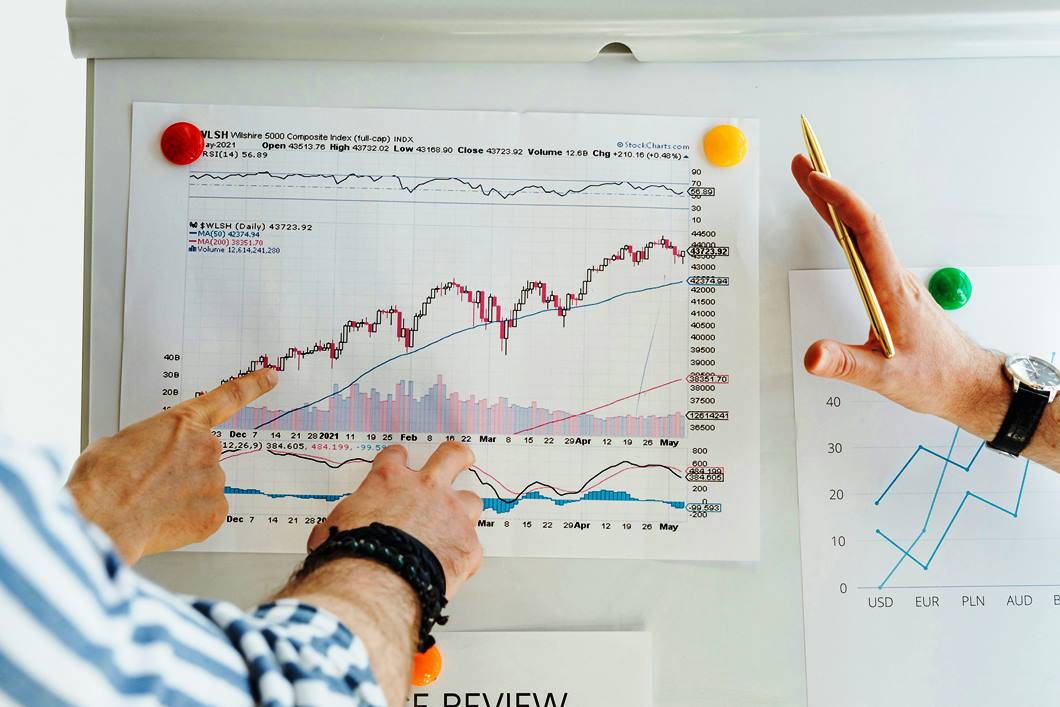
Consumer Price Index: how to read CPI, core CPI and HICP correctly
The Consumer Price Index, or CPI, tracks how prices paid by households change over time. It is used in inflation reports, wage negotiations, pension adjustments, benefit indexation, rent clauses and business contracts.
CPI is often quoted as a single number, but the meaning depends on the version used. A one-month change, a 12-month inflation rate, an annual average, a raw index level, a core CPI series and a European HICP value do not answer the same question.
The safest reading starts with four labels: place, period, population and basket. Without those labels, CPI can easily be mistaken for a cost-of-living score, a personal budget estimate or a direct price-level comparison between countries.
Price change for a defined household consumption basket.
Usually the clearest public reading of headline inflation.
National statistical offices, Eurostat, World Bank WDI and CPI manuals.
Monthly, annual and annual-average CPI values must be labelled separately.
What CPI actually measures
CPI measures price movement, not the absolute cost of life. If an index rises from 100 to 110, it shows a 10% increase from its base period. It does not prove that one country, city or region is more expensive than another.
Statistical agencies build CPI from many price observations. Goods and services are grouped into consumption categories, category weights are applied, prices are collected over time, and index values are published with monthly, annual or annual-average percentage changes.
CPI is strongest as a time-series measure inside a defined statistical system. It becomes misleading when a raw index level is treated as a direct comparison of living costs across places.
Quick answers for CPI readers
CPI is not a cost-of-living score
It tracks price change for a defined basket. It does not include every tax, asset price, public-service difference or household-specific expense.
Core CPI is not a replacement for headline CPI
Core CPI removes volatile items such as food and energy in many systems. It helps read the trend, but households still pay the full basket.
HICP is the better European comparison tool
Eurostat’s Harmonised Index of Consumer Prices is designed to make inflation measures more comparable across European countries.
Annual average is not the same as a 12-month rate
An annual average summarizes a full year. A 12-month rate compares one period with the same period one year earlier.
CPI checklist before quoting inflation data
Check the measure, period, source and limitation before using CPI in an article, dashboard, contract note or country comparison.
| Check | CPI topic | Best use | Source and method note |
|---|---|---|---|
| 1 | Headline CPI | Main gauge | official method Use all-items CPI from the relevant statistical office for broad household-facing inflation. State geography, coverage and seasonal adjustment. |
| 2 | 12-month change | Headline rate | official value Use year-over-year change for headline inflation. Do not mix it with a one-month change unless both periods are clearly labelled. |
| 3 | Annual CPI inflation | Country tables | official value For country tables, use documented international datasets such as World Bank WDI and check the source year. |
| 4 | Core CPI | Underlying trend | official value Core CPI usually excludes volatile categories such as food and energy. Use it for trend analysis, not as a substitute for household inflation. |
| 5 | HICP | EU comparison | official value Use Eurostat HICP for European inflation comparison because the series is harmonised across participating countries. |
| 6 | Basket | Scope check | official method The basket represents household consumption categories for the covered population. It is not a universal list of everything people buy. |
| 7 | Weights | Budget impact | official method Weights show how strongly each category affects the index. Large categories move headline CPI more than small categories. |
| 8 | Price collection | Data quality | official method Prices can come from outlets, services, online sources and housing units. Sampling and collection frequency shape the strength of the release. |
| 9 | Quality adjustment | Product change | official method Adjustments matter when products change in size, quality or features. This is important for electronics, vehicles, housing services and shrinkflation cases. |
| 10 | Seasonality | Monthly reading | official method Seasonally adjusted data are common for month-to-month analysis. Not seasonally adjusted data are often used for annual comparisons and clauses. |
| 11 | Base period | Index reading | method limit An index value shows change from its own base period. It should not be used alone to compare price levels between regions. |
| 12 | Exclusions | Avoid overclaiming | method limit CPI does not cover every cost-of-living factor. Asset prices, direct taxes, free public goods and some population groups may be outside scope. |
Three examples that prevent CPI mistakes
Monthly CPI is not annual inflation
A 0.3% monthly increase does not mean annual inflation is 0.3%. It describes movement from one month to the next. A 12-month rate compares the current month with the same month one year earlier.
An index level does not show where life is more expensive
If one CPI index is 130 and another is 115, the higher number may reflect a different base period. Use a price-level measure for price-level comparisons.
Core CPI helps, but households still feel the full basket
Core CPI can show persistent pressure after removing volatile categories. For everyday inflation, headline CPI remains essential because food, energy, rent and transport still affect household budgets.
How individual prices become a CPI reading
CPI is not a store receipt or a simple average of prices. It is a statistical process that turns many observed prices into index values and percentage changes.
Methodology and source hierarchy
Country-specific CPI figures should come first from the relevant national statistical office. European cross-country comparisons should use Eurostat HICP. Broad annual country tables can use World Bank WDI, with attention to source year and indicator definition. CPI manuals are best for concepts, index construction and limitations.
Metric definition
CPI is treated as a consumer price-change index. Index levels, monthly changes, 12-month changes, annual averages, core measures and harmonised series are kept separate.
Source priority
Official statistical offices, Eurostat, World Bank WDI and international CPI manuals are stronger sources than unsourced market summaries.
Comparison rule
Any comparison should state the period, measure type, geography, source and whether the figure is an official value, forecast or estimate.
Rounding rule
Use the source format where possible. Recalculate only when the base values and formula are clear.
CPI methodology differs by country because consumption patterns, geography, population coverage, housing treatment, data collection and publication rules differ. A figure can be correct within one statistical system and still be unsuitable for a different comparison.
Insights: what makes CPI data misleading
Key insight
CPI is strongest when used to track change over time inside one defined statistical system.
Common mistake
The most frequent error is mixing one-month change, 12-month inflation and annual average inflation without explaining the period.
Source pattern
Reliable CPI analysis starts with official releases and methodology documents, not with stripped-down reposts of inflation numbers.
Outlier risk
A high CPI reading can reflect energy, food, exchange-rate effects, tax changes or administered prices. CPI shows movement, not the full cause.
CPI can support wage discussions, pension indexation, rent escalation, budgeting, monetary-policy analysis and real-income comparisons. It cannot, by itself, measure affordability, household stress, wealth inequality or regional living standards.
What CPI means for readers
For households, CPI gives a broad signal of whether everyday prices are rising faster or slower. A family’s actual experience can differ because spending patterns vary by rent, food, transport, energy, insurance, health care and services.
For workers and pensioners, the exact CPI measure matters because wage agreements, benefits and cost-of-living clauses may refer to different official indexes.
For businesses, CPI can support pricing, contract escalation and real-revenue analysis. A company with costs concentrated in fuel, rent, insurance, imported goods or food inputs should also check category-specific price data.
For policy readers, CPI is a starting point. It should be read together with wages, employment, producer prices, interest rates, productivity, fiscal policy and income distribution.
FAQ
Is CPI the same as the cost of living?
No. CPI measures price change for a defined basket and population. Cost of living is broader and can include taxes, public services, asset prices, commuting patterns and household-specific needs.
Why can my personal inflation feel higher than official CPI?
Your spending mix may differ from the official basket. If you spend more on fast-rising categories such as rent, food, fuel or insurance, your personal inflation can be higher than the headline rate.
What is the difference between CPI and core CPI?
Headline CPI covers the full basket. Core CPI usually removes volatile categories such as food and energy to show more persistent price pressure.
Can CPI compare prices between countries?
Not directly. CPI usually measures change over time inside one country or region. For international comparisons, use harmonised inflation rates or documented cross-country datasets.
Why do CPI weights matter?
Weights show how strongly each category affects the index. A price jump in a large category moves headline CPI more than the same jump in a small category.
What is HICP?
HICP is the Harmonised Index of Consumer Prices used in the European statistical system. It is designed for more comparable inflation measurement across European countries.
Why should monthly CPI and annual CPI not be mixed?
A monthly change describes movement from one month to the next. A 12-month change compares the current period with the same period one year earlier. They can tell different stories during turning points.
Sources
U.S. Bureau of Labor Statistics — CPI
Official U.S. CPI releases, definitions and consumer price tables.
BLS Handbook of Methods — Consumer Price Index
Methodology, scope, sampling, calculation concepts and interpretation limits.
Eurostat — Harmonised Indices of Consumer Prices
HICP terminology and European harmonised inflation data.
World Bank — Inflation, consumer prices
Annual cross-country CPI inflation indicator in World Development Indicators.
IMF — Consumer Price Index Manual
International reference for CPI concepts, compilation practice and index methodology.
https://www.imf.org/external/pubs/ft/cpi/manual/2004/eng/cpi.pdf
Related rankings
Closely related StatRanker ranking and data pages selected by topic, entity scope and category. Fewer links are shown when strong matches are limited.